Liveaboards · Indonesia
Lady Denok — a traditional Indonesian phinisi built around serious diving
What makes this boat unique
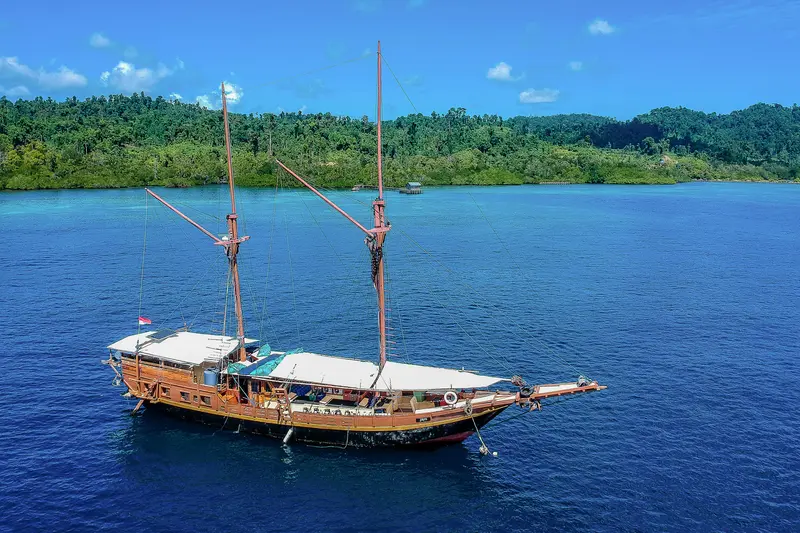
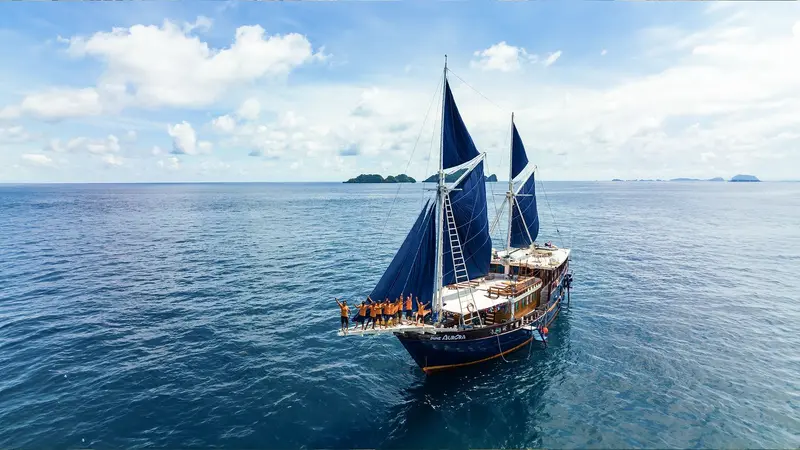
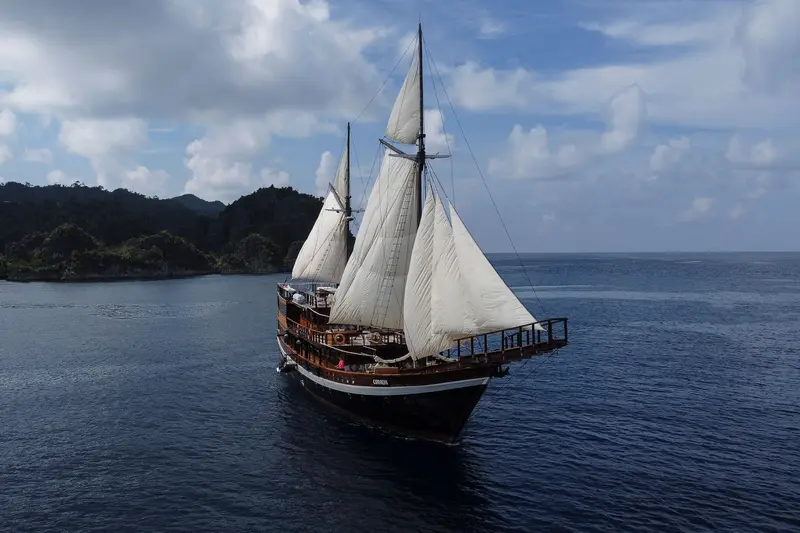
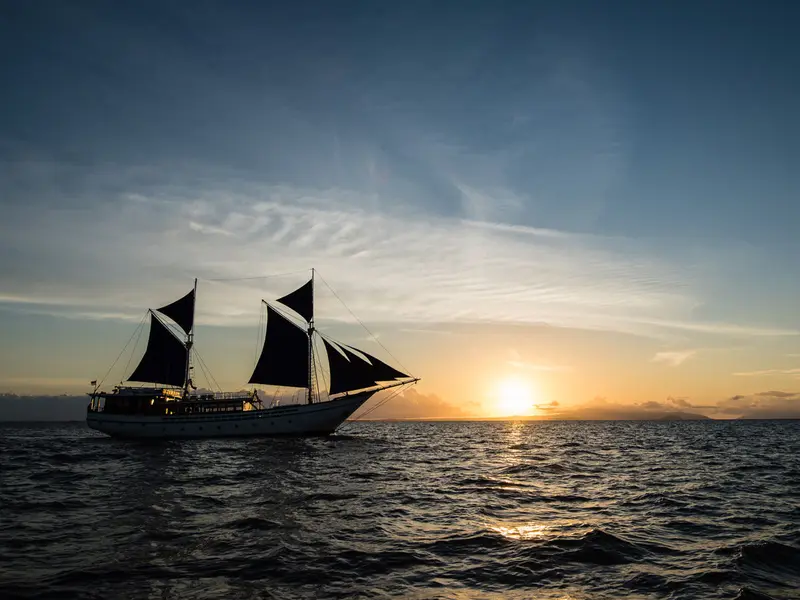
- A 28-metre wooden phinisi carrying up to 12 guests in seven air-conditioned cabins.
- Raja Ampat, Komodo, the Forgotten Islands and Lembeh feature on the cruising programme.
- The dive operation uses 12-litre aluminium tanks, DIN adapters, nitrox and a guide ratio of one guide to four divers.
- Every cabin has a private bathroom, hot and cold water, and a large window.
- The boat is particularly strong on food, diving and crew service, with review scores of 9.7, 9.5 and 9.0 respectively.
For subtitles in English: start the video firstthen click the gearat the top right of the video, select “Subtitles/CC”, then “Auto-translate” and choose “English”.
The invitation
Lady Denok is for divers who want Indonesia in its traditional form without giving up the practical comforts that matter after four dives. She is a wooden phinisi built by Konjo boat builders in South Sulawesi, with the routes and crew set up for long days in the water rather than short sightseeing cruises. Raja Ampat brings cleaning stations, current-swept reefs and enormous fish schools; the Lembeh crossing adds black-sand macro diving before the boat reaches Raja Ampat. Komodo itineraries take a different line, mixing strong-current pinnacles, manta sites and land visits. The reason to choose this boat is the balance: a recognisable Indonesian sailing vessel, a compact guest group, proper dive support and cabins that let the body recover between dives. The crew is a major part of that equation. Guests consistently single out the dive guides, the attention to detail and the cooking, while the boat itself provides a comfortable base for demanding days at sea.
Boarding
Lady Denok comes into view as a traditional wooden phinisi rather than a floating hotel. Her hull and decks carry the character of a working Indonesian sailing vessel, while the finish is arranged for people who spend their days moving between cabin, dive deck and sea. Boarding is straightforward: the crew meets arriving guests at the airport or hotel, brings them to the harbour and takes care of the practical handover before departure. Inside, the layout is compact enough that the boat becomes familiar quickly. The saloon, restaurant, camera room and deck spaces are linked without long corridors or wasted distance. The wood gives the interior a warmer feel than a steel liveaboard, but the boat is not presented as rustic accommodation. Air conditioning, private bathrooms, hot and cold water, and a large cabin window put the emphasis on usable comfort after a current-heavy dive.
The atmosphere on board
The atmosphere on Lady Denok is shaped less by formal service than by the amount of crew available to keep the day moving. The crew includes local and international members, and English and Indonesian are spoken on board. Guests who have travelled on the boat describe staff who notice practical problems early, help with transfers and take pride in the small details. That shows most clearly around diving and meals: briefings are taken seriously, guides look for the small creatures as well as the big animals, and the galley keeps food coming when four dives have taken the strength out of everyone. By the second day, a boat of 12 guests has usually become a single working group, with the crew passing through it constantly rather than disappearing behind a service routine. Evenings may mean dinner after a night dive, a drink at the bar or a quiet conversation on deck. The crew is what turns the wooden hull into a place divers remember.
The sites you’ll dive
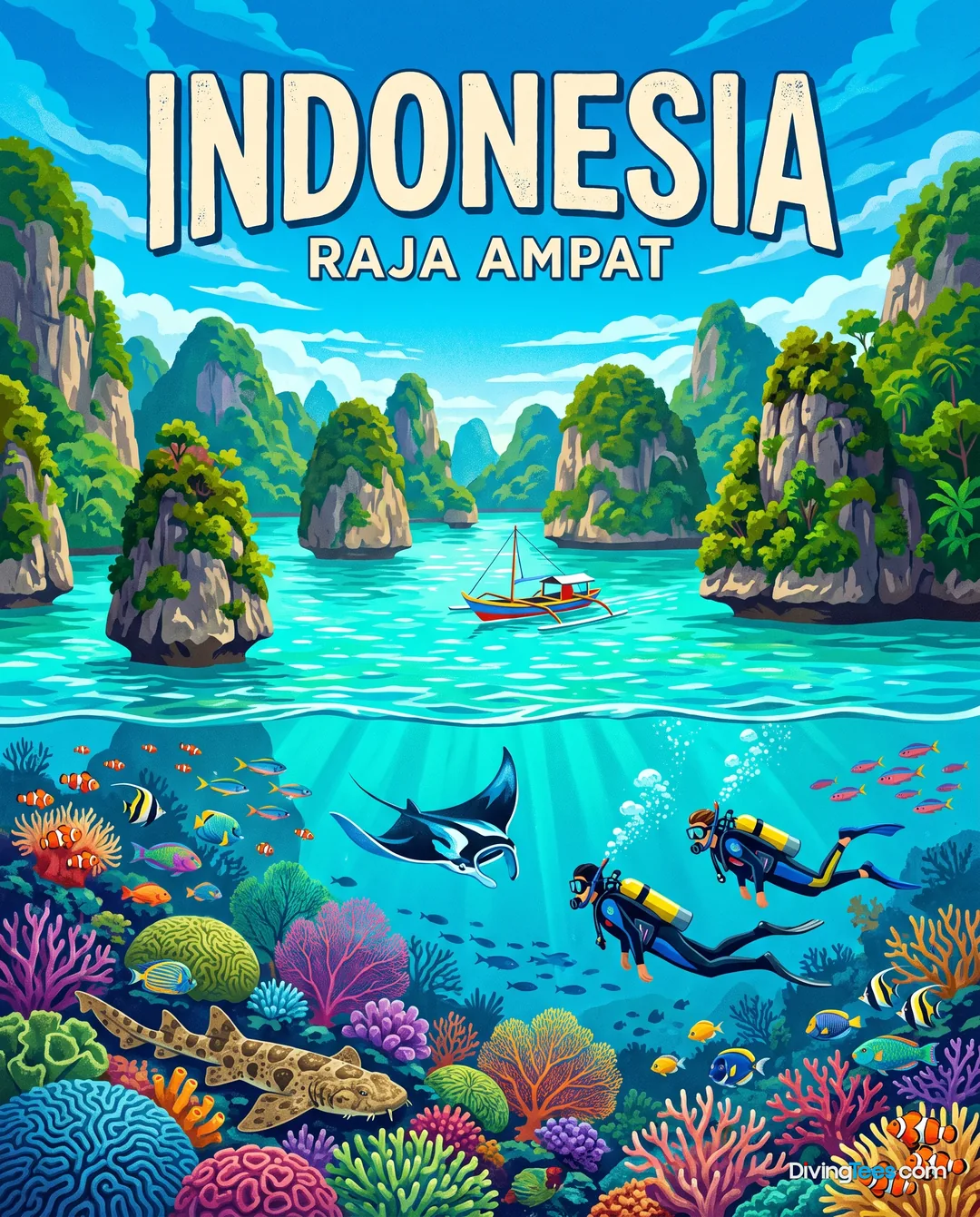
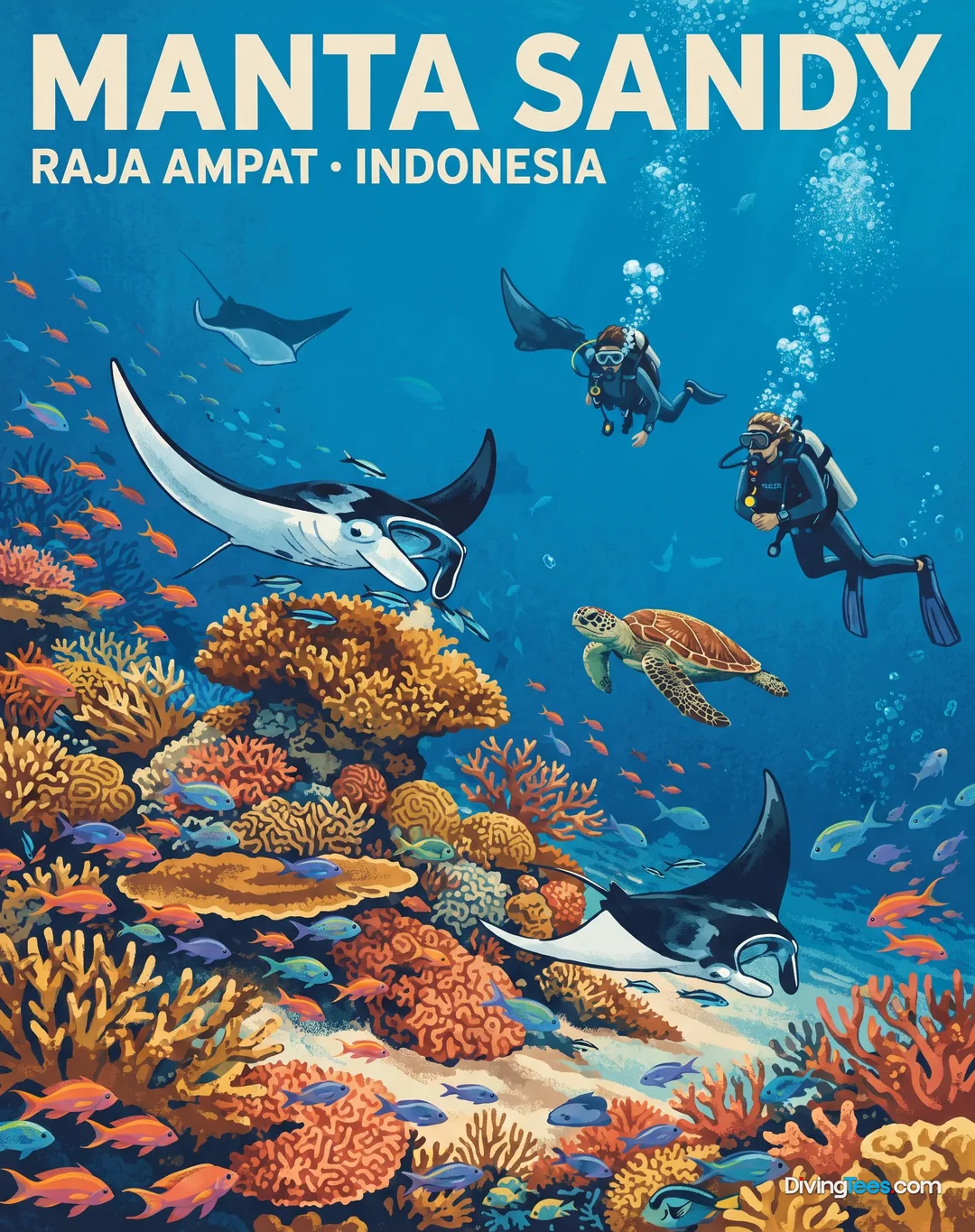
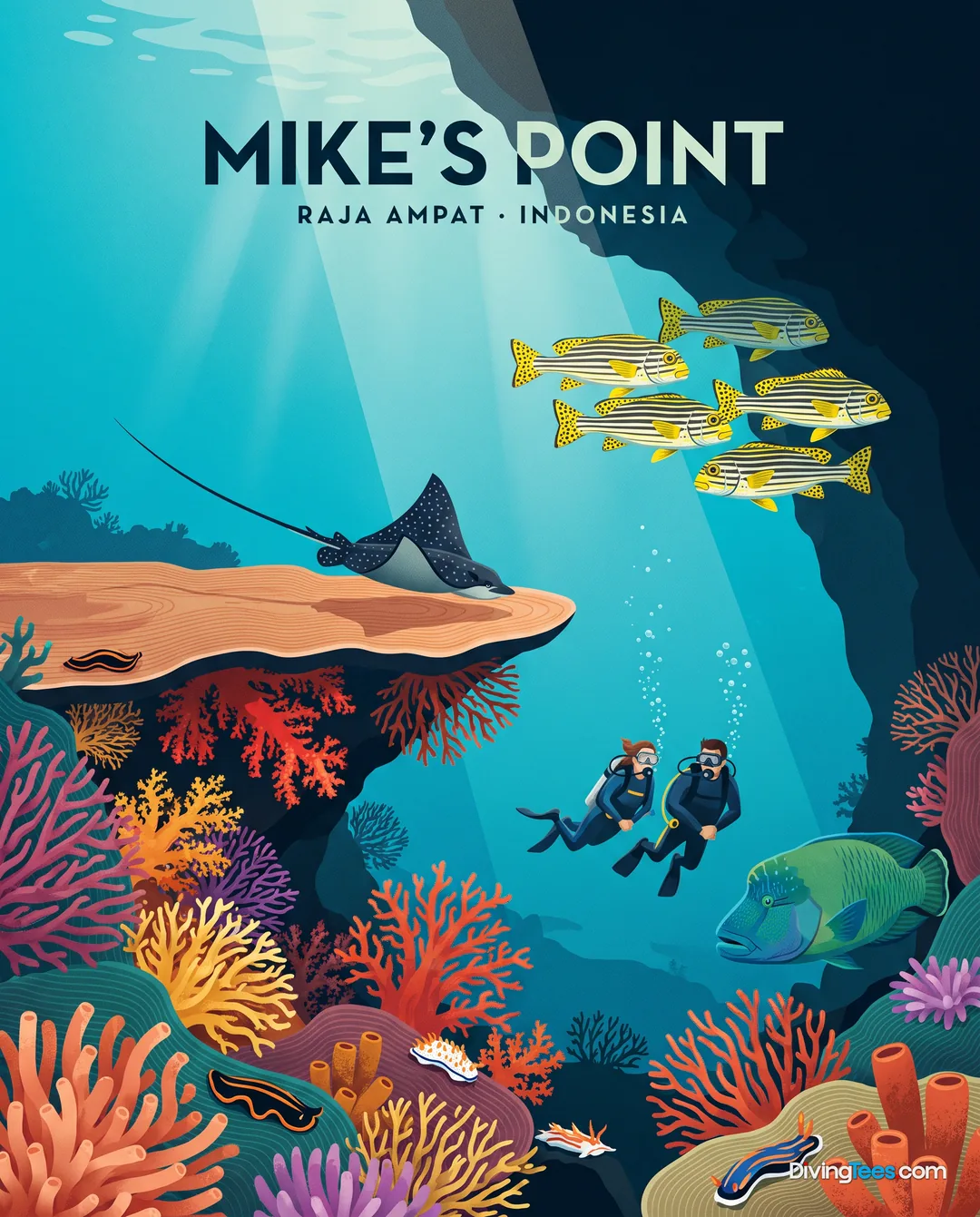
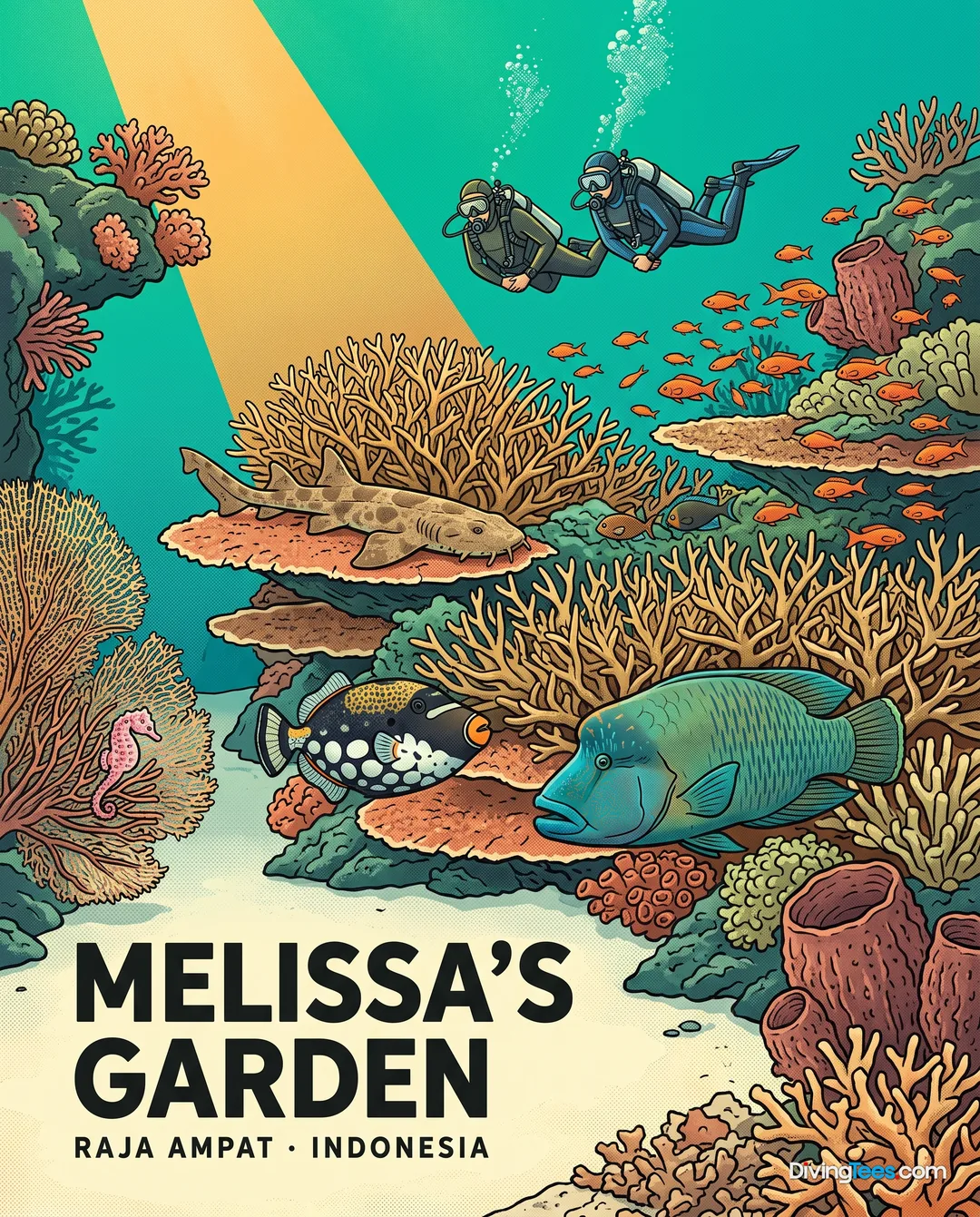
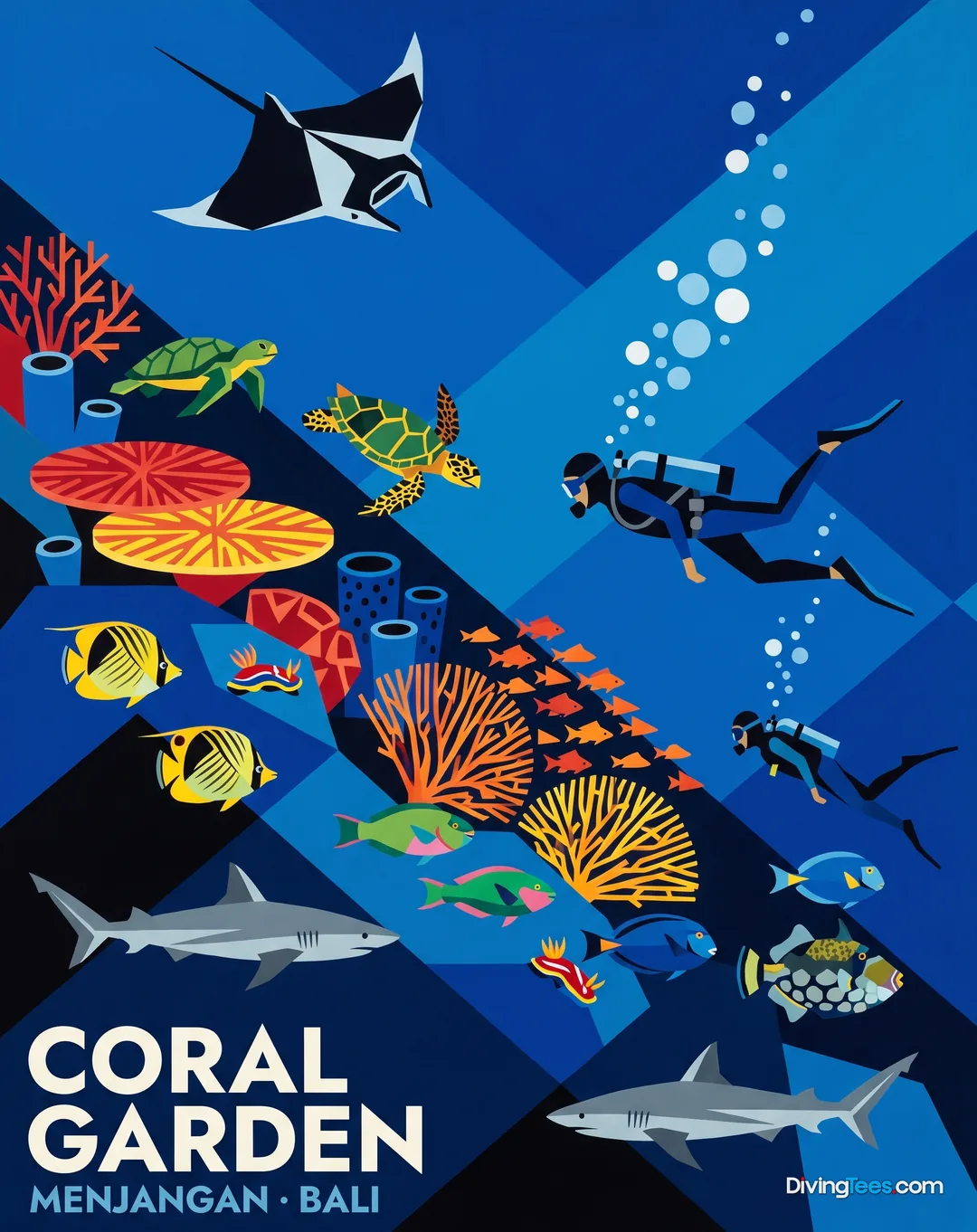
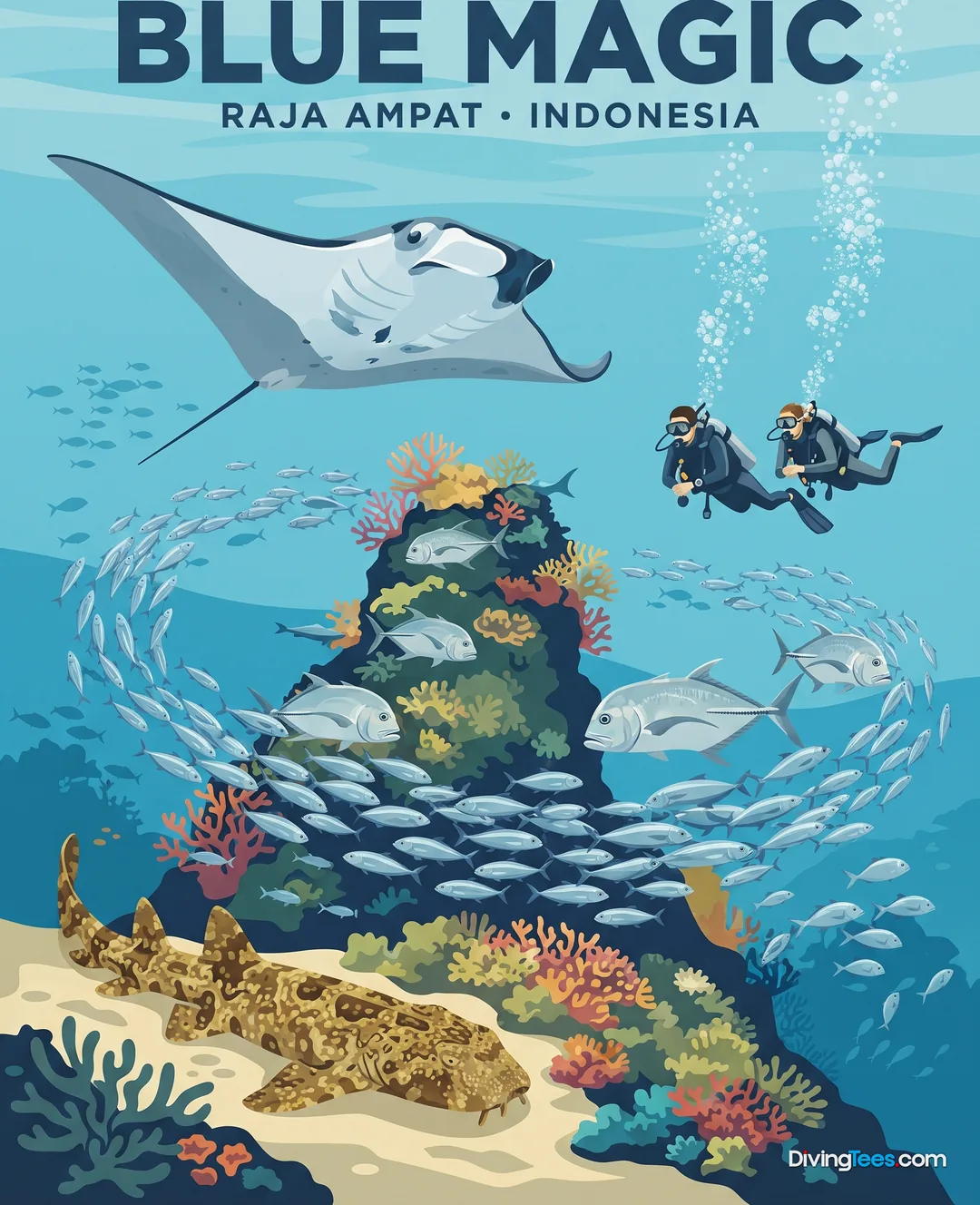
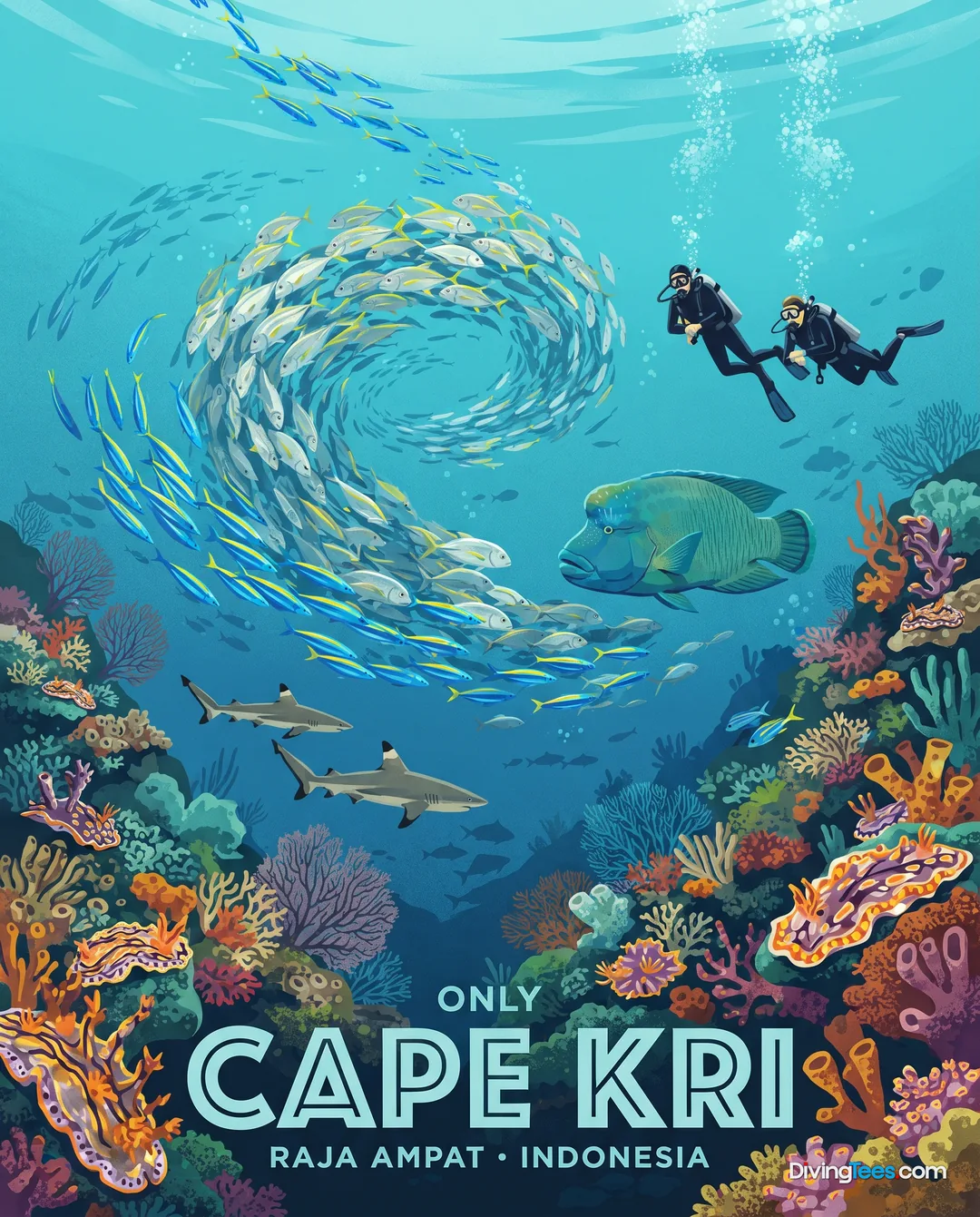
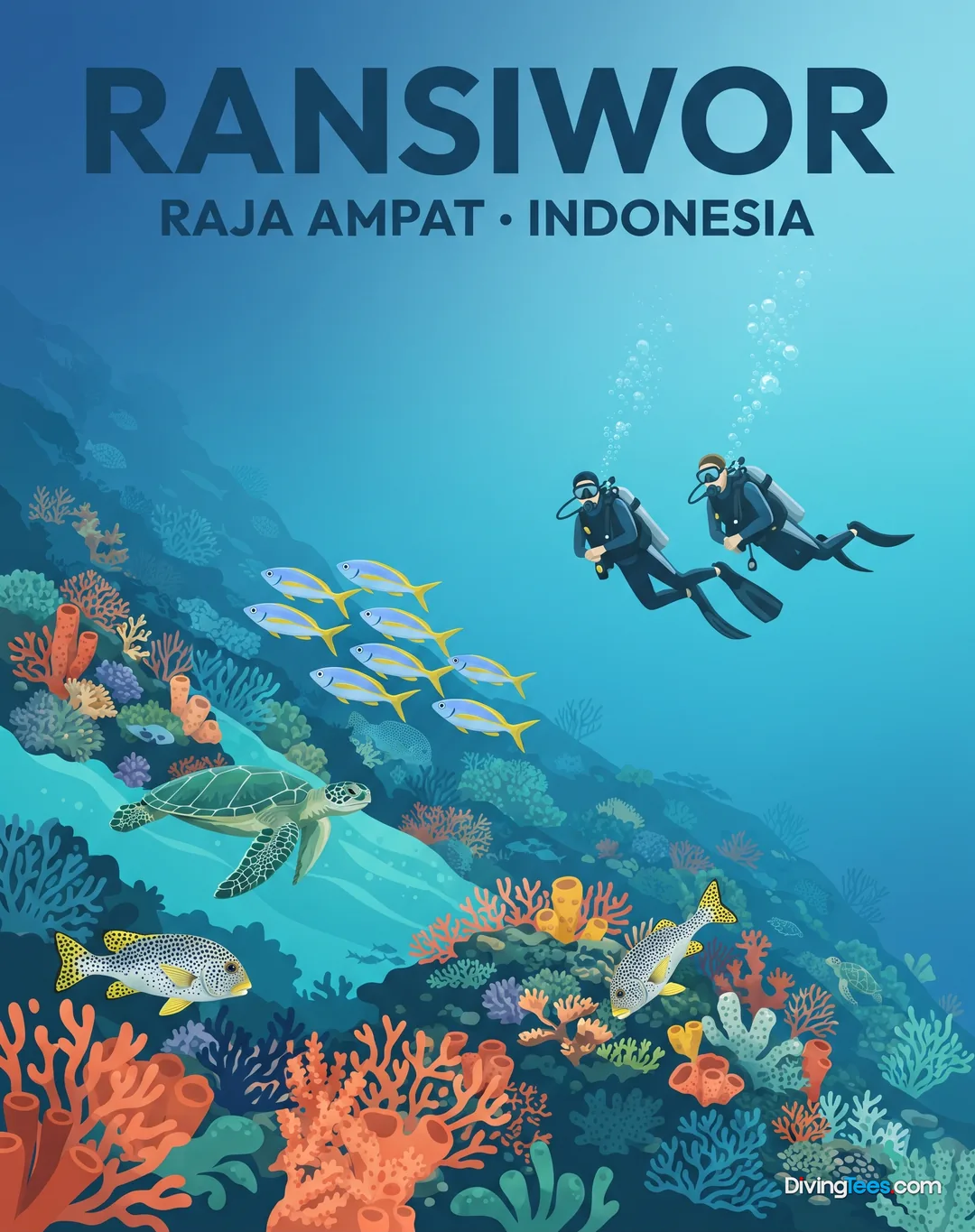
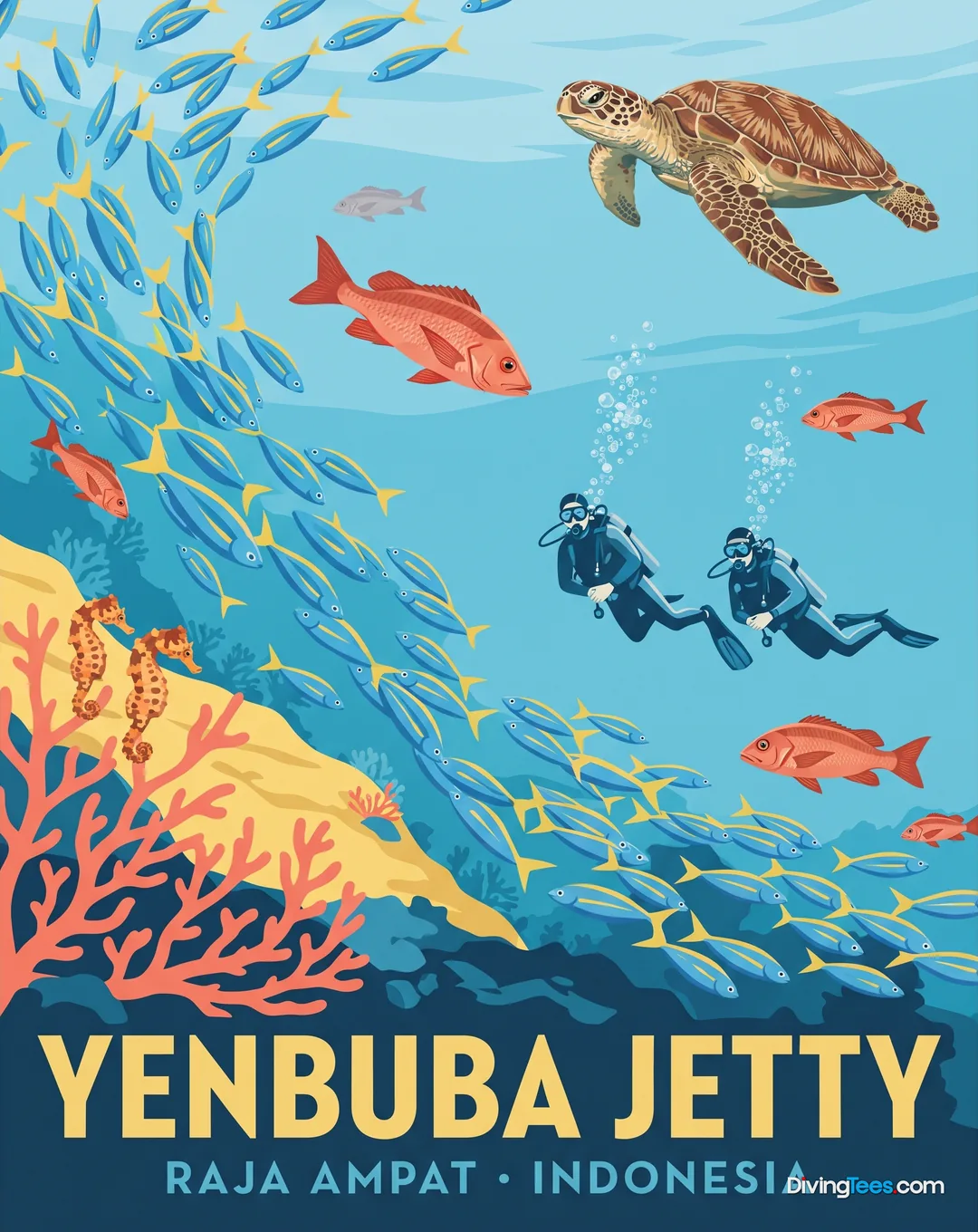
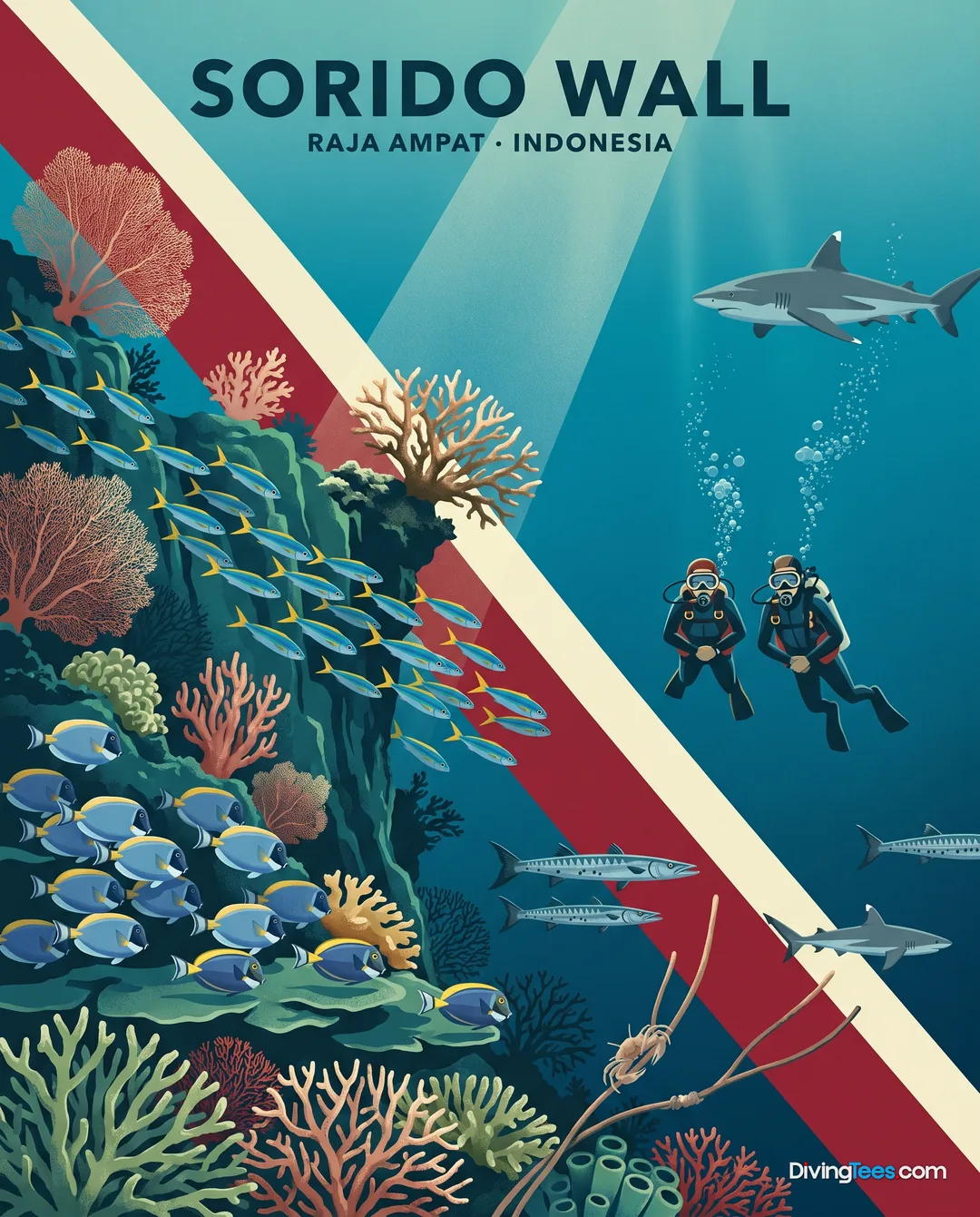
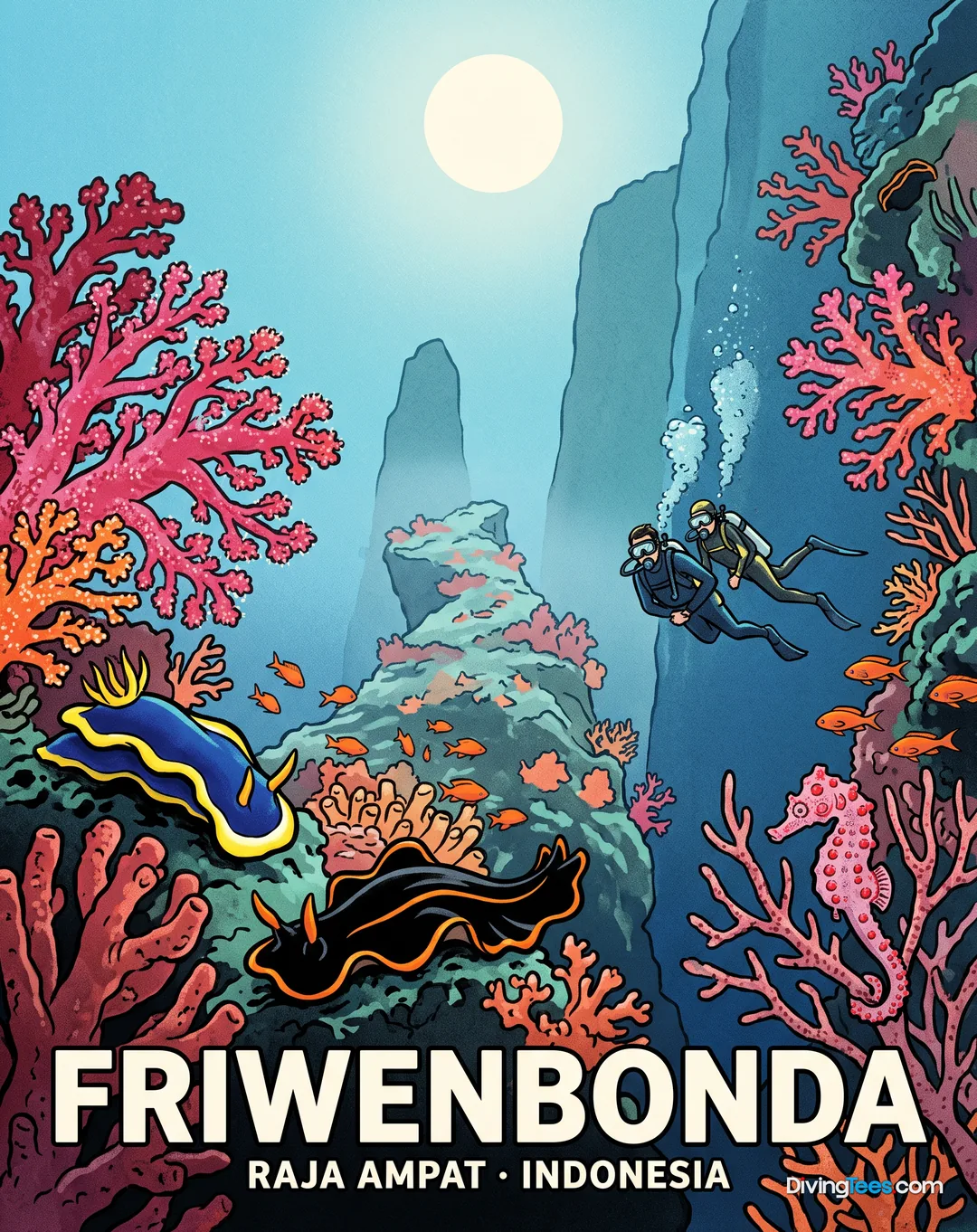
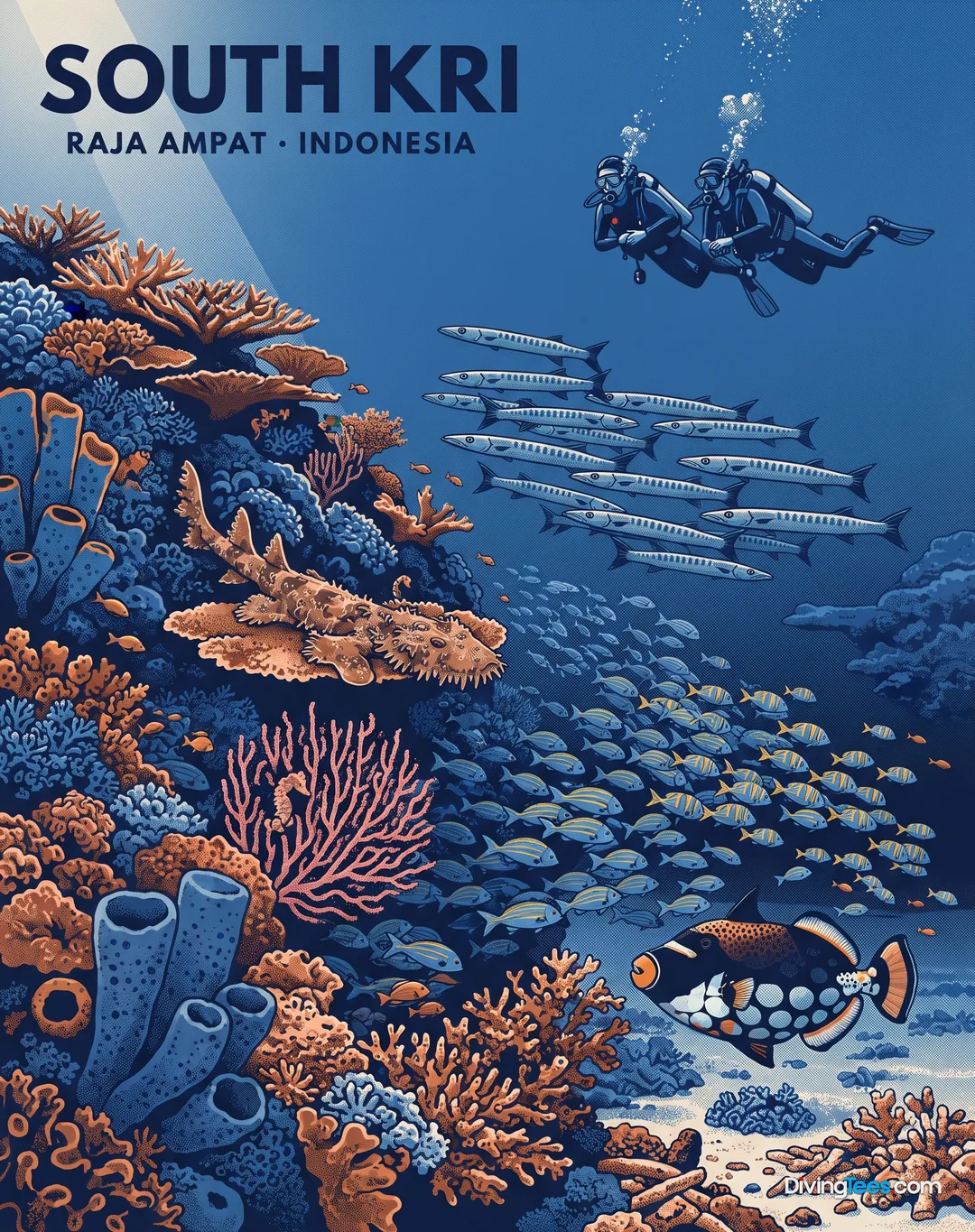
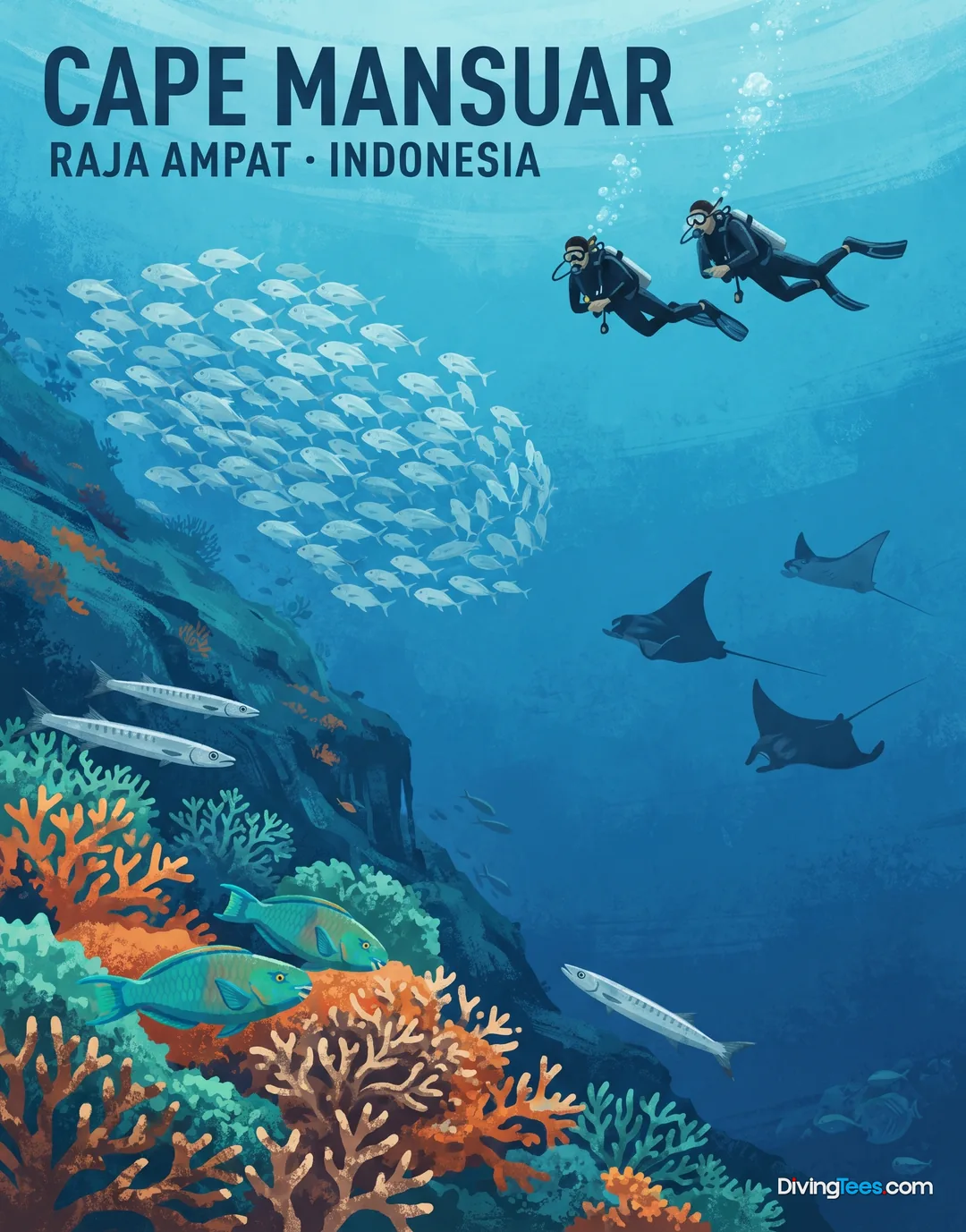
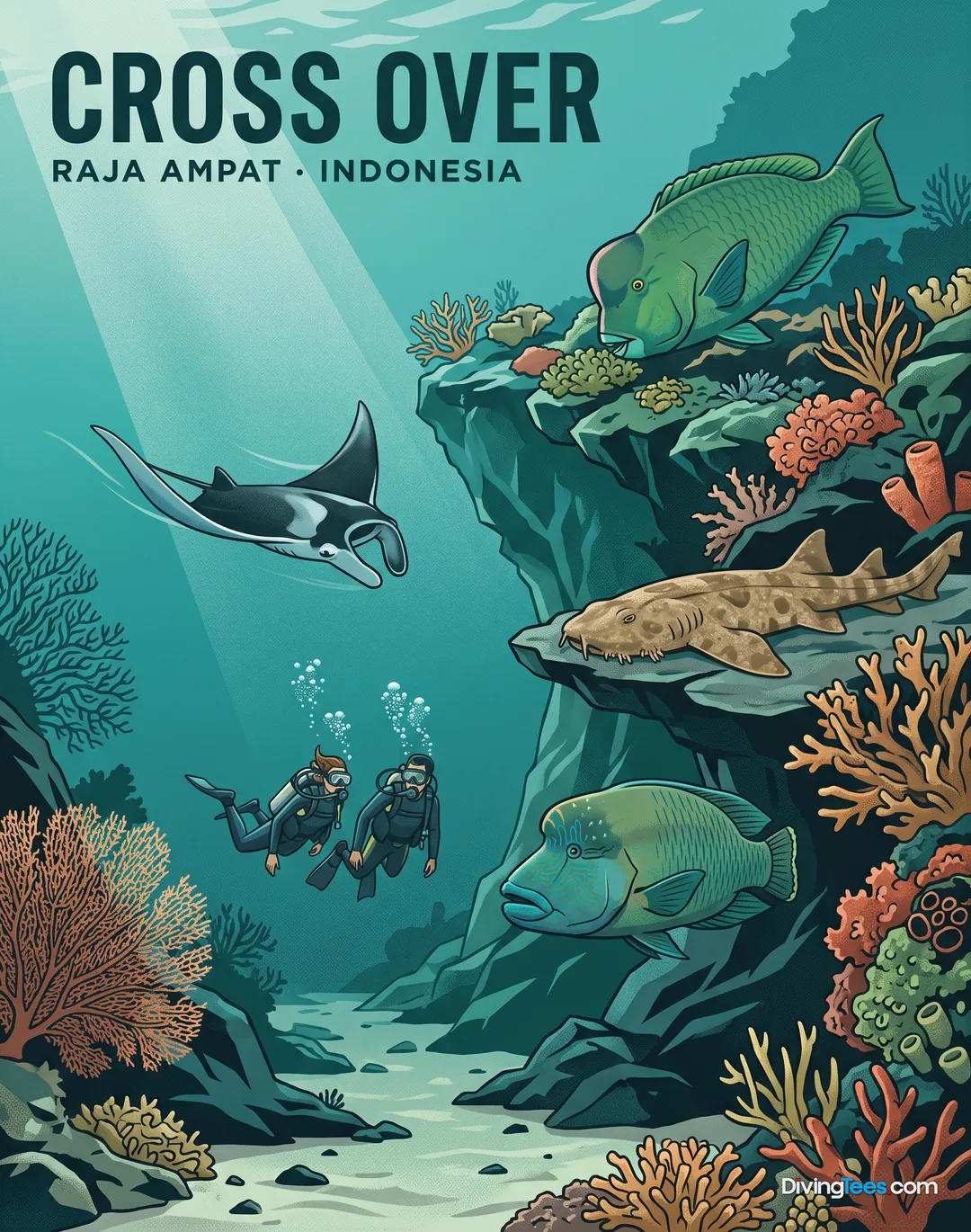
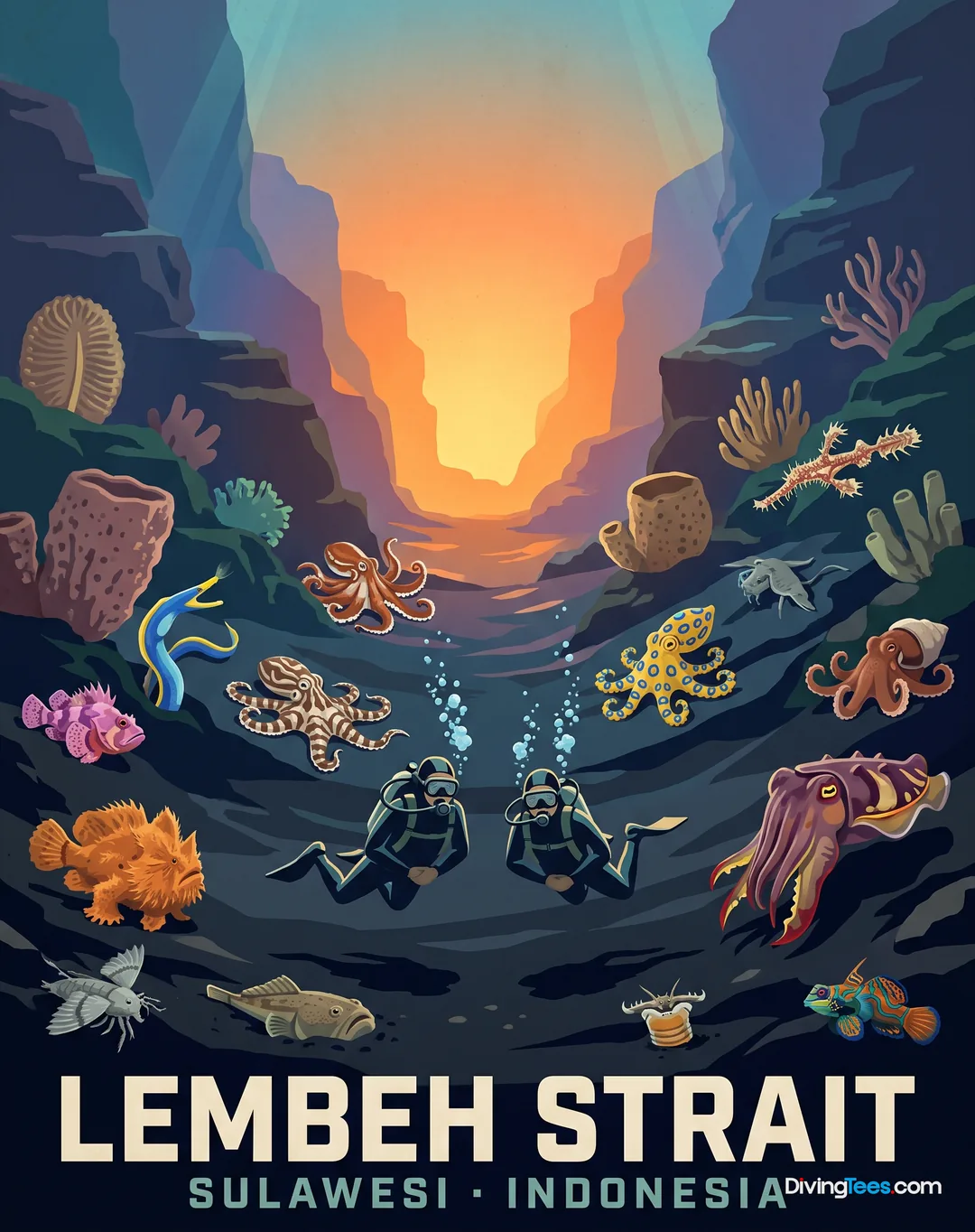
Lady Denok's routes cover several very different Indonesian dive programmes. Komodo runs as 7-day/6-night, 8-day/7-night and longer 9-day/8-night cruises from Labuan Bajo, while Raja Ampat offers South and Central itineraries of 11 days/10 nights and Ultimate itineraries of 13 days/12 nights from Sorong. The Lembeh-to-Raja Ampat crossing runs 13 days/12 nights from Bitung to Sorong. In Raja Ampat, Manta Sandy is a cleaning station where reef manta rays may hover close enough for divers and snorkelers to share the encounter. Mike's Point combines reef overhangs covered in soft coral with a flat plateau where eagle rays can pass, reaching a maximum of -40m. Melissa's Garden is a coral garden of soft coral and staghorn formations, with a maximum of -35m. Blue Magic brings schooling fish, wobbegong sharks and oceanic manta rays. Cape Kri is known for extraordinary fish density; 374 fish species have been observed on one dive. Ransiwor reaches a maximum of -30m and follows gentle slopes with cleaning stations and yellow-back fusiliers. Yenbuba Jetty, also to -30m, starts beneath fish-filled, coral-covered pilings before easing onto a sloping reef. Sorido Wall, Friwenbonda, South Kri, Cape Mansuar and Cross Over add walls, soft-coral colour, macro life and current-driven schools. Lembeh Strait changes the scale completely: shallow black sand and rare macro life reward slow searching rather than speed.
Itineraries, dates and prices
Prices per person. Each month shows its lowest price: click a month, or pick an itinerary.
Next departures · 19 departuresfrom £1,614$2,158€1,928
February 2027
June 2027
July 2027
August 2027
See dates and prices
If you click these links and make a purchase on the partner site, DivingDeal may earn a commission, at no extra cost to you.
Dates and prices taken from Divebooker and liveaboard.com, updated 25 October 2026
What you’ll meet underwater
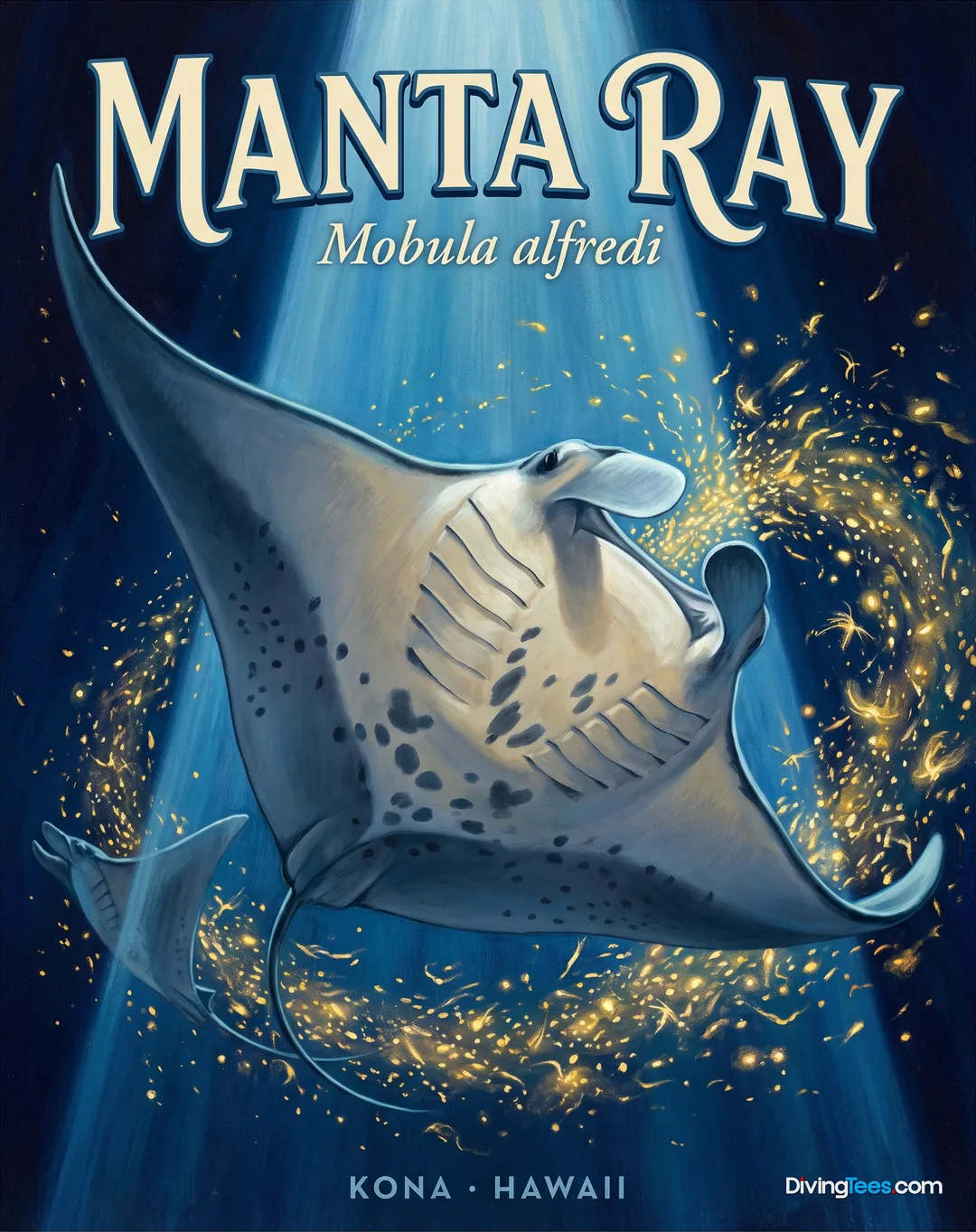
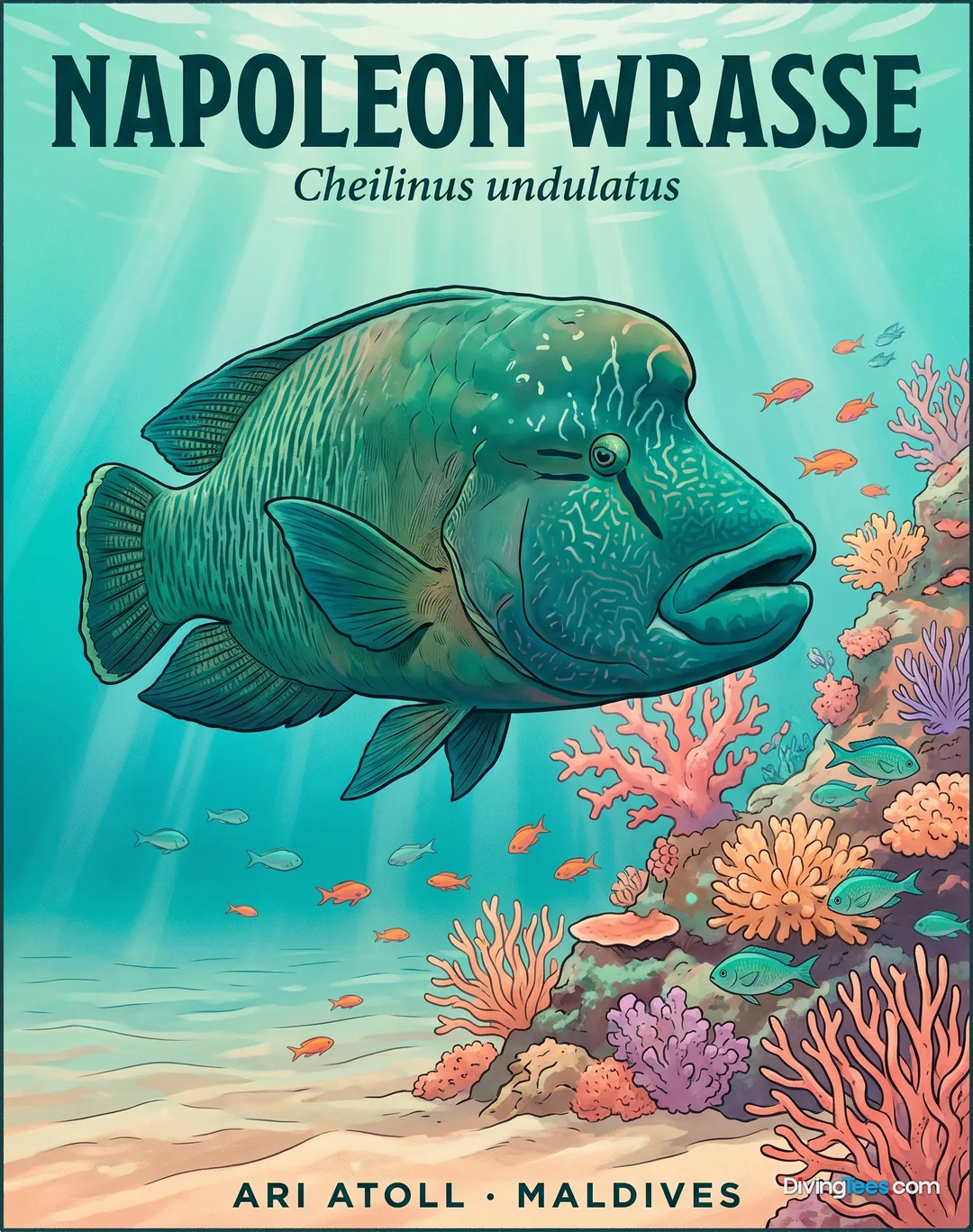
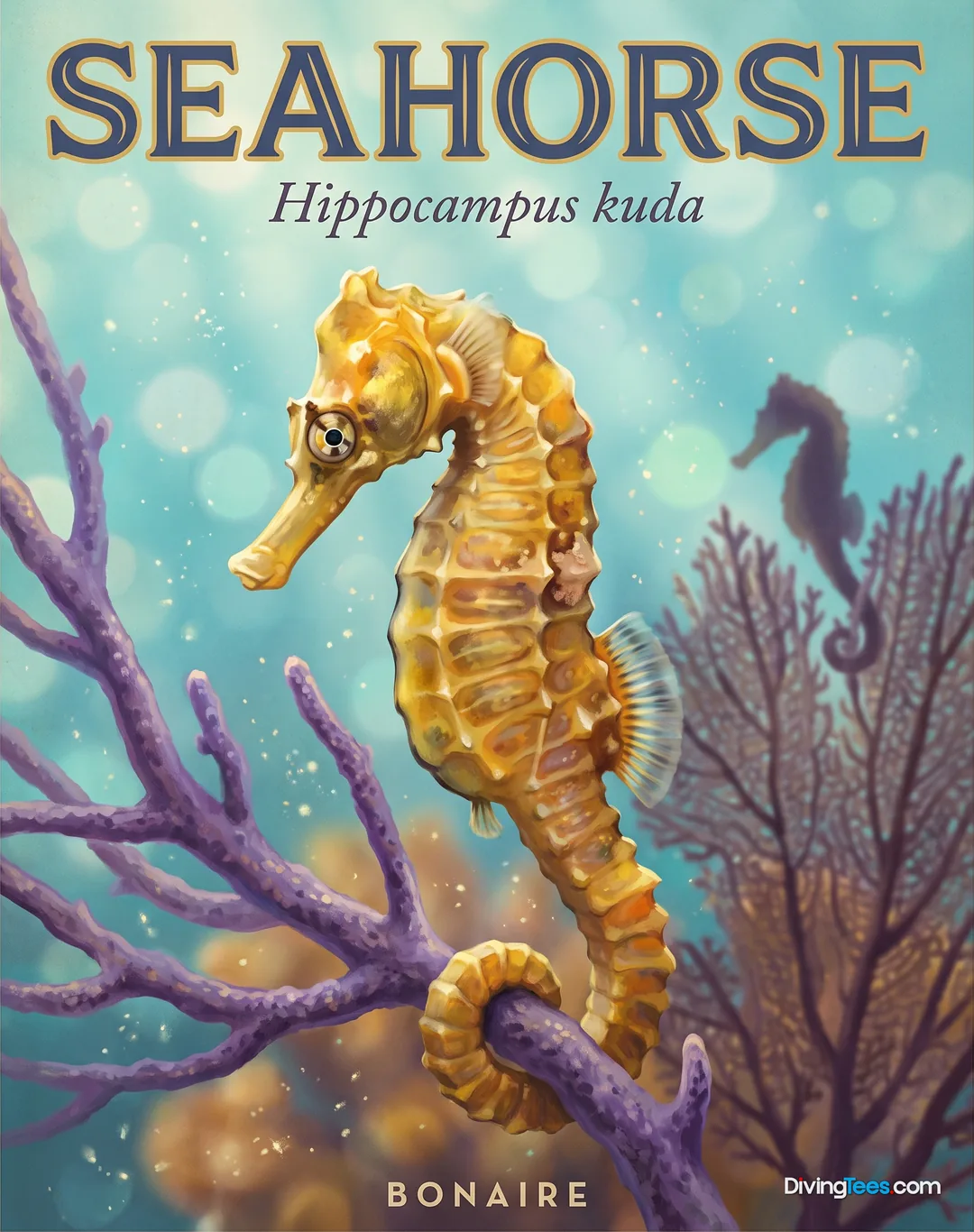
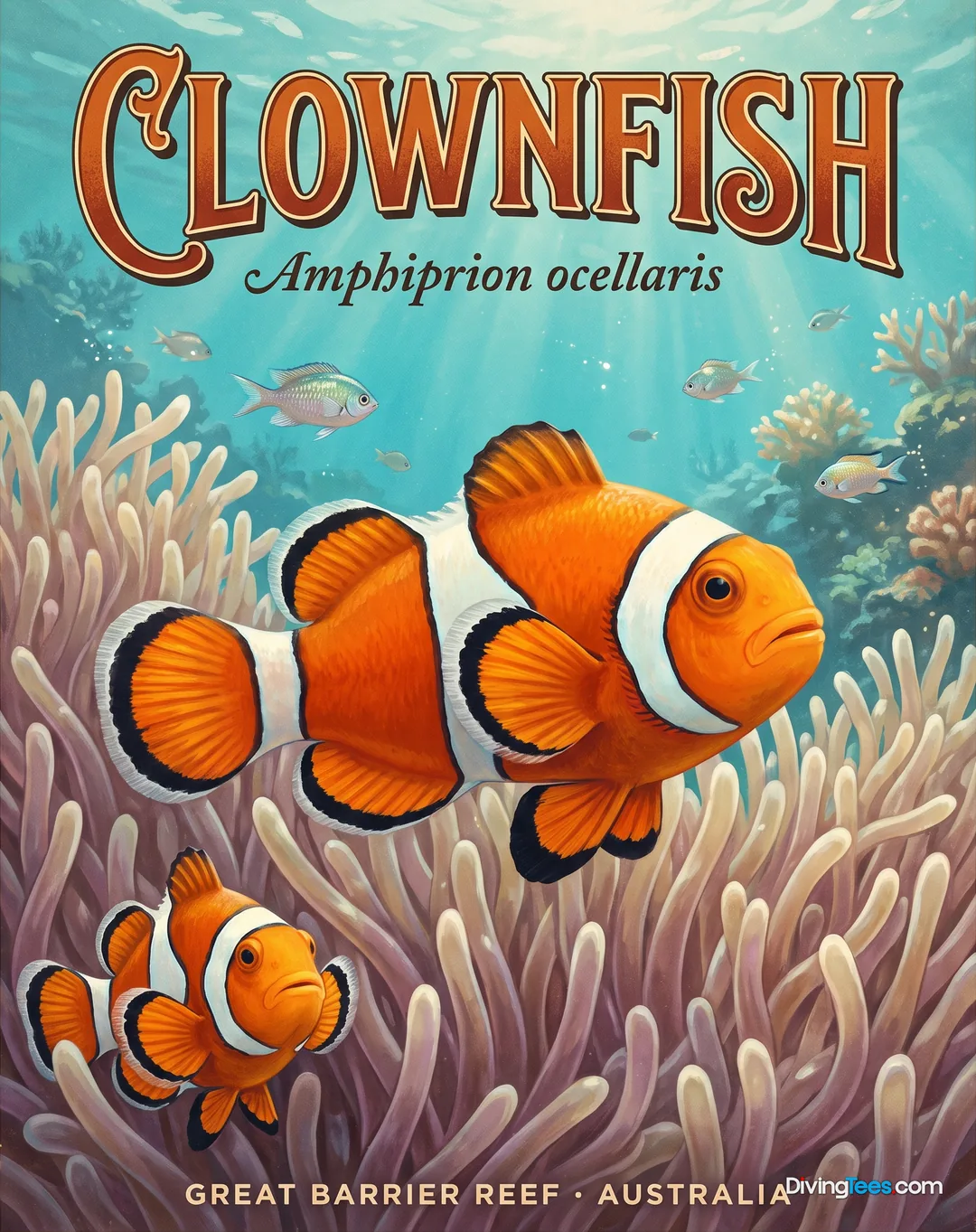
Across the Raja Ampat route, reef sharks, barracuda, fusiliers, nudibranchs, trevally, humphead parrotfish, Napoleon wrasse, turtles, soft corals, sweetlips, eagle rays and pygmy seahorses form the regular cast. The variety is the point: one dive can be spent watching a school hold its shape in current, the next looking for a nudibranch or pygmy seahorse in the coral. Certain sightings give a site its reason for being on the itinerary. Cape Kri is the place for the giant grouper and white-tip reef shark listed only there. Blue Magic is where the route records oceanic white-tip sharks and tuna alongside oceanic manta rays, schooling fish, giant trevally and dogtooth tuna. South Kri offers big-eye trevally, crabs and shrimp in addition to its schools and macro life. Lembeh Strait is the specialist stop for rare muck creatures and includes the seahorse listed only there. At Yenbuba Jetty, dense schools gather around the coral-covered pilings, with anthias and damselfish among the site-specific sightings. Ransiwor is the only listed site for clownfish.

Who puts you in the water
Two dive guides work with the cruise manager and the wider crew. Dive groups are kept small, with one guide for a maximum of four divers, and the check dive is used to place guests in a suitable group. Briefings are delivered before each dive, with the guide setting out the site, conditions and the plan rather than sending everyone into the same piece of water regardless of experience. Guests need at least an Open Water certification. Raja Ampat trips expect at least 30 logged dives, while Komodo trips require at least 50, a sensible distinction for routes where strong currents are part of the attraction. The crew speaks English and Indonesian. The guides are described as professionally trained and knowledgeable at finding both tiny macro life and large pelagics. Safety equipment includes oxygen, first-aid kits, life rafts, life jackets, fire equipment, flares, radar, GPS, sonar and VHF, SSB and satellite communications.
The dive deck and the gear
The dive operation is built around 12-litre aluminium tanks filled with air, with weights and belts included. DIN adapters are available, and 15-litre tanks can be arranged as a paid extra in limited numbers. Nitrox is available for certified divers; the nitrox qualification must be shown to the cruise manager, and nitrox is an extra rather than part of the standard air package. Other diving equipment can be rented if requested in advance. Two Bauer compressors and a separate nitrox compressor are listed for the operation. The dive deck is shaded and includes a dedicated camera room, separate camera rinse facilities and rinse tanks. Entry and recovery are handled from the dive platform, with two Yamaha 40 HP tenders: one Yamaha tender and one Yamaha 40 HP RIB. The boats take divers to and from the sites, allowing groups to surface away from the main vessel and be collected by tender. Oxygen, first-aid kits and marine communications are carried on board.
Between dives
Between dives, Lady Denok gives guests several ways to come down from the last descent. The shaded dive area is the natural place to sit while the tender returns and the next cylinder is prepared; the sun decks and observation deck offer more open air when the weather is kind. The air-conditioned saloon is useful in the middle of the day, especially after a current-swept reef, while the restaurant gives meals their own space rather than turning every surface into a dining table. Sailing time can be spent on the deck, with a book from the small library, music or video in the saloon, or a kayak excursion when the itinerary and conditions allow. Non-divers and snorkelers are welcome, and snorkelers are accompanied by a crew member with a speedboat nearby. The quieter gaps are not empty: they are where the body catches up with the dive plan.
A day on board
A normal diving day starts with a cold breakfast at 6:30 AM, then the first briefing and dive. The warm breakfast follows at 8:30 AM, giving divers something substantial once the first cylinder is empty. The second dive is around 11:00 AM, followed by lunch; the third dive comes at 3:00 PM, with tea or coffee and sweet and savoury snacks afterward. On days with a fourth dive, the programme continues according to the site plan and conditions. A night dive usually begins between 6:00 PM and 7:00 PM, with dinner afterward. The gaps are used for eating, drying gear, moving between islands, sitting in shade or taking a kayak when the itinerary allows. Raja Ampat schedules commonly carry three or four dives on full days, while the first and penultimate days are limited to a maximum of two. The exact sequence changes with tides, weather and the route, but the body quickly understands the pattern: dive, eat, recover, dive again.
What you eat aboard
The galley serves Indonesian and Asian dishes alongside Western food, and the cooking is one of Lady Denok's strongest points. Breakfast begins with a cold selection before the first dive, followed by a warm breakfast at 8:30 AM. Lunch comes after the second dive, and dinner follows the evening dive when one is scheduled. Snacks, fruit, bread, cookies and sweet or savoury treats appear through the day, which is exactly what a diver needs when the interval between meals is measured in cylinders rather than hours. Vegetarian and vegan meals can be arranged, and special dietary needs should be given before boarding. The table is mostly buffet-style, with local food among the familiar options. Indonesian fried rice and noodles have made a particular impression on returning guests, but the kitchen also handles international dishes, barbecue and more formal meals. The point is simple: no one is rationing energy on this boat.
Nights at sea
The seven cabins are divided between a Master Cabin, Twin/Double Cabins and Single Cabins. Each has air conditioning, a private bathroom, hot and cold water, and a large window, so nights are less about tolerating a bunk and more about getting proper rest before the next dive. The cabin is the quiet retreat; the saloon and decks are where most waking hours happen. Towels, soap and shampoo are provided, with beach towels available on deck. A separate camera room keeps charging and camera work out of the sleeping space. The boat also has an air-conditioned saloon for the hours when the heat stays outside. Lady Denok carries up to 12 guests, enough for a social boat but not a crowd spread across a large ship. That matters at night: the space remains shared, familiar and easy to navigate after a long day in the water.
Master Cabin
Twin/Double Cabin
Single Cabin
What to know before boarding
Departures and returns depend on the itinerary: Labuan Bajo is used for Komodo cruises, Sorong for Raja Ampat, and Bitung for the Lembeh-to-Raja Ampat crossing. The crew collects guests from the designated airport or a nearby hotel on embarkation day and transfers them to the harbour; the transfer is included. Arrival details are provided for the relevant departure city, and arriving the night before is the sensible way to protect the first diving day from flight delays.
- Year built
- 2015
- Length
- 28 m
- Beam
- 7 m
- Maximum number of passengers
- 12
- Number of cabins
- 7
- Number of bathrooms
- 8
- Engines
- Yanmar 350 hp
- Cruising speed
- 7 - 8 knots
- Tenders
- 1 Yamaha 40 hp 1 RIB Yamaha 40 hp
- Website
- ladydenokliveaboard.com ↗
Hello, I'm Marina, DivingDeal.com's AI assistant. I answer in detail about hotels, dive centres and liveaboards.
Thinking about the whole trip and the flights? Talk it over with Edith →
Marina is an AI. Some links are affiliate links: DivingDeal may earn a commission, at no extra cost to you. Bookings are made with the partner.