
Tiki Dive
Google 4.9/5 (288 reviews)
5.9 km away as the crow flies
Cavalaire-sur-Mer · France · Mediterranean
Max. depth · 40 mDescend onto the skeletal remains of L'Espingole, a 56-metre torpedo destroyer resting between 34 and 39 metres in Cavalaire Bay.
For subtitles in English: start the video firstthen click the gearat the top right of the video, select “Subtitles/CC”, then “Auto-translate” and choose “English”.
The L'Espingole lies in Cavalaire Bay, the remains of a torpedo destroyer commissioned in 1900 and lost in 1903. This 56-metre vessel initially ran aground on the 'Petit Sec' of Cap Lardier, then broke its tow lines during salvage and sank for good. Today, its metallic structure forms a pronounced silhouette on the seabed, visible as you descend towards its resting place near Pointe Andati. The upright hull creates a distinct profile from the first views, unlike many wrecks that break up flat.
Your dive begins with a descent towards the top section of the wreck, which starts at 34 metres. As you navigate along its length, you'll reach the deeper sections at 39 metres, where the stern or bow might capture your attention first. The L'Espingole's structure is somewhat deconstructed, giving it a skeletal appearance, but key elements like the hull and machine remnants are still identifiable. This profile allows for clear orientation throughout the dive, even for those less familiar with heavy wreckage.
The interior of the L'Espingole offers accessible compartments, allowing you to penetrate some of the vessel's former spaces. Care is needed, as always with wreck penetration, to maintain neutral buoyancy and be aware of potential silt. These protected internal areas, along with the exterior hull, provide a refuge for many resident species. Exploring these sections gives a better sense of scale and the ship's original layout before its sinking.
Below the metal framework, the seabed around the L'Espingole is worth attention. Shells and detritus create micro-habitats. One specific consideration on this wreck is the reported presence of unneutralized shells resting under the sand near the structure. It's a reminder to maintain visual contact and avoid disturbing the bottom, keeping your distance from any loose objects. This reinforces standard wreck diving practice of never touching anything you find.
Life on the wreck is varied, with specific species making it their home. You'll encounter large groupers (Epinephelus marginatus) often patrolling the deeper parts of the wreck or sheltering next to larger plates of metal. Moray eels (Muraena helena) and conger eels (Conger conger) are commonly found in the more constricted openings and crevices, often sharing space. Keep an eye out for lobsters (Homarus gammarus) tucked away in the more sheltered sections, providing a clear sign of the stable habitat the wreck offers.
The L'Espingole also features notable invertebrate life. The wreck is adorned with purple sponges, which add colour to the metal framework and contribute to the site's unique aesthetic. While moving along the wreck, you might also spot various other vertebrates and invertebrates like sars (Diplodus sargus) and sea breams, which move around the structure, using it for shelter and feeding. This density of life contributes to the feeling of exploring a vibrant artificial reef.
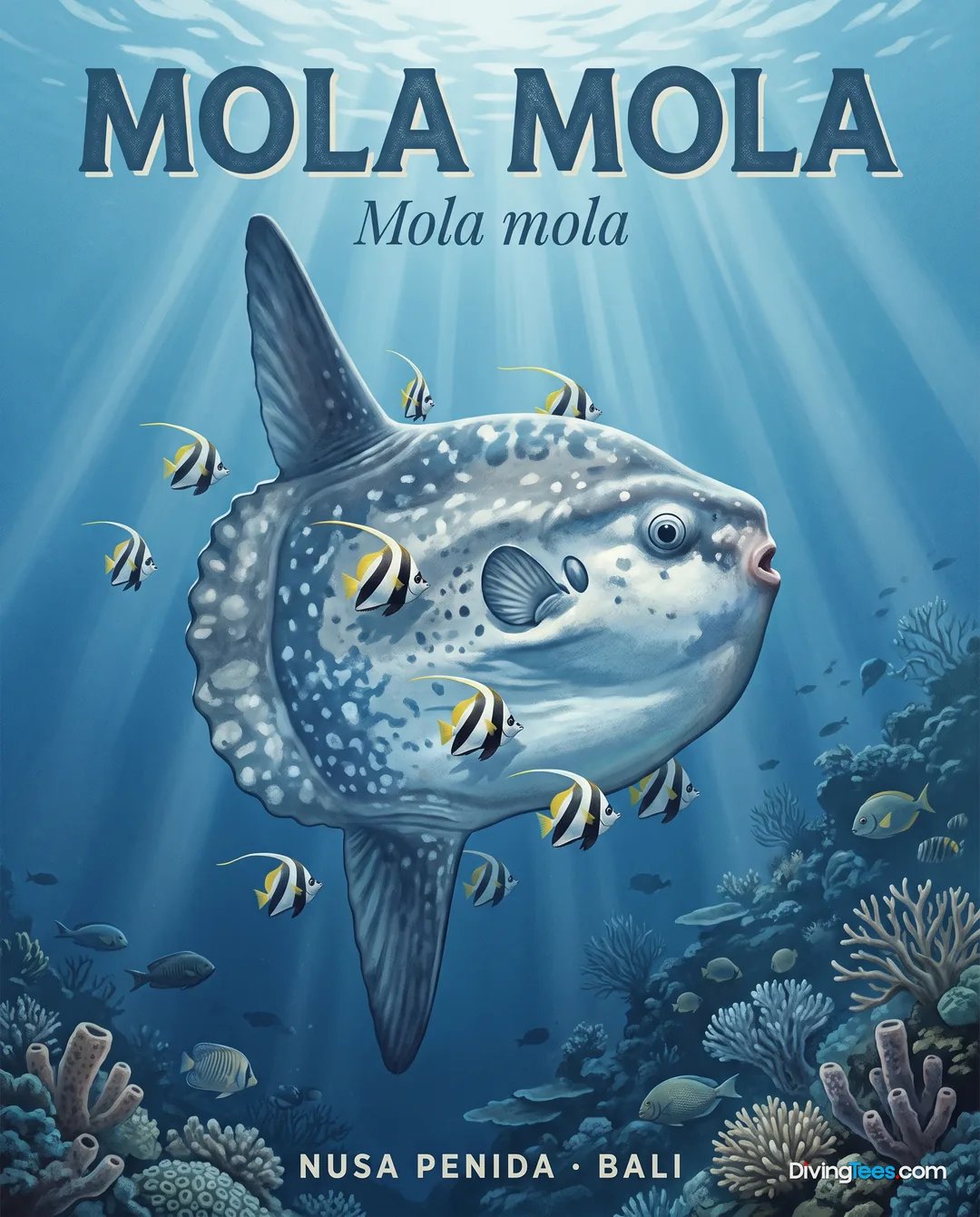
One noteworthy, though less frequent, visitor to the area around the L'Espingole is the sunfish (Mola mola). While not a constant presence, sightings are possible, especially in certain seasons. These large, gentle pelagic fish move with a distinct rhythm, and encountering one adds a different dimension to the dive experience, drawing your eye away from the wreck itself to the open water beyond. This underlines the dynamic nature of marine ecology here, with both resident and transient species.
This is a dive accessible from an experienced Level 2 or PE40 minimum, meaning a comfort level with depths between 34 and 39 metres is essential. The site's depth range requires careful gas management and an understanding of decompression limits. There is generally little current present at the L'Espingole, and it is usually sheltered from easterly winds, making for a relatively calm dive experience. This minimal current makes navigation around the wreck straightforward.
L’Espingole is accessible to experienced Level 2 or PE40 divers. You need to be comfortable diving between 34 and 39 metres, while managing your gas carefully and understanding decompression limits. The accessible compartments and hull sections also require controlled movement, neutral buoyancy, and attention to possible silt during penetration.
L’Espingole ranges from 34 to 40 metres, with the top of the wreck beginning at 34 metres and deeper sections reaching 39 metres. Its depth requires careful gas management and awareness of decompression limits. The wreck’s upright hull and identifiable structure provide clear orientation as you descend and move along it.
L’Espingole generally has little current and is usually sheltered from easterly winds, creating relatively calm conditions. The minimal current makes navigation around the wreck straightforward. Even so, you should maintain neutral buoyancy, avoid disturbing the seabed, and keep your distance from loose objects beneath the metal structure.
At L’Espingole, you can explore a 56-metre torpedo destroyer wreck, including accessible compartments, hull sections, and machine remnants. Groupers, moray eels, conger eels, lobsters, purple sponges, sars, and sea breams live around the structure. Sunfish may also visit, while shells and detritus create habitats around the seabed.