
Villa Adi
★★★★
★ 9.1/10 (666 reviews)
3.2 km away as the crow flies
Dive centre · Amed · Indonesia
5.046 Google reviewsTechnical diving and rebreather training meet world-class macro sites in the heart of Amed.
For subtitles in English: start the video firstthen click the gearat the top right of the video, select “Subtitles/CC”, then “Auto-translate” and choose “English”.
Located in the coastal village of Amed, Prana Dive serves as a gateway to some of Bali's most diverse underwater environments. The centre is positioned perfectly to access the renowned sites of both Amed and Tulamben, with many of the area's most famous landmarks reachable within a short drive.
Whether you are looking for a relaxed shore dive in Jemeluk Bay or a boat trip to a deeper wreck, the centre provides a structured and professional approach. The location allows for easy exploration of the local reefs, the famous Tulamben drop-offs, and the macro-heavy sites that make this stretch of coastline so significant.
The team at Prana Dive operates with a strict focus on safety, ensuring that every excursion is backed by professional oversight. They carry a comprehensive first aid kit and an automated external defibrillator (AED) on all dives to manage any emergencies.
Instruction is delivered through RAID International, a training agency known for its high standards and technical depth. To ensure a personalised experience and attentive guidance, the centre limits its groups to a maximum of four divers per guide. This ratio allows for more thorough training and more intimate exploration of the sites.
The training programme is extensive, covering the full spectrum of RAID certifications. Beginners can start with Try Dives, Junior Scuba Diver, or Open Water 20 courses, progressing through to Scuba Diver and Advanced 35.
For those looking to specialise or move into professional diving, the centre offers Performance Diver, Explorer 30, and Divemaster training. The facility is also equipped to teach technical disciplines, including Sidemount, Technical Open Circuit, and Closed Circuit Rebreather courses.
The centre utilises boats for excursions to more distant sites, with a capacity of two to three people per boat. These trips allow you to reach the deeper wrecks and reefs surrounding the Amed and Tulamben areas. For those looking to dive the local sites, boat trips are available for a daily charge per person.
Prana Dive provides full equipment hire for those travelling without their own kit. For those requiring specific breathing gases, Nitrox is available upon request with advance notice.
The centre is well-equipped for both recreational and technical divers, offering support for Closed Circuit Rebreather (CCR) operations. Safety remains central to their shore-based setup, with all necessary medical equipment kept on hand.
USAT Liberty Wreck is a world-famous wreck site that is accessible to all levels, including those on a discovery dive. It offers a unique opportunity to explore a large structure that has become a thriving artificial reef.
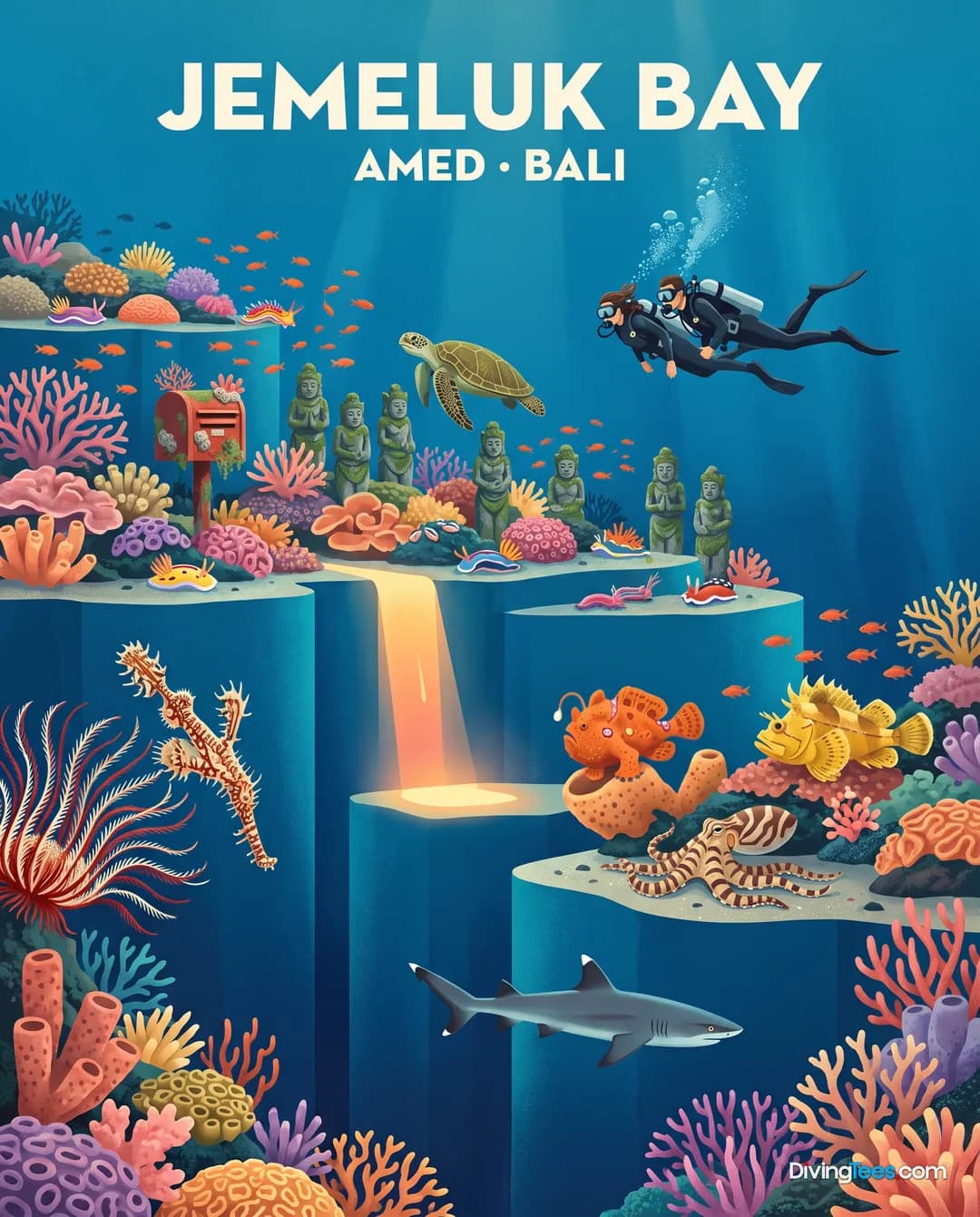
Jemeluk Bay provides two distinct experiences within a single, well-protected area. You can choose between the macro-rich environments on the left or the wide-angle opportunities on the right, including the Jemeluk Coral Garden and the Jemeluk Wall.
Seraya and Tukad Abu are globally recognised sites for macro enthusiasts. These areas are densely populated with small, specialised creatures, making them essential visits for anyone interested in underwater photography or biological diversity.
Gili Selang is a site reserved for high-level divers. The conditions here require more experience, but the reward is a unique and challenging environment.
Boga Wreck in Kubu offers a significant wreck diving experience for those looking to explore deeper structures away from the immediate Amed coastline.
And some of the dive sites the centre runs.
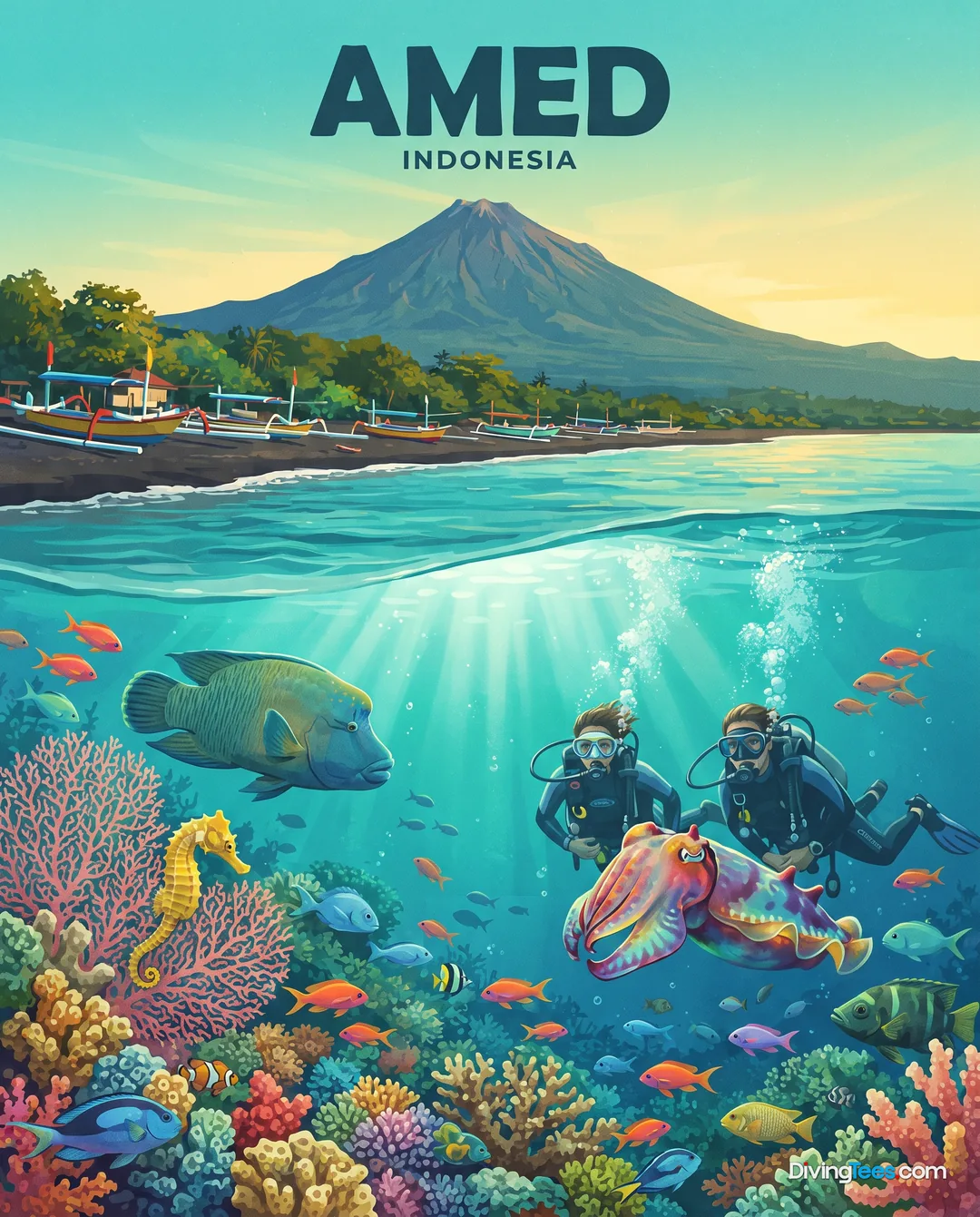
The reefs around Amed are a vibrant tapestry of hard coral (Scleractinia), soft corals (Alcyonacea), and various sponges (Porifera). You will find a healthy ecosystem supported by sea fans (Gorgoniidae) and diverse gorgonians that provide structure for the local fish populations.
Large pelagic species and reef residents are frequently encountered, including various sharks such as Blacktip reef shark (Carcharhinus melanopterus), Whitetip reef shark (Triaenodon obesus), and larger occasional grey sharks. You may also see schools of Jack (Carangidae), Tuna (Thunnus), and various snapper and grouper (Epinephelus) species patrolling the walls and wrecks.
The macro life in this region is exceptional. Divers can find a vast array of specialised creatures including Nudibranch (Chromodoris willani), Ornate ghost pipefish (Solenostomus paradoxus), and various species of ghost pipefish (Solenostomidae). Look closely for the Pygmy seahorse (Hippocampus bargibanti), Seahorse (Hippocampus kuda), and various shrimp and crabs (Brachyura).
Other notable small residents include the mimic octopus, various species of octopus, and the Blue-ringed octopus. The seabed is also home to garden eels (Gorgasia), ribbon eels, and various species of scorpionfish (Scorpaenidae) and stonefish (Synanceia).
Diving in this area can be conducted from the shore or by boat. The proximity of sites like Jemeluk Bay to the centre means shore entries are a common and easy way to access the reef flats and walls.
While many sites are protected, divers should be prepared for varying conditions depending on the specific location, such as the deeper drop-offs or the more exposed wreck sites.
Hello, I'm Marina, DivingDeal.com's AI assistant. I answer in detail about hotels, dive centres and liveaboards.

Thinking about the whole trip and the flights? Talk it over with Edith →
Marina is an AI. Some links are affiliate links: DivingDeal may earn a commission, at no extra cost to you. Bookings are made with the partner.