Liveaboards · Indonesia
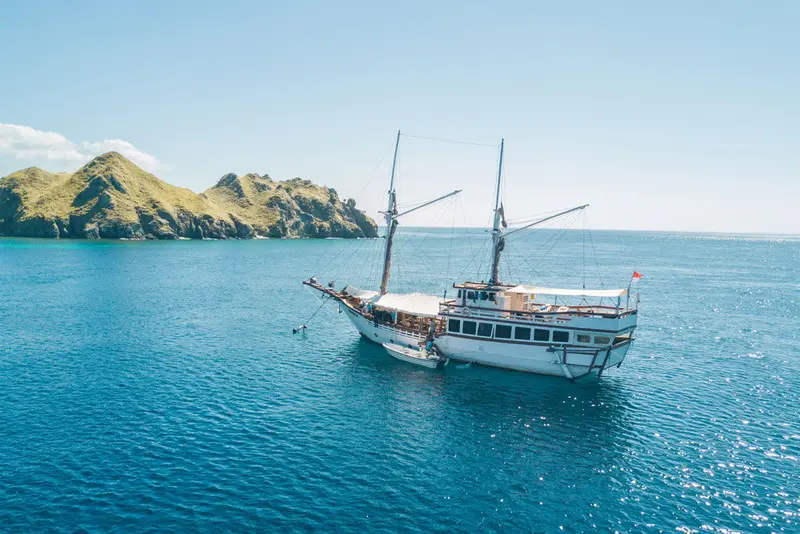
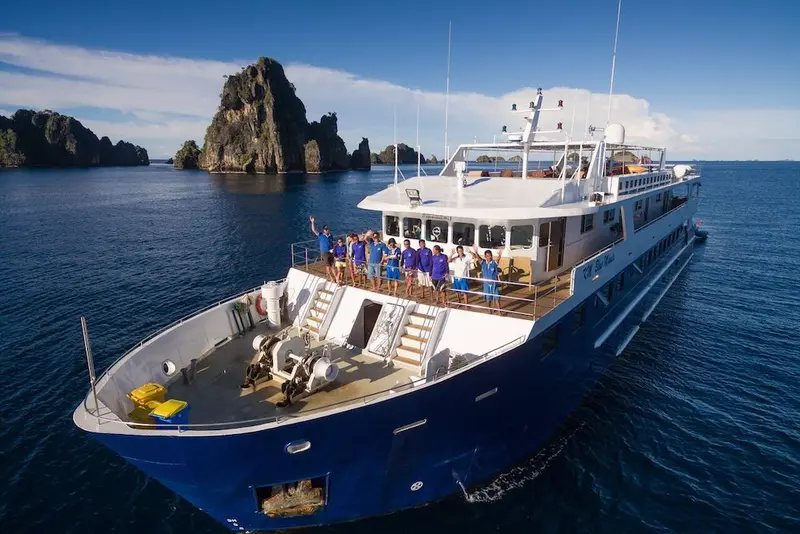
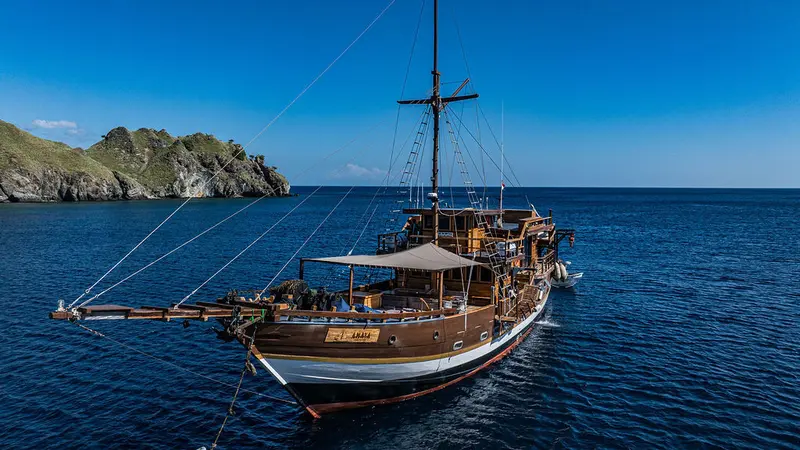
Komodo Aggressor — a compact, dive-first yacht with a strong crew
Deal on this boat
Per person
£2,481$3,316€2,963 £1,860$2,487€2,222
Discount calculated by us, against the boat's usual price for a trip of the same length.
See all discounted dates ↓What makes this boat unique
- The yacht carries up to 16 divers in eight air-conditioned cabins, each with a private bathroom.
- The programme can reach up to four dives a day, including night dives.
- Two twin-engine tenders handle the diving, with staff in the water on direct yacht dives and accompanying tender groups on selected sites.
- A dedicated camera room gives photographers a proper place to work between dives.
- Food and crew service are the boat's strongest points, while the diving scores slightly lower than the onboard experience.
For subtitles in English: start the video firstthen click the gearat the top right of the video, select “Subtitles/CC”, then “Auto-translate” and choose “English”.
The invitation
The Komodo Aggressor is for divers who want a full week built around the water rather than a resort stay with occasional boat trips. Its 16-guest capacity keeps the group small enough for the crew to know who is entering which tender, while the schedule can reach four dives a day, including at night. The reason to choose it is the combination: a comfortable yacht, serious access to Indonesian sites, and a crew whose service and cooking are consistently stronger than the diving score alone suggests. This is a good fit for a group that values reliable handling, good meals and a well-run routine, then wants to spend the available hours looking for animals rather than moving between hotels.
Boarding
From the dock, the Komodo Aggressor presents as a working dive yacht rather than a floating resort with a dive programme attached. Boarding leads quickly to the lower-deck cabins, the saloon and the route to the tenders, so the boat's layout keeps the practical parts of the trip close at hand. The enclosed saloon is air-conditioned; outside, the terrace gives the group somewhere to dry off, talk and watch the islands pass. With only 16 guests, the boat has a more personal scale than a large cruise vessel, but it is still big enough to separate sleeping, dining and dive spaces. English is the working language on board, with local and international crew sharing the operation.
The atmosphere on board
The boat's atmosphere is shaped less by formal luxury than by a crew that keeps the domestic side running without making it visible. The crew speaks English and combines local and international staff, so the working relationship stays clear during briefings, meals and tender movements. Passenger experience points to excellent crew service and food, with the yacht itself and overall value also rating strongly; diving is the one area that scores lower, which is a fair reminder that the route remains dependent on conditions and site choice. Evenings can hold a night dive, a fish-identification presentation, a film, games or shared footage from the week. After several days, the group tends to meet again around the same subjects: what moved in the current, what appeared after dark and which camera caught it.
The sites you’ll dive
The recorded departures range from eight days and seven nights on North Komodo to 10-day Alor trips, 12-day Banda Sea crossings from Alor to Ambon, and 12-day Sulawesi routes from Lembeh to Kendari. The sites therefore change with the itinerary. Lembeh Strait and Lembeh Resort House Reef work black-sand slopes and shallow reef for nudibranchs, frogfish, pipefish and other macro life. South Kri combines macro life with schooling fish and a drift. In Alor, Crucifixion and Bama Wall are reef slopes and walls dropping to 40 metres, while Wolang Cavern reaches 40 metres through grotto systems before opening onto a soft-coral wall. Cathedral has a swim-through at 25 to 30 metres; Andy’s bus stop reaches 25 metres; Clown Valley reaches 25 metres; Alami House Reef reaches 18 metres. Yellow Corner is a high-current alley for pelagics, while Pantar Strait reaches 40 metres around coral walls, volcanic cliffs and seamounts. Kalabahi Bay adds black-and-white sand macro diving.
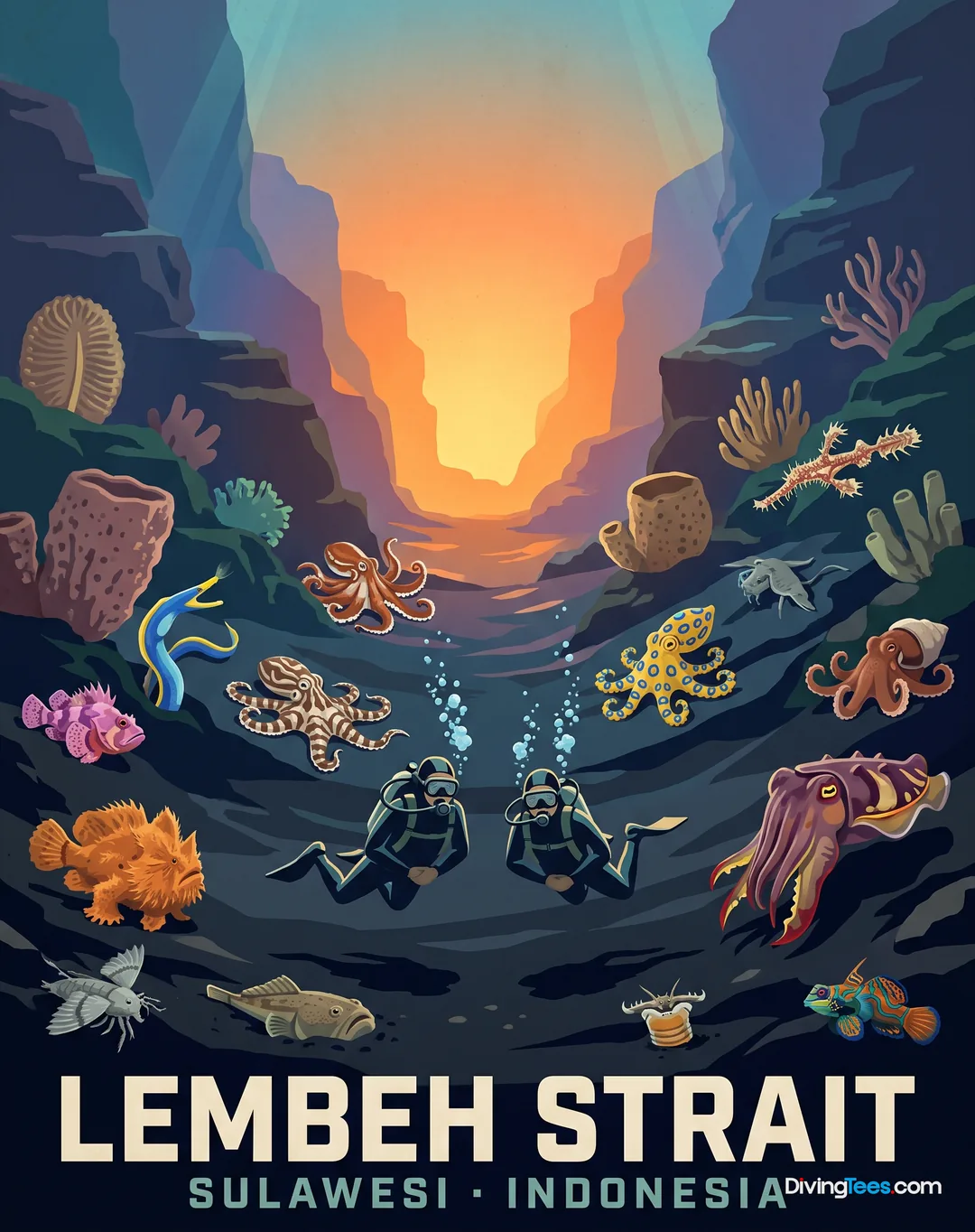
Lembeh Strait →
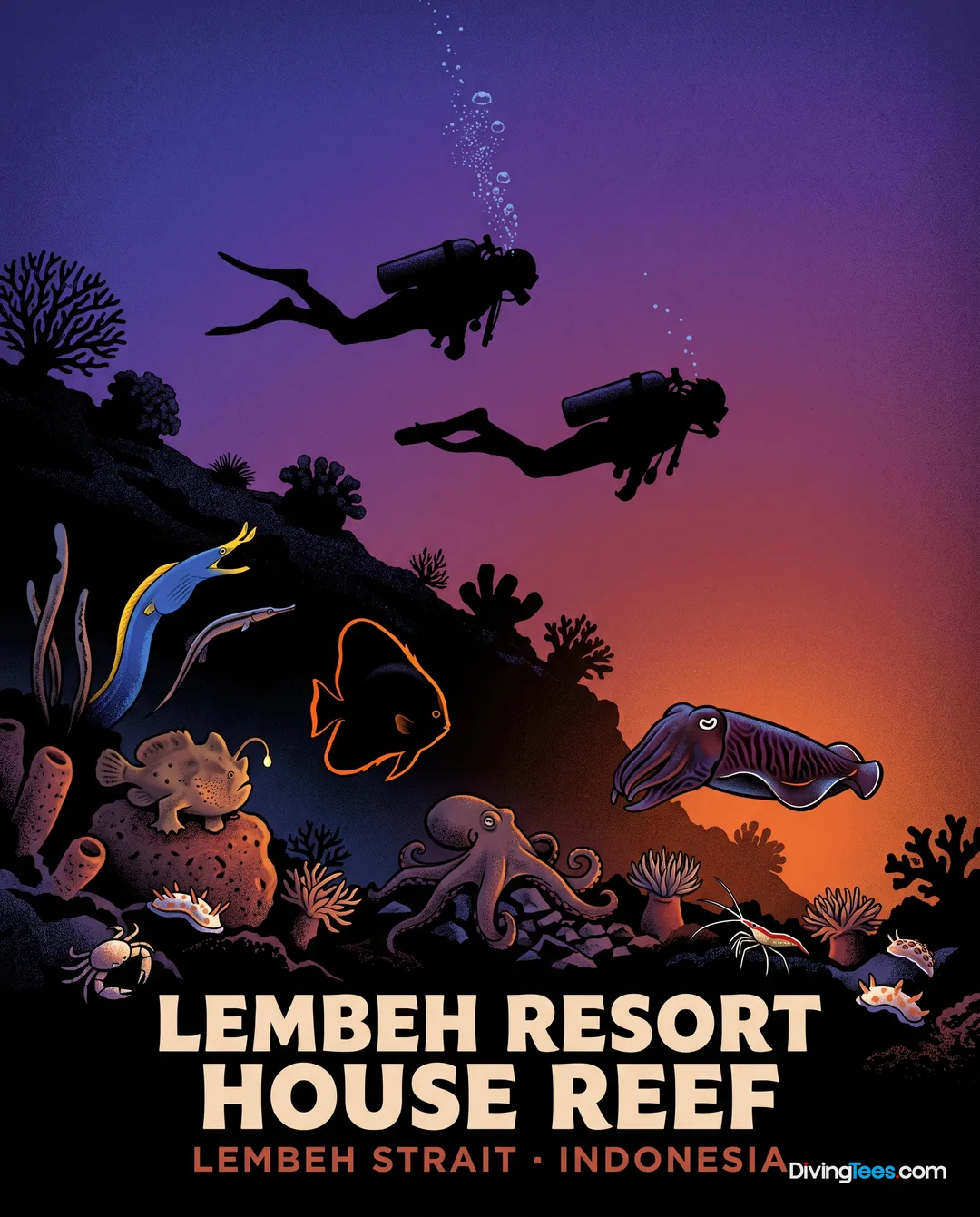
Lembeh Resort House Reef →
Max. depth · 25 m
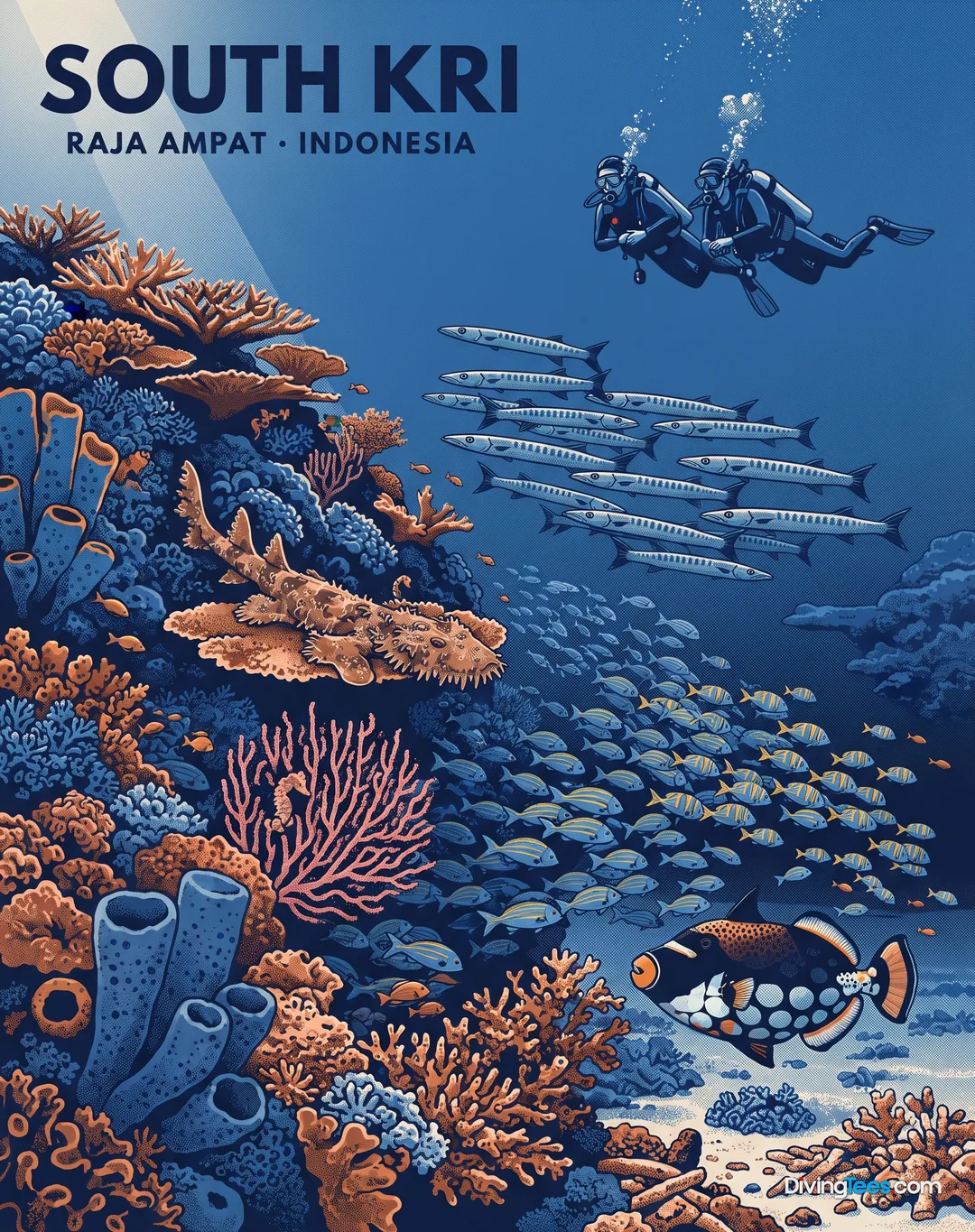
South Kri →
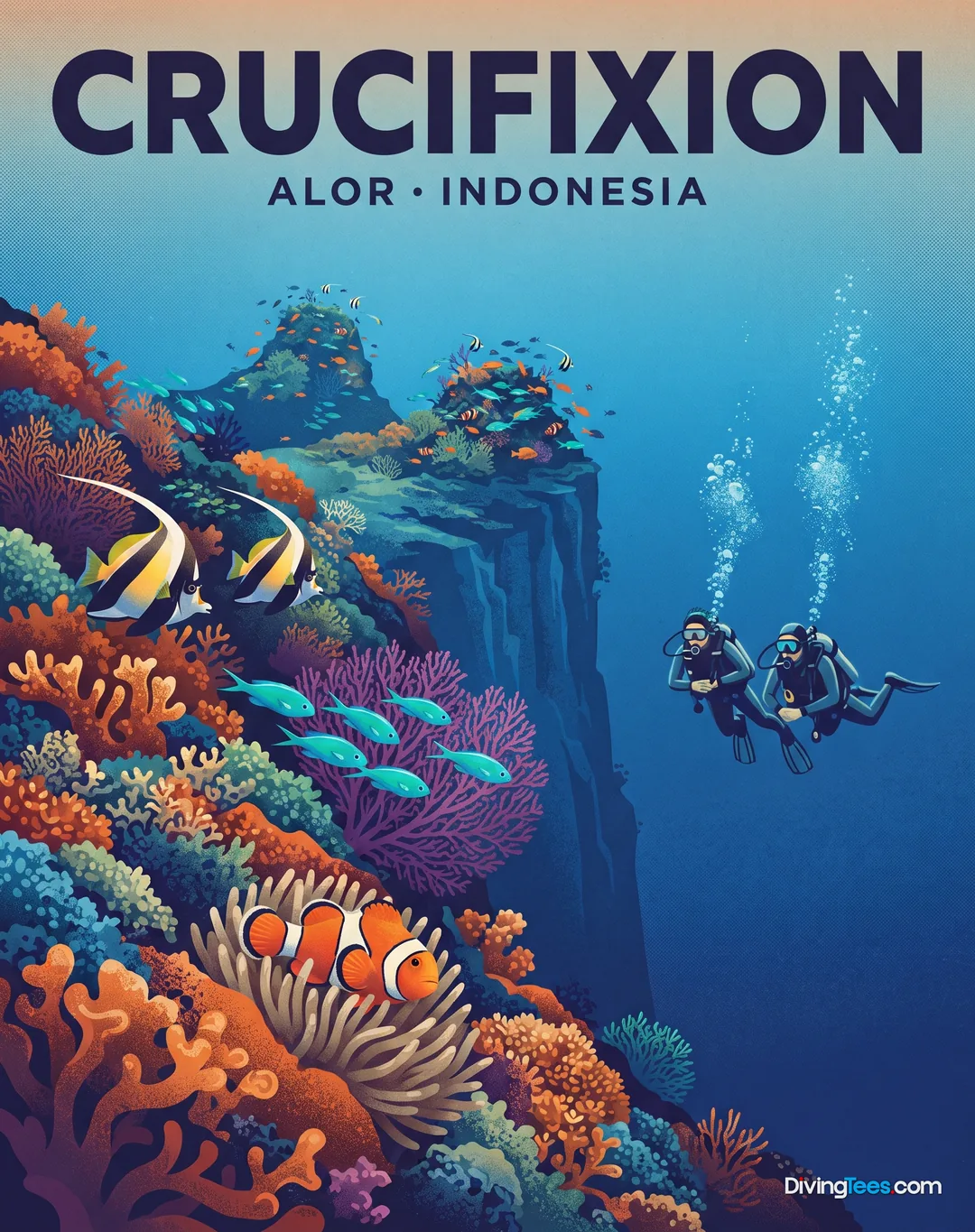
Crucifixion →
Max. depth · 40 m
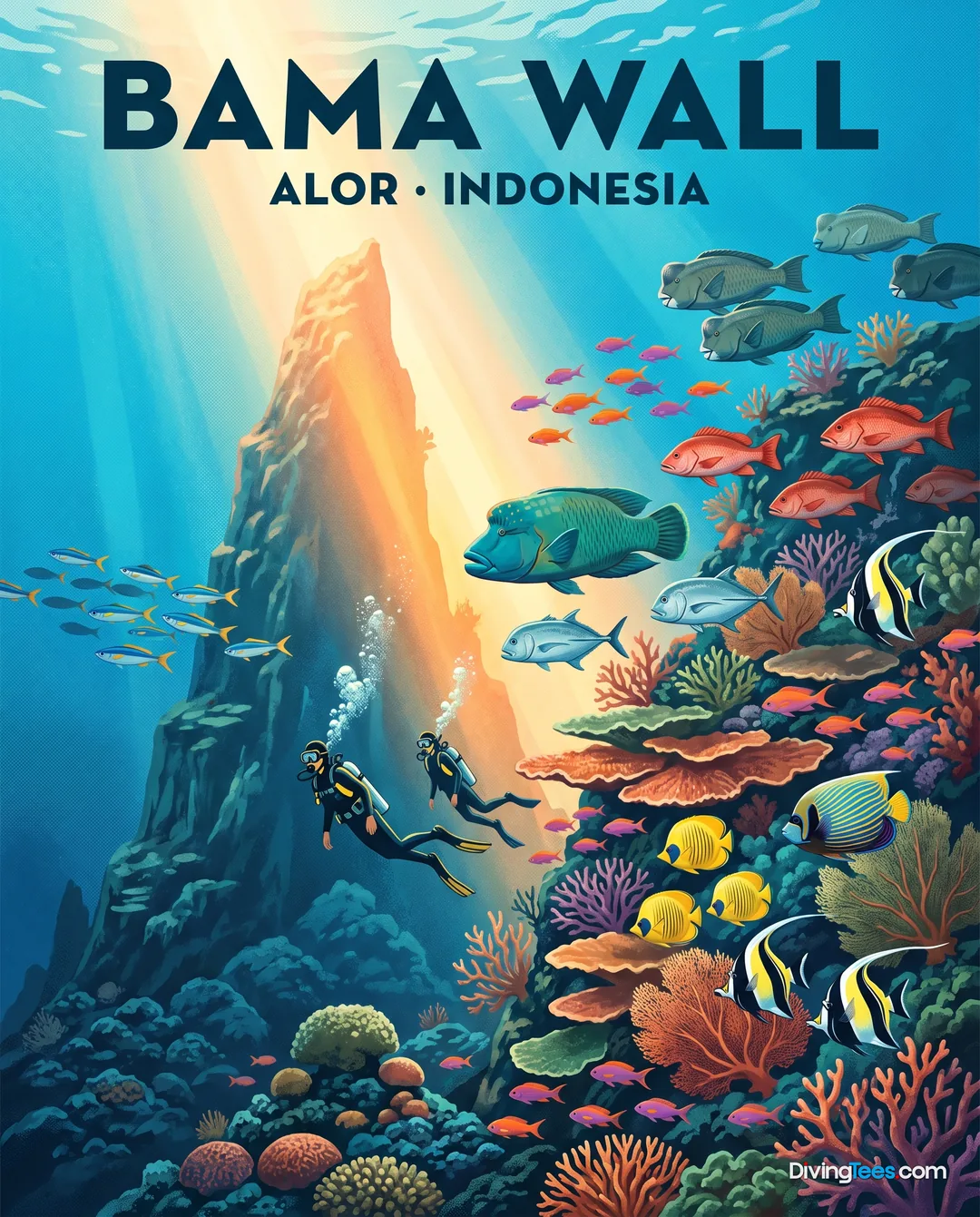
Bama Wall →
Max. depth · 40 m
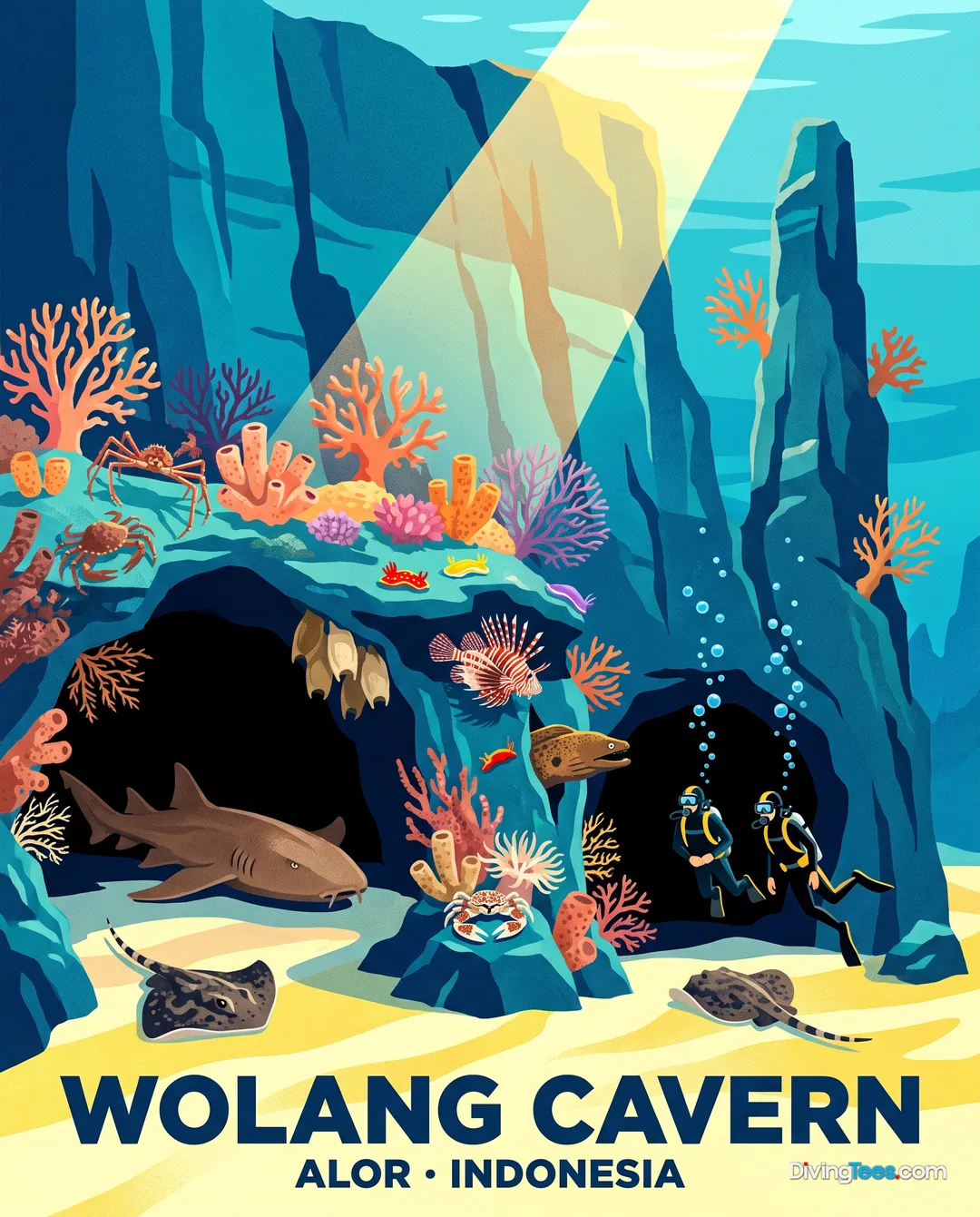
Wolang Cavern →
Max. depth · 40 m
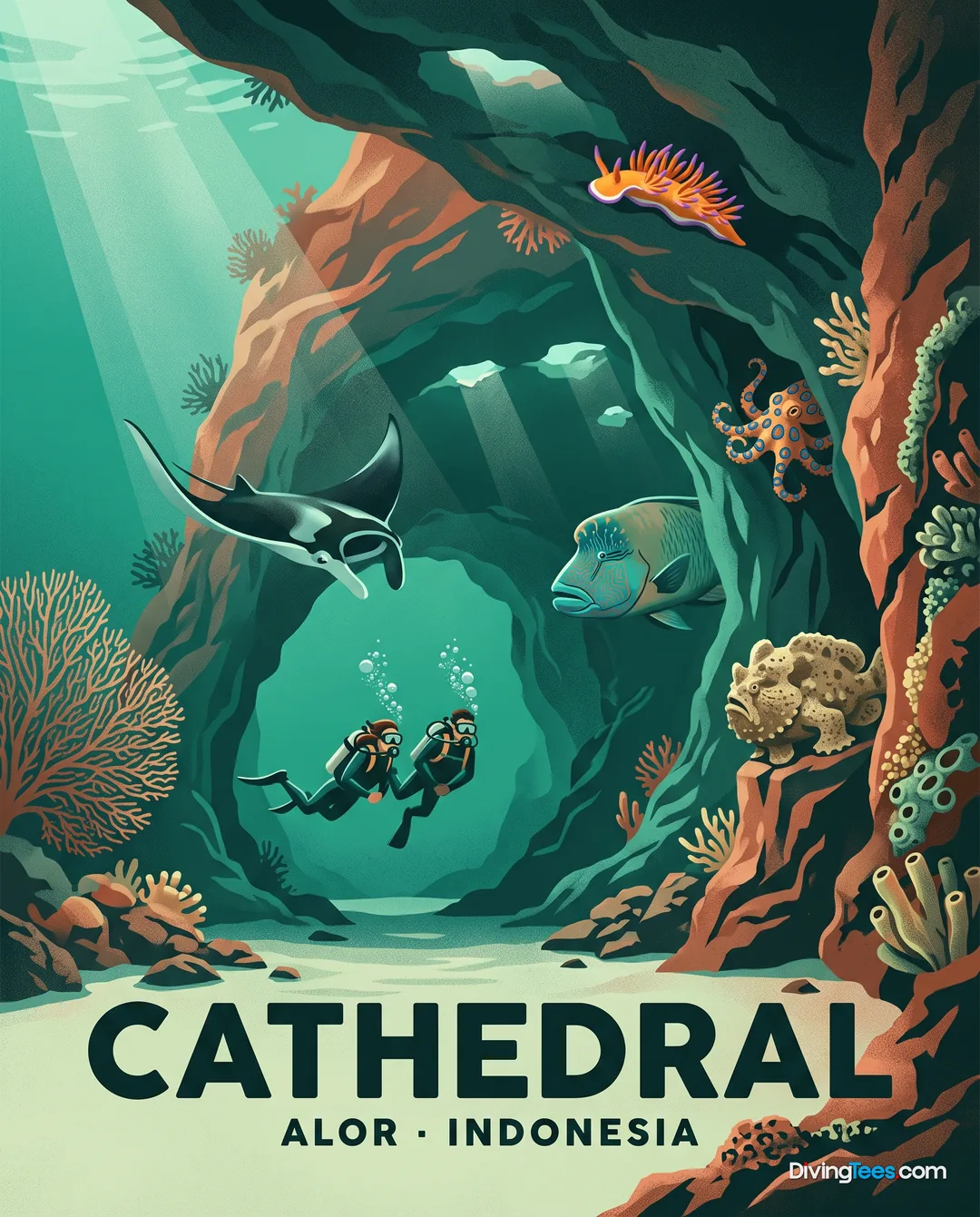
Cathedral →
Max. depth · 30 m
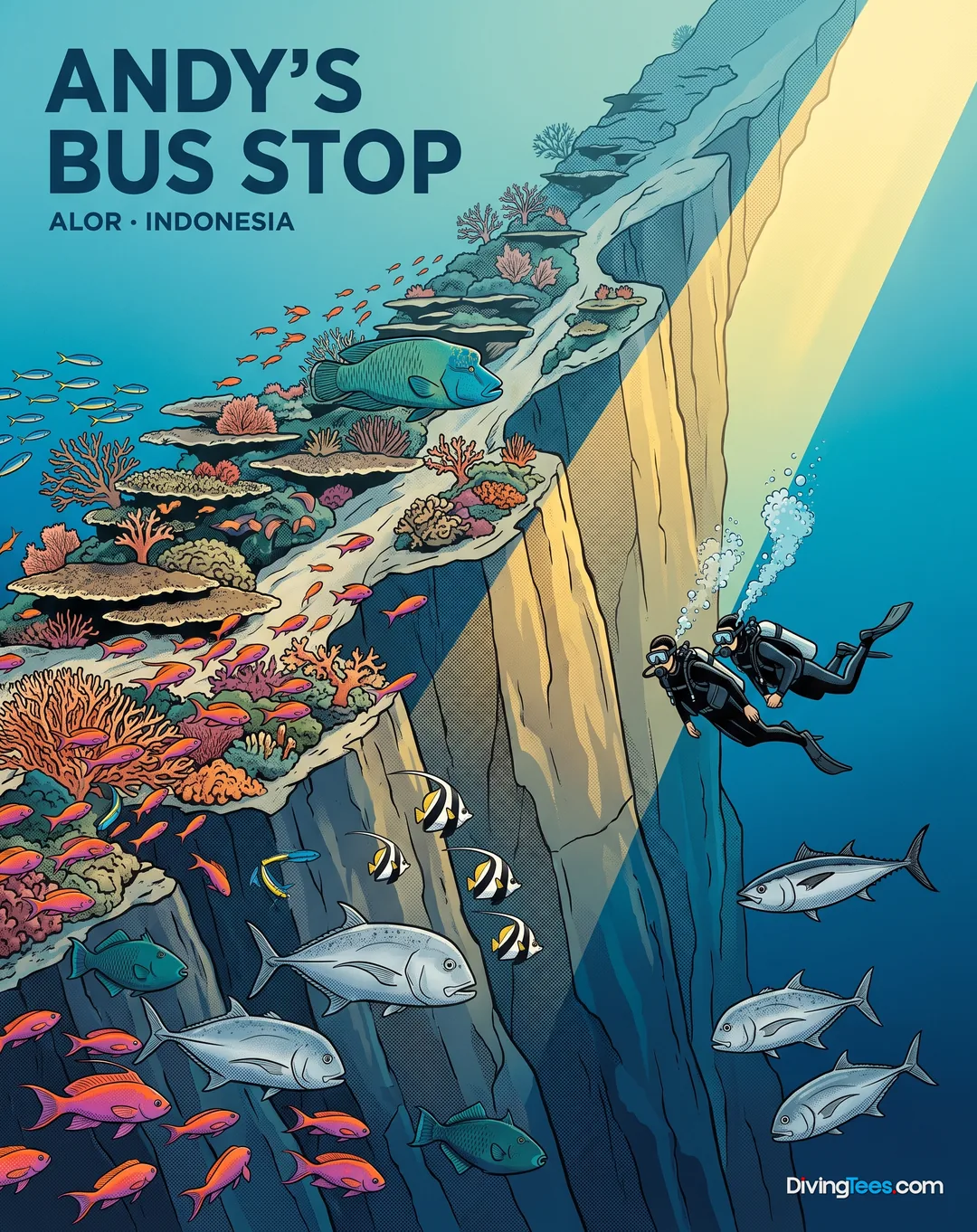
Andy’s bus stop →
Max. depth · 25 m
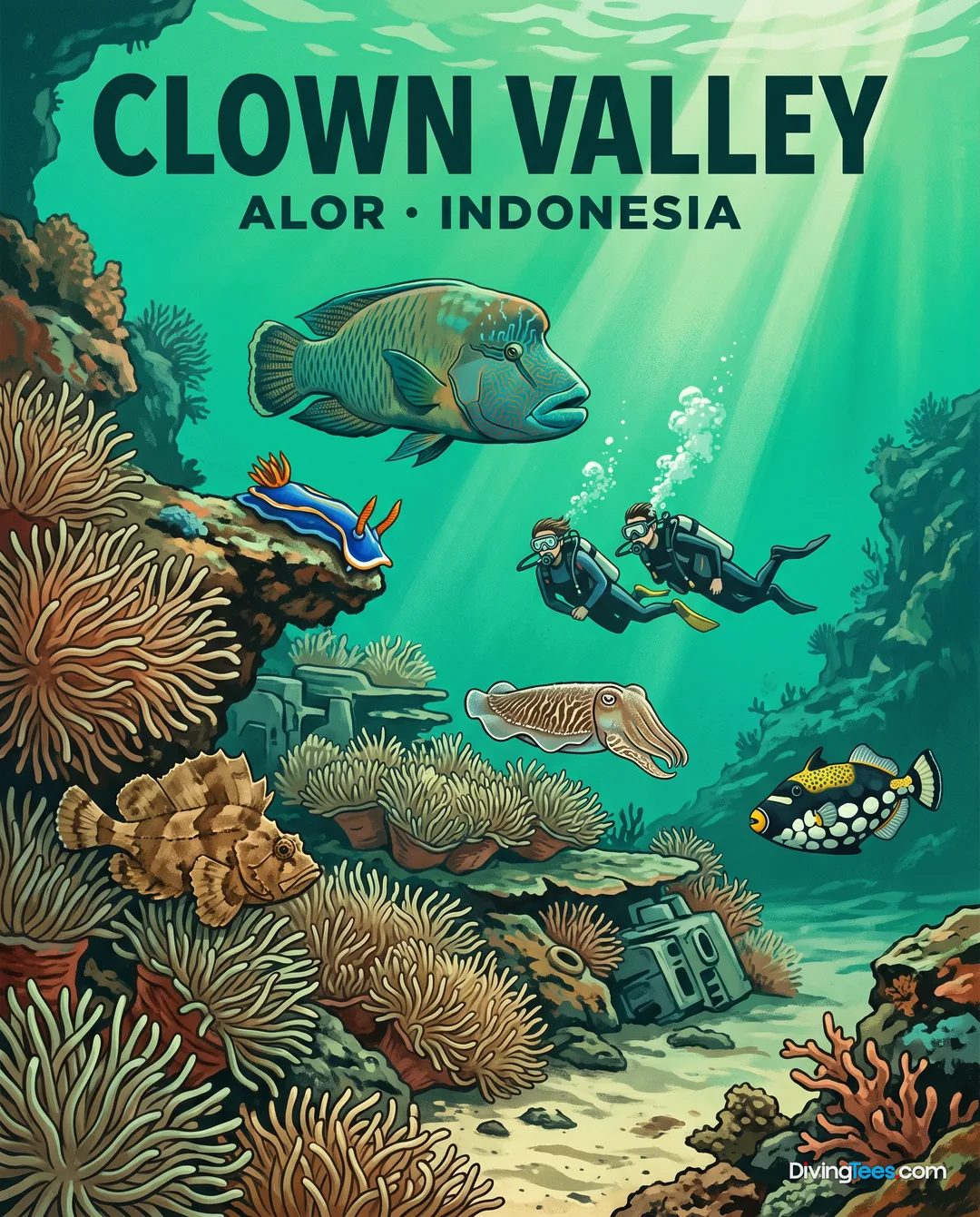
Clown Valley →
Max. depth · 25 m
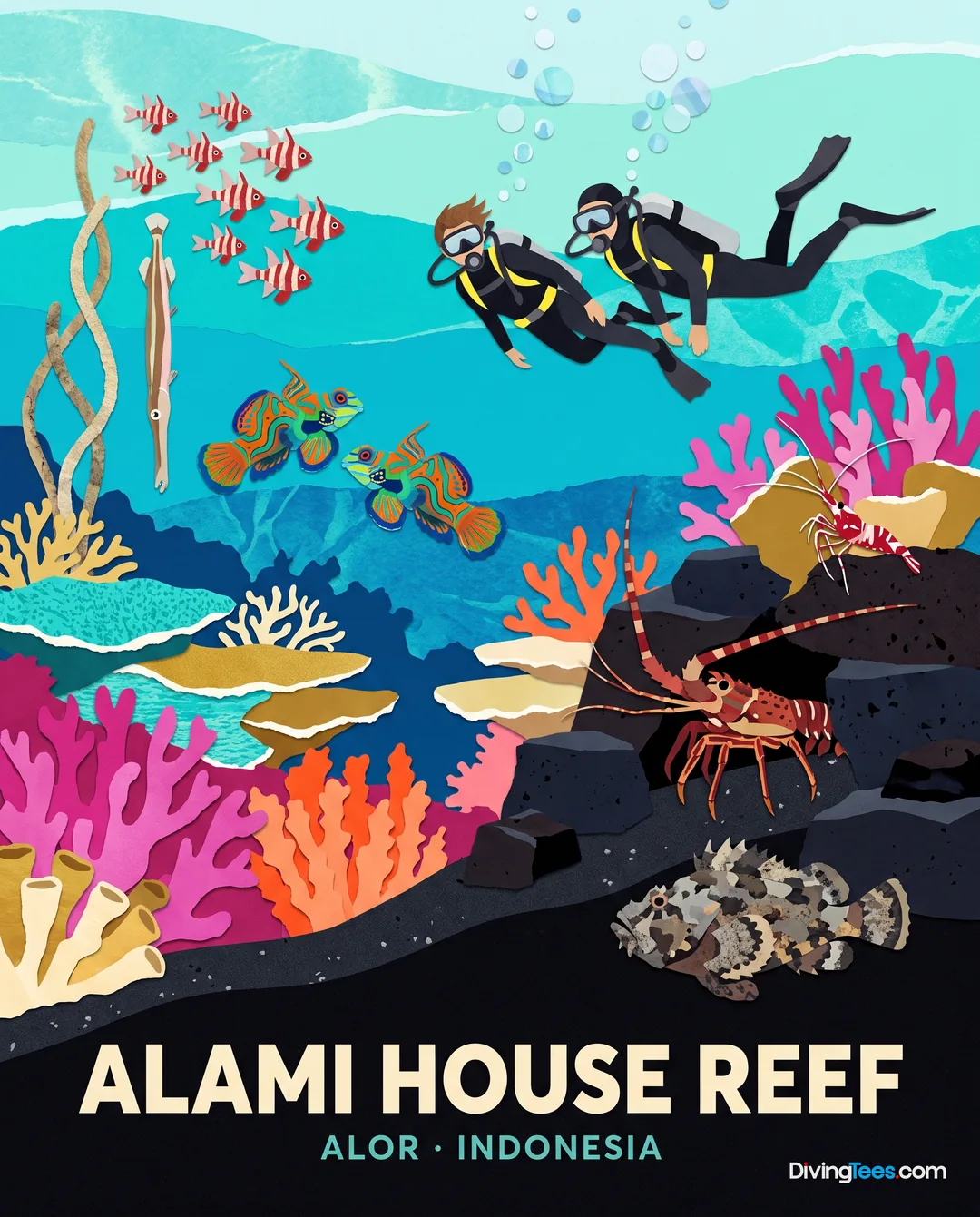
Alami House Reef →
Max. depth · 18 m
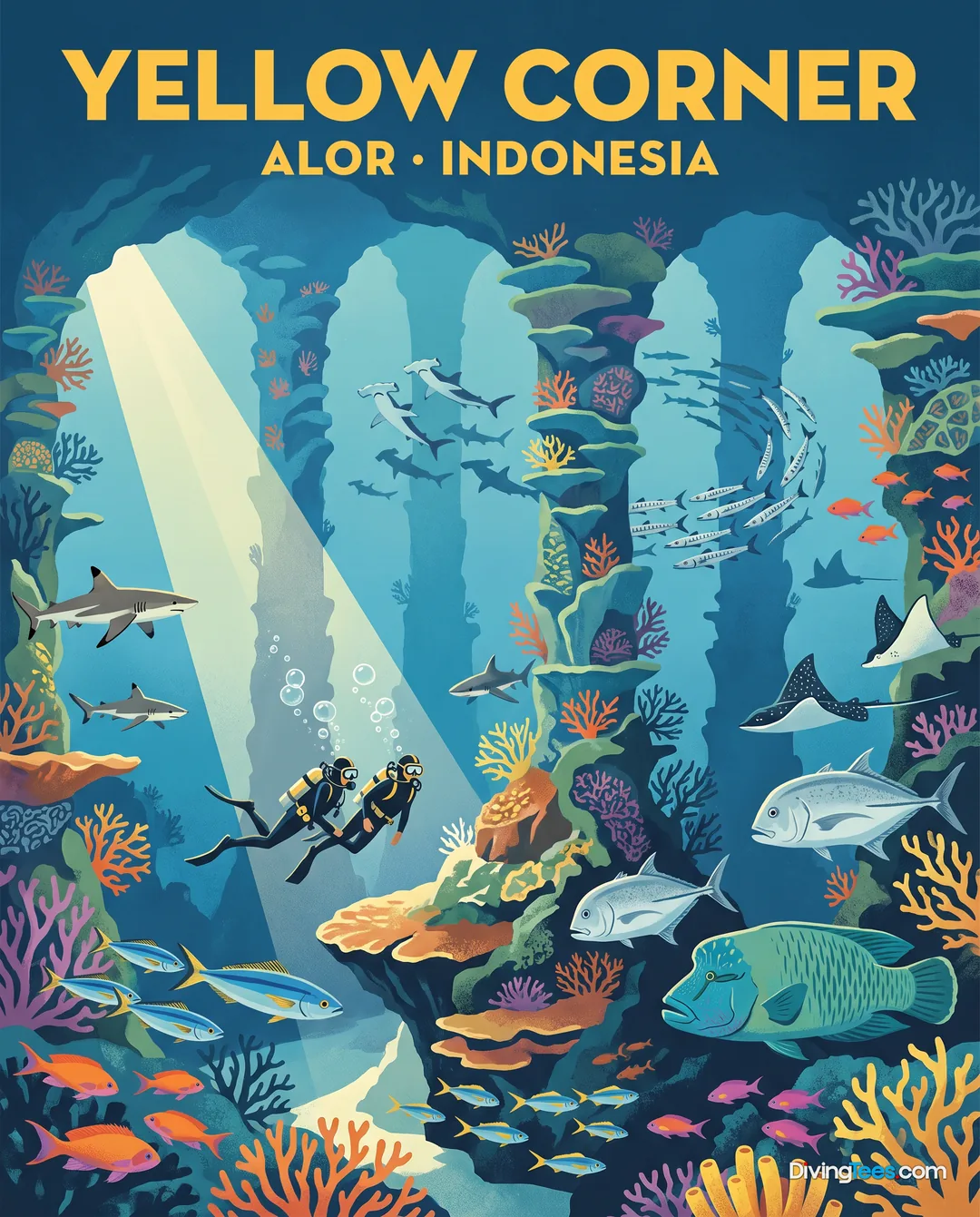
Yellow Corner →
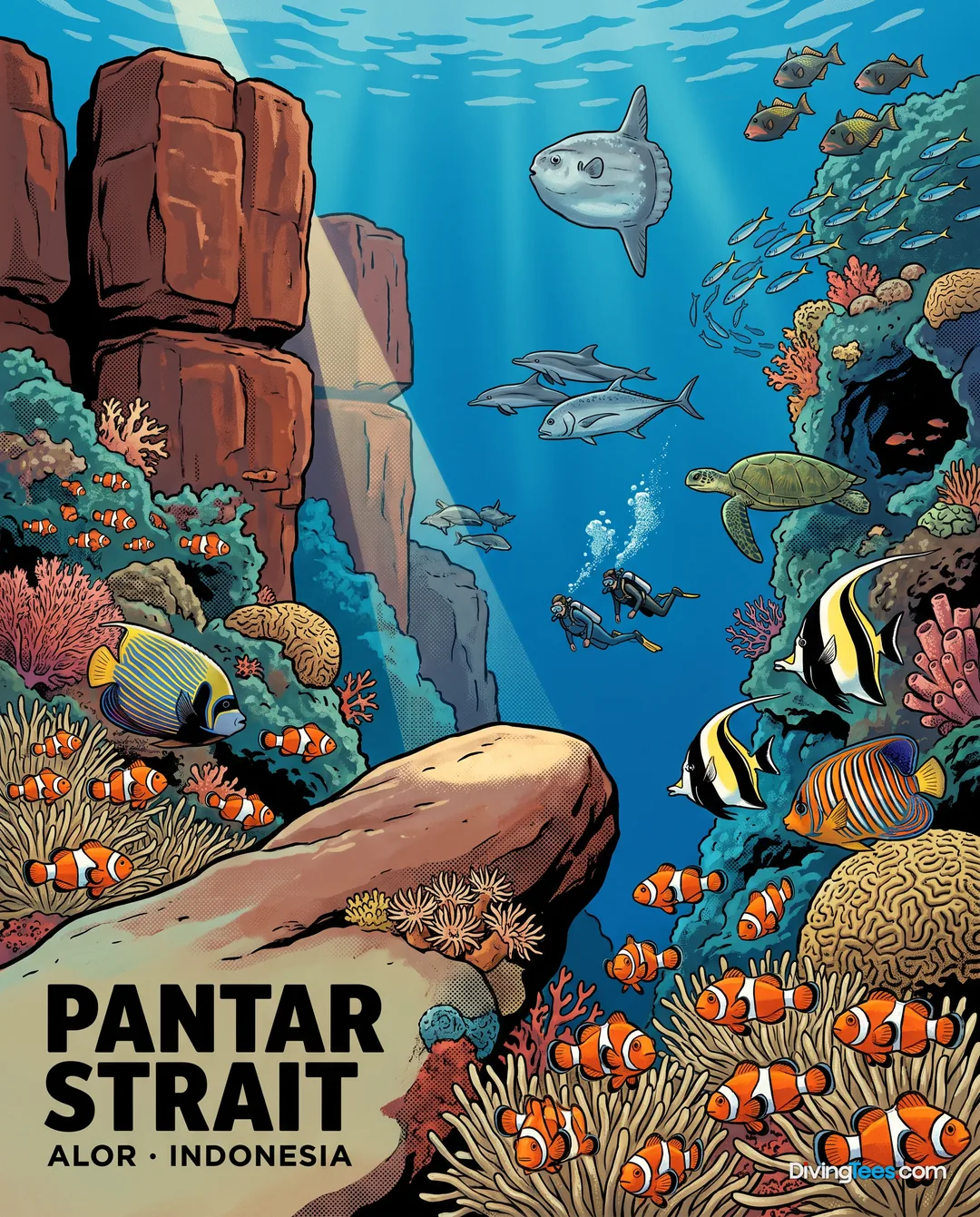
Pantar Strait →
Max. depth · 40 m
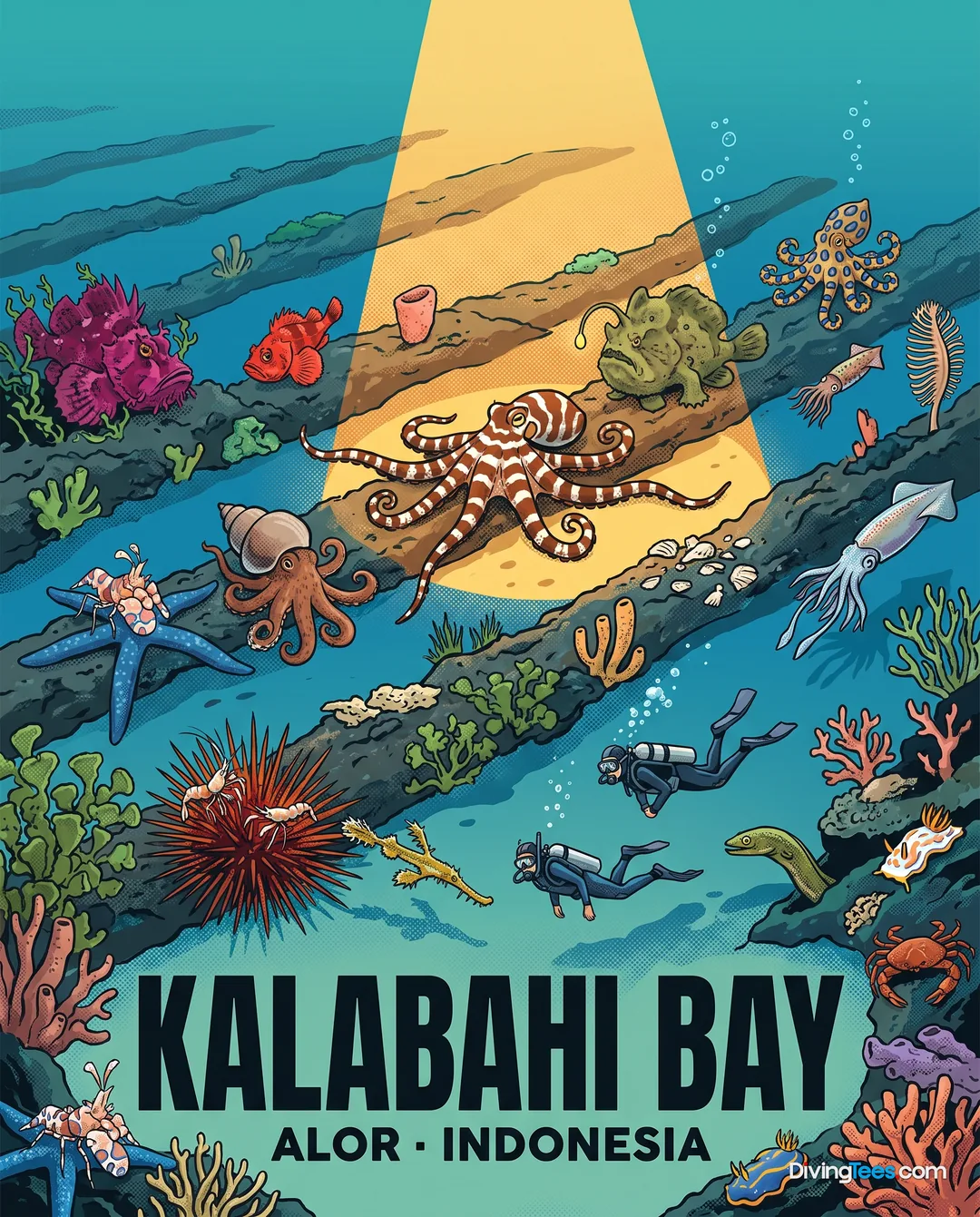
Kalabahi Bay →
Itineraries, dates and prices
Prices per person. Each month shows its lowest price: click a month, or pick an itinerary.
Next departures · 81 departuresfrom £1,860$2,487€2,222
December 2026
January 2027
February 2027
Green dot: a discounted departure that month. Discount calculated by us, against the boat's usual price for a trip of the same length.
See dates and prices
If you click these links and make a purchase on the partner site, DivingDeal may earn a commission, at no extra cost to you.
Dates and prices taken from Divebooker and liveaboard.com, updated 25 October 2026
What you’ll meet underwater
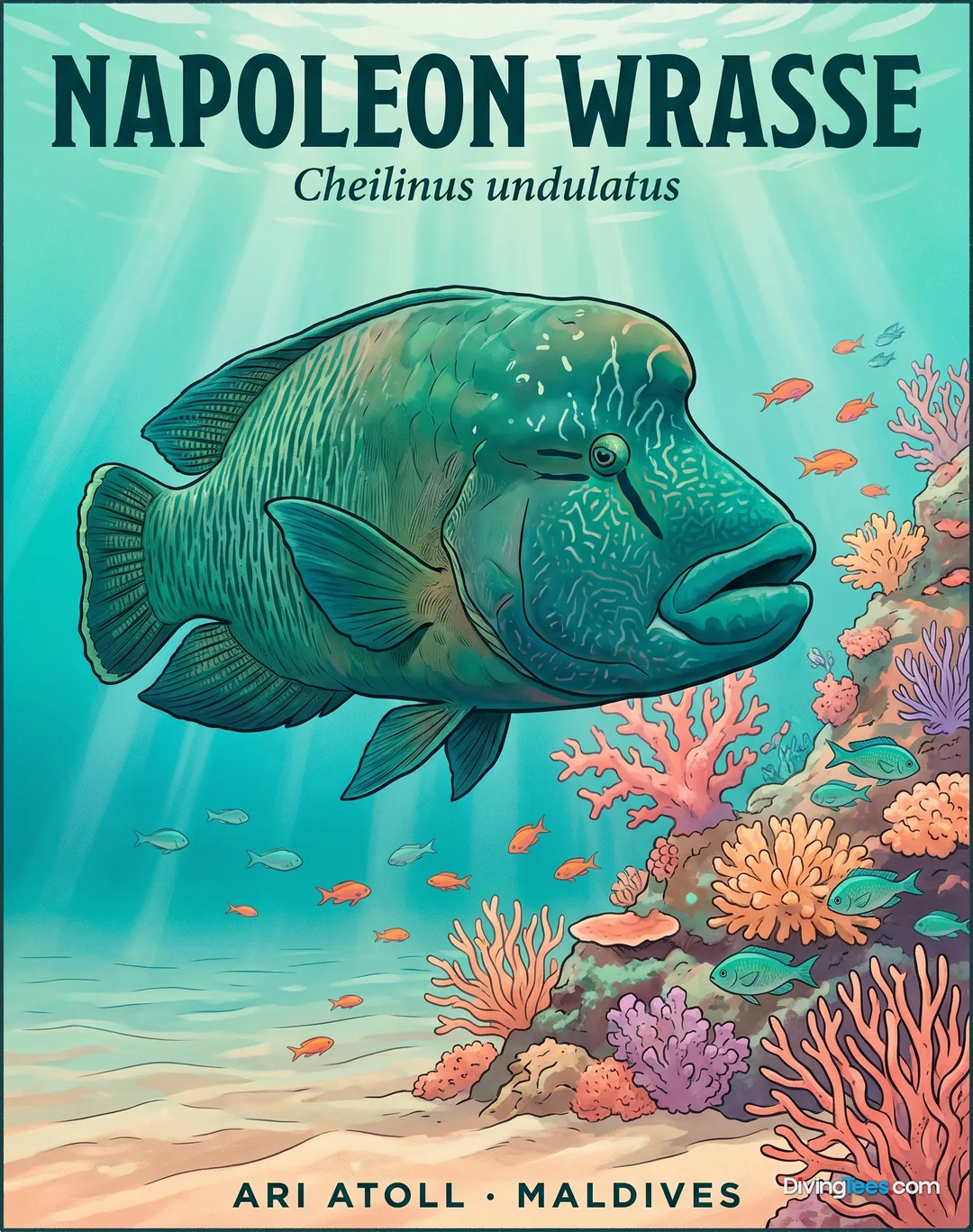
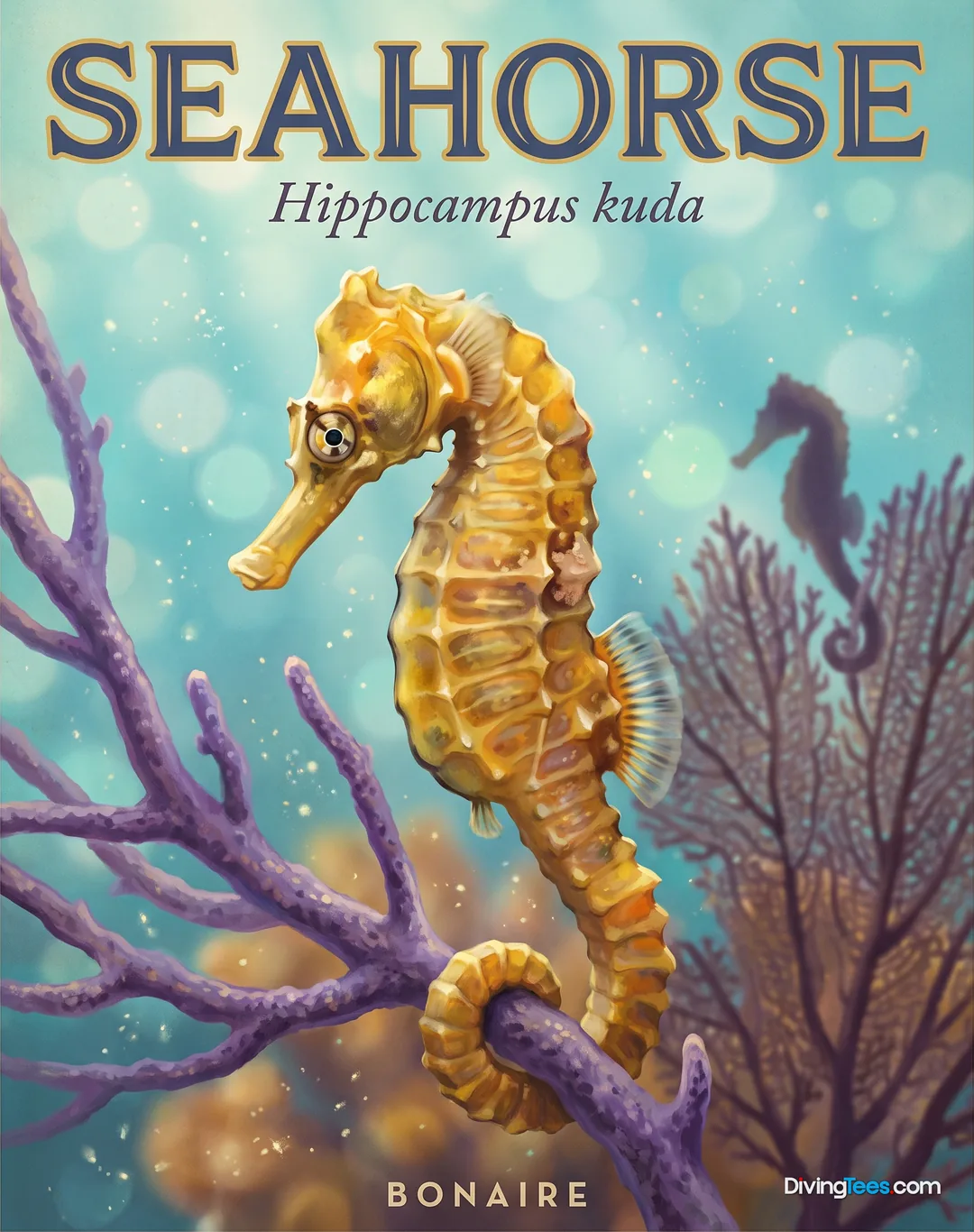
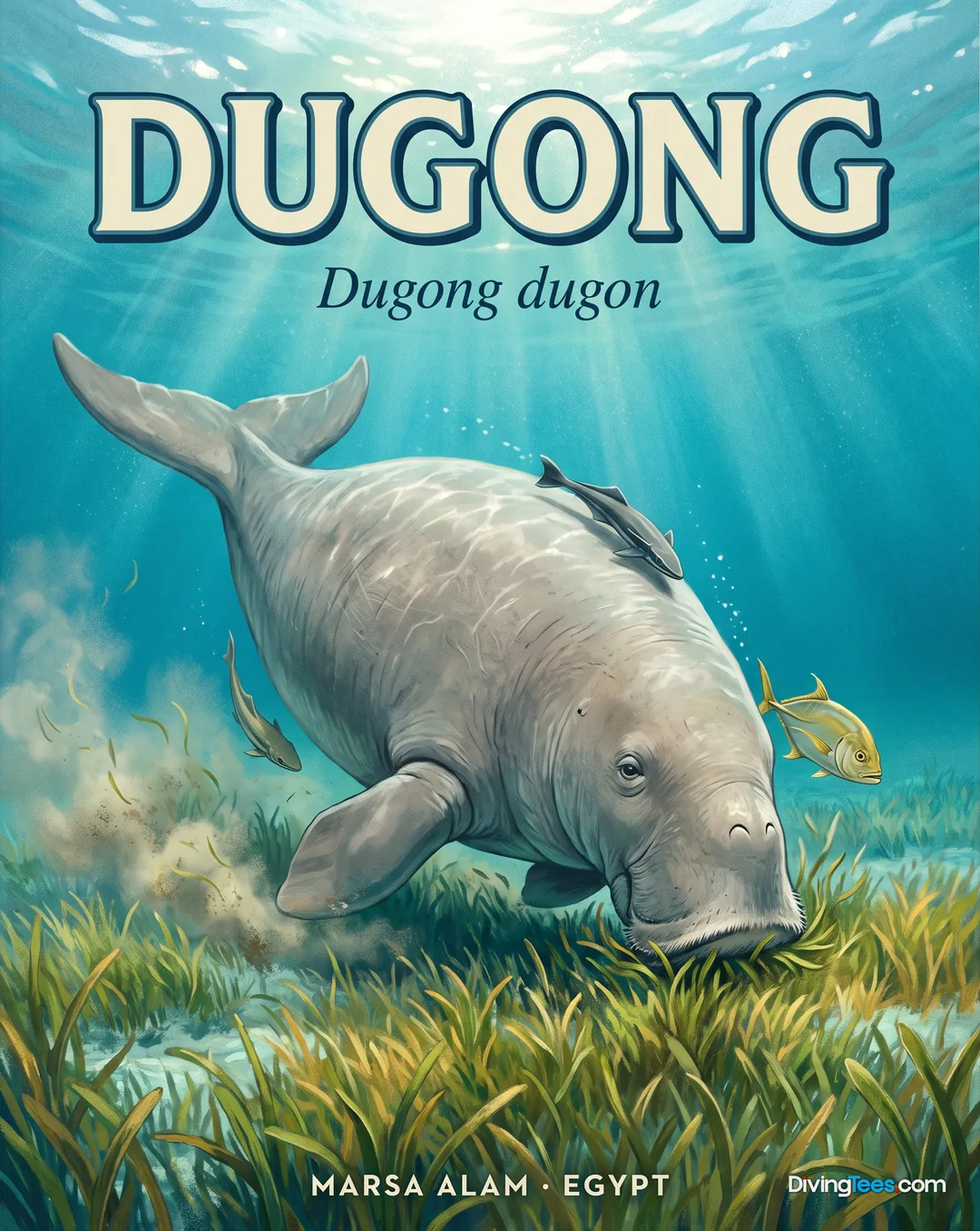
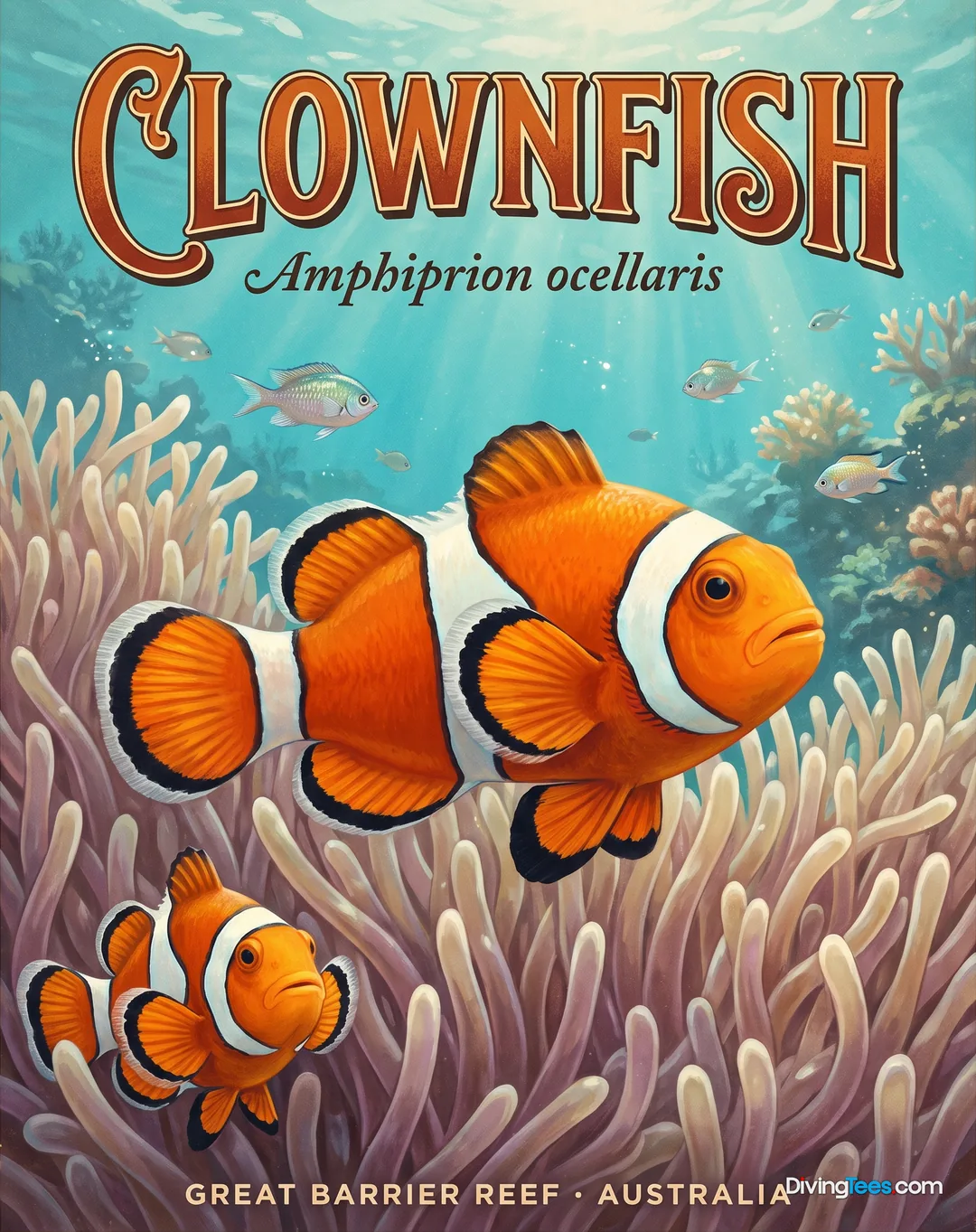
Nudibranchs, frogfish, Napoleon wrasse, pygmy seahorses, moray eels, trumpetfish, bigeye trevally and crabs recur across several sites, so the route rewards divers who slow down as much as those who watch the blue. The special encounters are tied to particular places. Pantar Strait is the site associated with dolphins, dugongs and grey reef sharks, where deep upwellings and strong currents bring pelagic life around walls and seamounts. Yellow Corner is where a hammerhead may join the barracudas, trevally, Napoleon wrasse and eagle rays moving through the current. Andy’s bus stop is the place to look for tuna and giant trevally in the blue, along with reef sharks and pygmy seahorses on the wall. Clown Valley's anemone carpets concentrate clownfish and can also produce groupers, turtles and triggerfish. At Alami House Reef, mandarin fish and cleaning shrimp add a different reward in the shallows.

Who puts you in the water
Every dive starts with a briefing from the dive staff. The crew speaks English, and staff may enter the water to support divers, spot critters and help locate particular points of interest; they do not directly supervise every diver, who remains responsible for following training and buddy procedures. Tender groups are accompanied by a staff member in destinations where that is required, with the buddy team signalling the tender driver or yacht staff after surfacing. All dives are buddy-team dives, normally in teams of two or three, rather than solo dives. Advanced training and Enriched Air Nitrox courses may be offered on board, subject to the instructor and trip. Course options include navigation, buoyancy, deep diving, fish identification, limited-visibility night diving and underwater photography.
The dive deck and the gear
The dive operation uses two twin-engine tenders, so the yacht can put groups onto sites without turning every entry into a scramble from the main vessel. Komodo Aggressor provides 80-cubic-foot air tanks with K valves and also accepts DIN connections; DIN adapters are available on board. Larger 100-cubic-foot or 15-litre tanks may be requested as paid rental equipment, but availability is not guaranteed. Nitrox is available as a paid option for certified divers, and a Nitrox course can be taken on board; the standard mix is 32%. Rental equipment is also available as an optional extra. A dedicated camera room is the important feature for photographers. Divers should bring the usual personal essentials, including a computer, SMB and reel for tender diving, and a reef hook where the site briefing calls for one. Rebreathers and double tanks are not supported.
Between dives
Between dives, the air-conditioned saloon is the retreat when the deck is hot, while the terrace and outdoor spaces are where divers dry equipment, watch the islands and let a surface interval pass. The boat also has an interior lounge, a library and audio-video entertainment, so a quiet afternoon does not depend on everyone wanting to sit in the sun. Photographers have a dedicated camera room instead of having to spread housings and chargers across a dining table. Internet is available as a paid extra, but the more useful habit on a dive trip is usually simpler: rinse the gear, check the camera, eat, then be ready when the next briefing begins.
A day on board
The day begins with the first dive briefing, followed by the descent into the site while the crew is already preparing the next tank and tender movement. Breakfast, snacks and lunch fill the surface intervals; the order is simple because the next dive is never far away. Depending on the itinerary and conditions, the programme can reach four dives in a day, with night diving included on selected schedules. Between entries, divers move between the shaded or air-conditioned spaces, check cameras, compare sightings and rest before gearing up again. When the boat is underway, the crossing becomes the longer pause: a chance to eat, sleep or watch the Indonesian islands slide past. After the final dive, dinner and an evening presentation, film or shared video close the day.
What you eat aboard
Meals combine Western and local cooking, with vegetarian and vegan options available. Dinner is à la carte, and wine is included with the evening meal; beer and other alcoholic drinks are available, while non-alcoholic drinks, water, tea and coffee are provided. The kitchen matters on this itinerary because four dives can leave a diver hungry without making a meal feel like another task. Food is one of the boat's clear strengths, and good wine at dinner gives the last meal of the day a more deliberate finish. Between the dives, snacks keep the gaps short and practical. The table becomes the place where the day is compared: current, visibility, a frogfish found by one group, or the animal someone missed by seconds.
Nights at sea
The eight cabins sit on the lower deck, where each diver has air conditioning, a private bathroom and a porthole rather than a large picture window. Balcony Suites, Master Staterooms and Deluxe Staterooms are available, with accessible balconies for the cabins that include them. That distinction matters after several days of repetitive dives: the lower-deck rooms are functional places to sleep, while a balcony cabin gives more useful private air between dives. The saloon and interior lounge are air-conditioned when the heat outside becomes too much. A hairdryer, daily housekeeping, towels and toiletries keep the cabin side simple. At night, the character is practical and quiet enough for recovery, with the machinery of a liveaboard replaced by the familiar sounds of people preparing for the next dive.
Balcony Suites
Master Staterooms
Deluxe Staterooms
What to know before boarding
Recorded routes depart and return to Labuan Bajo for North Komodo, Alor for Alor and Banda Sea trips, and Lembeh to Kendari for the Sulawesi North to South itinerary; the Banda Sea route returns in Ambon. Airport transfers are included for the relevant embarkation or disembarkation arrangements. The exact transfer details depend on the chosen route and are provided with the trip information. Arriving the night before departure remains the sensible choice.
Deck plan
- Length
- 29 m
- Beam
- 7.9 m
- Maximum number of passengers
- 16
- Number of cabins
- 8
- Number of bathrooms
- 8
- Cruising speed
- 8 knots
- Website
- aggressor.com ↗
Hello, I'm Marina, DivingDeal.com's AI assistant. I answer in detail about hotels, dive centres and liveaboards.
Thinking about the whole trip and the flights? Talk it over with Edith →
Marina is an AI. Some links are affiliate links: DivingDeal may earn a commission, at no extra cost to you. Bookings are made with the partner.