
Bulles Plongee
Google 4.9/5 (231 reviews)
2.9 km away as the crow flies
Montpellier · France · Mediterranean
Max. depth · 35 mDescend into Homardstone's intricate limestone structures, where European spiny lobsters find shelter in a network of crevices and overhangs.
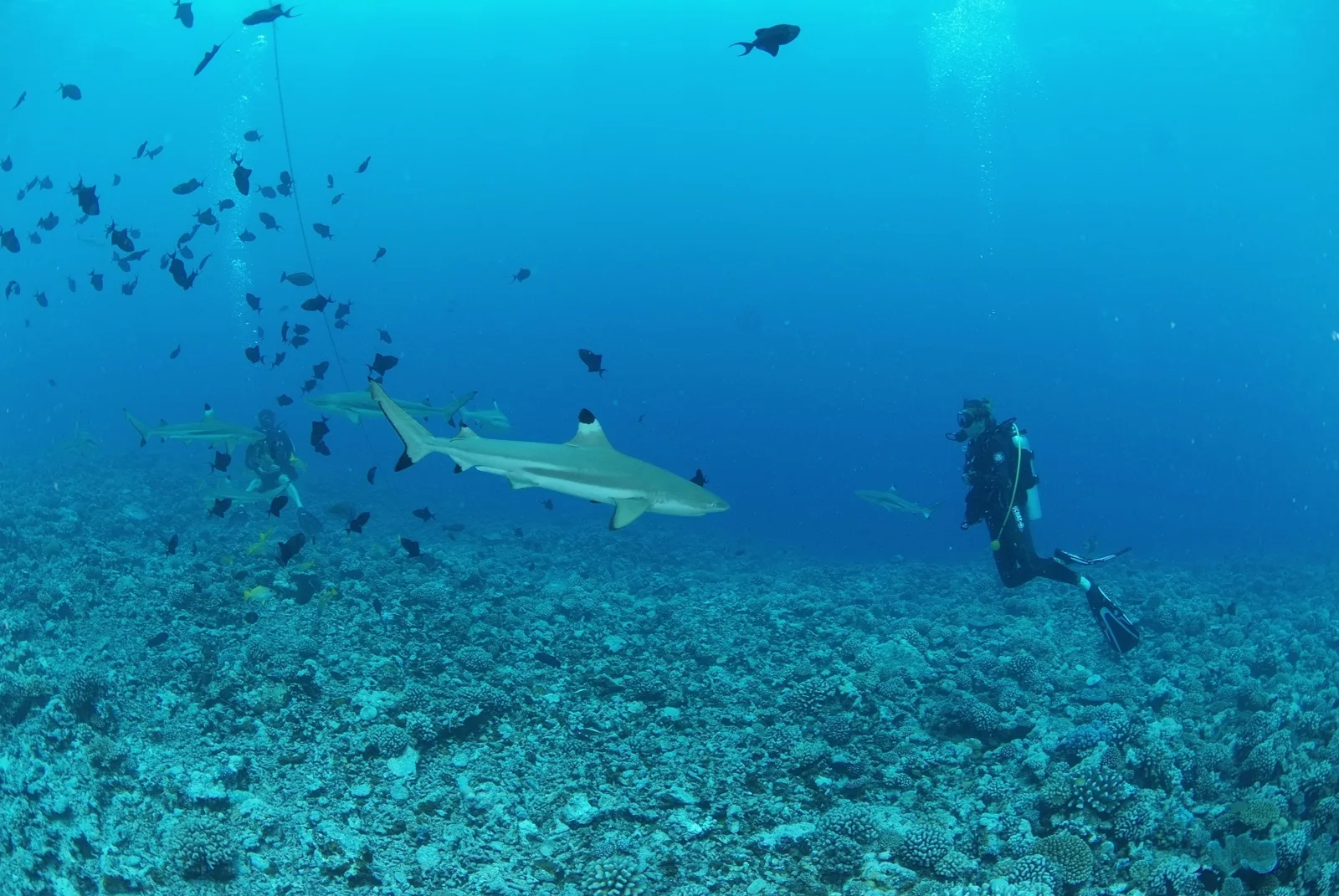
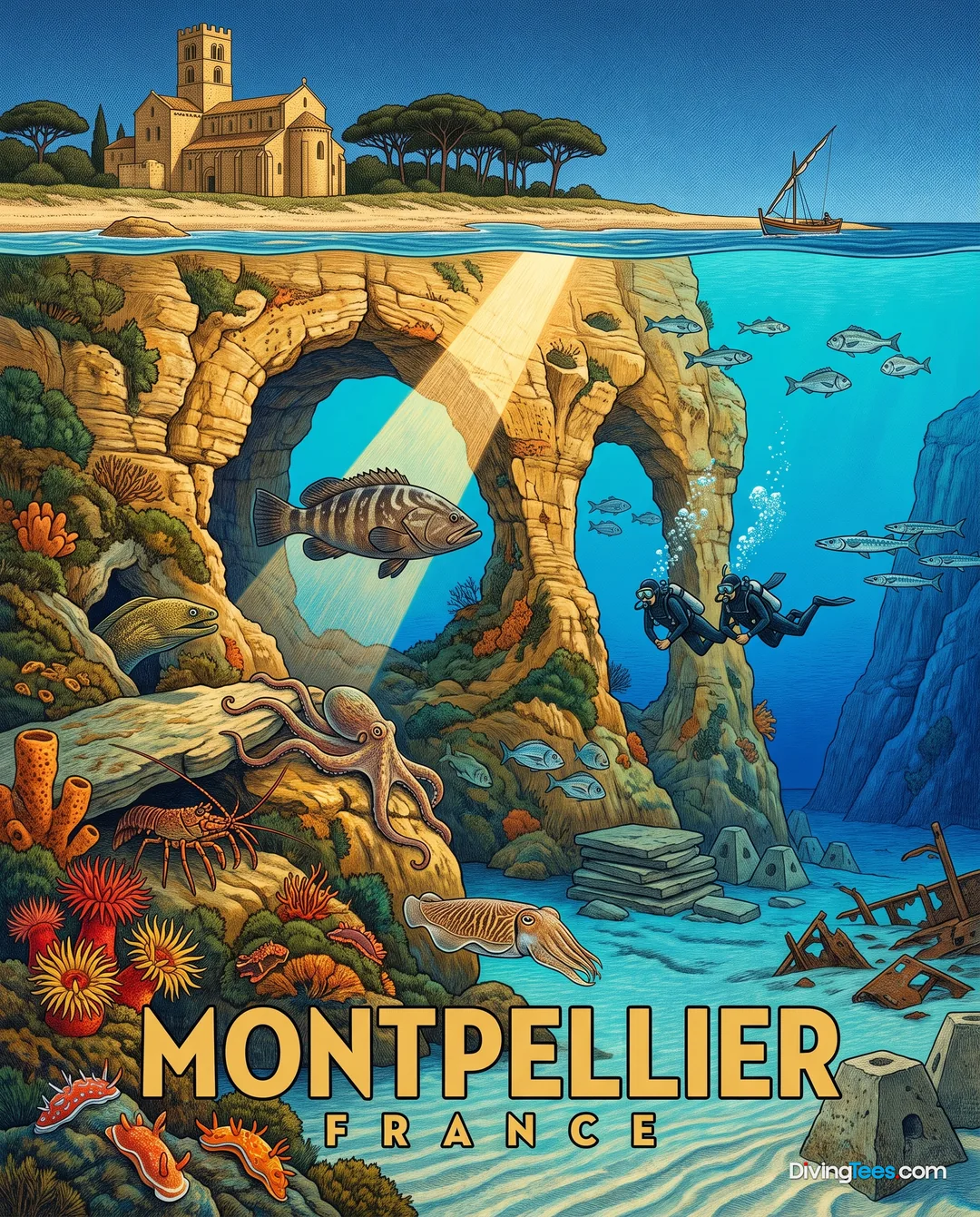
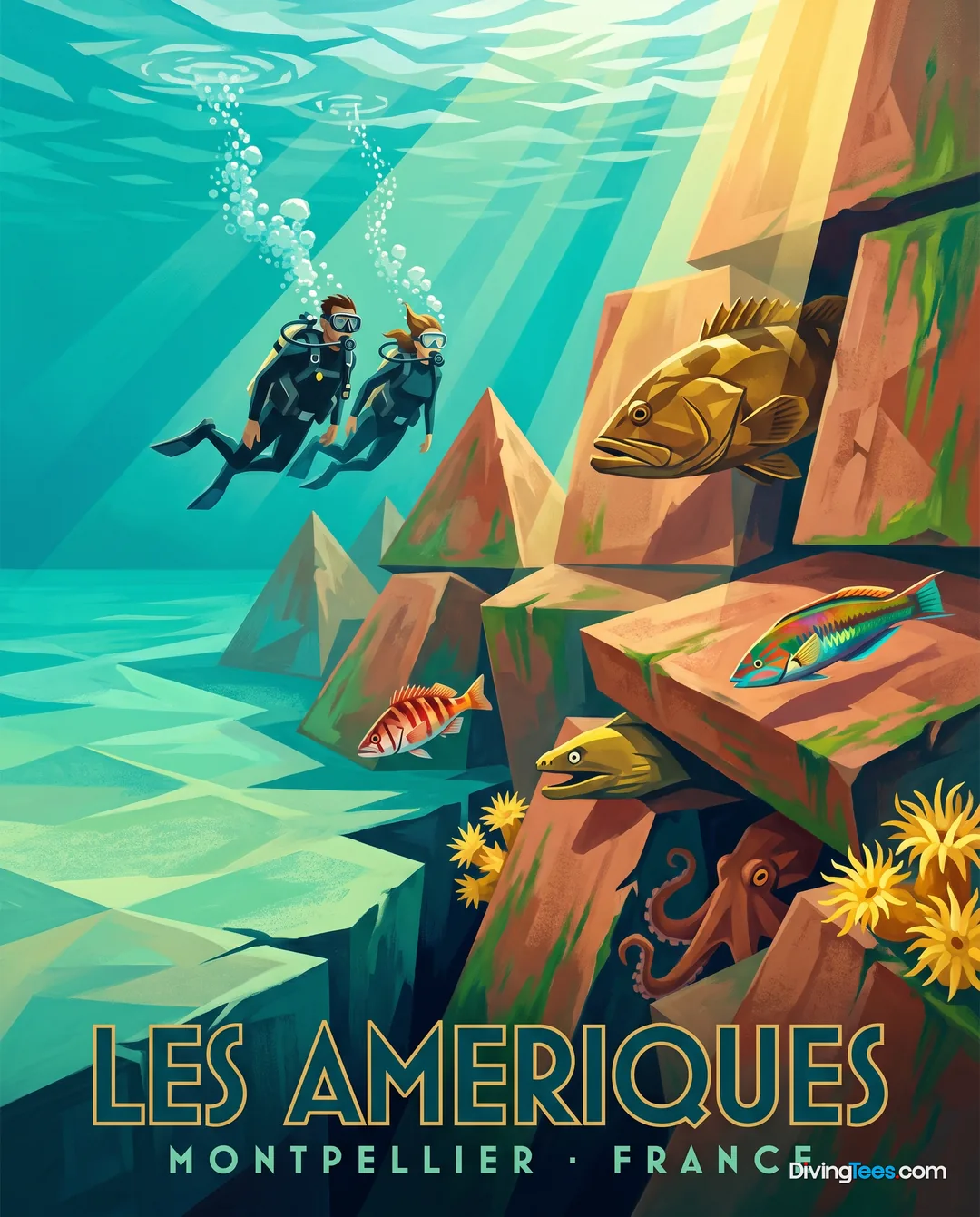
Homardstone is a geological dive site defined by its striking limestone formations, rising from a minimum depth of 5 metres and dropping away to 35 metres. The topography is anything but flat, featuring an intricate arrangement of weathered pinnacles and rocky reefs that demand attention to orientation. You'll navigate through a complex environment of crevices, overhangs, and larger sheltered chambers, particularly as you explore the deeper sections of the reef, making every descent a journey of discovery through its rugged relief.
The site's three-dimensional structure provides a rich habitat for resident marine life, most notably the European spiny lobster, which you will encounter nestled within the numerous rock shelters and deeper ledges. As you move through the various depths, keep an eye out for painted combers (Serranus scriba) moving across the rock faces and Mediterranean rainbow wrasse (Coris julis) darting among the crevices. The light shifts constantly as you traverse the pinnacles, creating dynamic visual experiences throughout the dive profile.
Visibility at Homardstone typically ranges from 15 to 25 metres, though this can be influenced by local weather patterns and offshore winds. While the site is diveable year-round, conditions often improve during the summer months from July to August, when cleaner offshore waters are pushed towards the coast. This influx of clearer water can sometimes be associated with changes in current, so it's important to be mindful of shifting conditions as you plan your dive.
Beyond the prominent lobsters, the limestone formations host a diverse array of smaller invertebrates, including various nudibranchs. You'll spot species such as Flabellina affinis and Chromodoris purpurea grazing on the reef, adding splashes of colour to the rocky landscape. These smaller details require a slower pace and keen observation, rewarding divers who take the time to explore the nooks and crannies of Homardstone’s intricate reef system.
What truly sets Homardstone apart from other Languedoc reef dives is the reported occasional presence of Mediterranean monk seals (Monachus monachus). While not a common sighting, there have been instances of these rare seals investigating divers from nearby surface haul-outs, an encounter that provides a unique and memorable experience. Such encounters underscore the site’s ecological significance and its connection to the broader marine environment of the region.
The underwater landscape offers a distinct profile, moving from shallower pinnacles to deeper, more sheltered chambers. The descent introduces you to the rugged nature of the limestone, giving way to extensive rock structures as you gain depth. The site demands comfort with navigating complex reef topography, as the experience is less about a single feature and more about exploring a continuous, varied underwater terrain.
Homardstone is accessible for Open Water divers who are comfortable with rocky-site diving and prepared for deeper sections down to a maximum depth of 35 metres. Current at the site is variable, influenced by local weather and offshore winds; expect changing conditions. Visibility generally ranges between 15 and 25 metres, with the best conditions typically found during the summer months of July and August. Divers should possess experience with reef navigation in potentially shifting water movements.
Homardstone is diveable year-round, while conditions often improve during July and August. During these summer months, cleaner offshore waters can reach the coast and improve visibility, which generally ranges from fifteen to twenty-five metres. These clearer waters may also coincide with changes in current, so remain attentive to shifting conditions.
Homardstone is accessible to Open Water divers who are comfortable with rocky-site diving and prepared for deeper sections. You should also have experience navigating reefs in potentially shifting water movements. The current is variable and influenced by local weather and offshore winds, so conditions can change during your dive.
Homardstone ranges from five metres to a maximum depth of thirty-five metres. Its profile moves from shallower limestone pinnacles into deeper reef sections, where you can find swim-throughs, crevices, overhangs, and sheltered chambers. The deeper terrain requires comfort with complex rocky topography and careful attention to orientation.
At Homardstone, you can explore intricate limestone pinnacles, rocky reefs, crevices, overhangs, swim-throughs, and sheltered chambers. European spiny lobsters occupy rock shelters and ledges, while painted combers, Mediterranean rainbow wrasse, and nudibranchs such as Flabellina affinis and Chromodoris purpurea inhabit the reef. Mediterranean monk seals appear occasionally.