
Bulles Plongee
Google 4.9/5 (231 reviews)
1.9 km away as the crow flies
Montpellier · France · Mediterranean
Max. depth · 18 mMaguelone offers a unique Mediterranean wreck experience, focusing on scattered debris and an unexpected resident population of coconut octopuses.
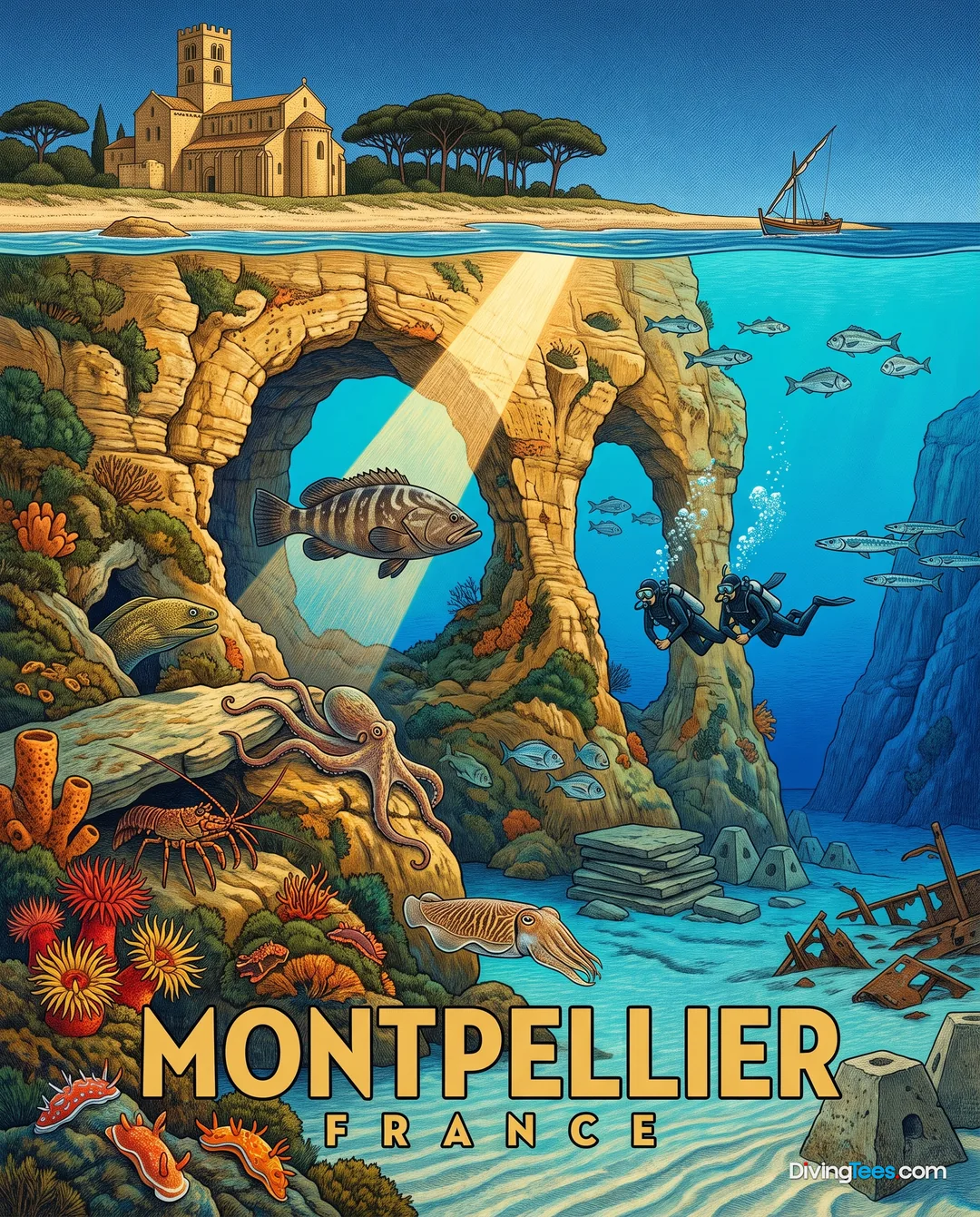
Diving Maguelone means entering a landscape of scattered wreck remains settled on a sandy Mediterranean bottom. Unlike a continuous, intact wreck, you'll navigate clusters of metal debris and rocky outcrops that rise a few metres above the sand. This topography creates a series of small, sheltered pockets and ledges, forming ideal microhabitats for a diverse range of marine life. The modest relief of the site means the dive is less about exploring a grand structure and more about meticulous observation, searching for the life that has made these scattered fragments home.
The dive profile at Maguelone is straightforward, largely dictated by the gentle undulations of the bottom between 8 and 18 metres. Your descent takes you into clear water, with visibility often extending between 12 and 25 metres, allowing ample time to scan the seabed for features. The dive progresses by identifying these individual wreck clusters and rock formations, each acting as an anchor for the local ecosystem. You're effectively tracing a path across a debris field, where every piece of wreckage or rock crevice holds the potential for a new discovery.
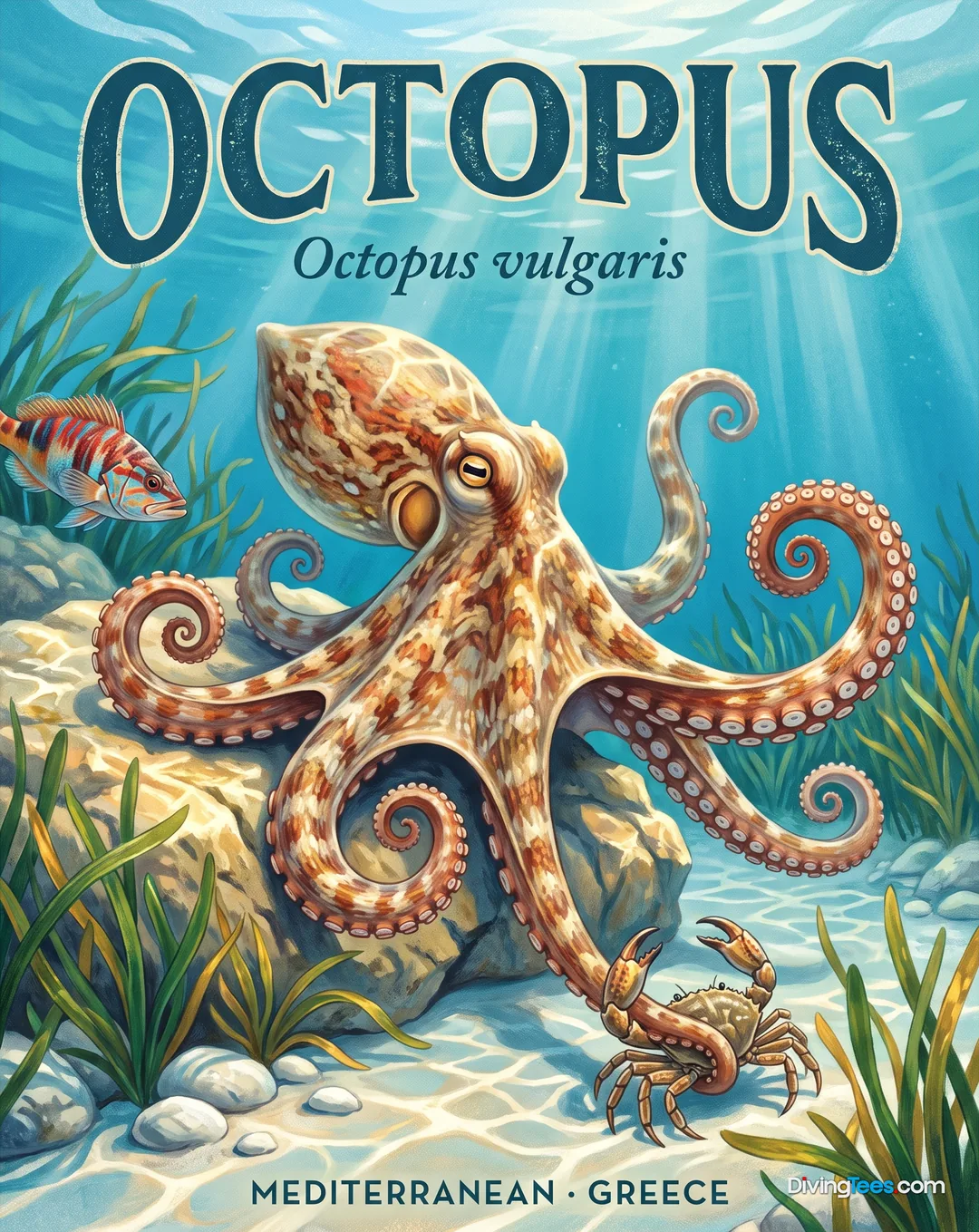
What sets Maguelone apart in the Languedoc region is its resident population of coconut octopuses (Amphioctopus marginatus). This species, more commonly associated with the Indo-Pacific, has made a home among the scattered debris. You'll often find them utilizing shells or other discarded items as mobile shelters, a behaviour that defines their common name. Observing these octopuses as they carry their makeshift homes across the sand or cautiously emerge from their retreats adds a layer of unexpected interaction to the dive, distinguishing it from the typical wall or reef dives of the area.
Beyond the coconut octopuses, the site's unique mix of wreck and natural hard bottom attracts a range of other species. Keep an eye out for scorpionfish (Scorpaena scrofa) camouflaged against the rocks and debris, along with Mediterranean rainbow wrasse (Coris julis) darting through the shallows. Juvenile sea bass (Dicentrarchus labrax) often school around the larger pieces of wreckage, while gilt-head bream (Sparus aurata) forage actively over the sandy areas. Closer inspection of the sand patches will reveal hermit crabs (Pagurus bernhardus) scuttling about and various species of sand gobies (Gobiidae family) tucked into the sediment, underscoring the site's rich critter emphasis.
The conditions at Maguelone are generally calm, with light current being the norm. The site appears to be relatively sheltered, meaning that any current you encounter is more likely to be influenced by local wind and sea state than by strong, persistent site-specific flows. This calm environment, combined with the modest depth, makes it an excellent site for focusing on macro photography and extended bottom time, allowing for detailed observation of the marine life and the intricate details of the wreck clusters.
Maguelone is accessible for Open Water divers, with depths ranging from 8 to 18 metres. Visibility typically falls between 12 and 25 metres. Current is generally light, making for comfortable diving conditions. The best time to experience this site is during the summer months, specifically July and August, when conditions are most favorable.
Summer, specifically July and August, is the most favorable time to dive Maguelone. During these months, conditions are generally comfortable, with light current and visibility typically ranging between 12 and 25 metres. The site’s shallow profile also supports relaxed exploration of its scattered wreck remains and rocky outcrops.
Maguelone is accessible to Open Water certified divers. The site ranges from 8 to 18 metres, with a straightforward profile across gentle bottom undulations. Instead of exploring one intact wreck, you follow scattered wreck debris and rocky outcrops across a sandy Mediterranean seabed, finding small sheltered pockets along the way.
You can generally expect light current at Maguelone, creating comfortable diving conditions. The site appears relatively sheltered, so any current is more likely to reflect local wind and sea state than strong, persistent flows. This calm setting suits detailed observation, macro photography, and extended attention to the wreck clusters and surrounding rocks.
Maguelone combines scattered wreck debris, rocky outcrops, and sandy seabed habitats. Look for coconut octopuses using shells or discarded items as shelters, along with camouflaged scorpionfish and Mediterranean rainbow wrasse. Juvenile sea bass gather around larger wreckage, while gilt-head bream, hermit crabs, and sand gobies occupy the sand and crevices.