Liveaboards · Indonesia
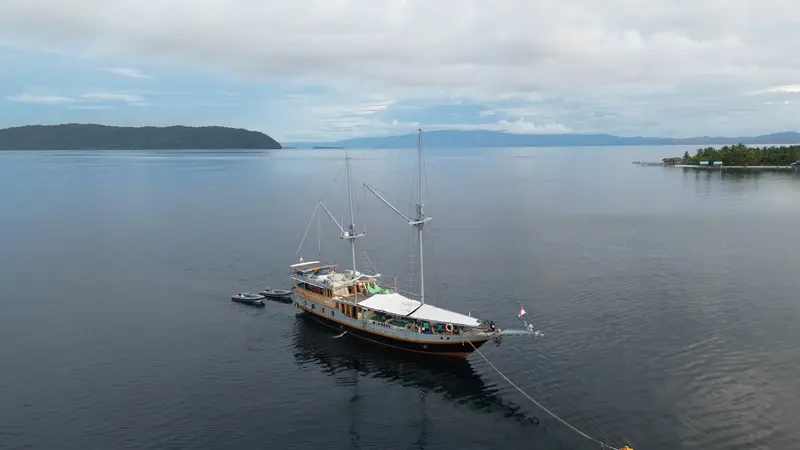
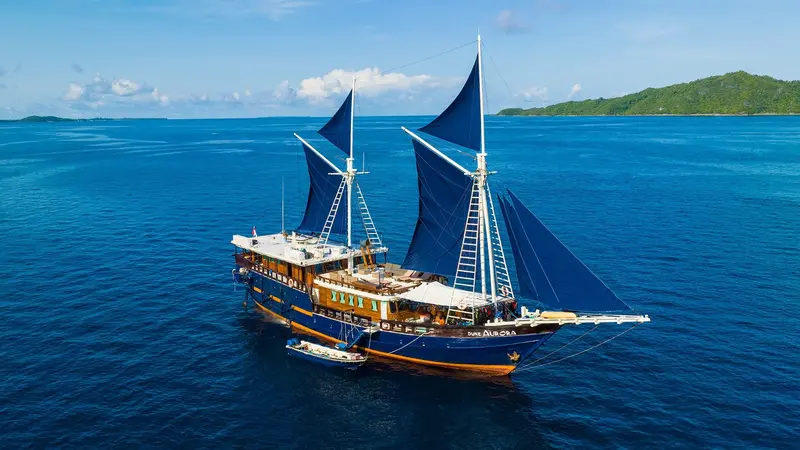
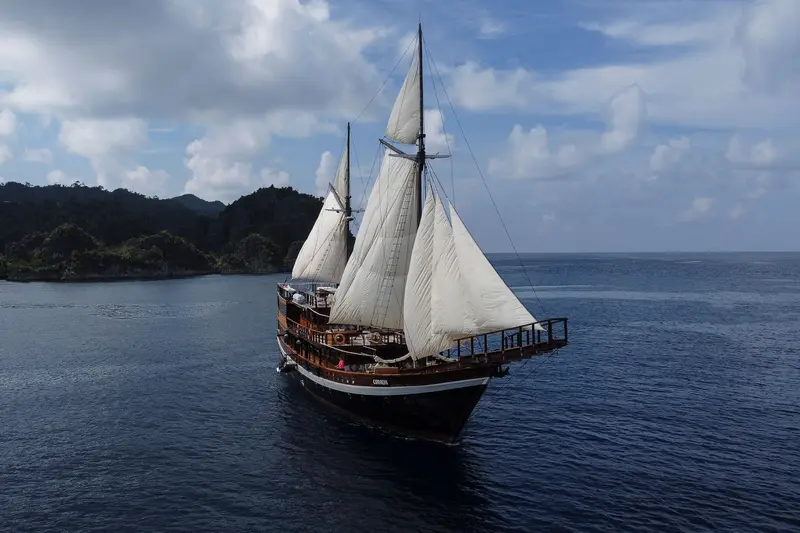
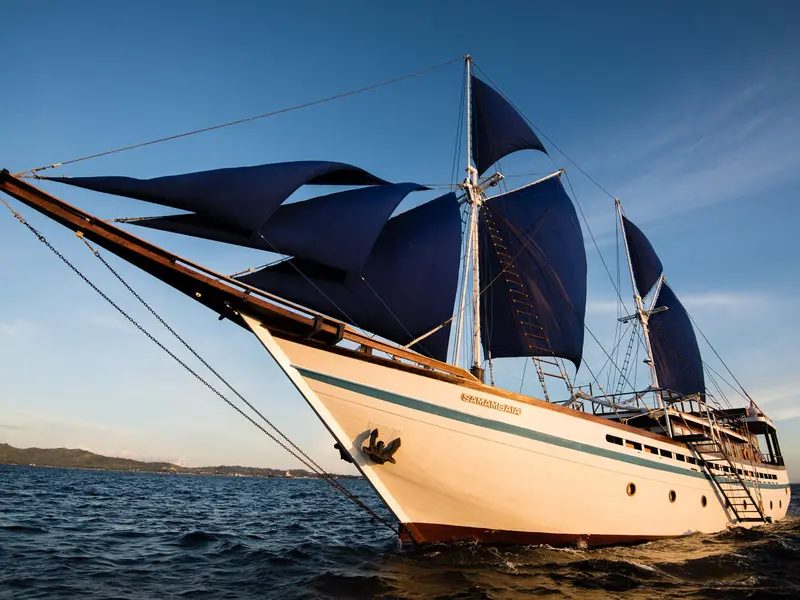
Wisesa — a traditional wooden phinisi built around small-group diving
What makes this boat unique
- A 30-metre traditional Indonesian wooden phinisi built in 2016, with modern equipment and space for only eight guests.
- Four air-conditioned cabins sit on the lower deck, with portholes and private or shared bathrooms depending on the cabin.
- The dive operation is organised for eight divers with two guides, two compressors and 22 aluminium 12-litre tanks.
- Raja Ampat cruises run from Sorong to Sorong for 8 days / 7 nights or 12 days / 11 nights.
For subtitles in English: start the video firstthen click the gearat the top right of the video, select “Subtitles/CC”, then “Auto-translate” and choose “English”.
The invitation
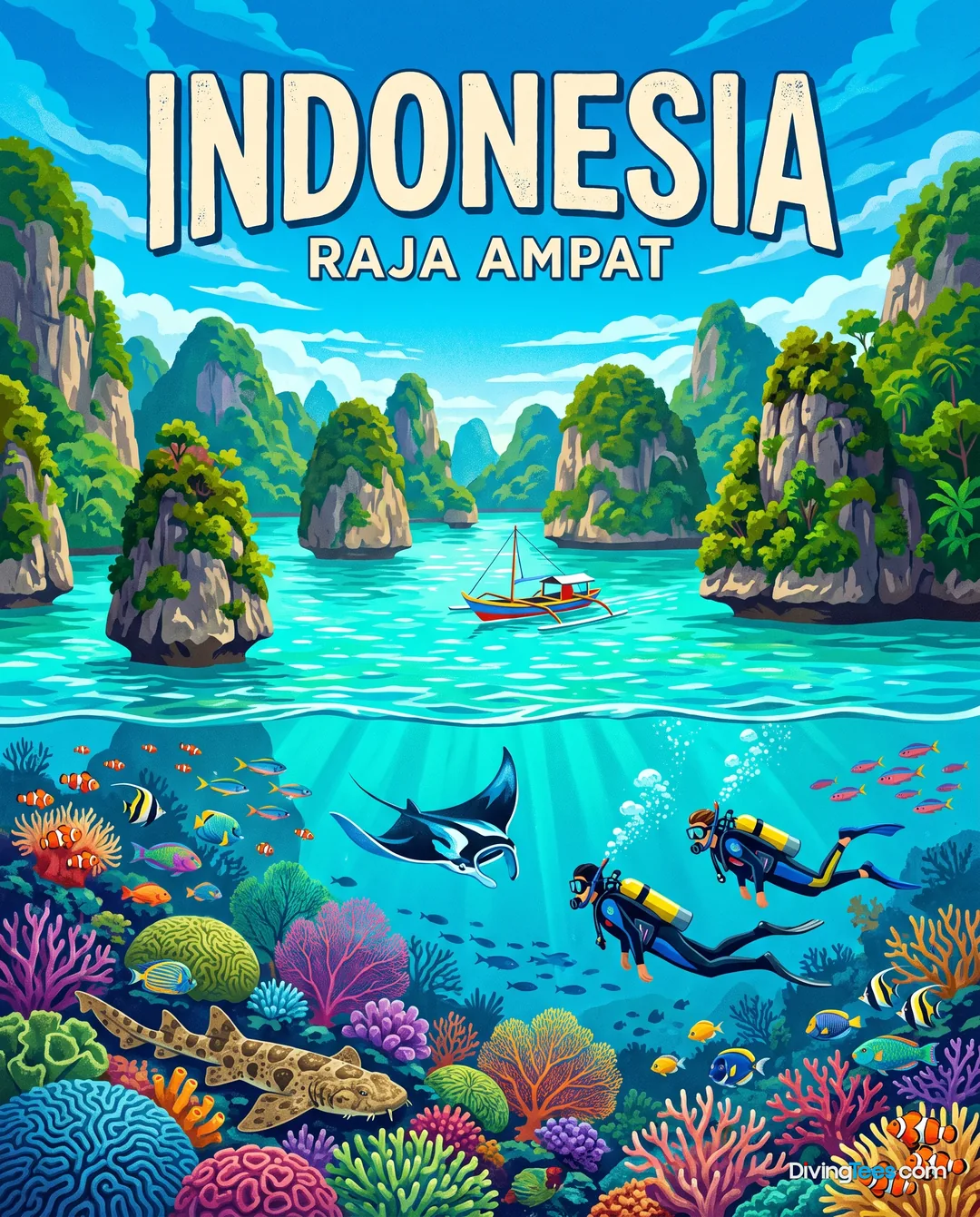
Wisesa is for divers who would rather spend a week with seven fellow passengers than disappear into a large boat. The traditional wooden hull gives the trip a proper Indonesian character, while the practical details belong to a modern dive liveaboard: air-conditioned cabins, a shaded dive area, a tender for transfers and two guides for eight divers. That combination matters in Raja Ampat. The boat is small enough for the crew to adjust an outing to the weather, current or interests of the group, but equipped for a serious run of dives rather than a sightseeing cruise with tanks added on. Raja Ampat is the reason to board: cleaning stations, walls, current-swept reefs, dense schools and soft corals all appear across the route. Between dives, the Wisesa gives the group a shaded lounge, open-air dining and a rooftop with uninterrupted sea and night-sky views. It suits divers who want the reefs first, with a warm, well-run wooden boat around them.
Boarding
From the dock, Wisesa looks like what she is: a working Indonesian phinisi with a traditional wooden hull, broad enough to carry a small group comfortably but still personal rather than anonymous. The wood is the first thing that sets the tone. Once aboard, movement is straightforward, with the main lounge and dining spaces above the cabins and the dive area arranged for the day’s equipment. The boat has modern navigation and safety systems without losing the feel of a vessel made for island passages. There is room to sit together, but not the scale of a resort ship; by the second day, everyone knows where the cameras, fins and coffee live. The deck also makes the surrounding landscape part of the trip. Raja Ampat’s limestone islands, forested shores and empty beaches pass at cruising speeds of 5 to 8 knots, while the upper deck becomes the natural place to watch the islands fall behind.
The atmosphere on board
Eight guests is the key to the atmosphere. The crew can see when someone needs help with a camera, a meal or a tired set of legs, and the trip does not have to feel like a queue moving through a dive operation. The onboard team includes a French cruise director, a local guide and seven crew members, with English, French and Indonesian spoken. Their work is visible in the small transitions: gear ready for the next dive, cabins kept clean, meals appearing on time and shore plans adjusted when conditions or the group suggest a better option. Evenings tend to gather people in the lounge or outside with a drink, while the day’s sightings are still being dissected. Guests have found the boat well kept and the schedule smooth, but the more important point is how much attention the crew can give to eight people. That is what turns a compact wooden boat into a comfortable base for a week of diving.
The sites you’ll dive
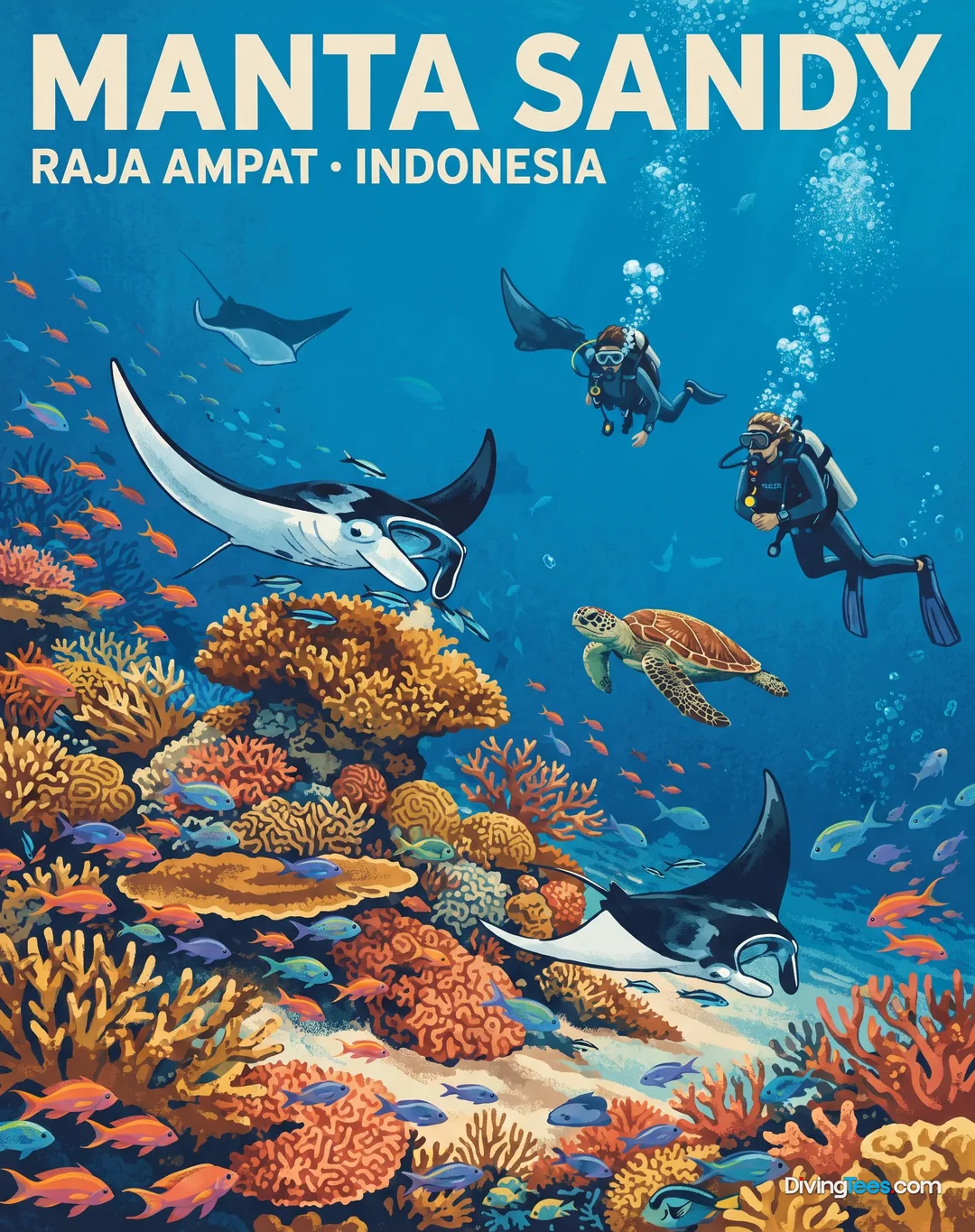
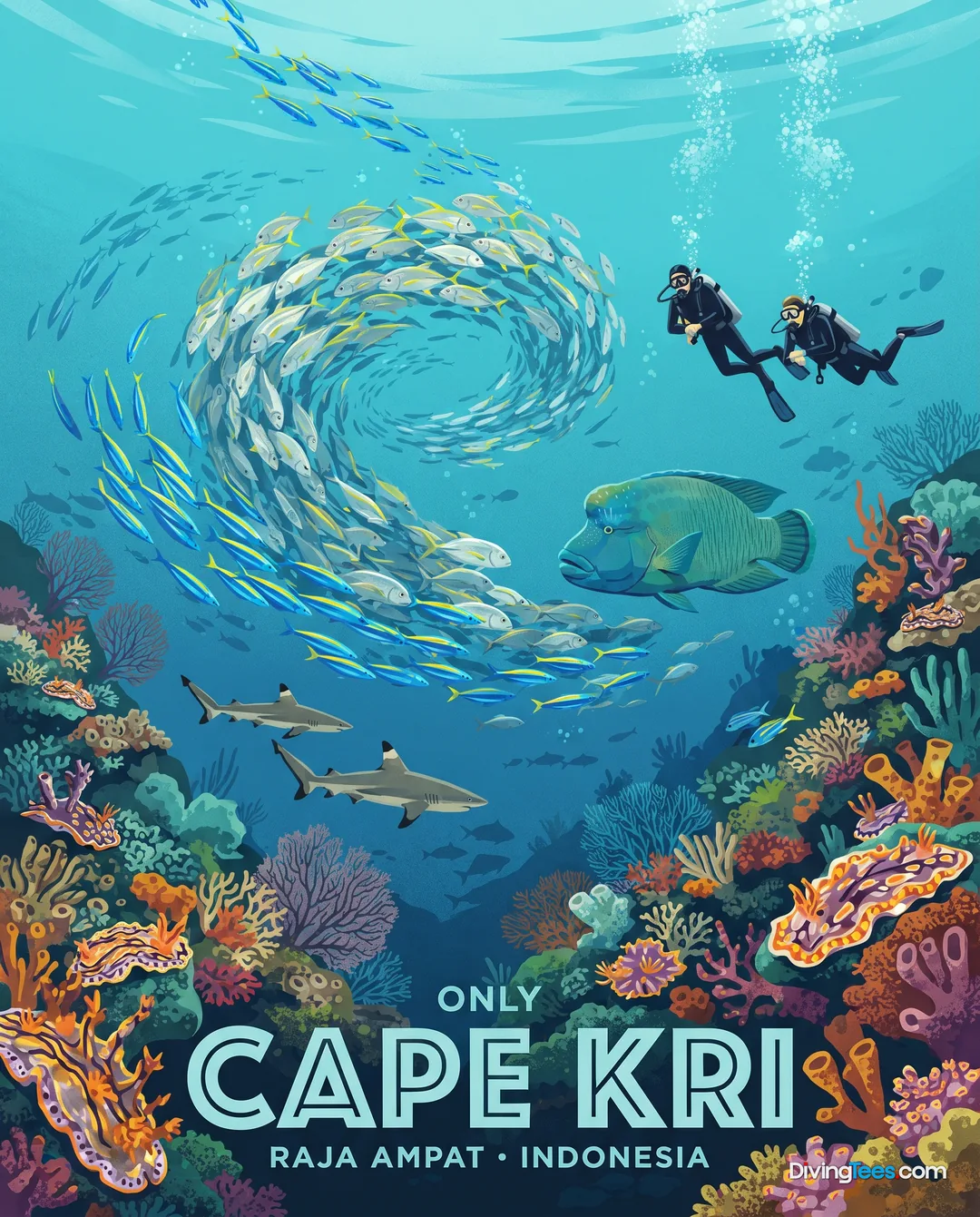
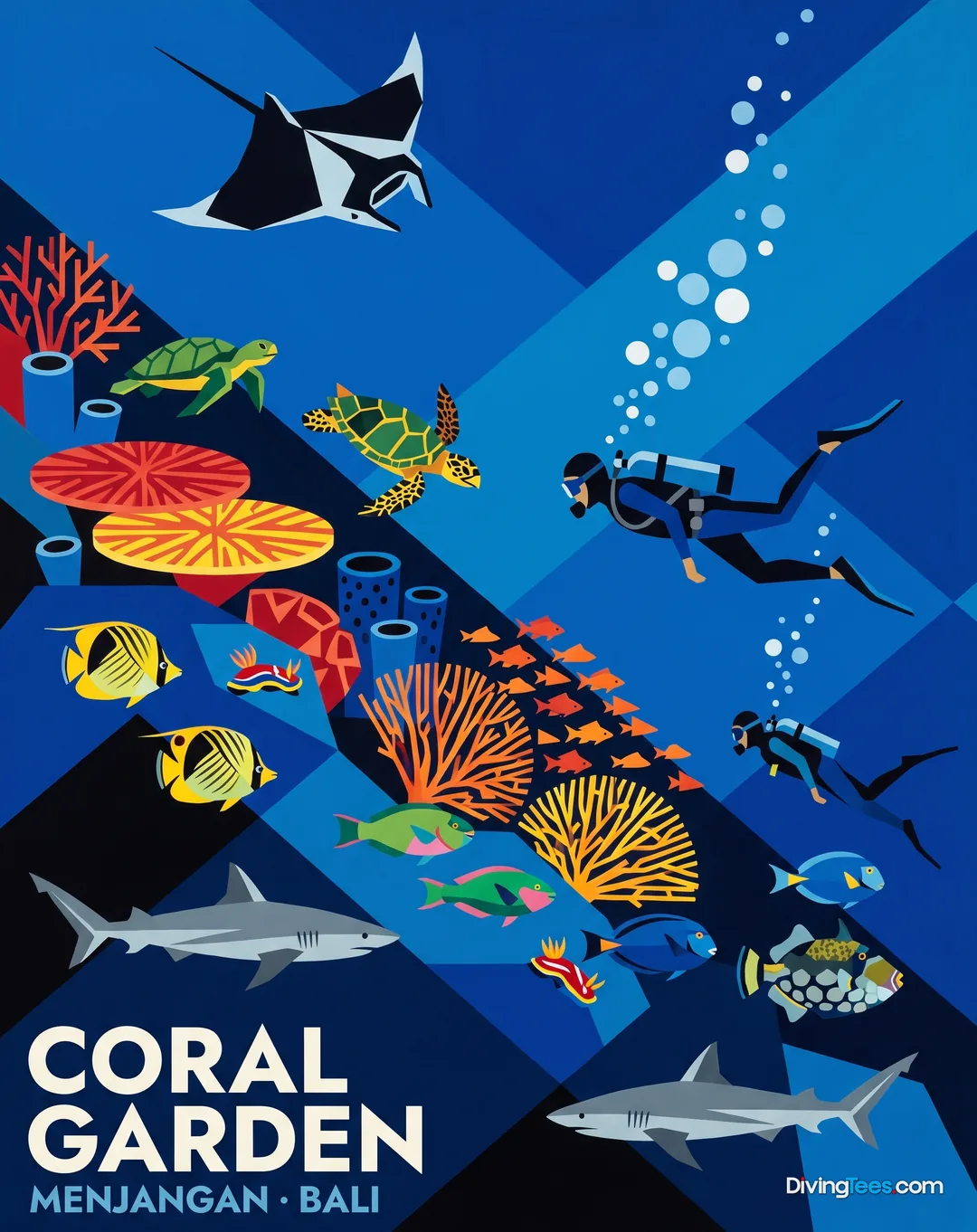
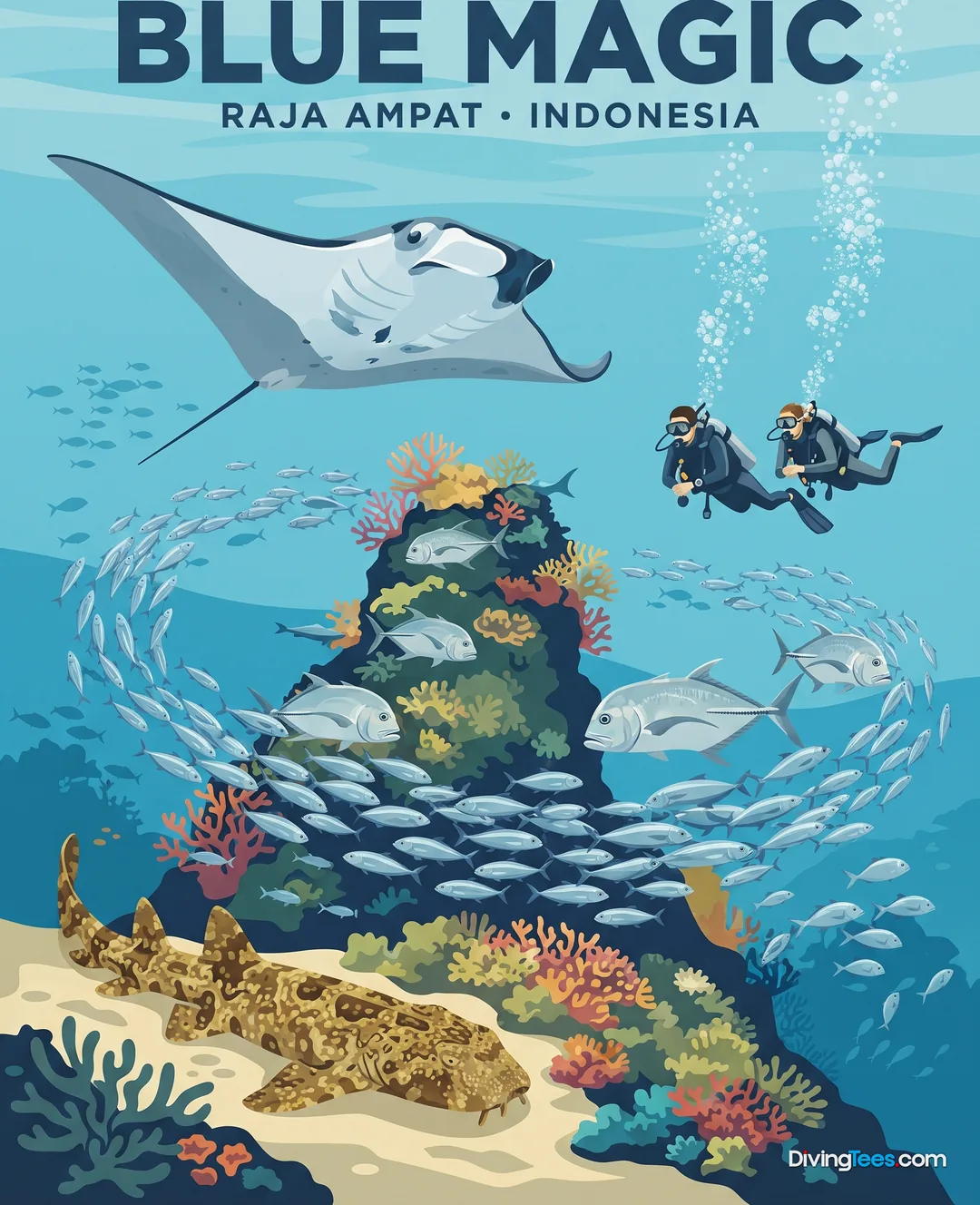
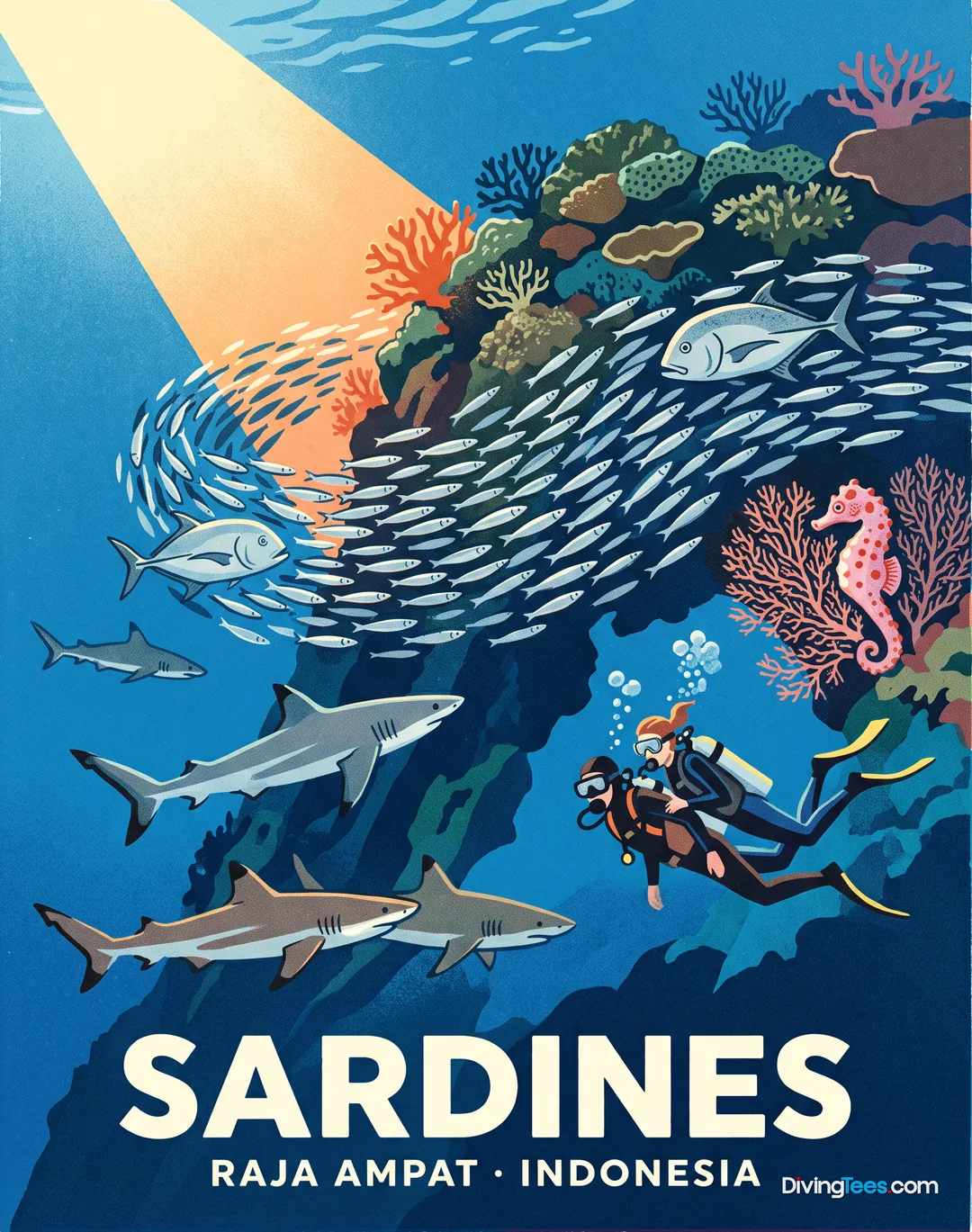
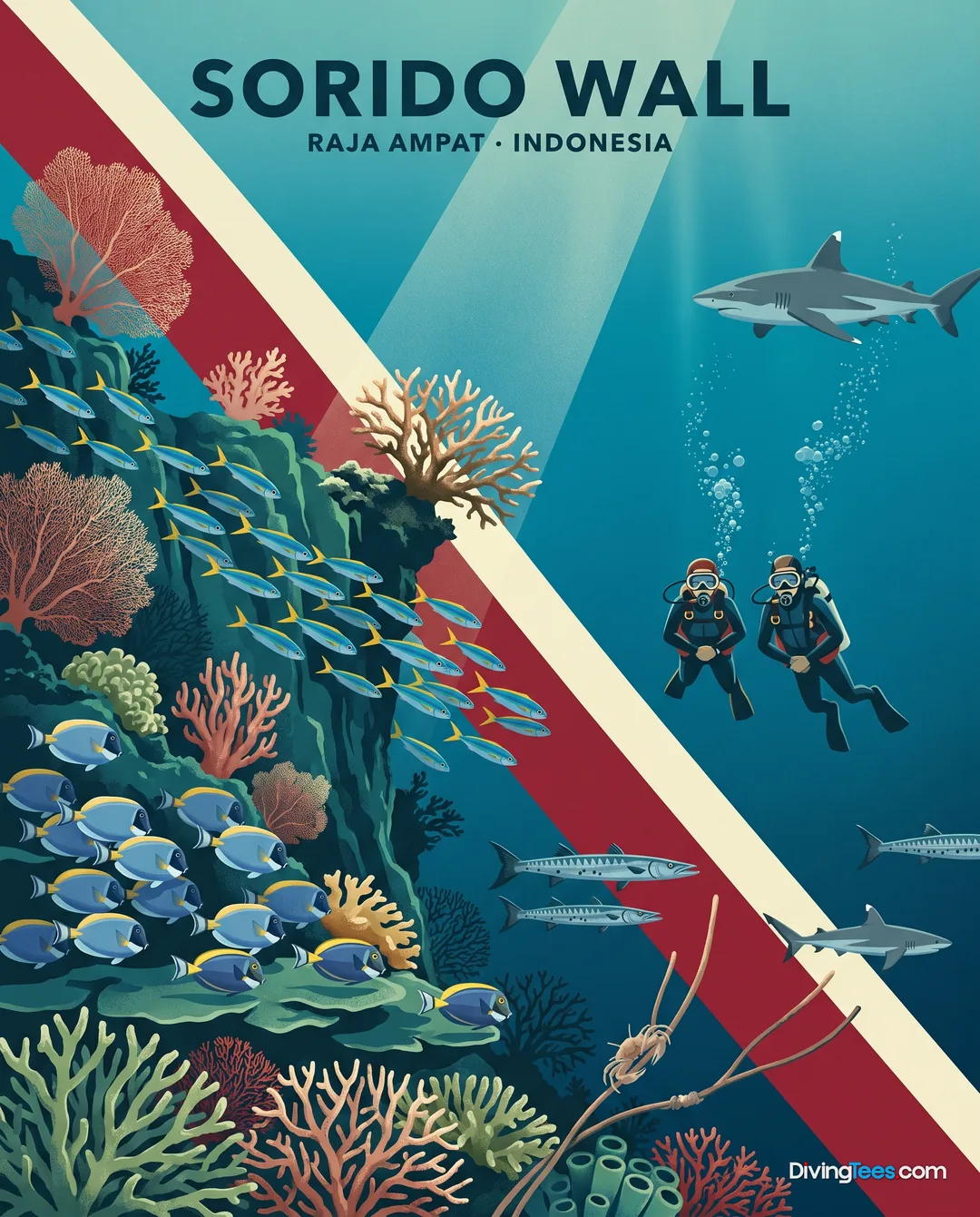
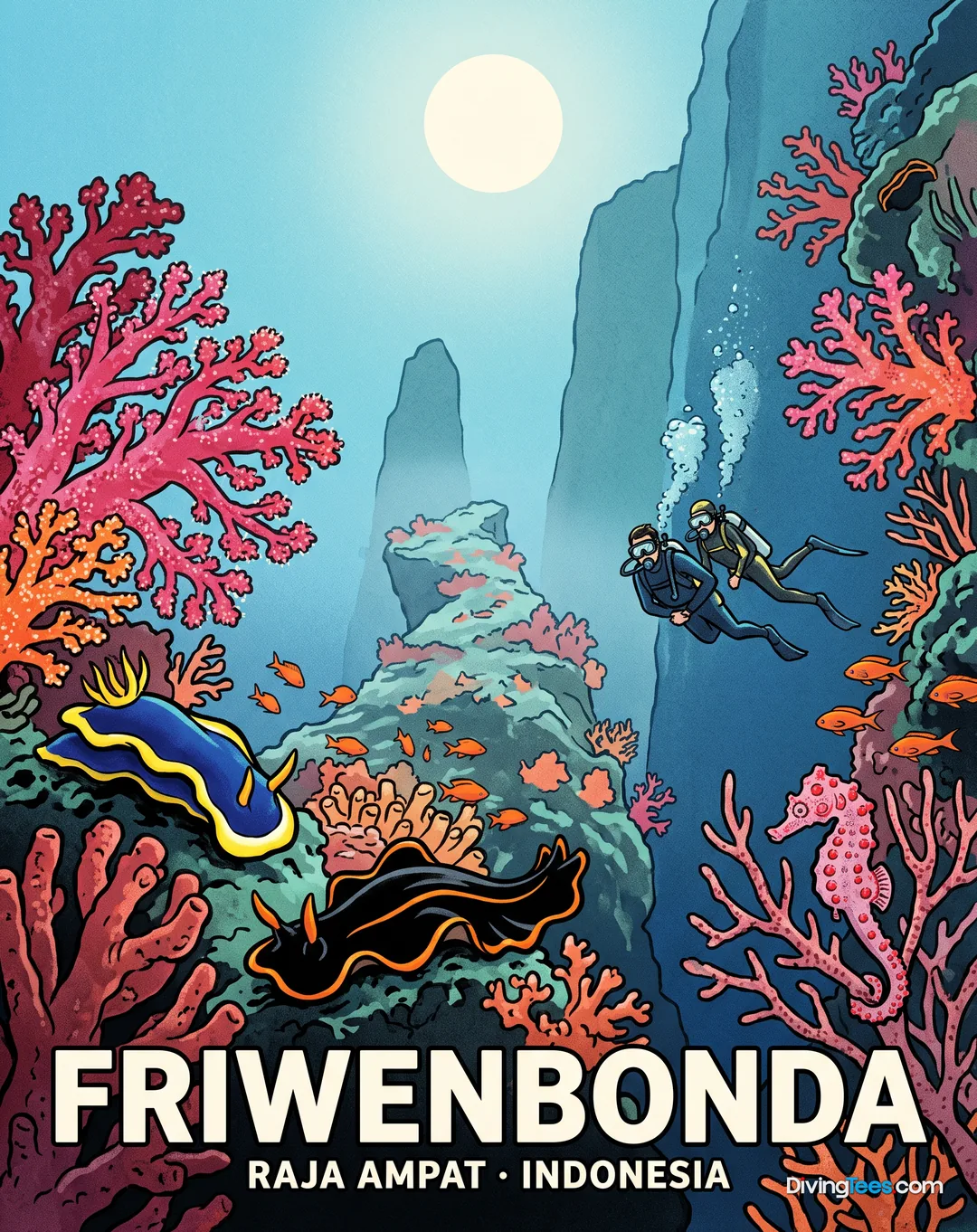
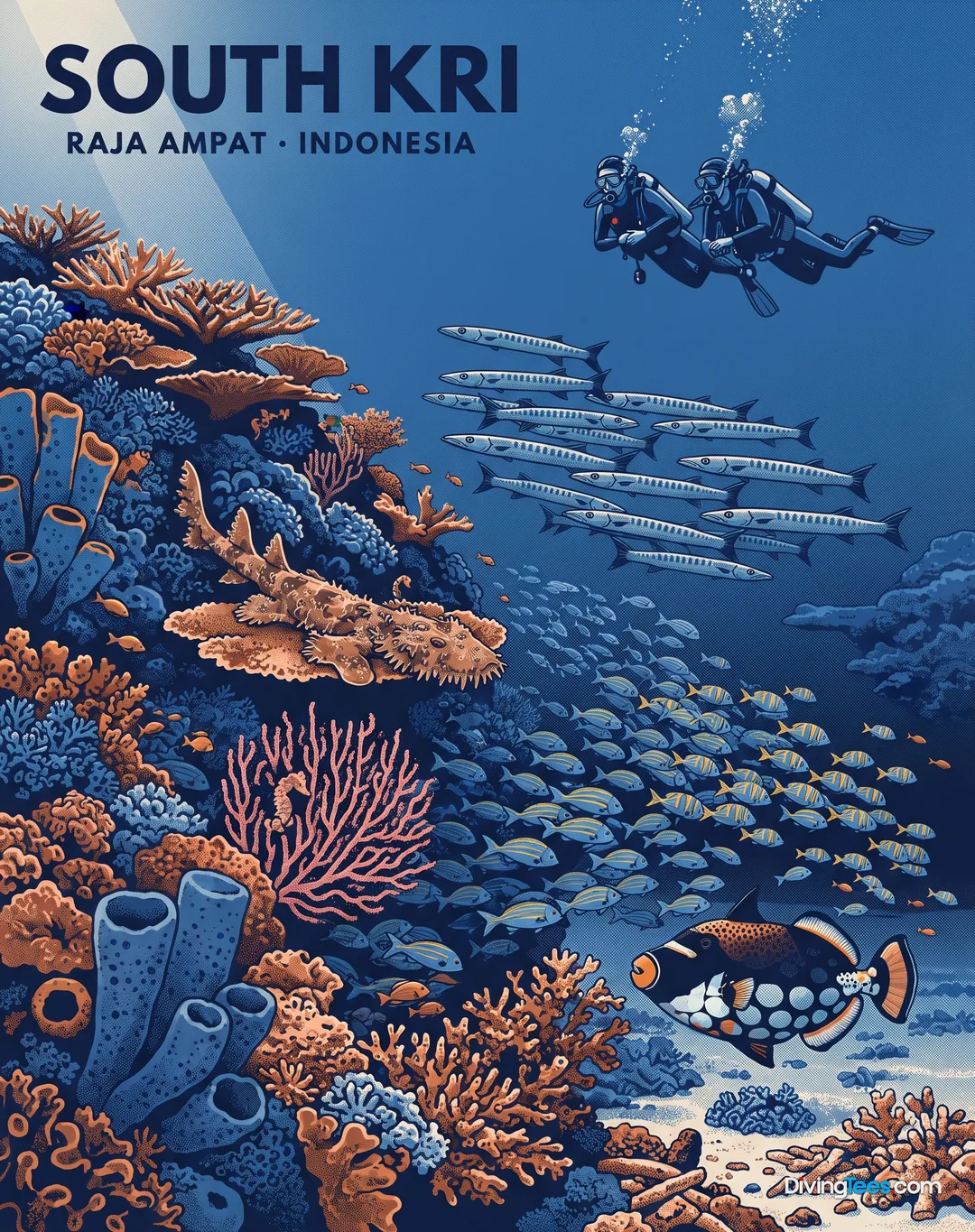
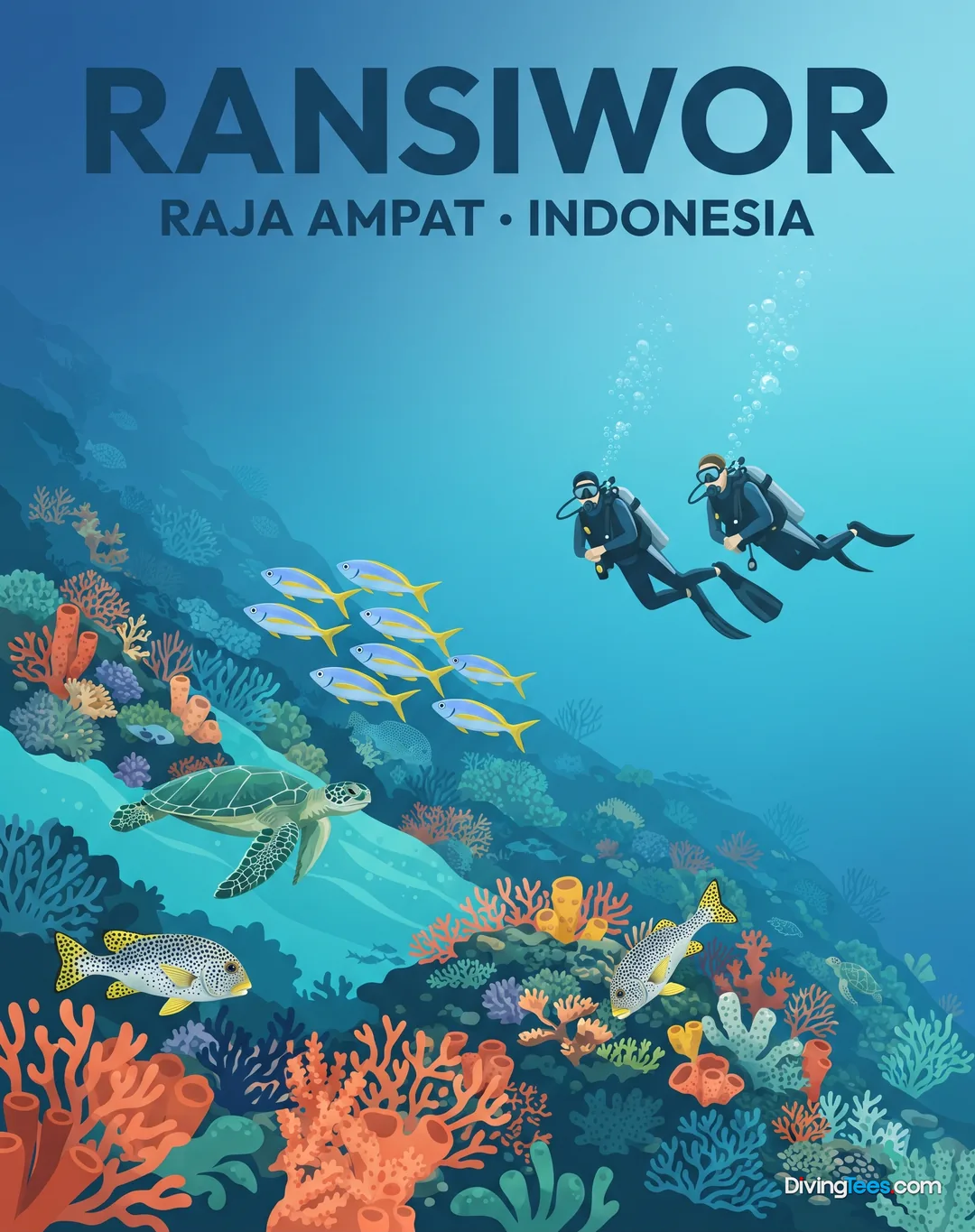
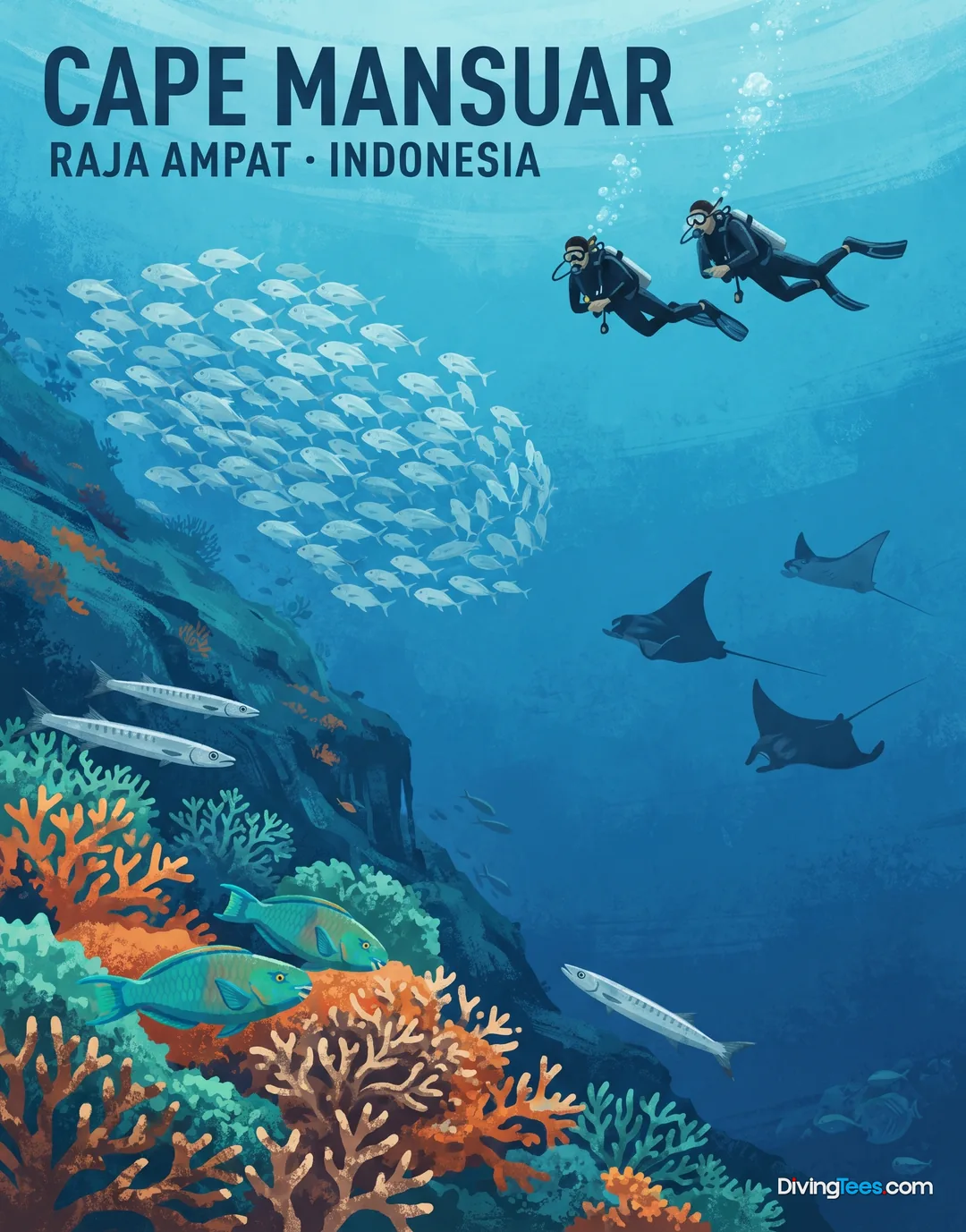
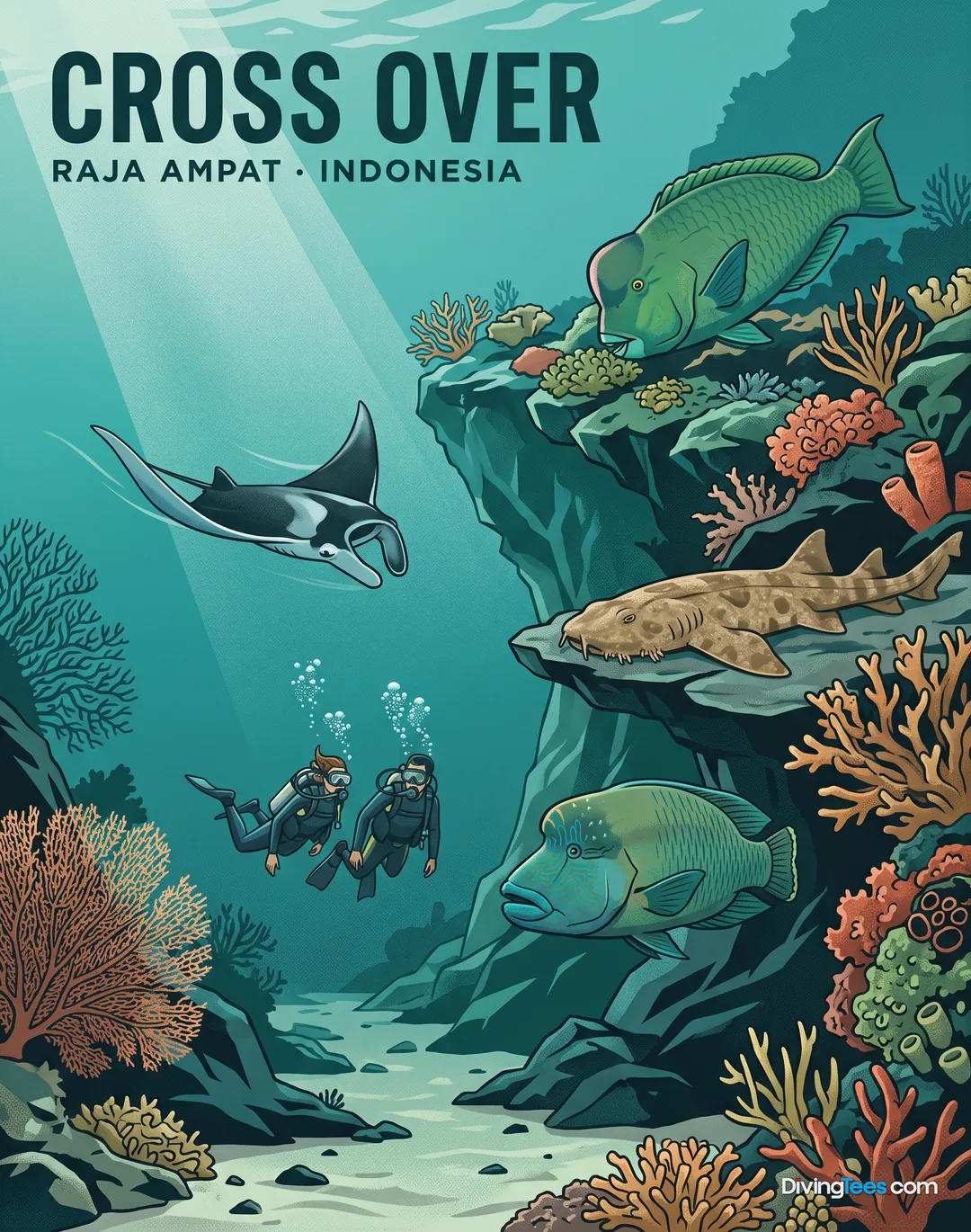
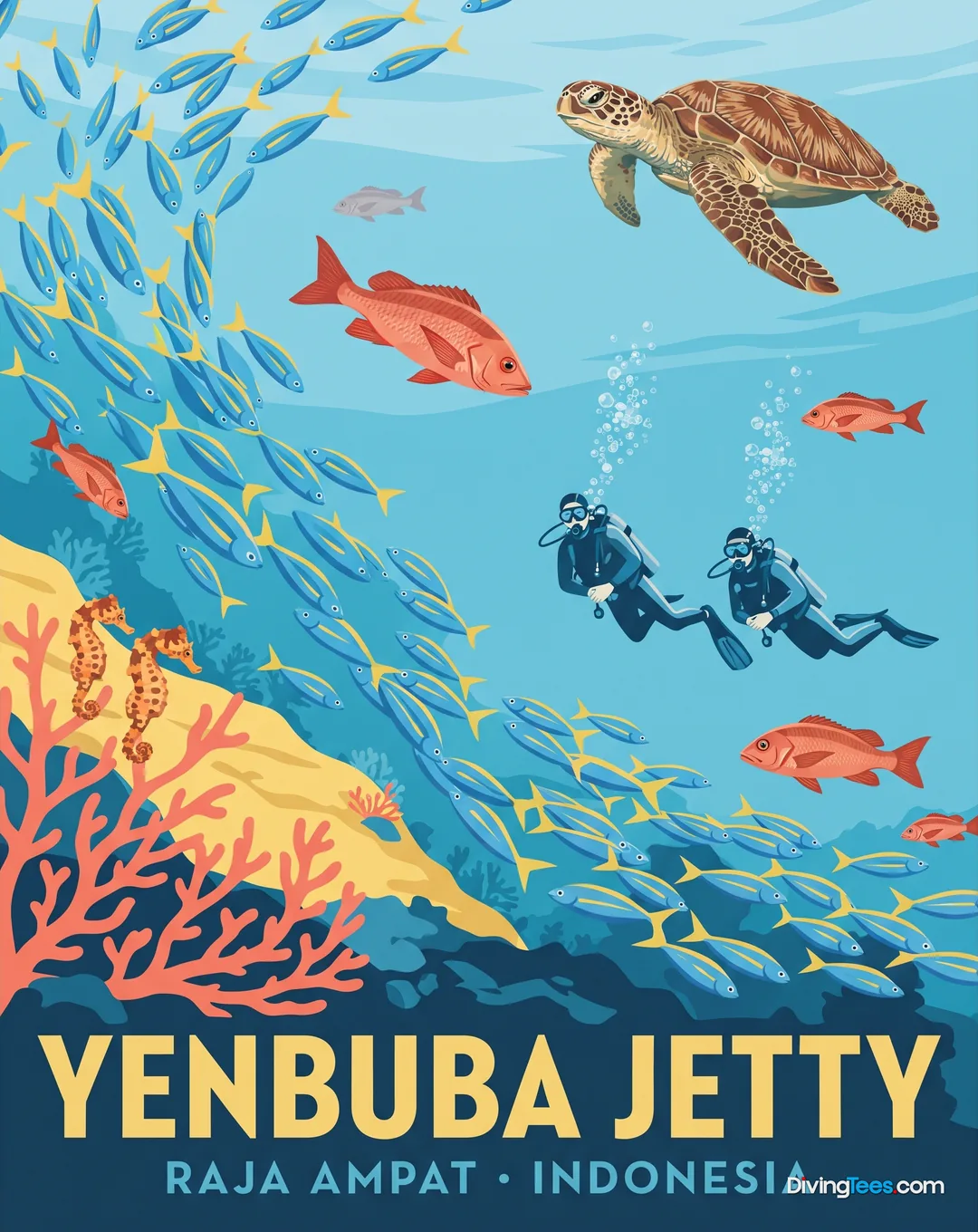
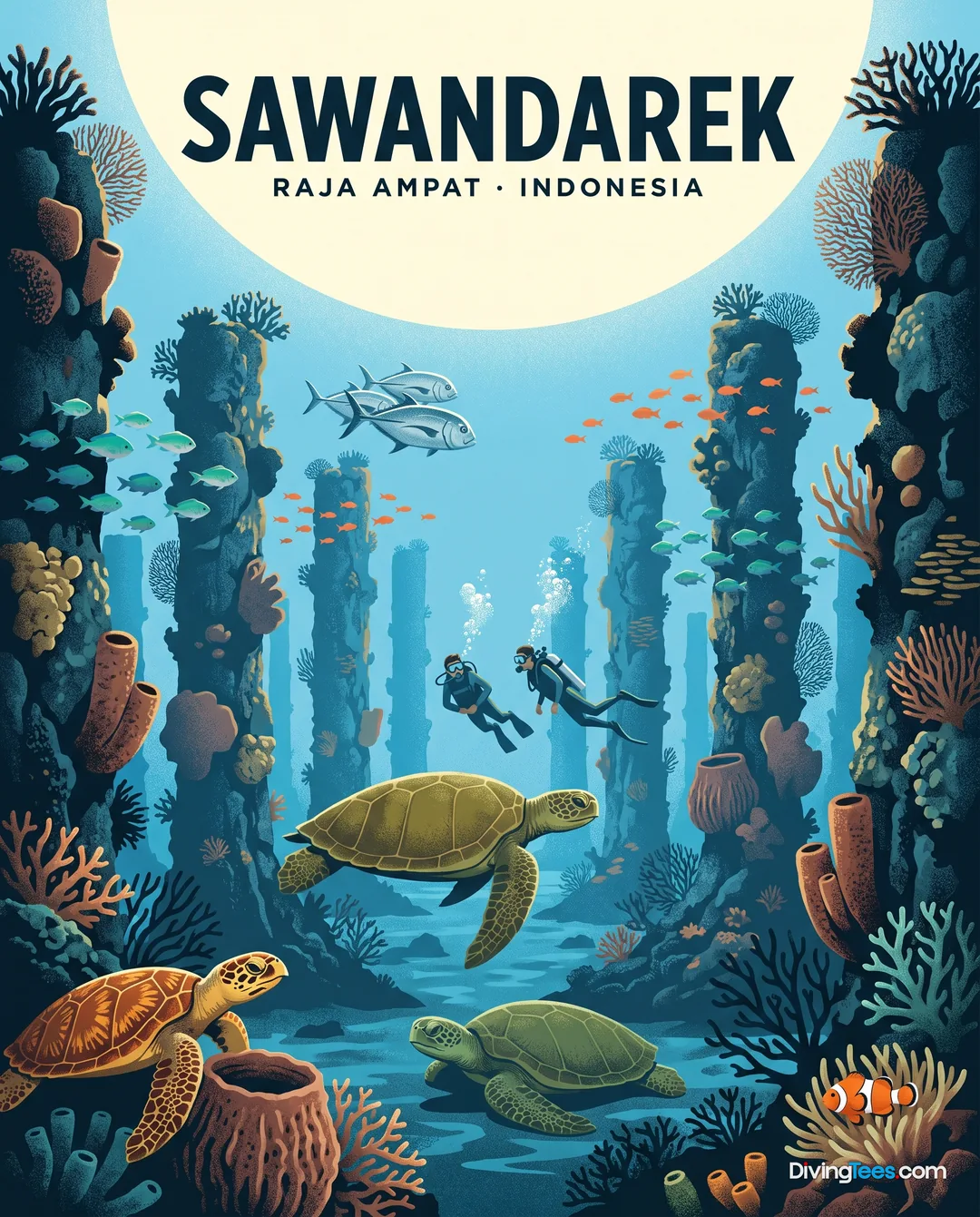
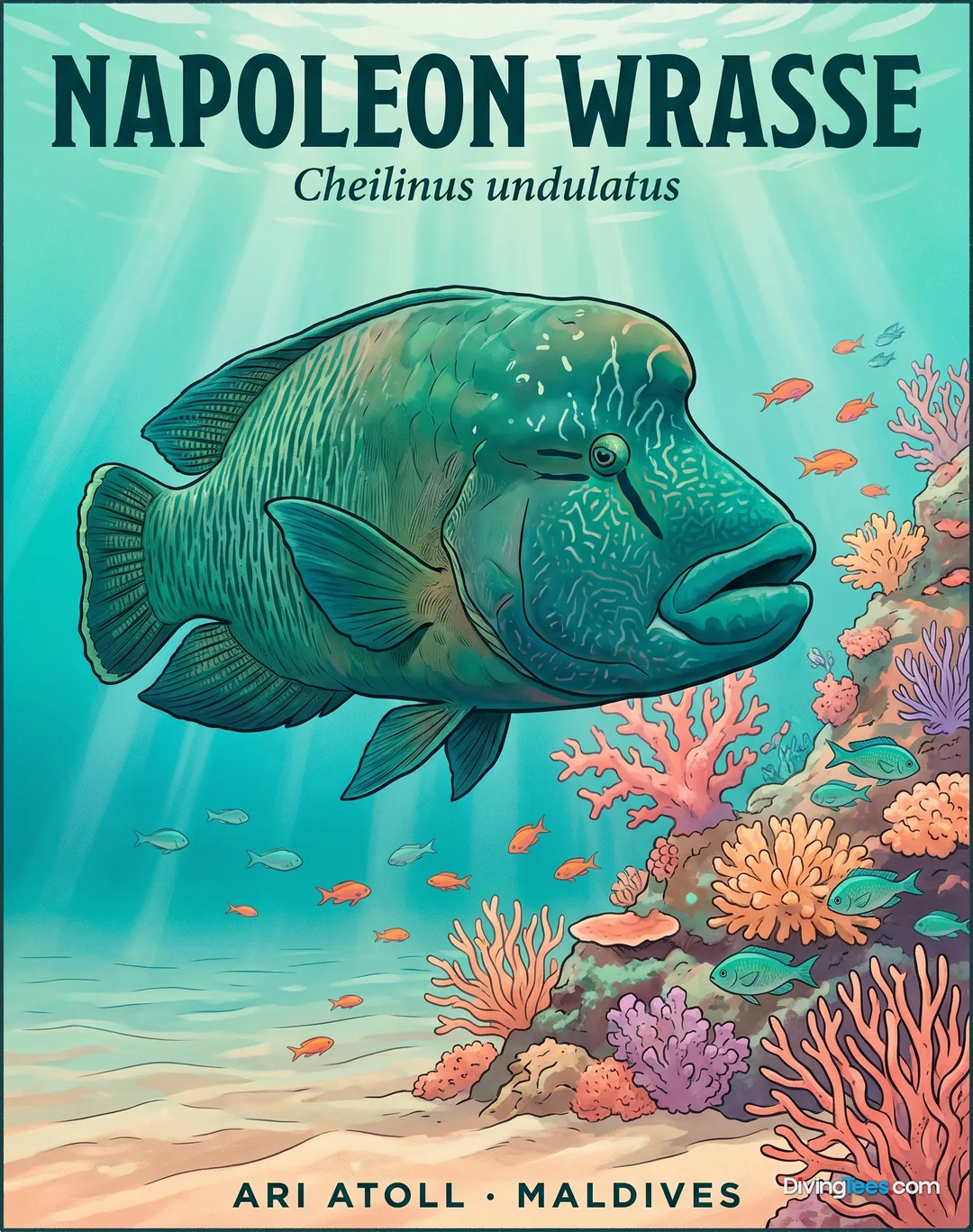
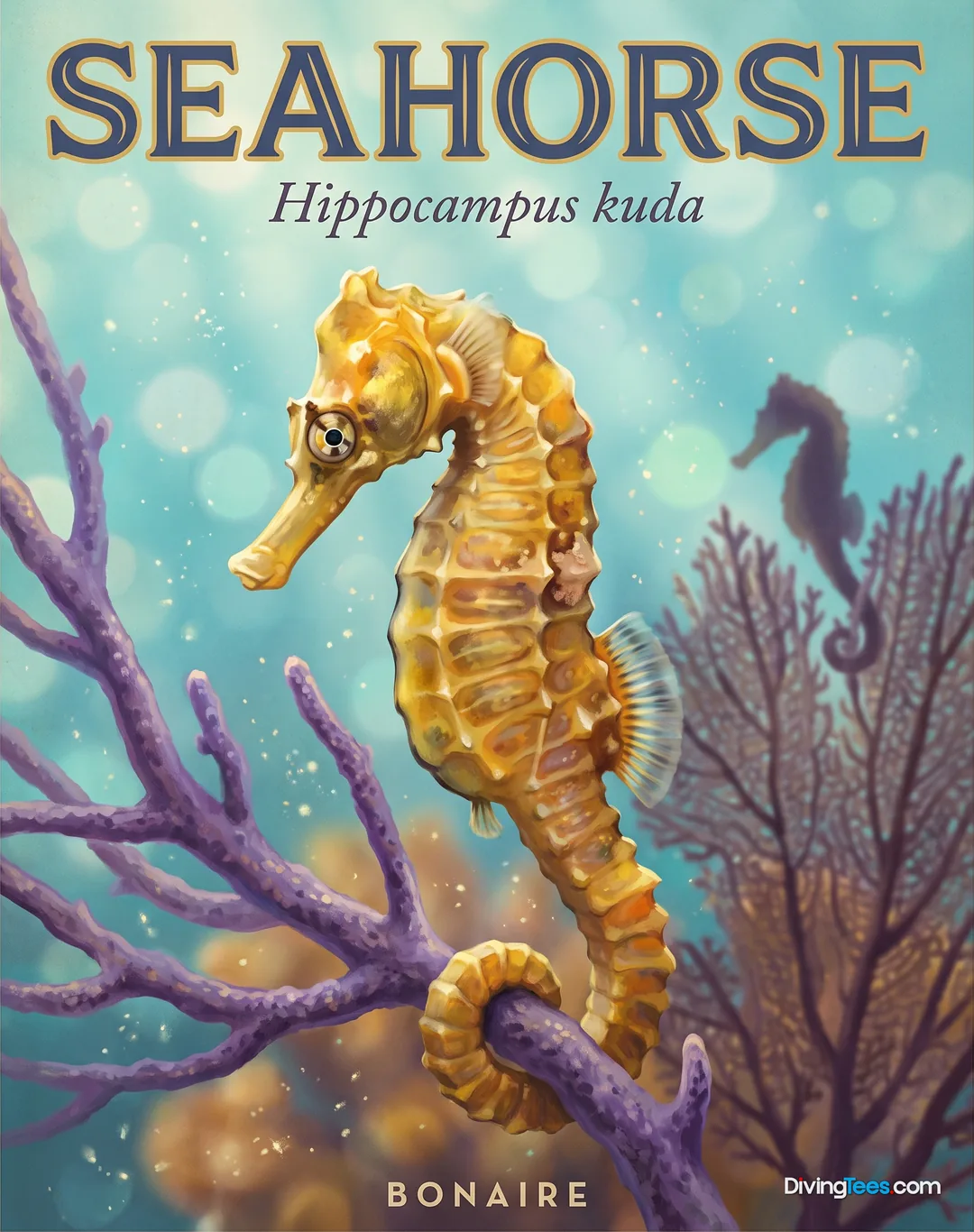
The Raja Ampat route is built around reefs where the current concentrates life. At Manta Sandy, reef manta rays hover over cleaning stations, with snorkelers able to share the encounter from above. Mike’s Point combines reef overhangs crowded with soft corals and sweetlips with a flat plateau where eagle rays may pass; its maximum depth is -40m. Cape Kri is the big-fish site, with dense schools, Napoleon wrasse and reef sharks, and a record of 374 fish species observed on one dive. Melissa’s Garden is a coral garden of soft corals and staghorn formations to -35m. Blue Magic brings schooling fish and the possibility of oceanic manta rays, while Sardines turns huge concentrations of fish into a moving reef scene. Sorido Wall puts barracudas and reef sharks beside fusiliers and surgeonfish; Friwenbonda offers a colourful soft-coral wall and pygmy seahorses. South Kri mixes macro life with schooling fish on a drift. Ransiwor slopes to -30m and its cleaning stations sit beside yellow-back fusiliers. Cape Mansuar and Cross Over use current-swept reefs, while Yenbuba Jetty reaches -30m beneath fish-filled, coral-covered pilings. Sawandarek adds giant green turtles and schooling jackfish in the shallows. Cruises leave from and return to Sorong, lasting 8 days / 7 nights or 12 days / 11 nights.
What you’ll meet underwater
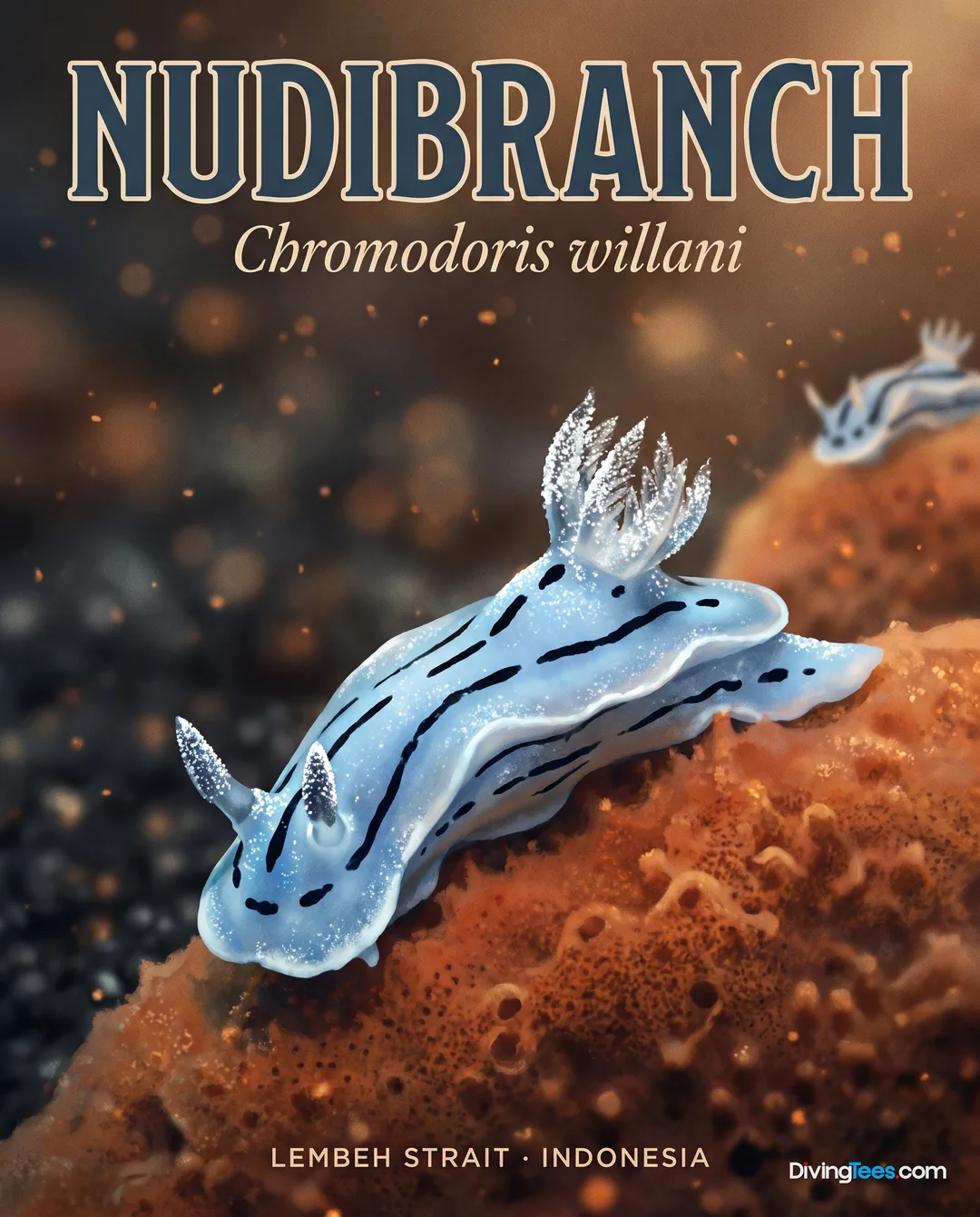
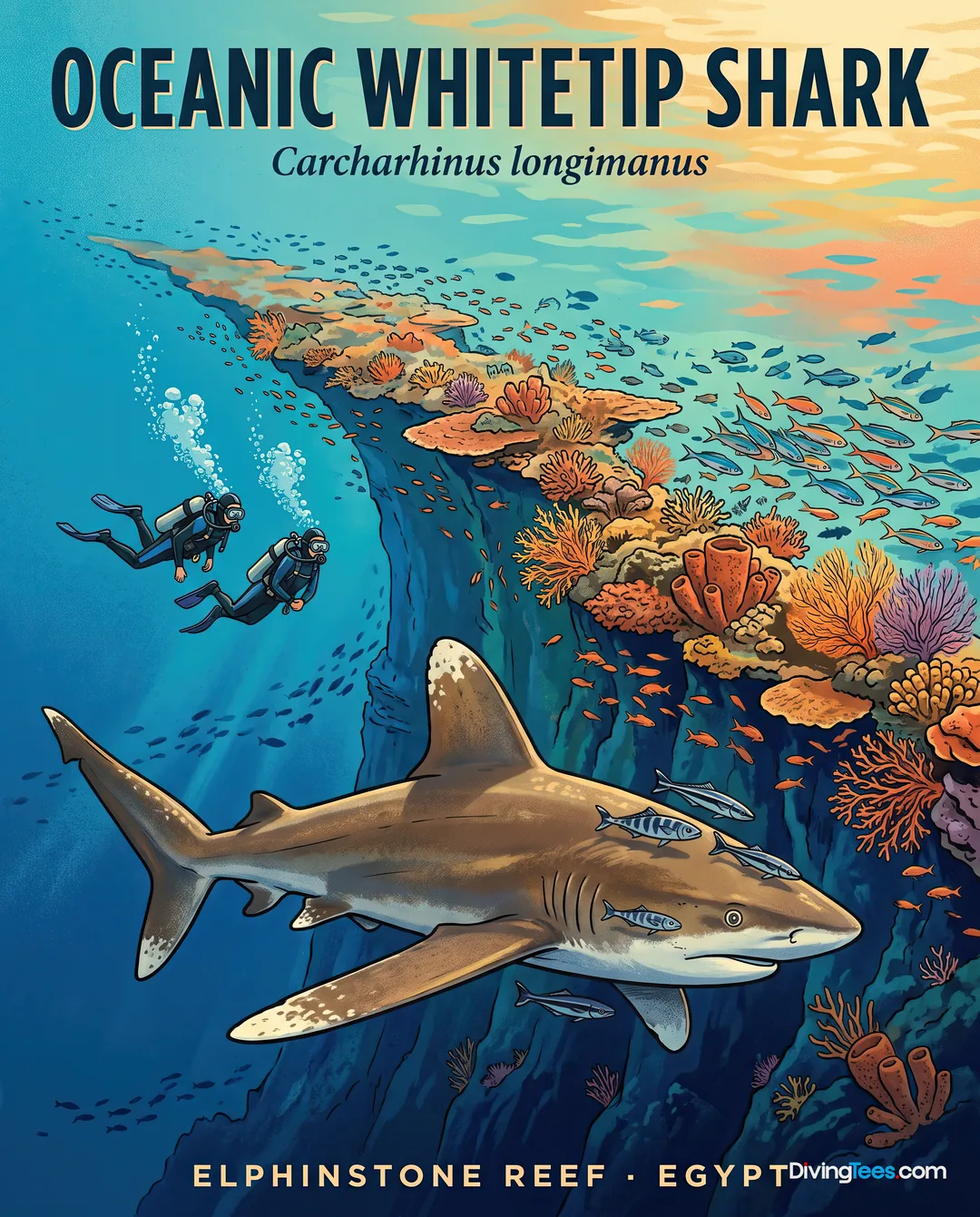
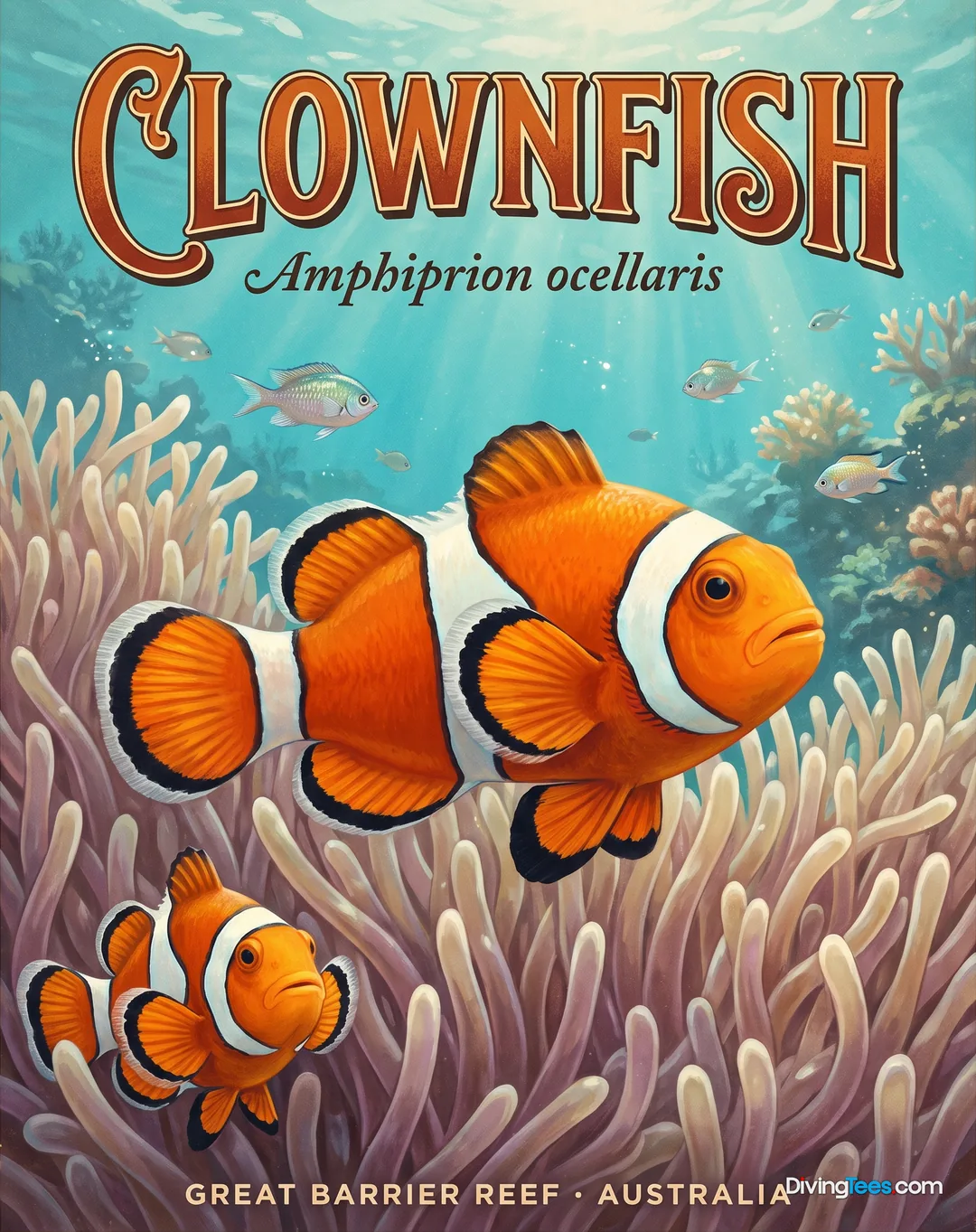
The recurring spectacle is density: barracudas and reef sharks appear across much of the route, with trevallies, fusiliers, Napoleon wrasse, turtles, sweetlips, humphead parrotfish, nudibranchs, soft corals and pygmy seahorses turning many sites into busy water rather than isolated sightings. Currents help explain the larger scenes. They bring schools to Cape Mansuar and Cross Over, while cleaning stations give Manta Sandy and Ransiwor a reason to hold position and watch. Some encounters are tied to one site. Cape Kri is where the route records giant grouper and whitetip reef sharks. Blue Magic is the place for a possible oceanic whitetip shark and tuna among the schools and oceanic manta rays. South Kri is the site associated with bigeye trevally, crabs and shrimp in the macro work. Yenbuba Jetty is where anthias and damselfish are recorded, and Ransiwor is the place for octopus and clownfish. Sorido Wall is the named site for surgeonfish. The reef is never empty, but the larger animals remain sightings, not guarantees.
Who puts you in the water
The dive groups are kept small: two guides for up to eight divers, or one guide for four divers when the group is full. That ratio is useful in Raja Ampat, where a briefing may need to cover current, reef hooks, a wall descent, a cleaning station or a planned drift rather than simply point out the coral. Guided dives are part of the cruise, with two to three dives per day and alternating night dives described for the itineraries. The cruise director and local guide work with the crew on the surface and in the water, and the team speaks English, French and Indonesian. Oxygen, first-aid kits and the boat’s navigation and communications equipment are carried on board. This is a guided Raja Ampat operation, not a self-directed liveaboard.
The dive deck and the gear
The dive operation is compact and properly equipped for the guest count. Wisesa carries two compressors and 22 Luxfer S80 aluminium 12-litre tanks, with DIN/Yoke fittings, weights and weight belts provided for dive cruises. A shaded dive space keeps equipment out of the strongest sun, and the boat has separate camera rinsing, charging stations and a diving platform. Divers enter the water from the platform and are collected by the 5-metre tender, which also handles transfers and excursions. Sidemount diving is supported. Scuba equipment is not included as standard, but rental gear is available on board: Scubapro regulators, BCDs, wetsuits with booties, computers, torches and complete sets without a computer. The setup is built around eight divers moving cleanly through the day.
Between dives
Between dives, the Wisesa offers several ways to be still without putting everyone in the same chair. The shaded dive area is close to the action, while the main lounge gives a place to read, nap, edit photographs or watch the crew prepare the next meal. The upper deck is for open air, sun and the wider view: during navigation it is also where whales and dolphins may be watched from the surface. Kayaks and stand-up paddleboards take the group away from the hull when a quiet bay or beach makes that worthwhile. Shore excursions can include villages, viewpoints, rainforest walks and small islands, with a naturalist guide accompanying the land programme. On a day when there is no immediate dive, the boat’s size works in its favour. The sea stays close, the deck never becomes a shopping mall, and the gap between dives can remain a real pause rather than another scheduled attraction.
A day on board
A dive day begins with the crew preparing the deck before the first briefing. Divers assemble gear, listen to the plan for the site and current, then enter from the platform while the tender follows the group’s bubbles and collects them where they surface. Two or three guided dives punctuate the day, with breakfast and hot meals placed around them and fruit, drinks and other snacks available whenever a diver comes back hungry. Surface intervals belong to the shaded deck, the lounge, a camera rinse or a quiet nap. When the boat is under way, the upper deck gives the best view of the limestone islands and open water; a shore visit, kayak outing or beach barbecue may replace part of the usual pause. On selected days, an additional night dive alternates with the daytime programme. After dinner, the boat settles into its anchorage or continues a passage, and the last conversation usually concerns the animal that appeared for only a few seconds. Then the lower-deck cabins take over until the next briefing.
What you eat aboard
The galley sends out full-board meals, with breakfast, two hot meals and snacks available through the day. The cooking combines local Indonesian dishes with Western food, and vegetarian and vegan options are available; fresh food is prepared in generous portions, with non-alcoholic drinks, water, tea and coffee included. Beer and wine are available separately. Meals are not an afterthought between dives. They are where the group compares the current, the fish and the photographs from the previous drop, then eats again before the next briefing. Dining can move outside, and a beach barbecue is part of the cruise rather than an optional shore treat. The chef’s role matters on a dive boat: food has to arrive regularly, suit different diets and give tired divers something substantial without turning every surface interval into a formal event. Wisesa’s kitchen is built for that rhythm.
Nights at sea
The four cabins are on the lower deck, each with air conditioning, a porthole and a bathroom arrangement that depends on the category. Bali and Lombok share a bathroom; Flores has its own, and the larger Papua cabin has a private bathroom, a queen bed and two bunks suited to a family or friends travelling together. Bali and Lombok each have a 140 × 200 cm double bed, while Flores has the same large double bed and Papua has a 160 × 200 cm queen bed with two 90 × 200 cm bunks. That layout gives the boat a useful choice rather than four identical rooms. Nights are quieter in the cabins than on the working decks, but the Wisesa remains a wooden liveaboard: you are close to the sea and to the boat’s movement. The air conditioning, daily housekeeping and clean bathrooms make the lower deck a reliable place to recover after diving.
Cabins Lombok & Bali
Cabin Flores
Cabins Papua
What to know before boarding
Raja Ampat cruises depart from and return to Sorong, Indonesia. Airport transfers to the boat and back to the airport or hotel are included; the crew needs the flight or accommodation details to organise them. Arriving in Sorong the night before is strongly advised, so a delayed or cancelled flight does not put the boarding connection at risk.
Deck plan
- Year built
- 2016
- Length
- 30 m
- Beam
- 5.6 m
- Maximum number of passengers
- 8
- Number of cabins
- 4
- Cruising speed
- 5 to 8 knots
- Website
- cruising-raja-ampat.com ↗
See dates and prices
If you click these links and make a purchase on the partner site, DivingDeal may earn a commission, at no extra cost to you.
Hello, I'm Marina, DivingDeal.com's AI assistant. I answer in detail about hotels, dive centres and liveaboards.
Thinking about the whole trip and the flights? Talk it over with Edith →
Marina is an AI. Some links are affiliate links: DivingDeal may earn a commission, at no extra cost to you. Bookings are made with the partner.