Liveaboards · Indonesia
Blue Lotus — a new phinisi built around Komodo diving
What makes this boat unique
- Blue Lotus runs round-trip Komodo voyages from Labuan Bajo, with departures lasting 5 to 7 days.
- The route combines current-swept pinnacles, manta sites, coral gardens, macro dives and guided land excursions to see Komodo dragons.
- The dive operation includes shaded preparation space, DIN adapters, separate rinse facilities, Nitrox and two diver tenders.
- Cabins are air-conditioned and ensuite, with panoramic sea-view windows and an accessible balcony in the cabin arrangement.
For subtitles in English: start the video firstthen click the gearat the top right of the video, select “Subtitles/CC”, then “Auto-translate” and choose “English”.
The invitation
Blue Lotus is for divers who want Komodo’s full range in one trip: mantas over shallow cleaning areas, reef sharks in the current, dense coral on a pinnacle, and small life hiding in sand and bommies. The boat is a traditional phinisi shaped for dive travel rather than a converted pleasure craft, so the reason to board is clear from the start: spend the days moving between Komodo’s signature sites, with land excursions and sunset walks built into the voyage. It suits divers who want serious water without giving up a private cabin, air conditioning and space to recover between dives. Komodo can be gentle at Siaba Besar or Sebayur Kecil, then become fast and technical at Castle Rock, Crystal Rock or Shotgun. That contrast is the point. One itinerary can give a newer diver a calm reef and give a current-hungry diver a proper ride.
Boarding
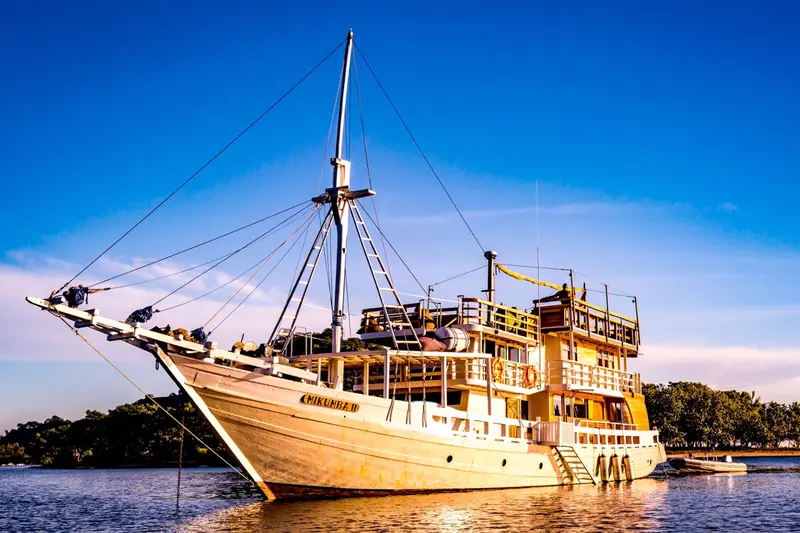
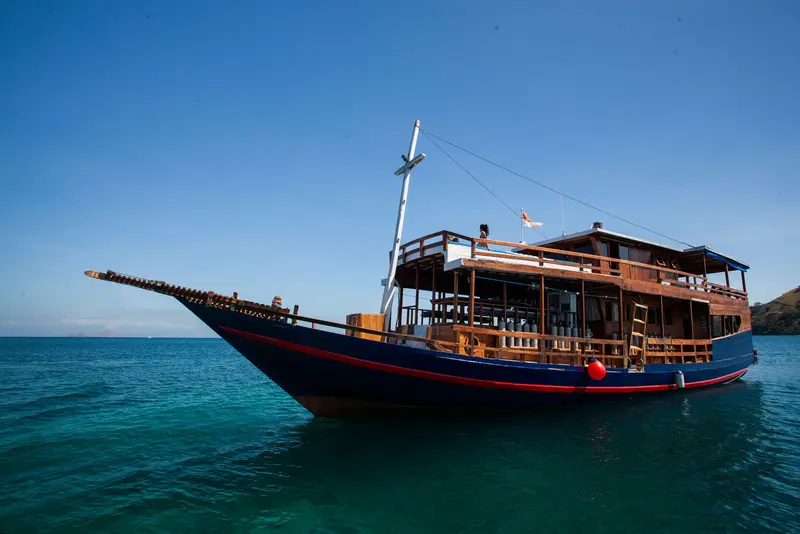
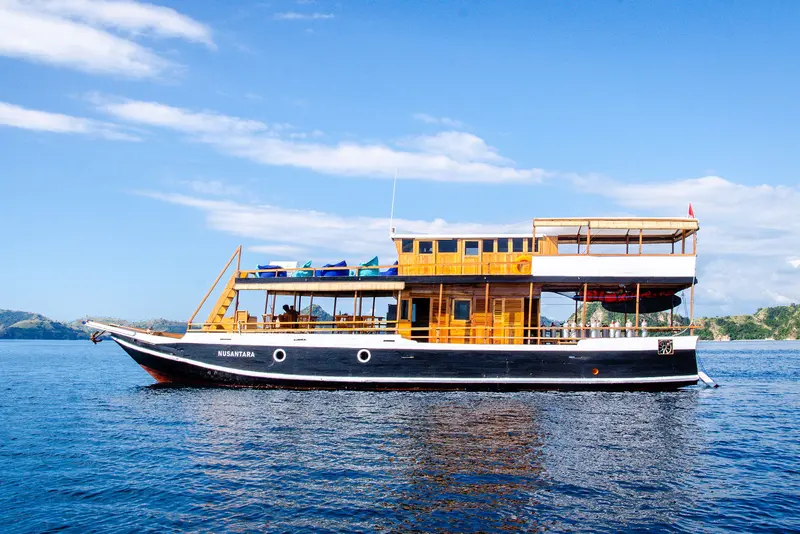
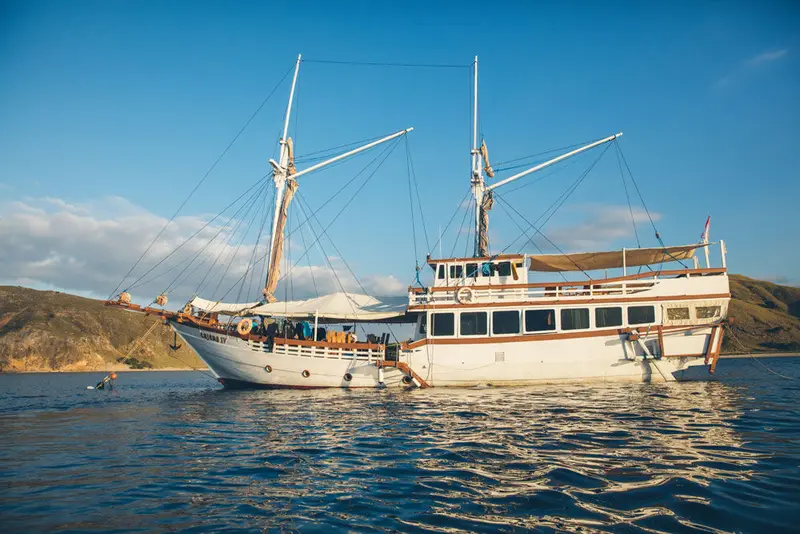
From the dock, Blue Lotus presents the familiar lines of an Indonesian phinisi, with traditional wooden construction carrying a modern dive operation. Built in 2025, it has the feel of a new vessel rather than an old liveaboard dressed up for another season: clean common spaces, dedicated dive areas and a layout made for moving from cabin to water without crossing the whole boat. The atmosphere is more intimate than a large steel liveaboard. Guests share the boat closely, but the group remains small enough for the crew to recognise who is preparing for which dive and who wants a quiet corner afterward. The ride between sites is described as smooth, and the open areas let Komodo stay in view while the boat is underway. This is a compact, purpose-built phinisi for divers who want the character of a wooden Indonesian vessel with the practical side of a recent build.
The atmosphere on board
Blue Lotus is small-group diving with the crew close to the action rather than hidden behind a service structure. The operation combines local and international crew, with English spoken on board, and the crew-to-passenger ratio is close to one-to-one. In practice, that means help is near when a harness, camera or tender entry needs sorting, while the social spaces remain relaxed rather than formal. The boat’s strongest impression comes after diving: food, sightings and current stories bring people back to the same table, then the evening spreads between the salon and open deck. Some guests will want a drink or a film; others will sit outside and watch the islands darken. The crew’s role is not only to serve meals or drive the tenders. They keep the dive operation moving, read the group’s energy and make a week of demanding water feel manageable.
The sites you’ll dive
The route is Komodo round trip from Labuan Bajo, with recorded departures of 5, 6 or 7 days, and up to 23 dives on the longer programmes. Batu Bolong is the compact pinnacle that earns repeated attention: coral walls, giant trevally and Napoleon wrasse down to -40m. Castle Rock reaches -30m and Crystal Rock -30m, both exposed pinnacles where current concentrates reef sharks, barracudas, trevally and other pelagics; they suit divers comfortable in moving water. Shotgun is the current funnel, a drift through the Cauldron and narrow channel to a shallower reef, with a maximum of -25m. Manta Alley is a channel dive to -20m where strong current can bring groups of reef manta rays. Siaba Besar is the gentler counterpoint at -18m, with frogfish, blue-ringed octopus, turtles and macro life among coral bommies. Wainilu has no stated maximum depth and offers sandy-slope macro hunting. Tatawa Besar, Tatawa Kecil, Sebayur Kecil, Golden Passage, Siaba Kecil, Cannibal Rock and Pengah Kecil add current drifts, coral slopes, pelagics and specialised macro encounters, with maximum depths from -25m to -30m where stated.
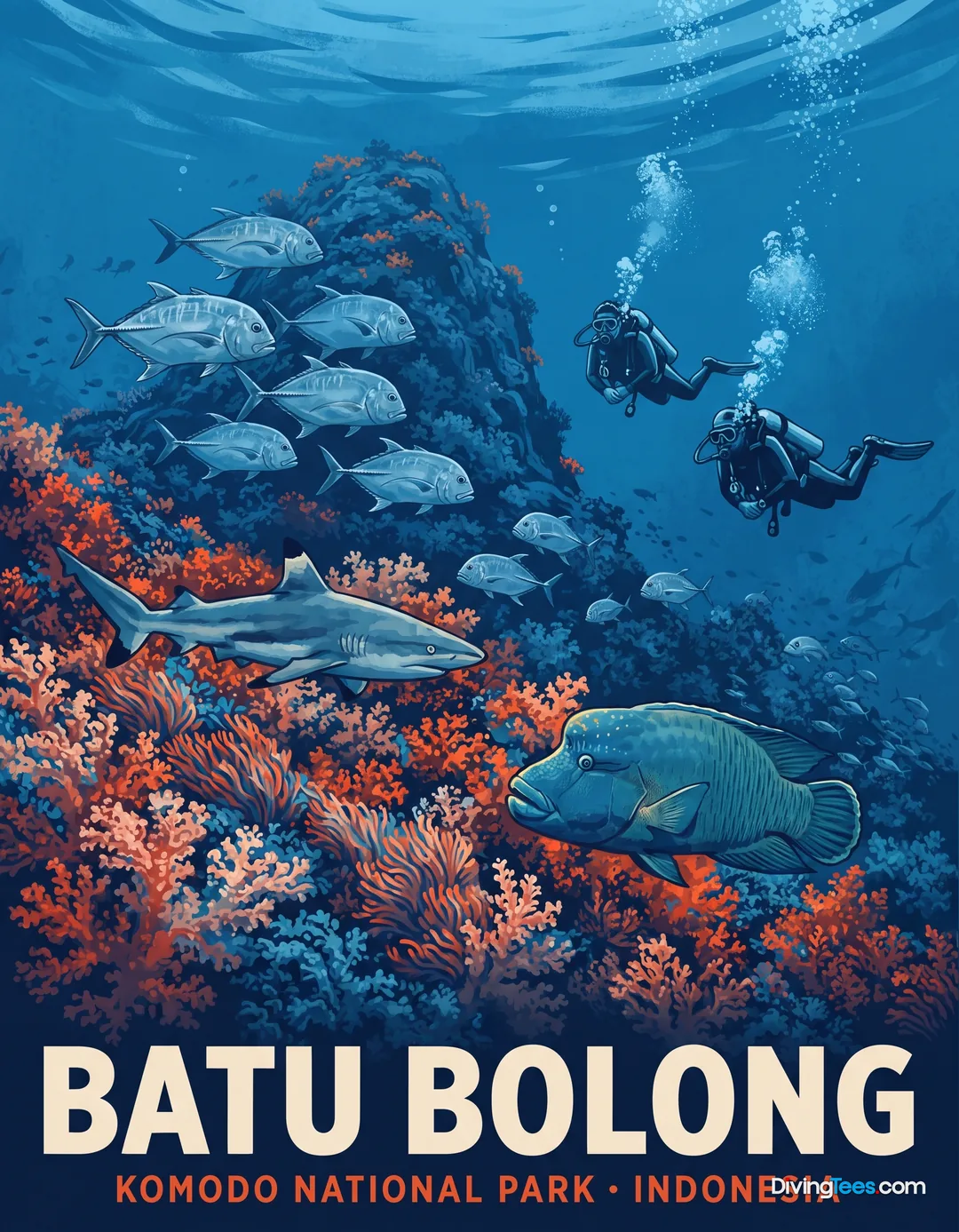
Batu Bolong →
Max. depth · 40 m
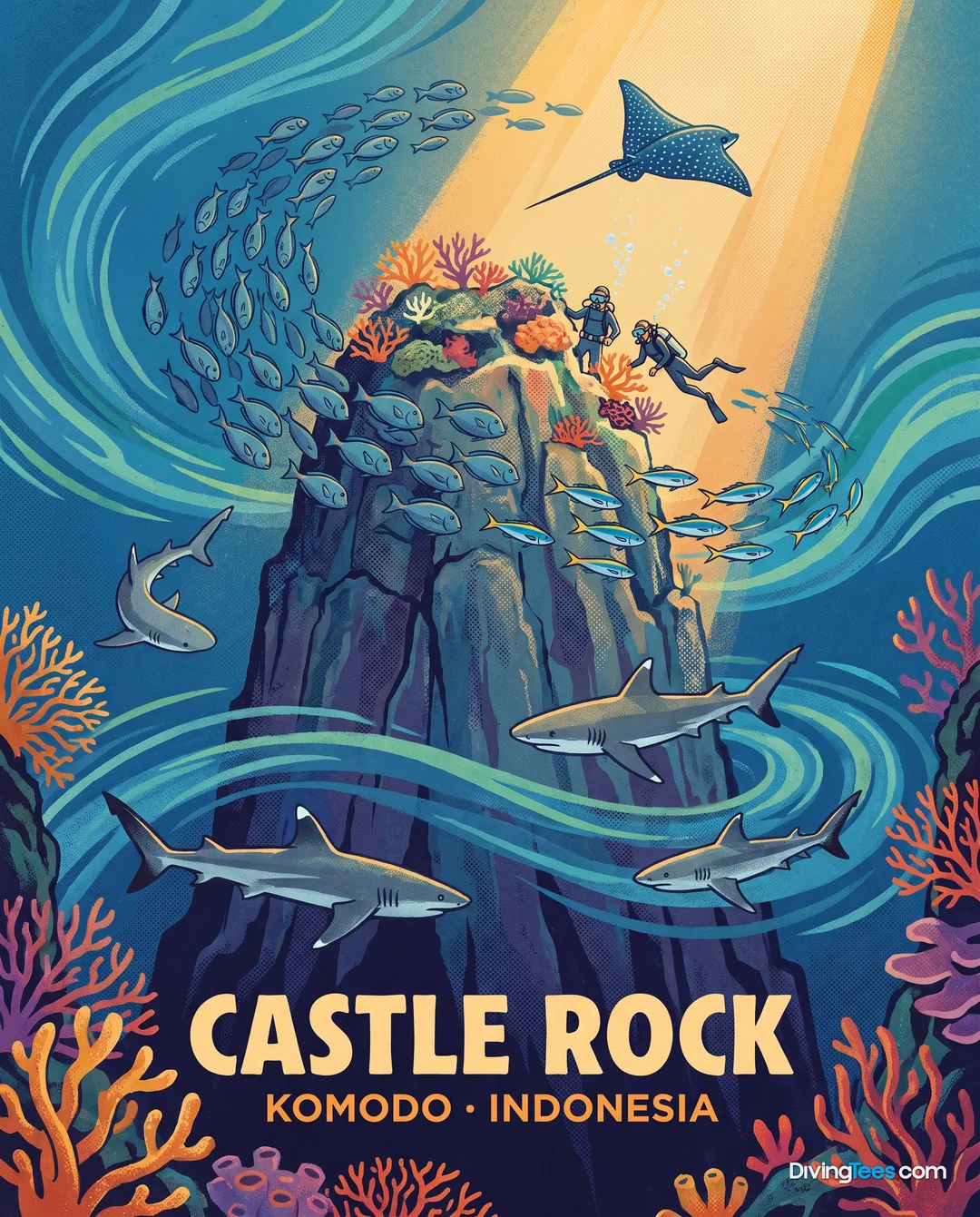
Castle Rock →
Max. depth · 30 m
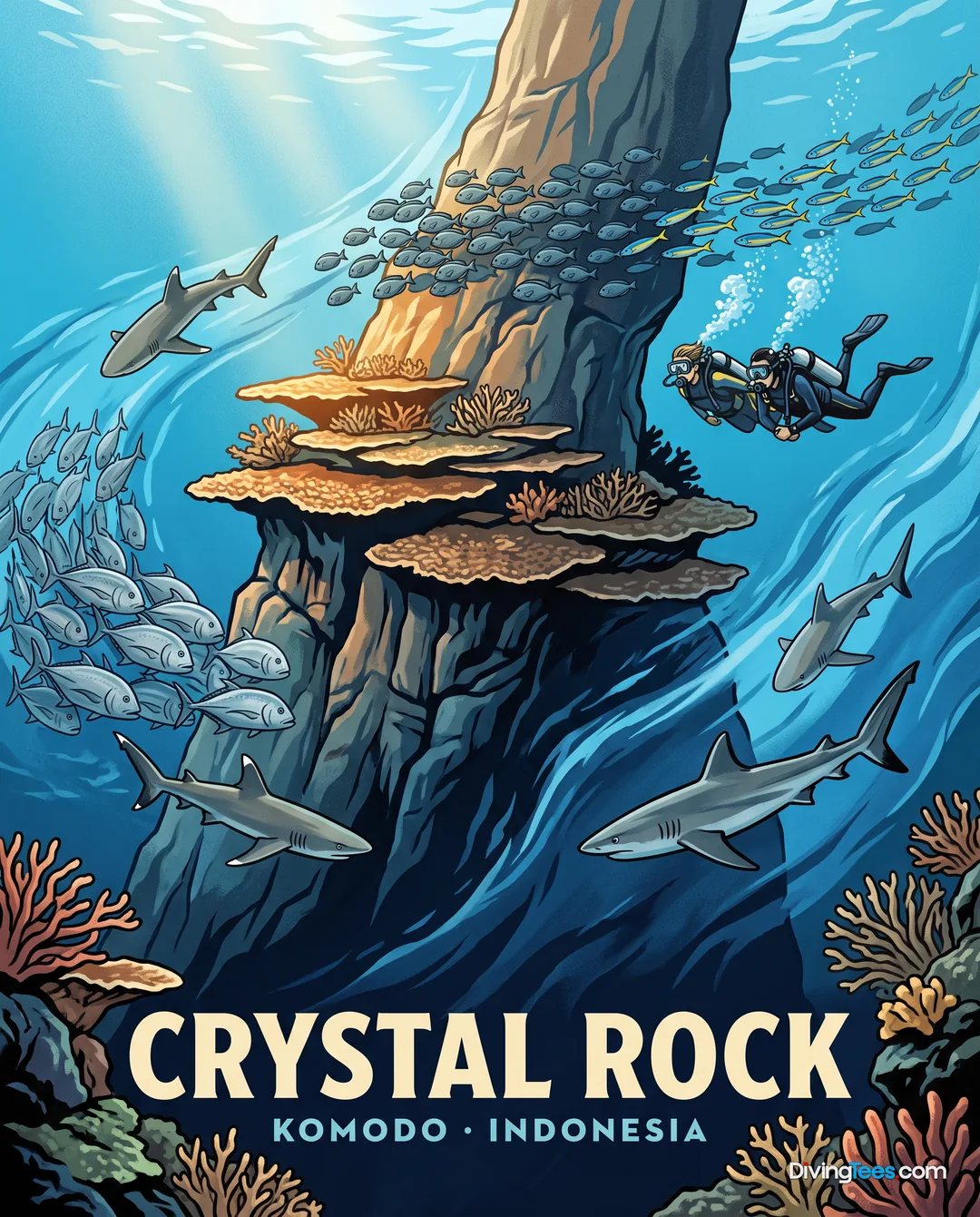
Crystal Rock →
Max. depth · 30 m
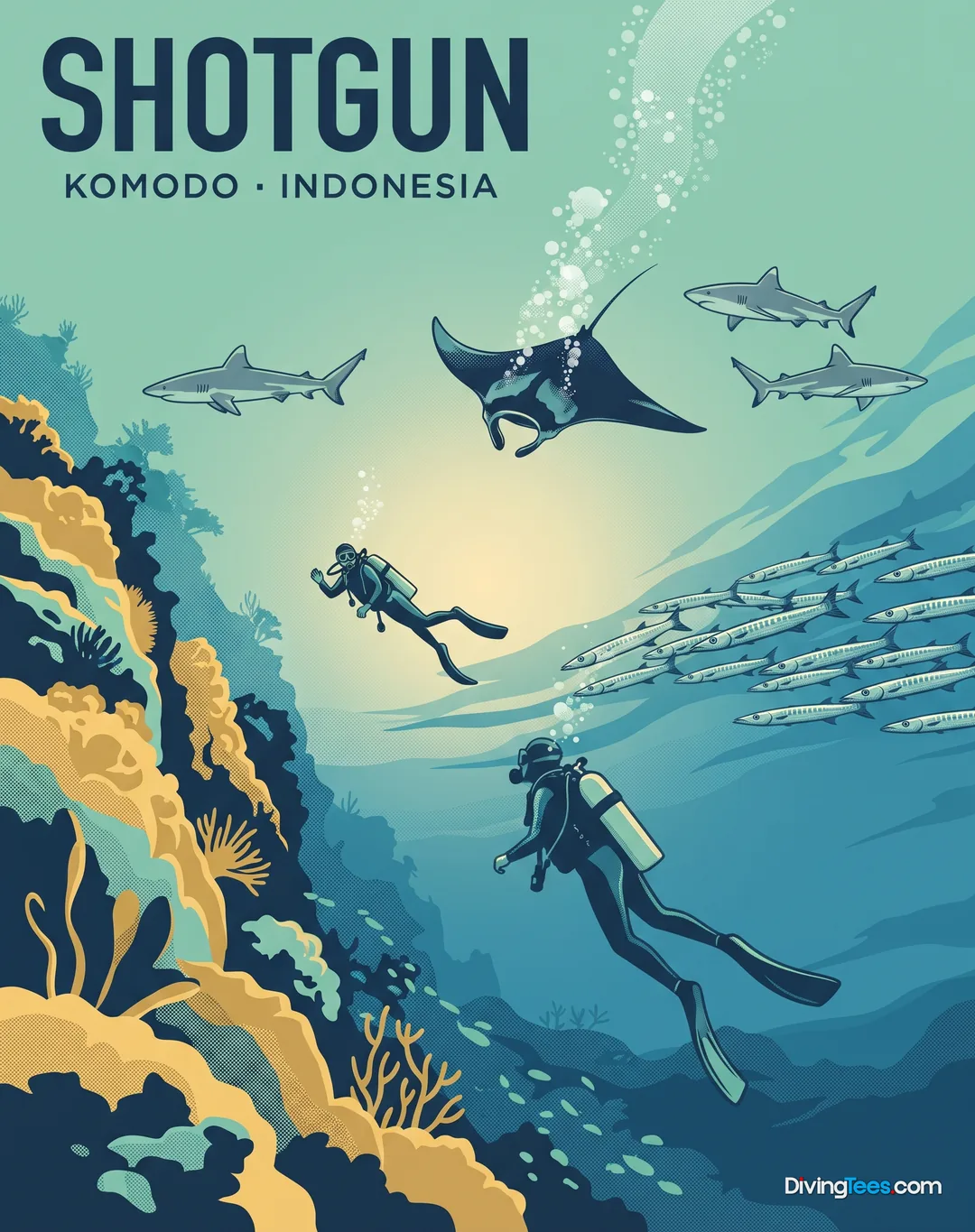
Shotgun →
Max. depth · 25 m
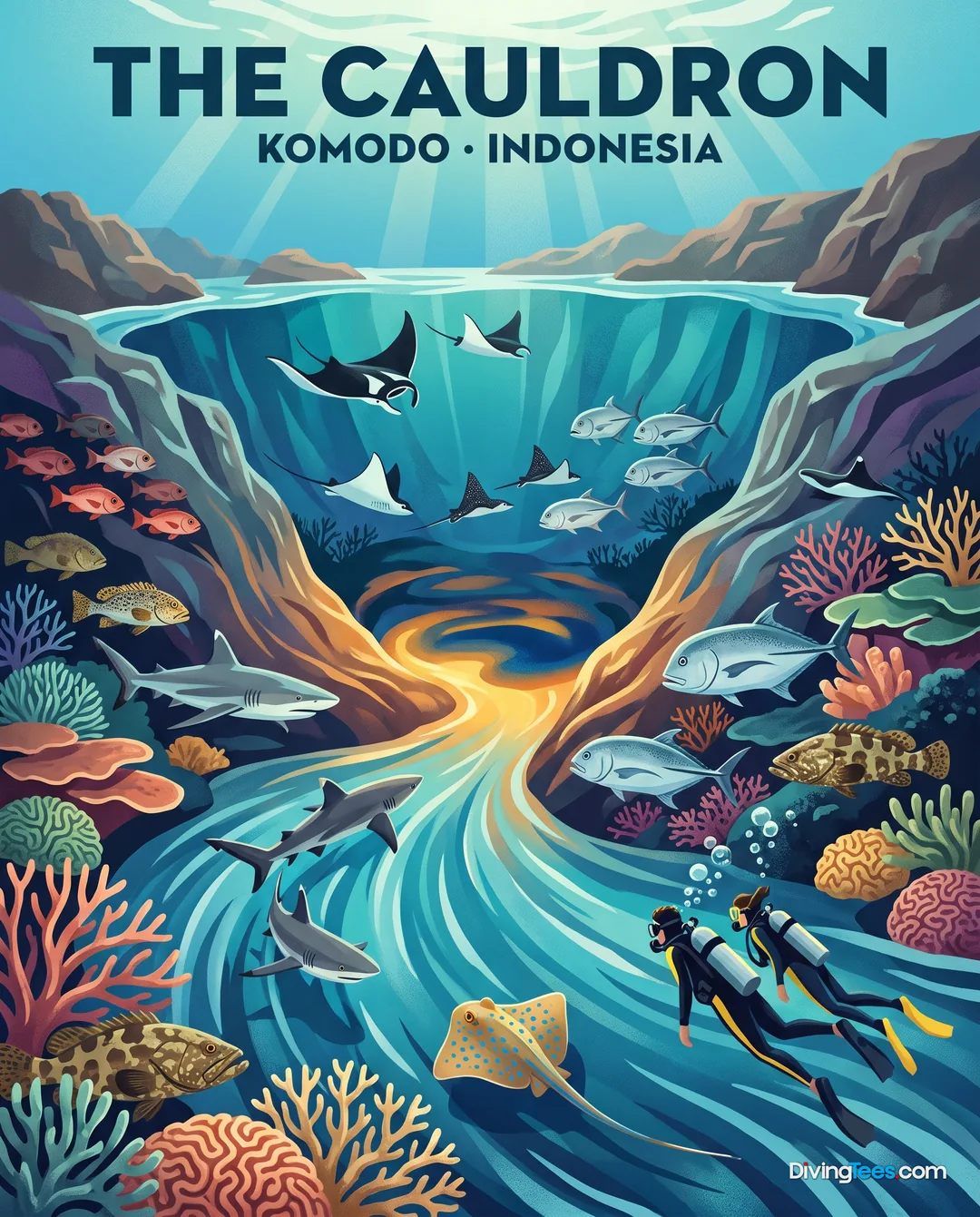
The Cauldron →
Max. depth · 25 m
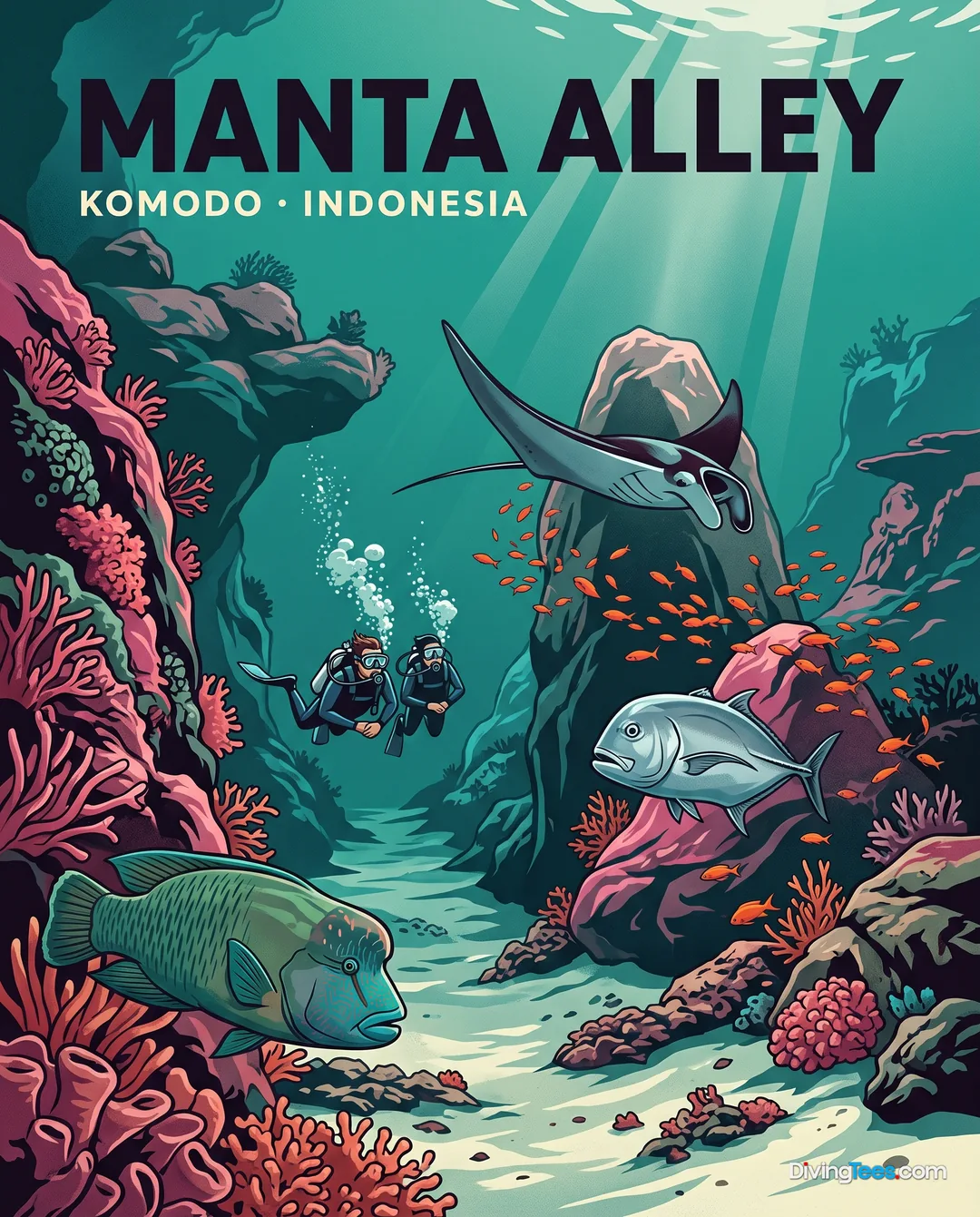
Manta Alley →
Max. depth · 20 m
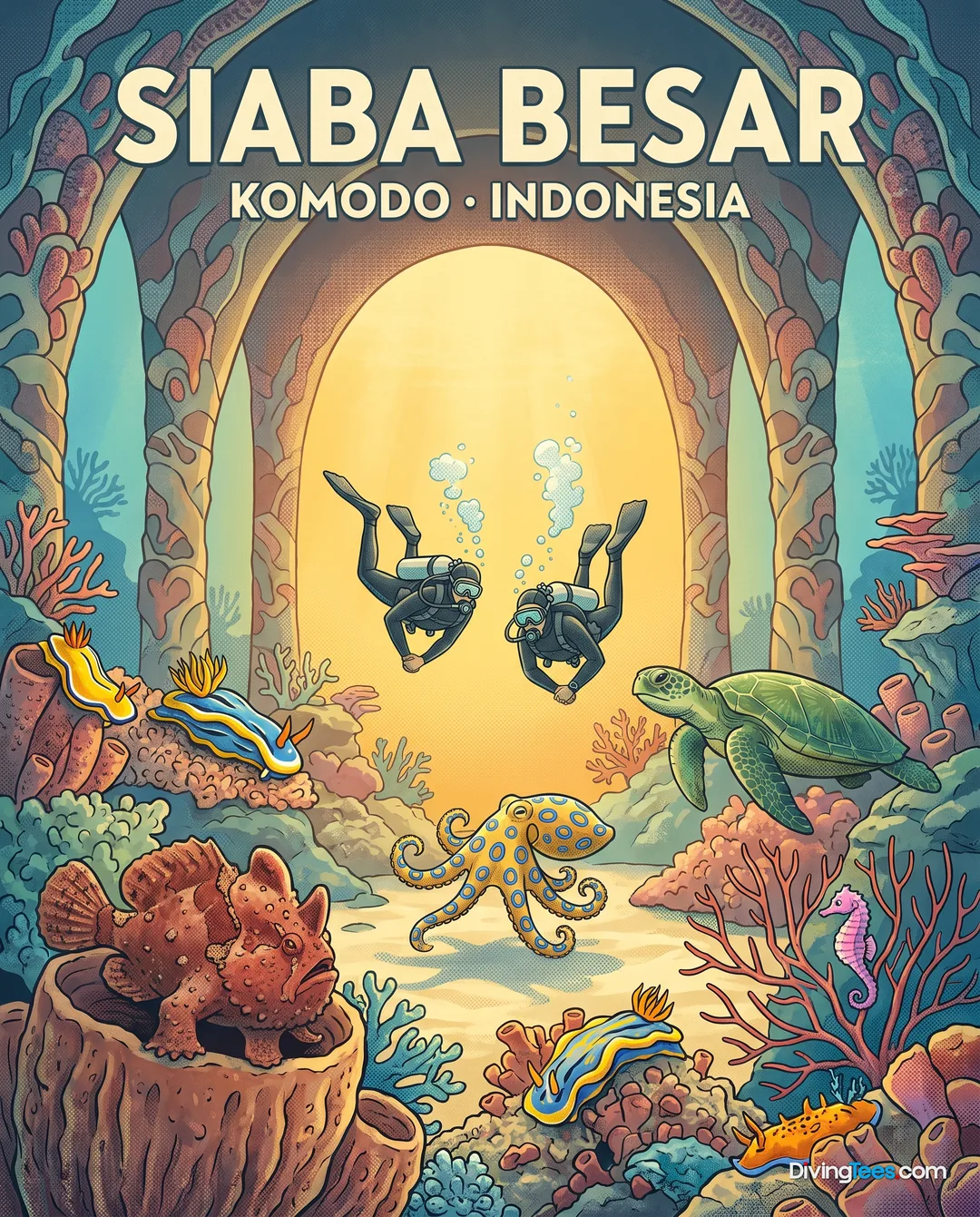
Siaba Besar →
Max. depth · 18 m
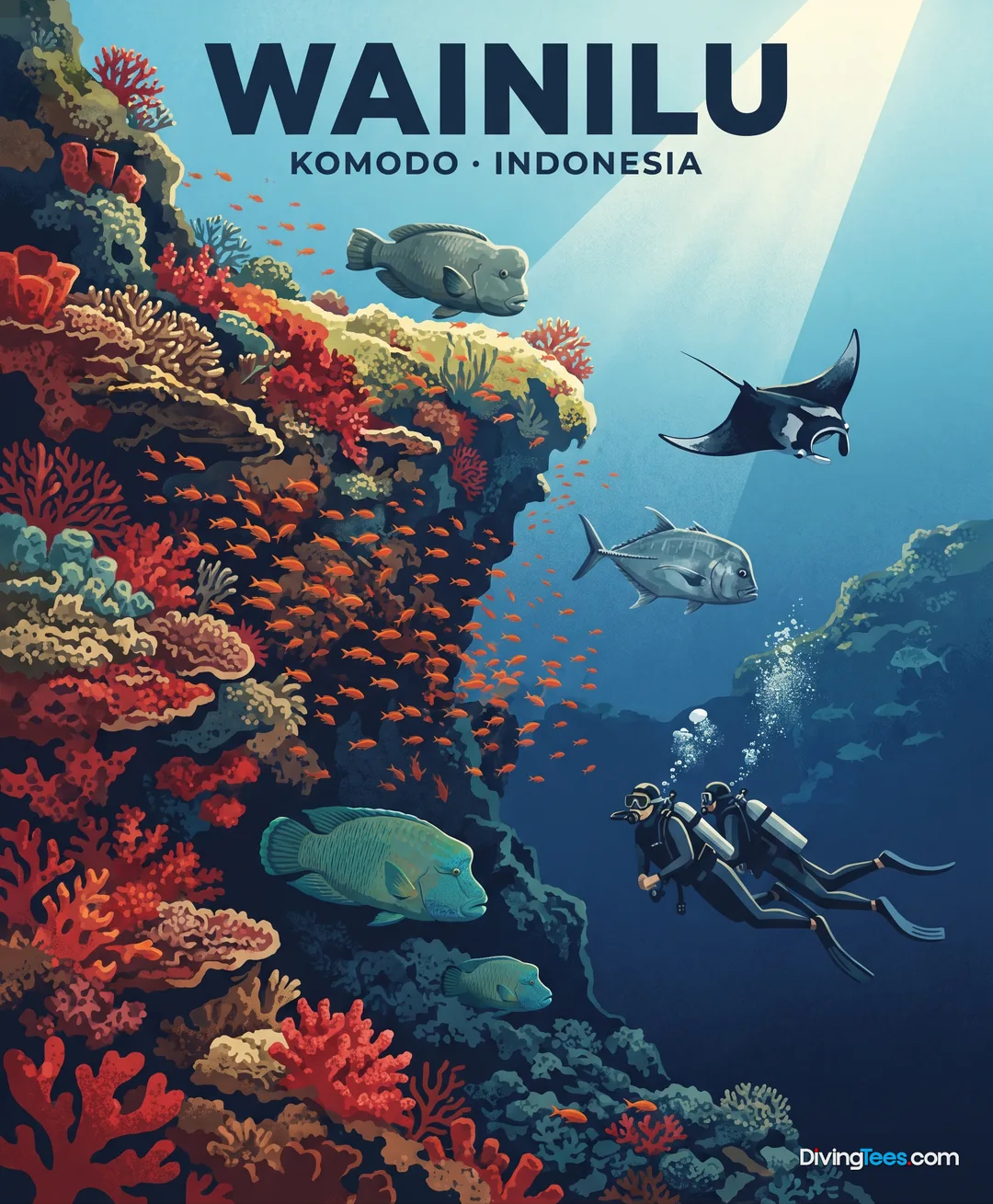
Wainilu →
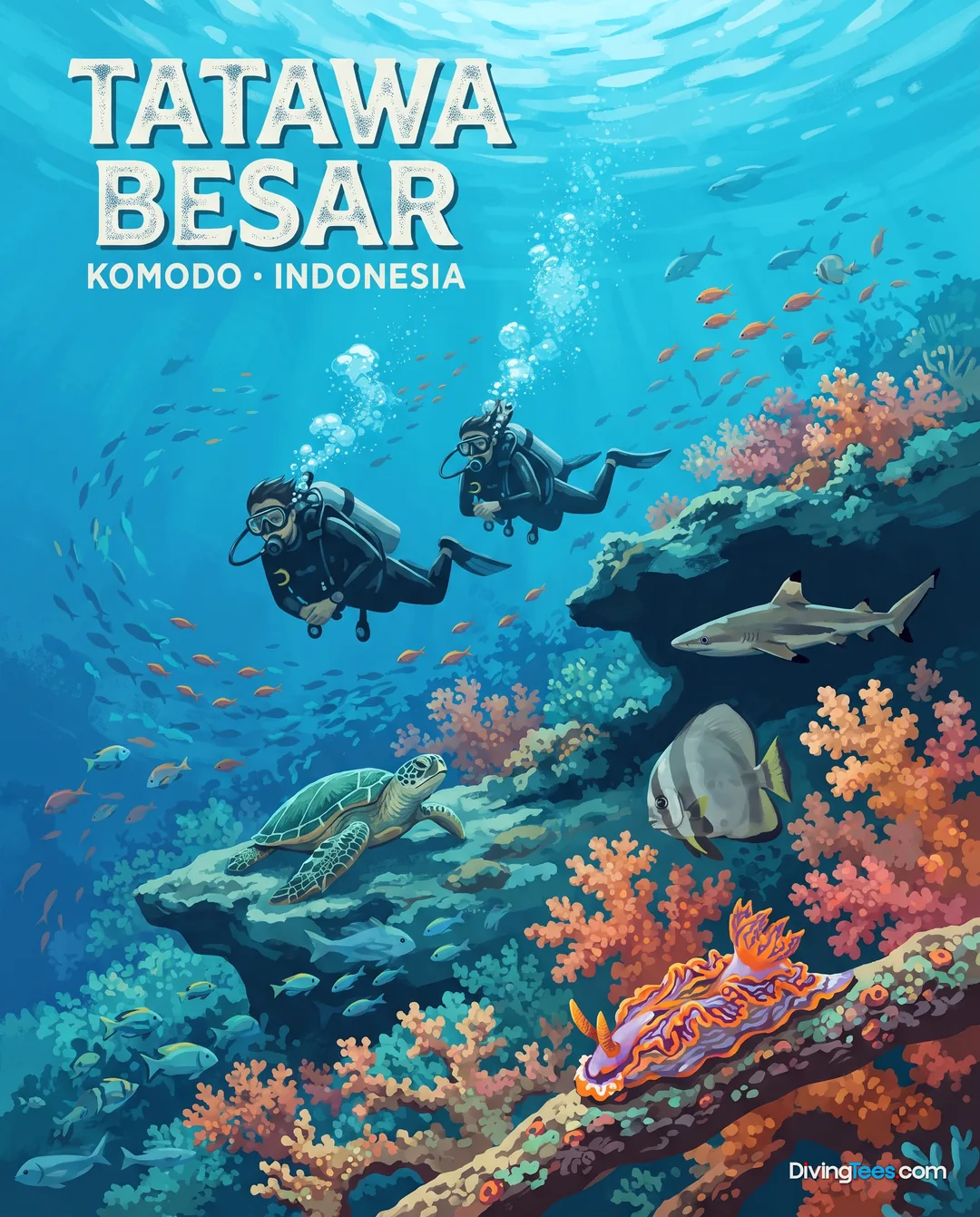
Tatawa Besar →
Max. depth · 25 m
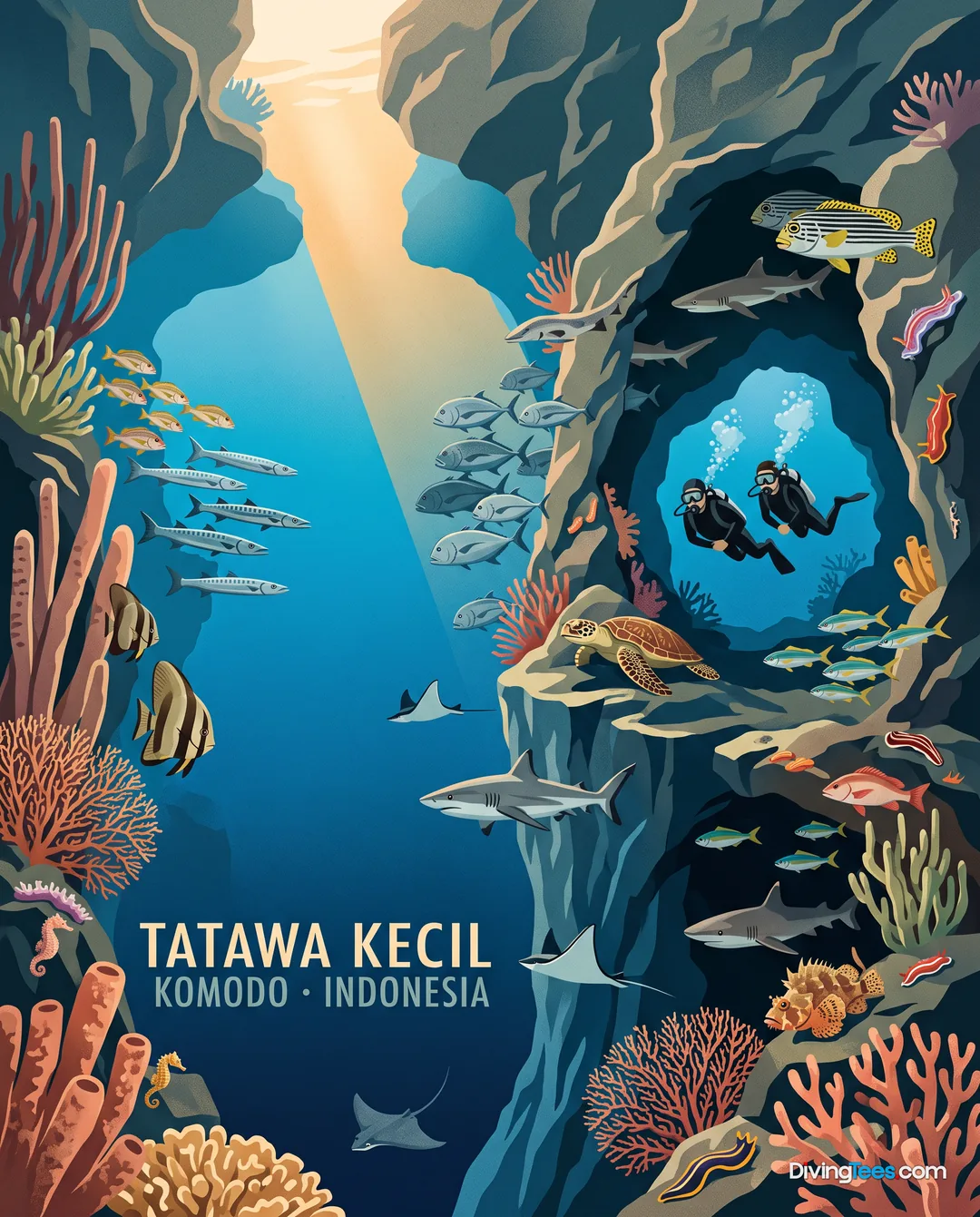
Tatawa Kecil →
Max. depth · 30 m
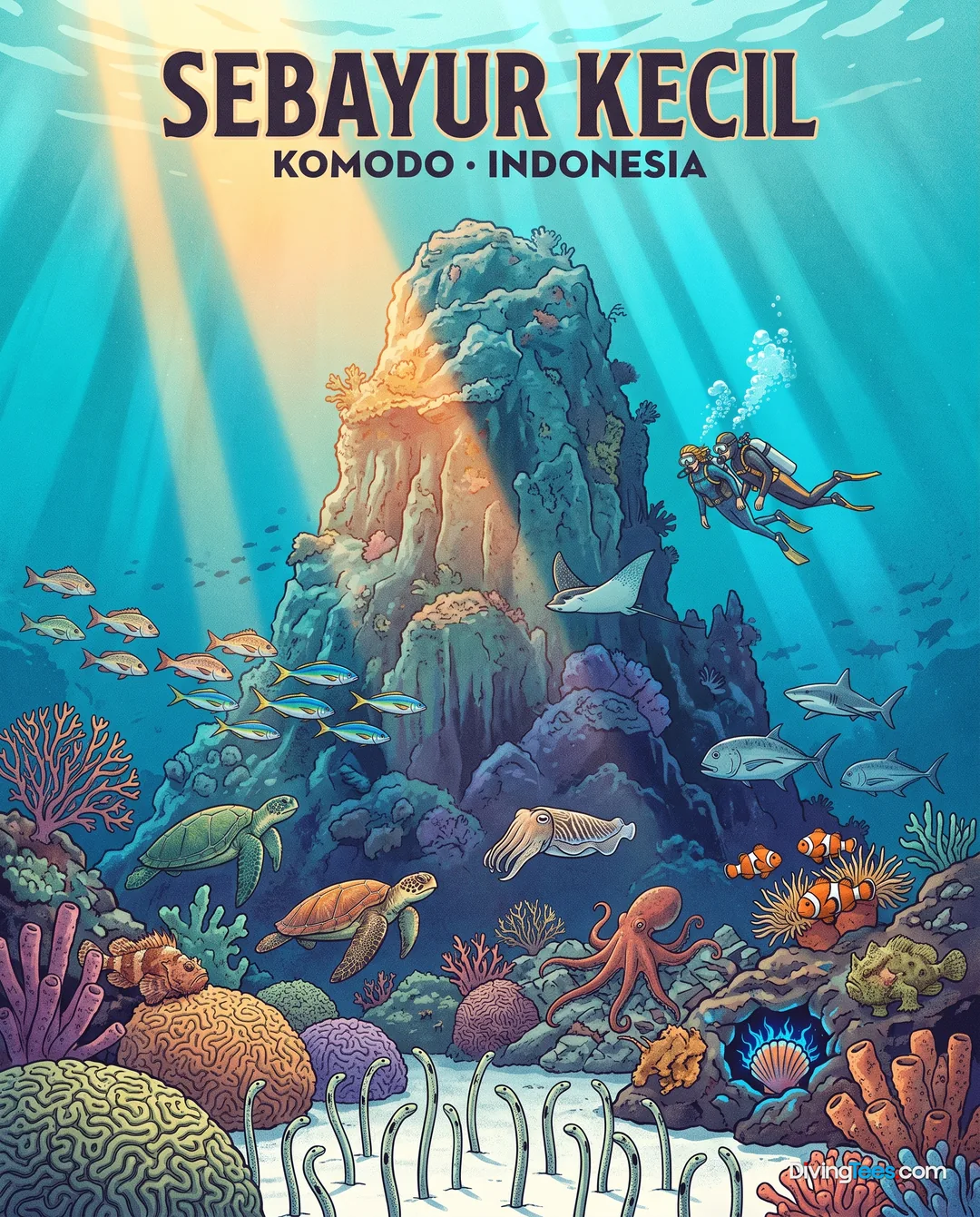
Sebayur Kecil →
Max. depth · 25 m
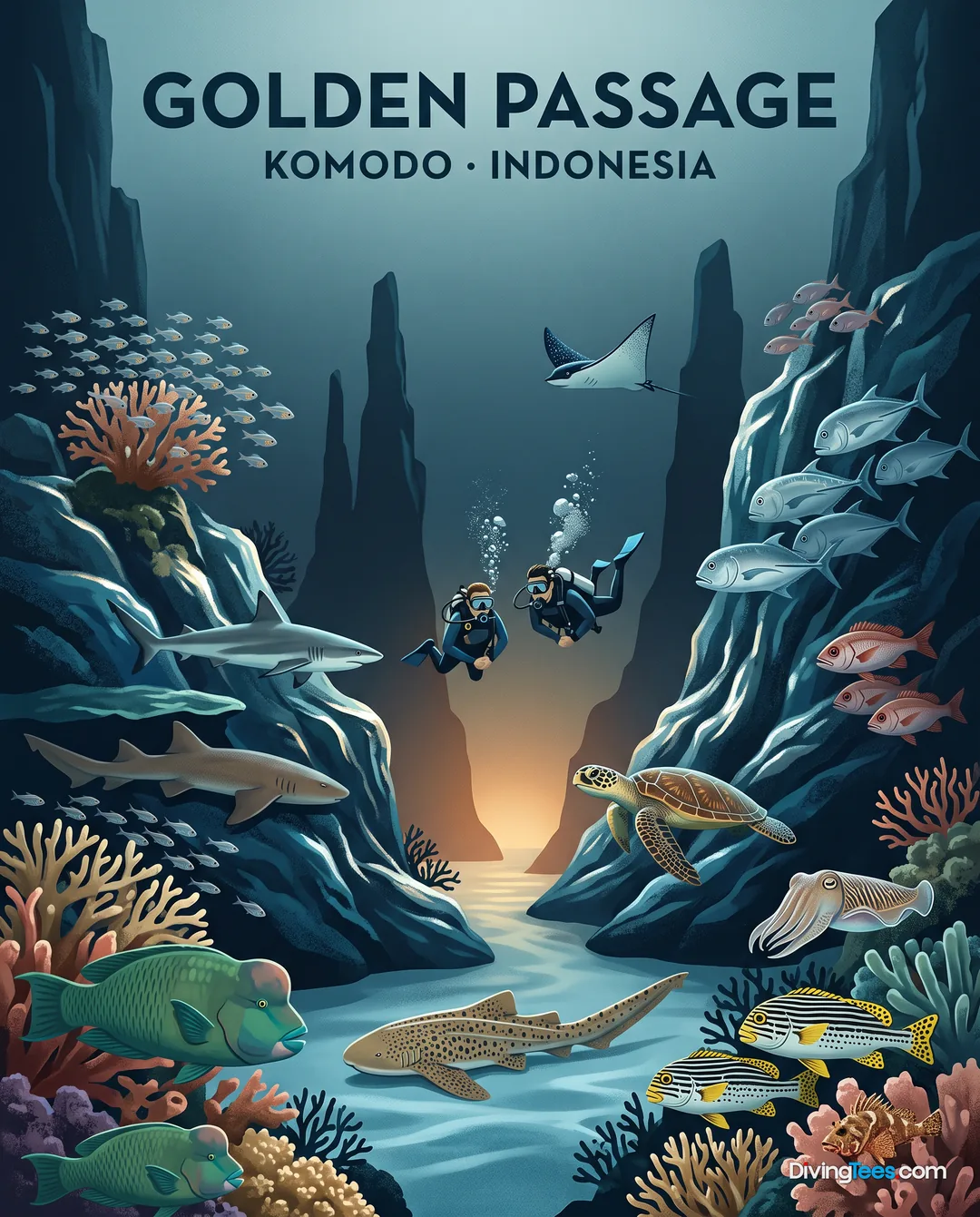
Golden Passage →
Max. depth · 30 m
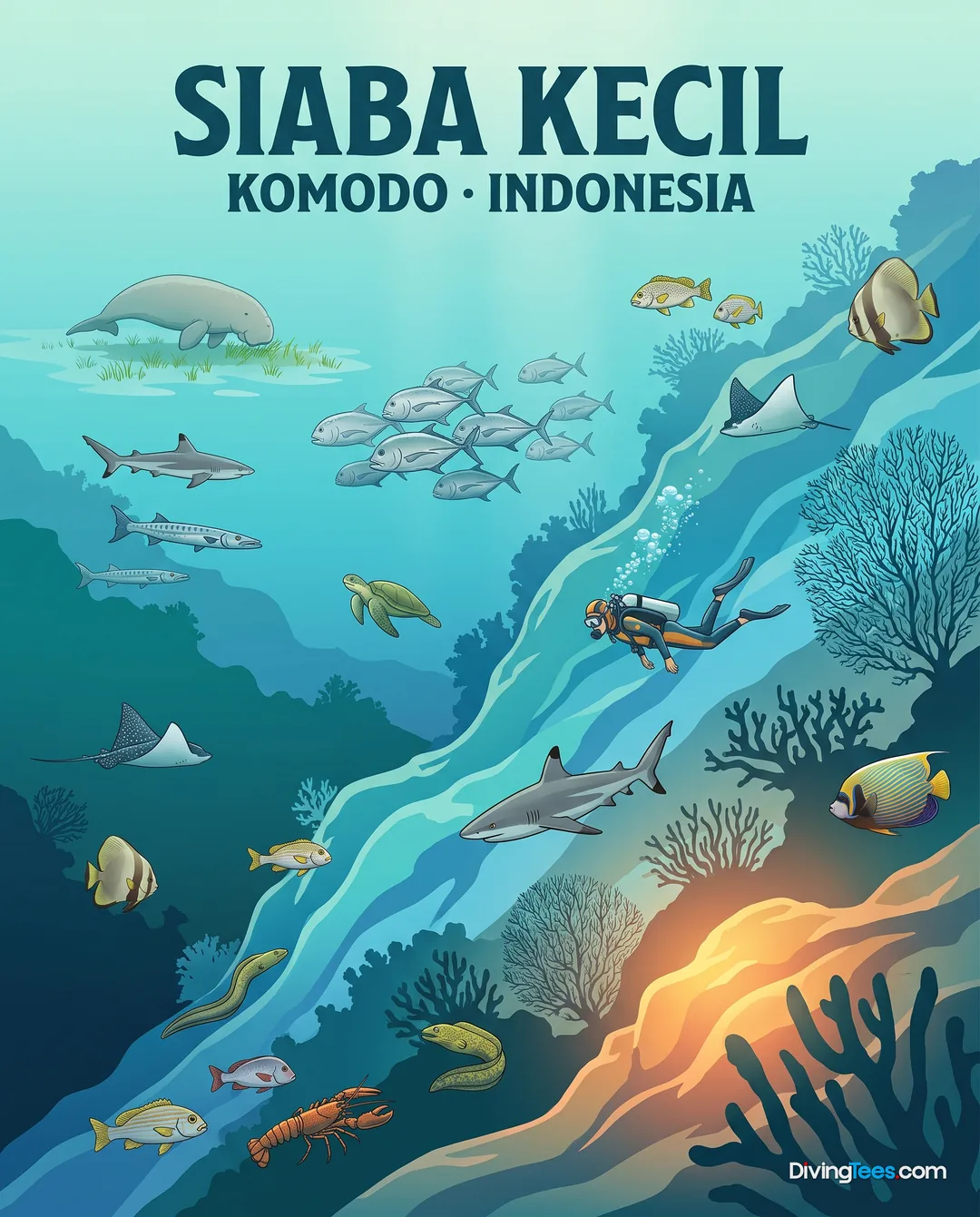
Siaba Kecil →
Max. depth · 30 m
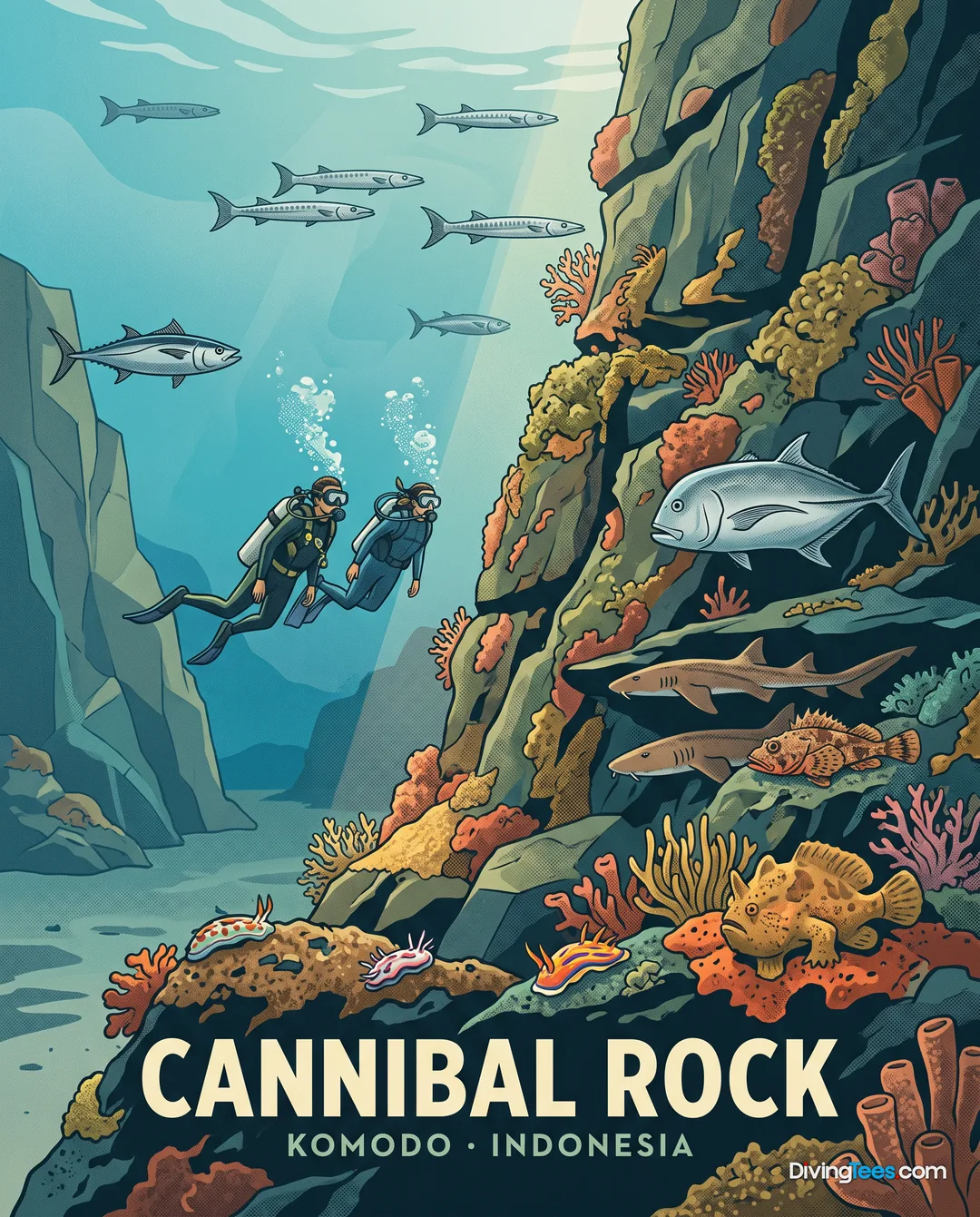
Cannibal Rock →
Max. depth · 30 m
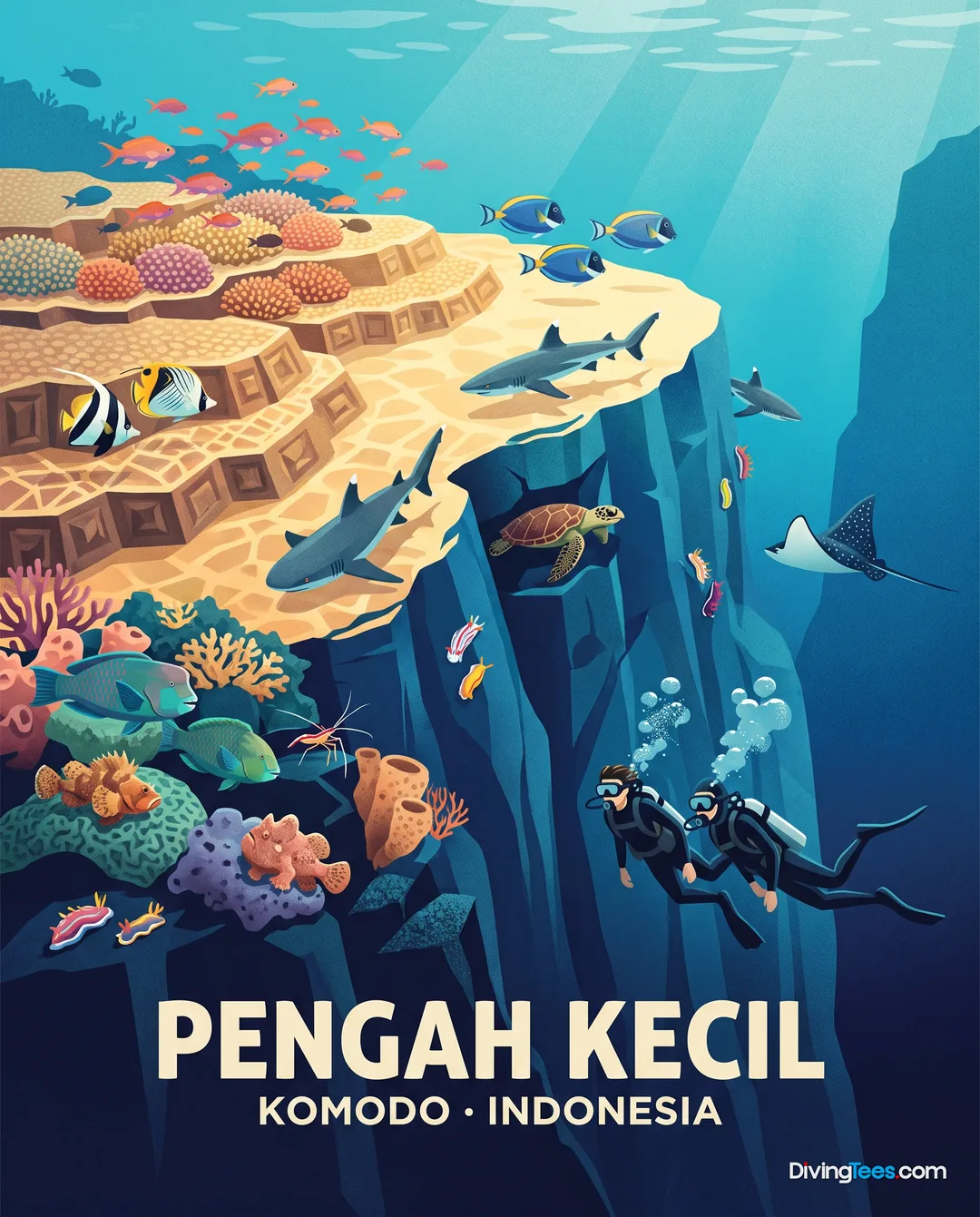
Pengah Kecil →
Max. depth · 25 m
Itineraries, dates and prices
Prices per person. Each month shows its lowest price: click a month, or pick an itinerary.
Next departures · 101 departuresfrom £1,200$1,604€1,433
October 2026
November 2026
December 2026
See dates and prices
If you click these links and make a purchase on the partner site, DivingDeal may earn a commission, at no extra cost to you.
Dates and prices taken from Divebooker and liveaboard.com, updated 20 October 2026
What you’ll meet underwater
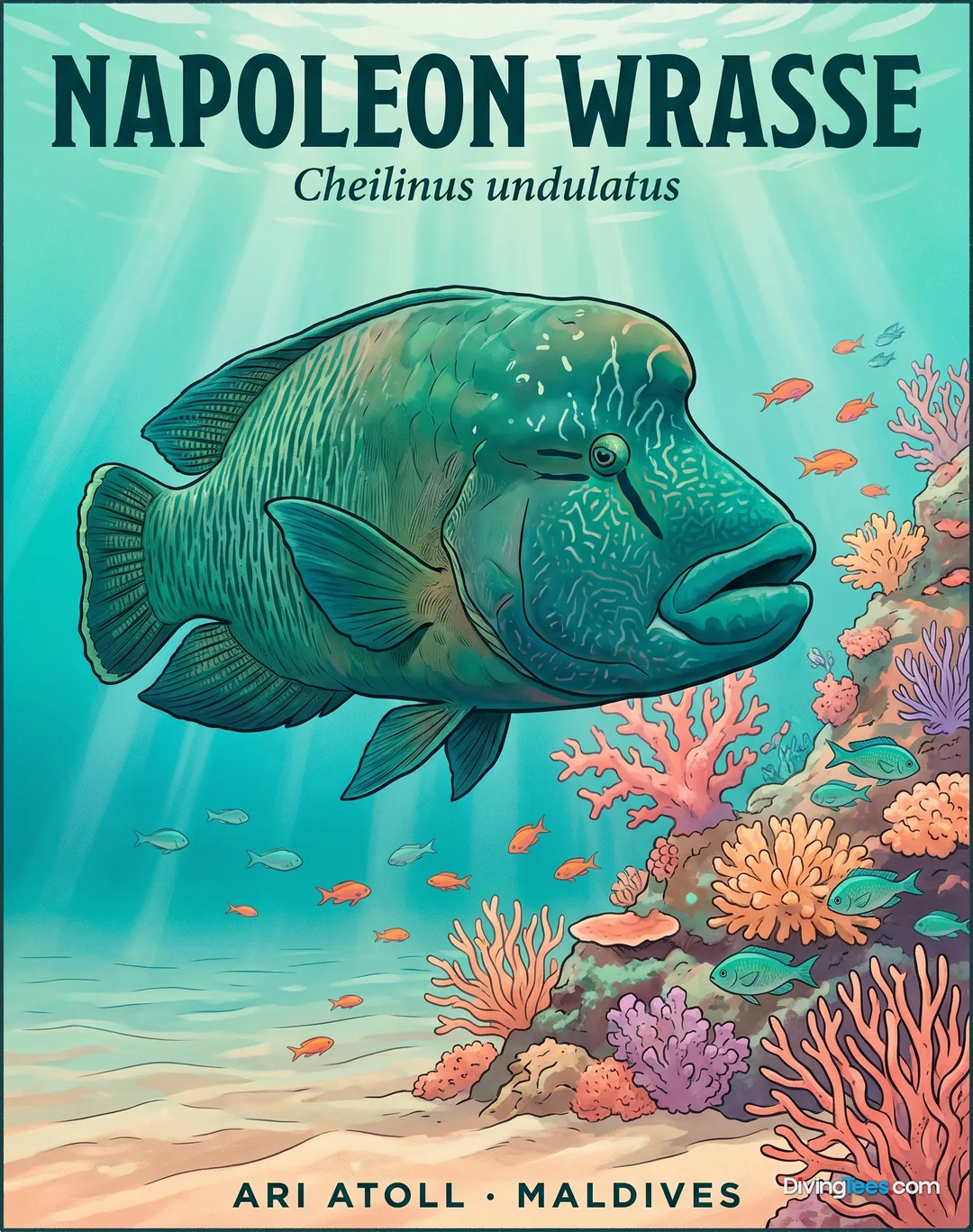
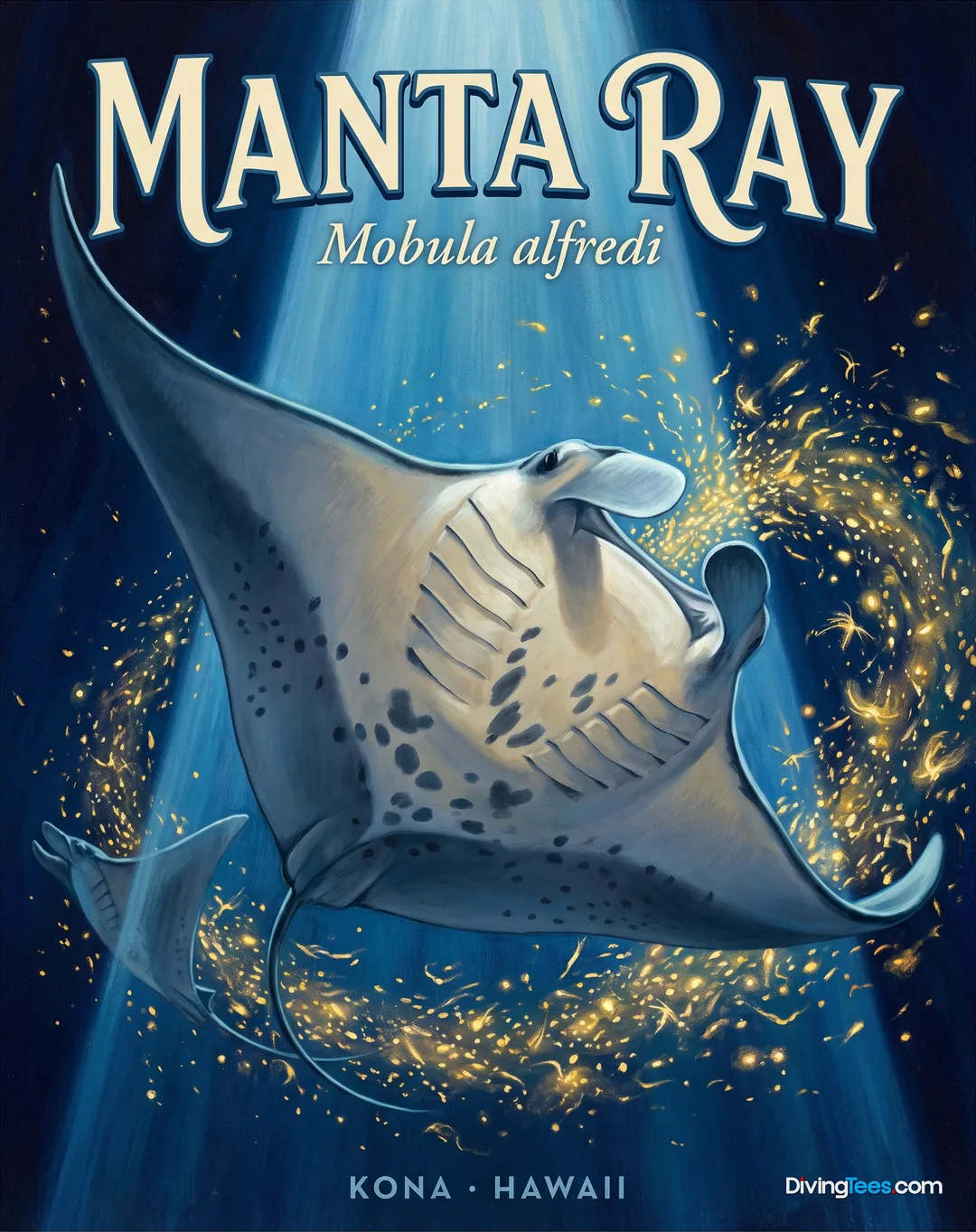
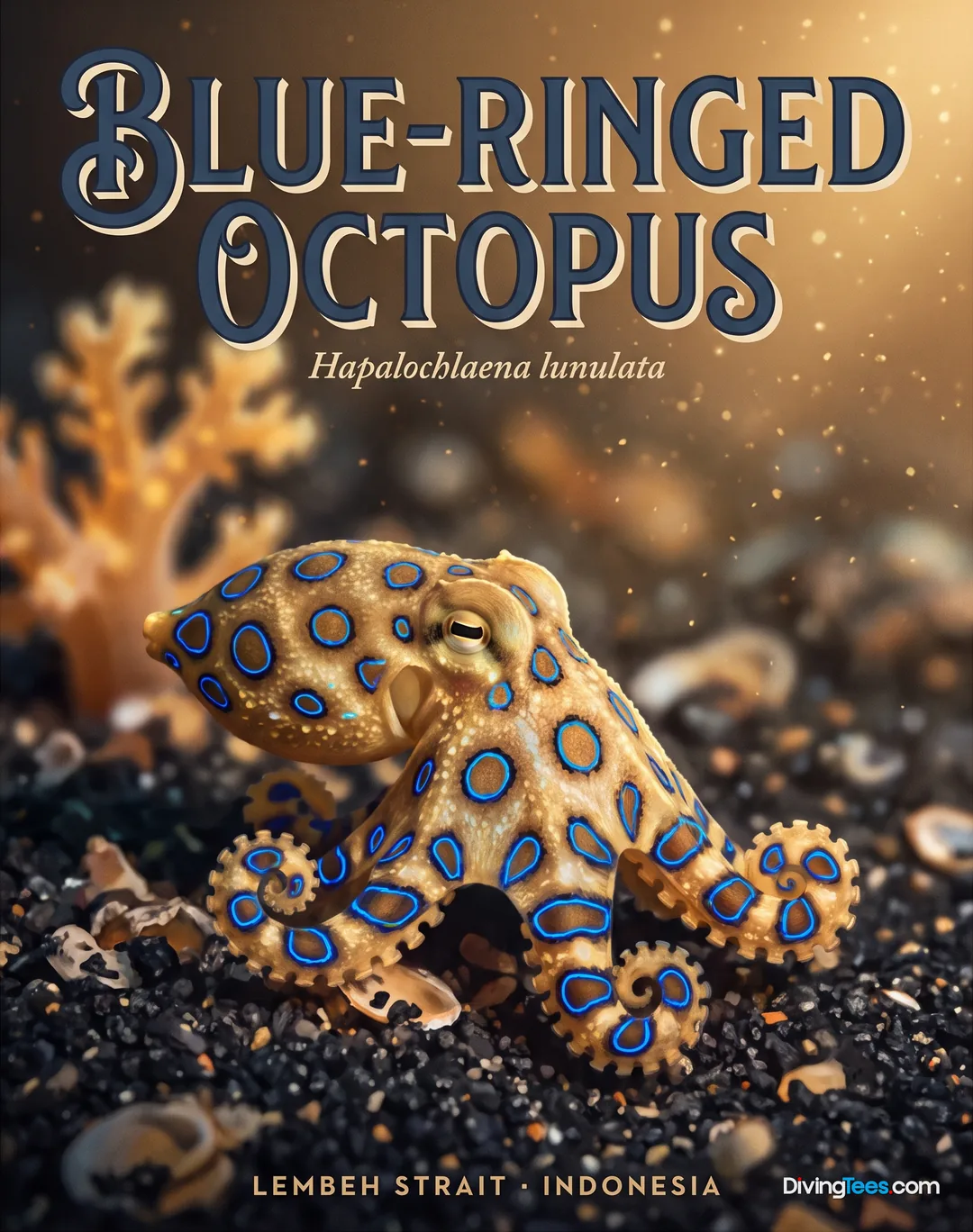
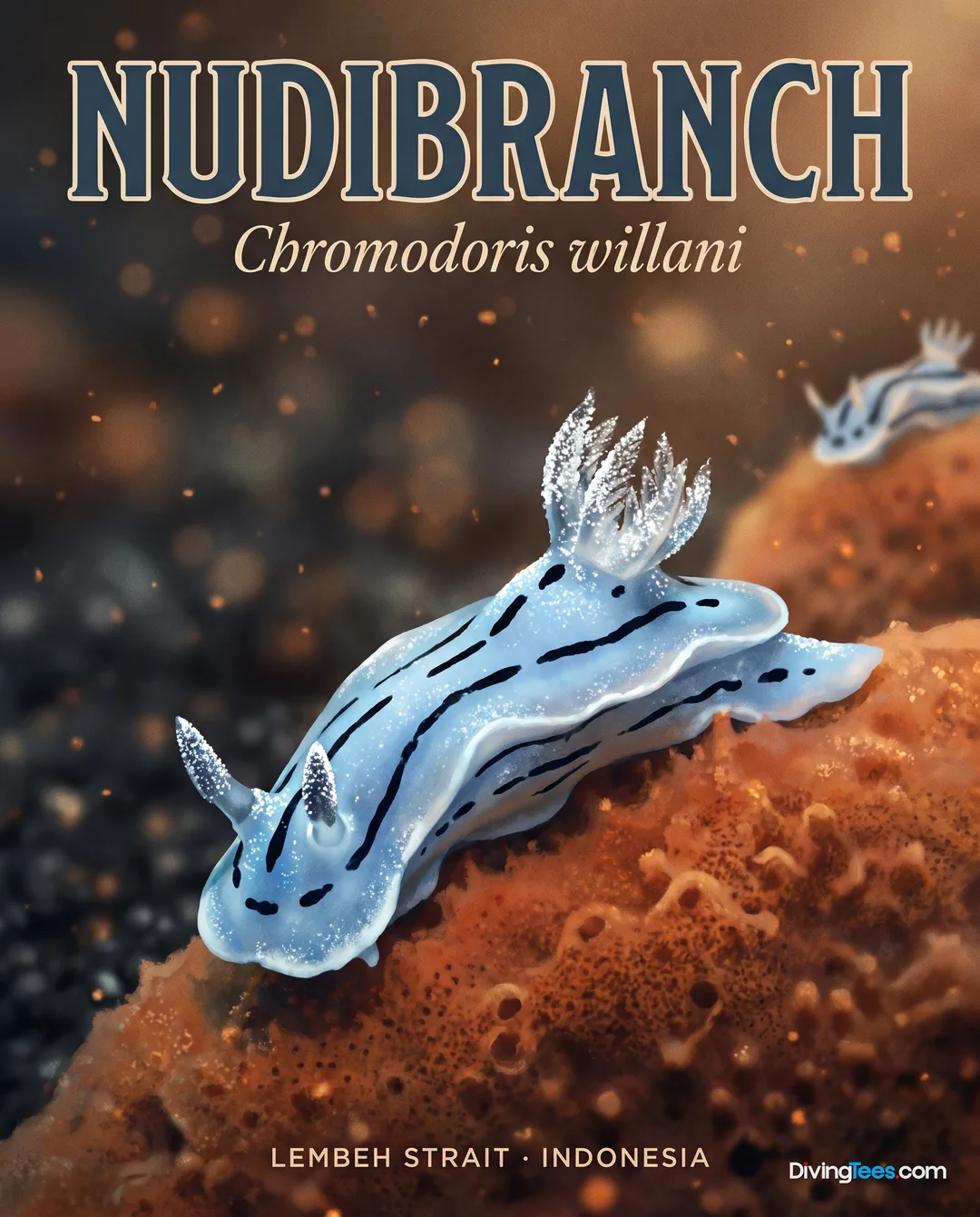
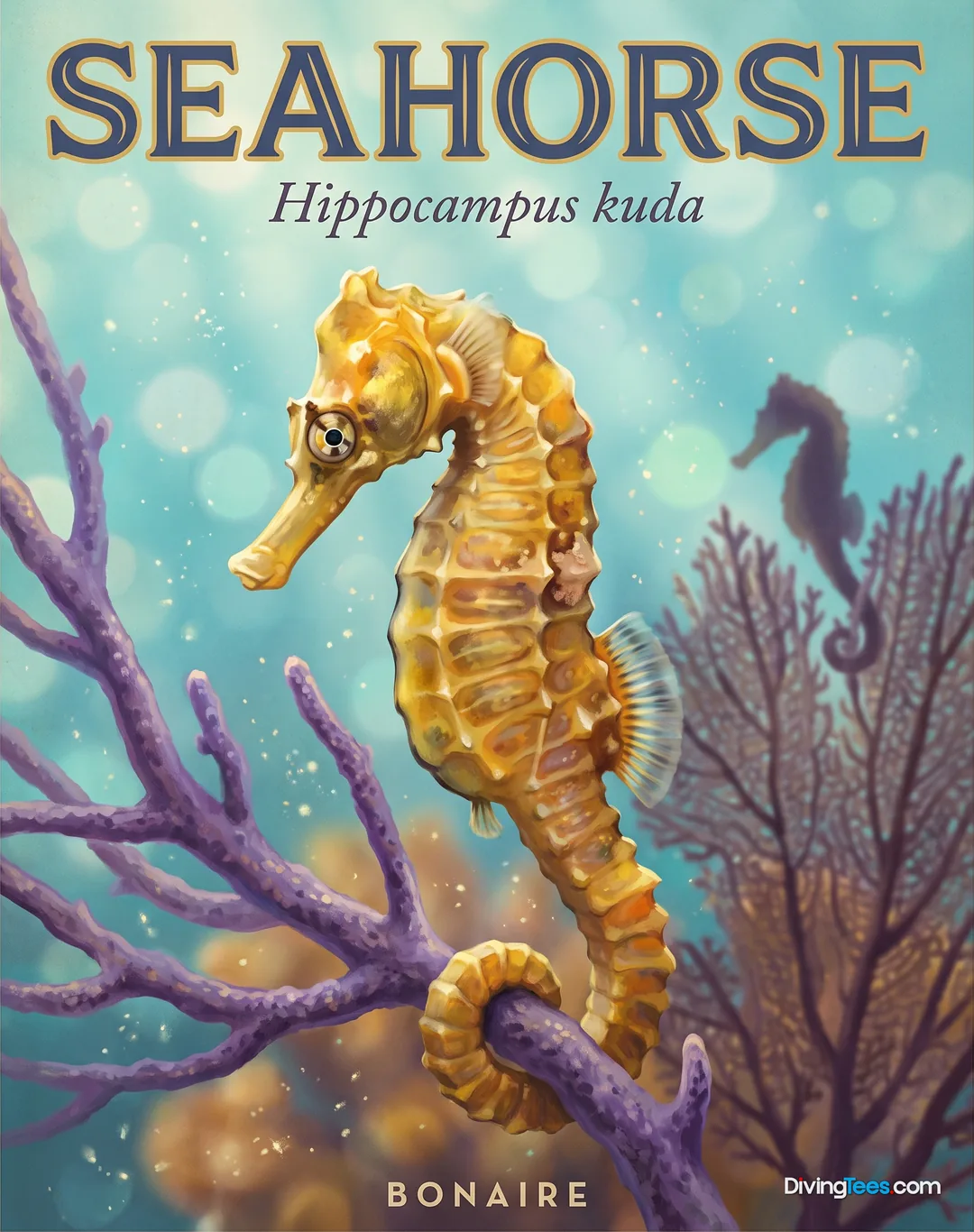
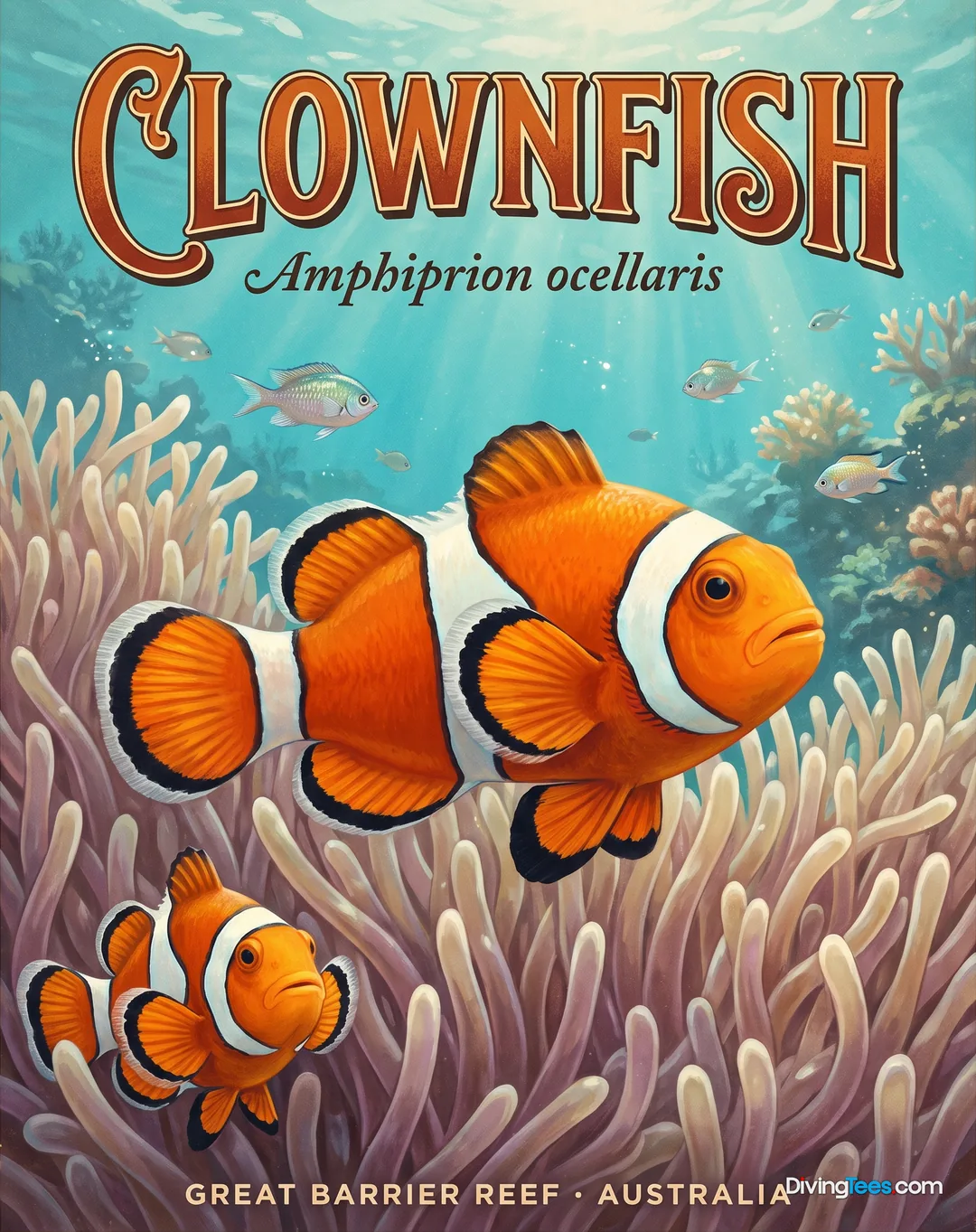
Manta rays, reef sharks, sea turtles, nudibranchs, eagle rays, giant trevally, barracuda, Napoleon wrasse and soft corals form the recurring spectacle across this route. Currents explain much of the big-animal action: they move through channels and over exposed pinnacles, carrying food toward Castle Rock, Crystal Rock, Shotgun, Golden Passage and Tatawa Kecil. Manta rays also gather at cleaning areas, particularly around Manta Alley, while Mawan combines manta encounters with turtles and macro life on a shallow slope. The route becomes more specific when the diver slows down. Wainilu is the place to look for mandarinfish, flamboyant cuttlefish, frogfish, seahorses and harlequin shrimp. Siaba Besar is where ghost pipefish and unicornfish are recorded, alongside its frogfish and blue-ringed octopus. Golden Passage is the site associated with leopard sharks and glassfish. Siaba Kecil has the route’s recorded lobster and angelfish sightings, while Sebayur Kecil is the place for clownfish and filefish. None of these encounters is guaranteed; the current, timing and a careful eye still decide what appears.
Who puts you in the water
The guides know Komodo’s current-sensitive sites and plan dives around conditions rather than treating every pinnacle as an all-levels reef. Groups are kept to a maximum four-to-one diver-to-guide ratio, with mandatory cohesion, conservative depth limits and safety stops. Pre-dive briefings cover the site, current, entry and exit plan, and the route to follow once the reef starts moving. The English-speaking crew includes PADI professionals, and the operation is built for both experienced divers looking for drift and pelagic action and divers who can use calmer sites such as Siaba Besar or Sebayur Kecil. Oxygen, professional first-aid kits, marine radios, life rafts and support dinghies form the emergency backbone.
The dive deck and the gear
The dive deck is shaded and arranged for repeated diving, with preparation space, tank racks, rinse tanks and a separate rinse area for cameras. DIN adapters are available. Nitrox is available as an optional extra. Sidemount diving is supported with a single cylinder, and rental equipment is available. Two tenders, each powered by a 20-horsepower four-stroke outboard, handle diver transfers and collection from the surface. That is the important Komodo detail: entries and exits do not depend on the main hull coming alongside every reef, and the tender can return for divers where the group surfaces. Oxygen, first-aid kits, camera rinse facilities, charging stations and hot-water showers are available on board.
Between dives
Between dives, the useful places are the shaded deck lounges, the air-conditioned salon and the outdoor dining areas. Coffee and tea are available in an enclosed cabin, while the upper deck provides space to watch the islands pass or leave the camera gear alone for an hour. Some crossings are simply travel between sites; others open into the quiet part of the day, when there is no reason to do more than eat, dry equipment and look toward the next anchorage. Land time is not an afterthought. The programme includes excursions and guided treks on Komodo or Rinca, including sunset walks, with local rangers leading guests through dragon habitat. That gives non-divers and tired divers something worthwhile to do without turning the boat into a resort schedule. The best gap in the day may still be the one spent in the shade, listening to the water and waiting for the next call to kit up.
A day on board
A day starts with the first briefing, equipment checks and a descent at the site chosen for the conditions. The dives are spread through the day rather than packed into one block: water time is followed by food, shade, drying gear and the short preparation for the next entry. Three or more dives can form the main rhythm, with longer itineraries reaching as many as 23 dives overall; night dives are included in the dive package. After sunset, the reef changes character, and nudibranchs, octopus, cuttlefish and other nocturnal life replace the daytime pelagic focus. Meals mark the transitions more reliably than a clock: breakfast before the first dive, something substantial between dives, then dinner after the final return. When the boat gets underway, the gap becomes part of the trip rather than dead time, with Komodo’s islands passing outside the shaded deck. A land day near Rinca or Komodo breaks the pattern with a guided dragon trek before the return to the boat.
What you eat aboard
Meals combine Indonesian and Western cooking, with buffet service, local dishes and à la carte dinners alongside vegetarian options. Full board covers the meals across the trip, while snacks remain available through the day and non-alcoholic drinks, water, tea and coffee are included. The galley serves the practical needs of a dive boat: food arrives between water sessions, not as a long ceremony that delays the next briefing. A good meal after a current dive is part of the decompression routine, and family-style dining gives the group a place to compare sightings, argue over the best reef and plan the next camera dive. Beer and other alcoholic drinks are available separately. The food is one of Blue Lotus’s strongest points, with local flavour kept alongside familiar Western choices rather than forcing every guest into the same menu.
Nights at sea
The cabins sit on the upper deck, where panoramic windows keep the sea present even when the door is shut. Standard Double, Standard Twin and Master cabins cover the main arrangements, with private bathrooms, air conditioning and an accessible balcony in the cabin layout. After a current dive, that matters more than decorative detail: the room is somewhere to cool down, dry off and sleep without sharing a bathroom. The boat’s shared spaces include an air-conditioned salon as well as shaded and open deck areas, so a cabin does not become the only refuge from sun or spray. The compact phinisi layout keeps the distance between bunk, saloon and dive deck short. Nights are therefore easy to organise around the next dive rather than around a large ship’s corridors. Cabins are non-smoking, and daily housekeeping, cabin towels and deck towels are included.
Standard Double Cabin
Standard Twin Cabin
Master Cabin
What to know before boarding
Blue Lotus departs from and returns to Labuan Bajo, with recorded routes running Labuan Bajo–Labuan Bajo. Airport and hotel transfers are included, and the crew arranges collection from either point. The guest-relations contact reaches out before the trip with the transfer information. Arriving in Labuan Bajo the night before departure is advised, since flight delays can otherwise put the boarding connection at risk.
Deck plan
What the boat does for the ocean
Blue Lotus operates within Lotus Liveaboards’ Green Fins membership and PADI 5-Star Eco Center programme. Each voyage includes briefings on local marine ecosystems and conservation challenges, turning the time on board into practical guidance for lower-impact diving. The operation also participates in World Ocean Day and Coral Triangle Day activities, collaborates with local marine-protection initiatives and works through Dive Operators of Komodo on regional conservation practices.
- Year built
- 2025
- Length
- 32 m
- Beam
- 2.5 m
- Maximum number of passengers
- 13
- Number of cabins
- 5
- Number of bathrooms
- 6
- Engines
- Mitshubishi 8DC11
- Cruising speed
- 6-7 knots
- Tenders
- 2 × 20 hp 4-stroke
- Website
- lotusliveaboards.com ↗
Hello, I'm Marina, DivingDeal.com's AI assistant. I answer in detail about hotels, dive centres and liveaboards.
Thinking about the whole trip and the flights? Talk it over with Edith →
Marina is an AI. Some links are affiliate links: DivingDeal may earn a commission, at no extra cost to you. Bookings are made with the partner.