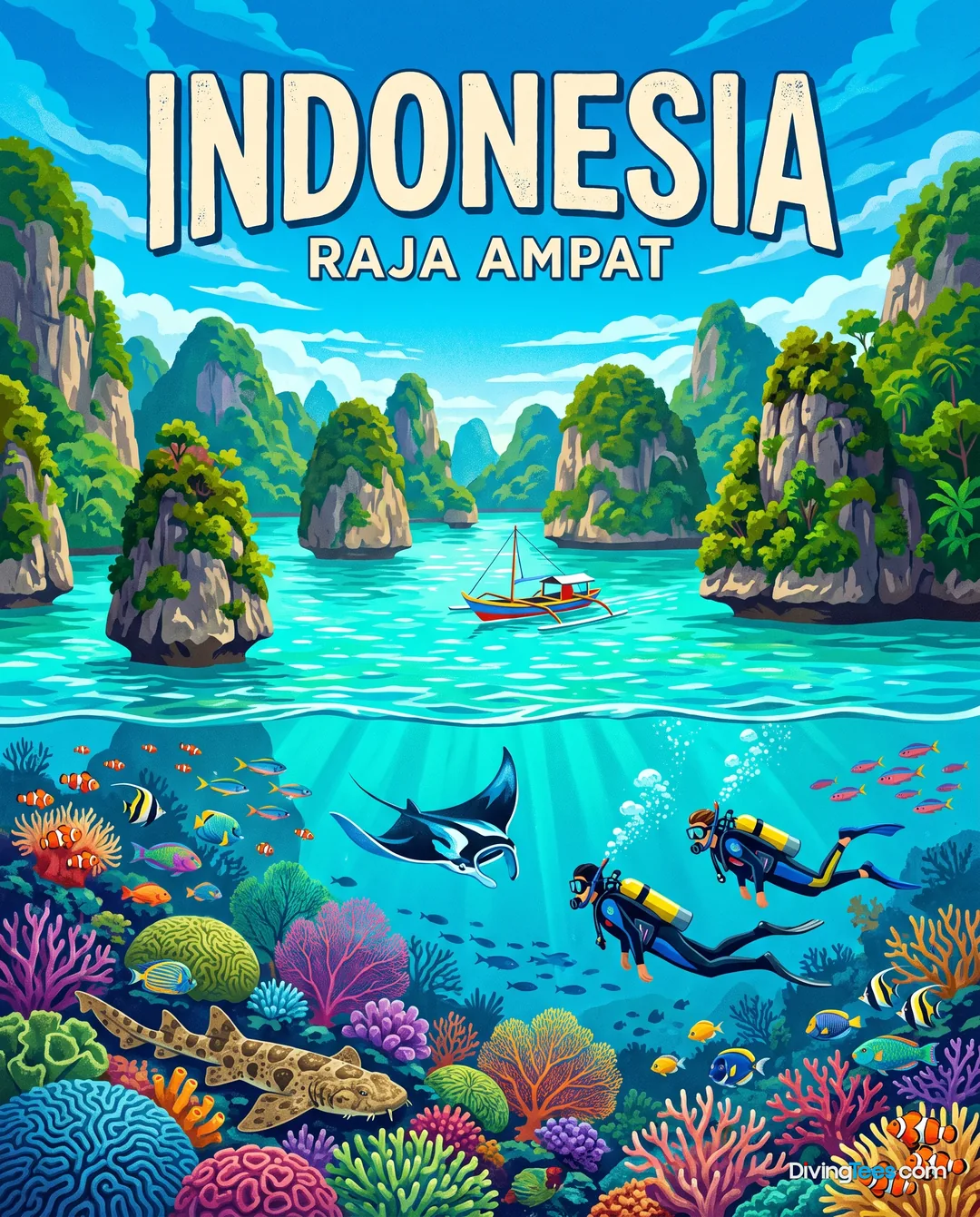
Liveaboards · Indonesia
Queenesia — a small, custom-built phinisi for focused diving
What makes this boat unique
- This 22-metre phinisi carries up to eight guests in three air-conditioned cabins.
- Natural wood, an indoor dining room, a relaxed main deck and a sundeck give the boat an intimate liveaboard feel.
- The dive setup includes 12-litre aluminium tanks, an Alkin compressor, DIN adaptors, two tenders and a shaded dive area.
- Full-board meals combine local and Western cooking, with vegetarian options, snacks throughout the day and night dives included.
- The boat was built in 2014 and renovated in 2022.
For subtitles in English: start the video firstthen click the gearat the top right of the video, select “Subtitles/CC”, then “Auto-translate” and choose “English”.
The invitation
Queenesia suits divers who would rather know seven other people well than share a large boat with a crowd. Its size keeps the diving personal without stripping away the practical things that matter: a proper platform, shaded preparation space, two tenders, camera facilities and a crew presence close to the group. The reason to choose it is the balance. The boat is small enough for a private expedition, but set up for a serious run of dives rather than a sightseeing cruise with tanks added afterward. Local food, land excursions and snorkeling give non-divers something to do, while the route keeps the underwater programme at the centre. It is a good match for a couple, a family or a close group of friends who want the boat to feel like their base rather than a hotel corridor.
Boarding
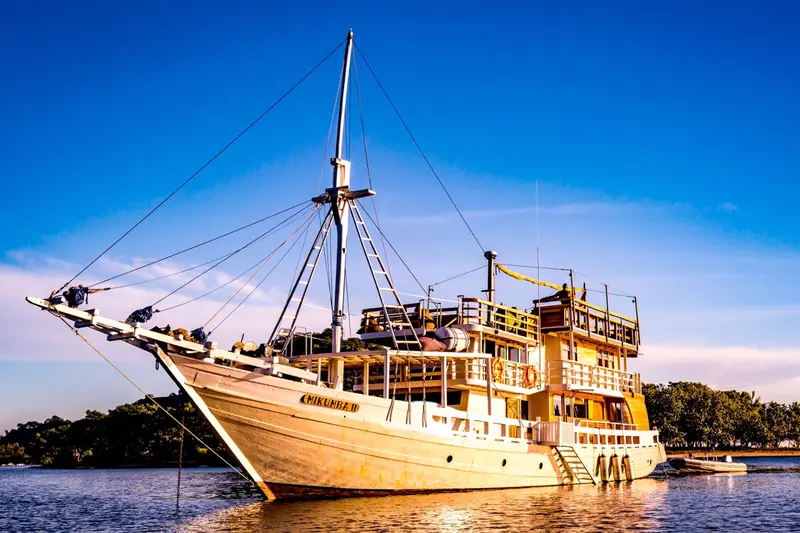
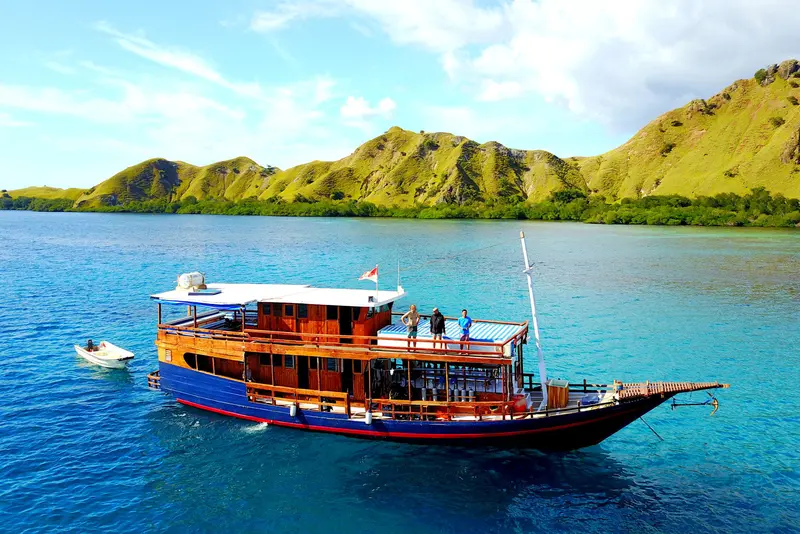
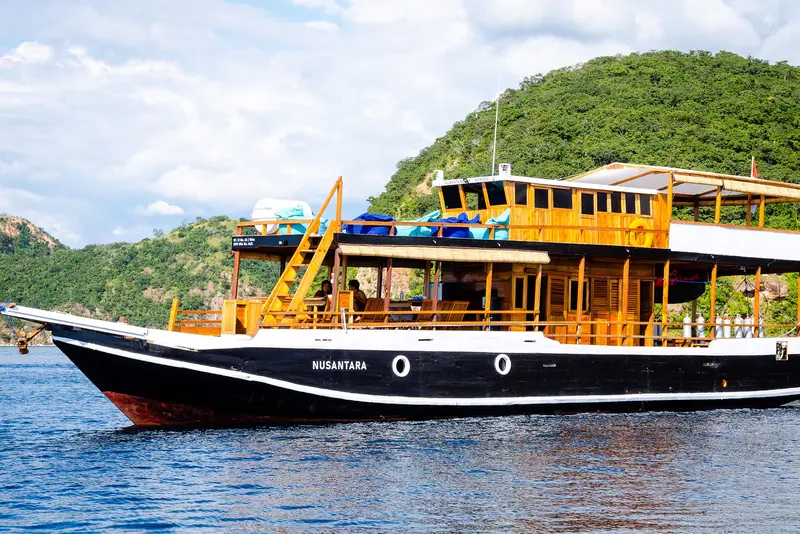
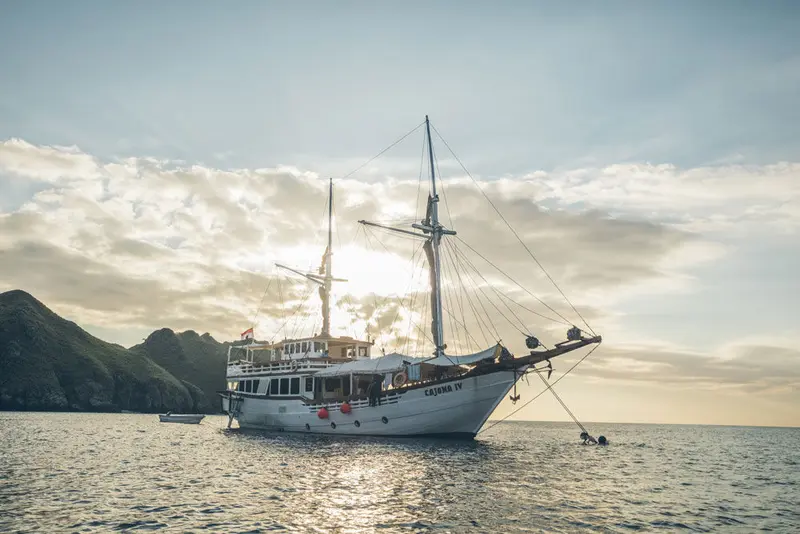
Queenesia makes its first impression through wood. The boat is built with specially selected natural timber, and the indoor dining area, main deck and sundeck give the small group several places to spread out without losing sight of one another. The 2022 renovation matters here: it places a relatively recent working surface over the character of a traditional Indonesian phinisi. Boarding is less about polished grandeur than about stepping into a compact, purpose-built vessel where the kitchen, dining area and dive operation are all close at hand. The 22-metre hull is not designed to hide its scale. That is part of the appeal: the group stays connected, movements are short, and the boat feels like a private expedition platform rather than a floating resort.
The atmosphere on board
Queenesia is built around a small group and a crew-to-passenger ratio close to one. That changes the practical feel of a week: questions do not have to travel down a chain of departments, and the same people are present at meals, briefings, tender trips and returns to the platform. English and Indonesian are spoken on board. The crew is local and international, with the boat's working atmosphere centred on diving rather than formal entertainment. In the evening, the group has the indoor lounge, the main deck and the sundeck rather than a programme to follow. The strongest passenger impressions attach to the food and diving, while the boat itself scores lower than those areas. In plain terms, the people and the operation carry more weight than a vessel chasing luxury finishes.
The sites you’ll dive
The recorded departures are six days and five nights, running from Labuan Bajo to Labuan Bajo in Komodo National Park. The named North Sulawesi sites give the underwater character associated with Queenesia's broader diving programme: Bunaken Marine Park drops along vertical coral walls to a maximum of -40m, with turtles, reef sharks, rays and pelagic life; Murex Bangka House Reef reaches -25m on a sloping reef where pygmy seahorses and blue ribbon eels suit a slow macro dive; Bunaken Timur has a wall, shallow reef and macro life to -25m; Sahaung's pinnacles and boulders descend to -35m, with schooling fish and possible white-tip reef sharks. Celah Celah places the diver inside a cleft in the wall. Lembeh Strait brings black sand and rare macro subjects. Murex Manado House Reef reaches -20m among natural and artificial structures, while Lekuan, Sachiko's and Siladen Wall each offer coral walls to -25m. Batu Mandi's pinnacles reach -30m; Bethlehem and City Extra are shallow macro sites to -20m; The Molas Shipwreck rests upright on a sandy slope to -40m.
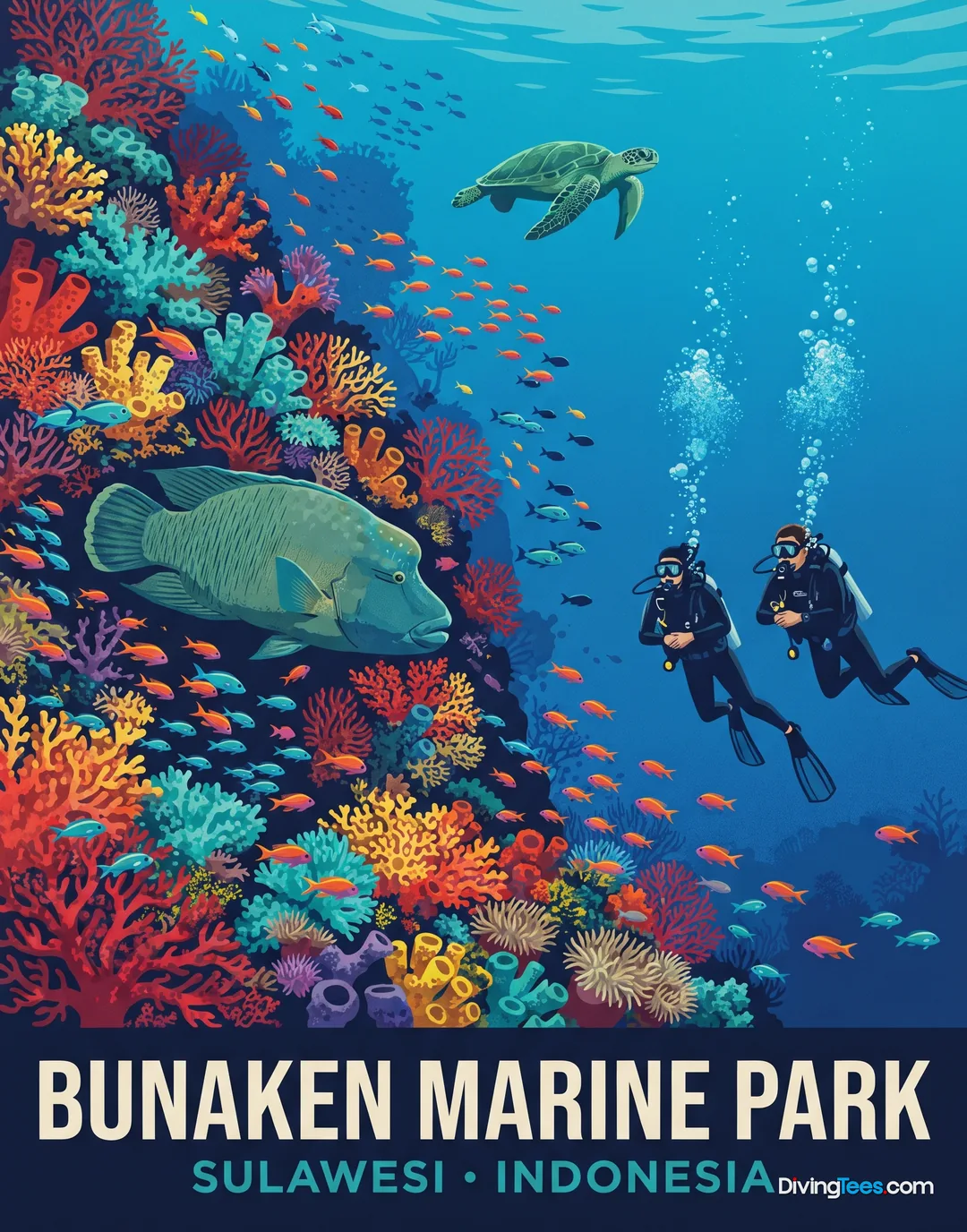
Bunaken Marine Park →
Max. depth · 40 m
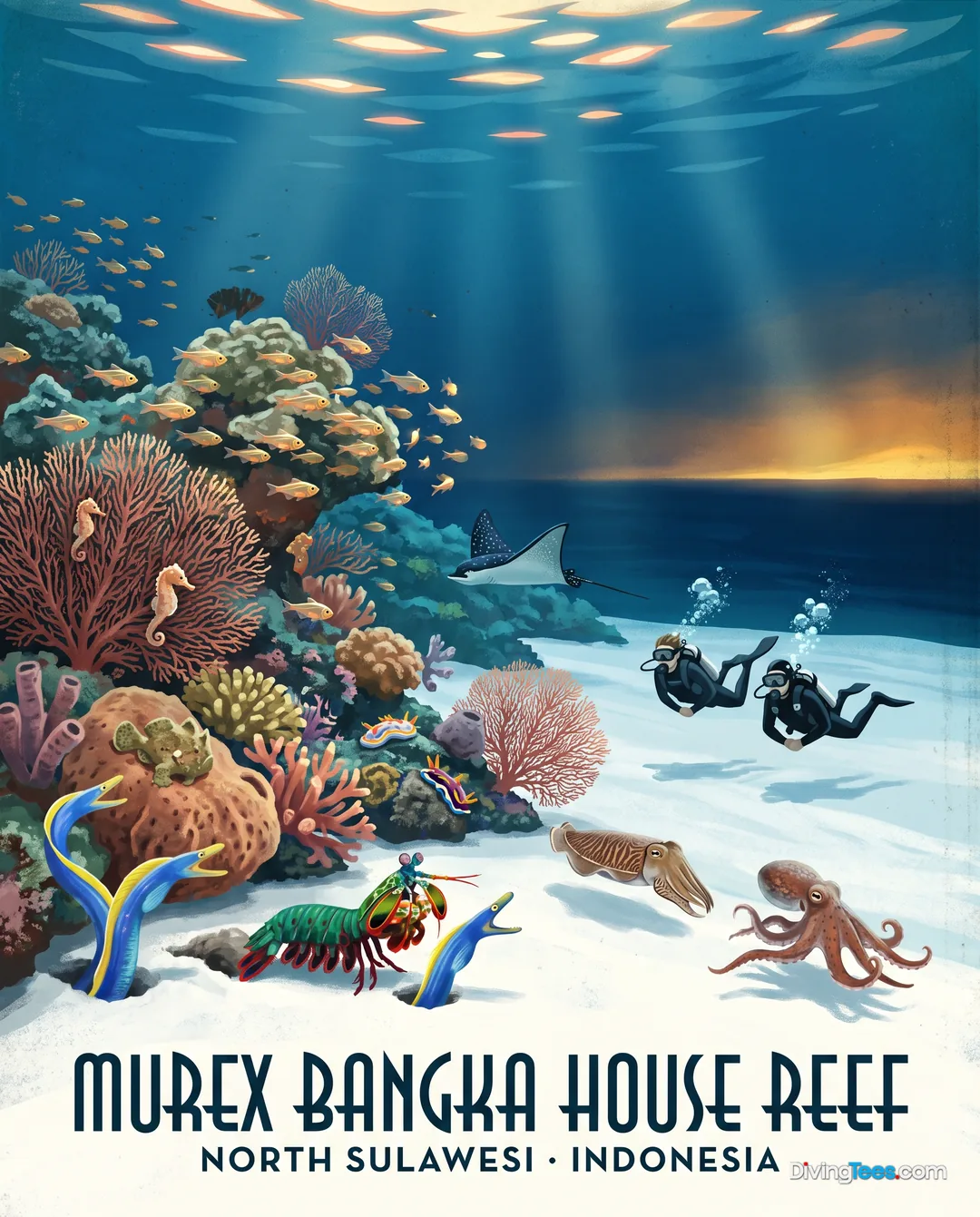
Murex Bangka House Reef →
Max. depth · 25 m
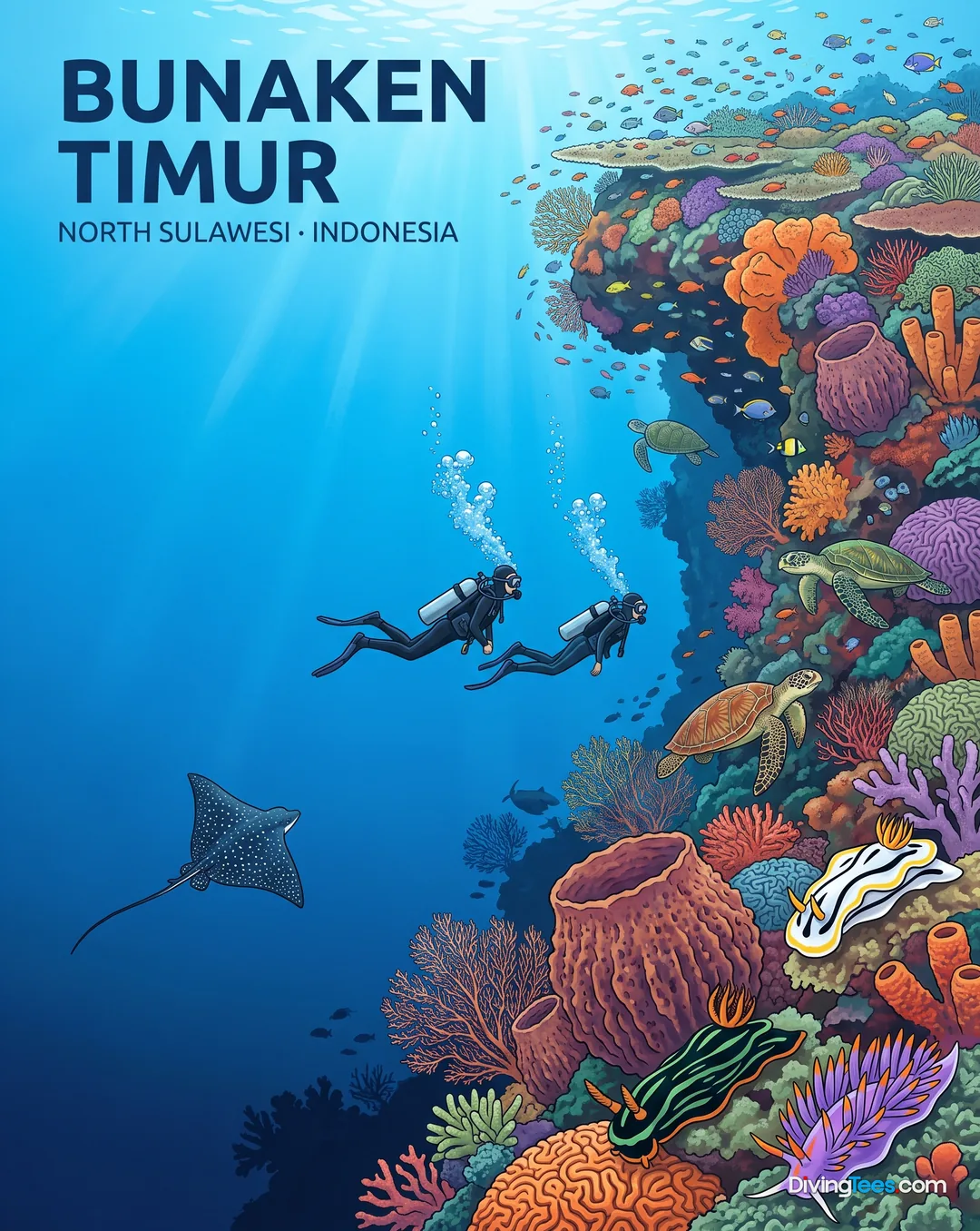
Bunaken Timur →
Max. depth · 25 m
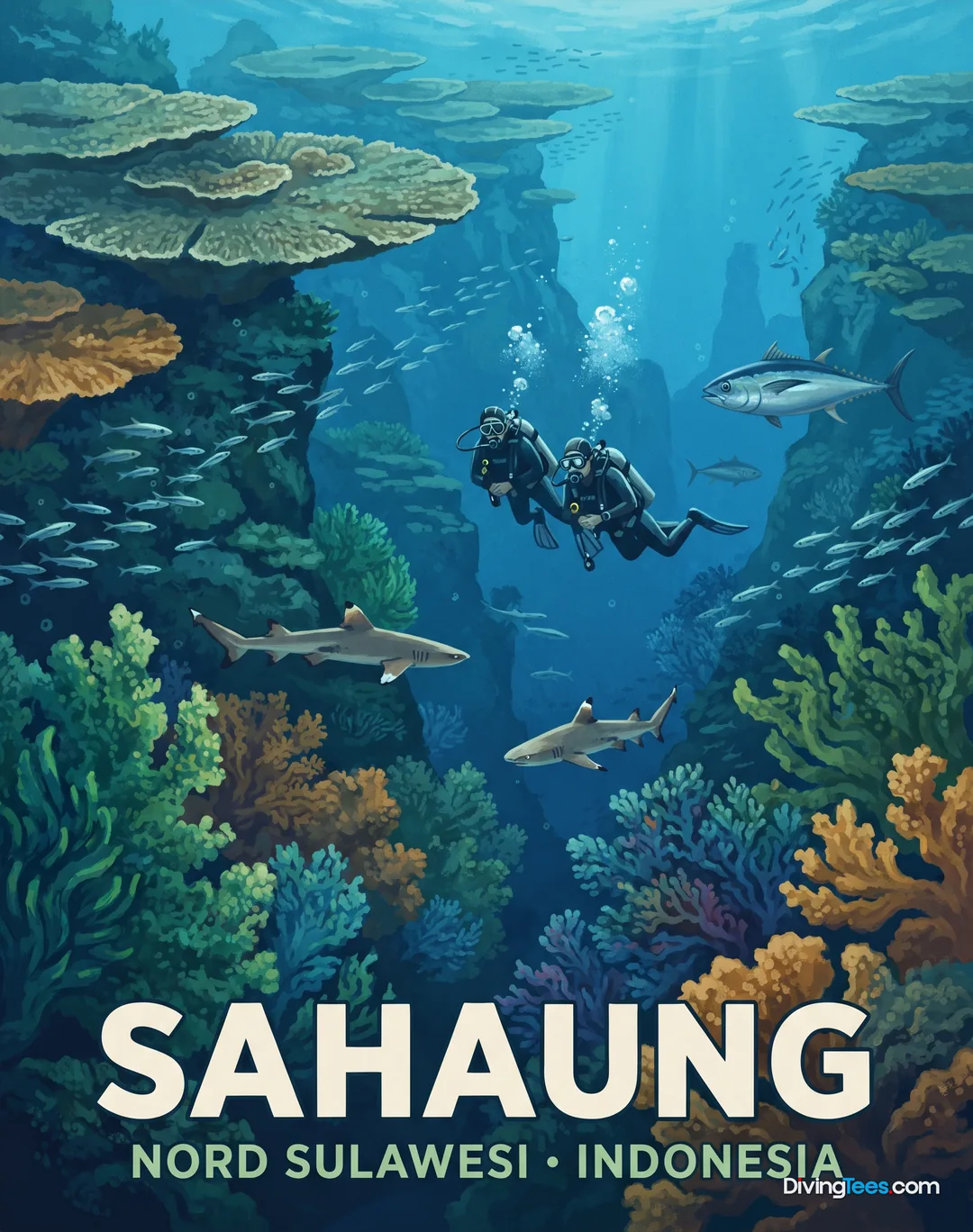
Sahaung →
Max. depth · 35 m
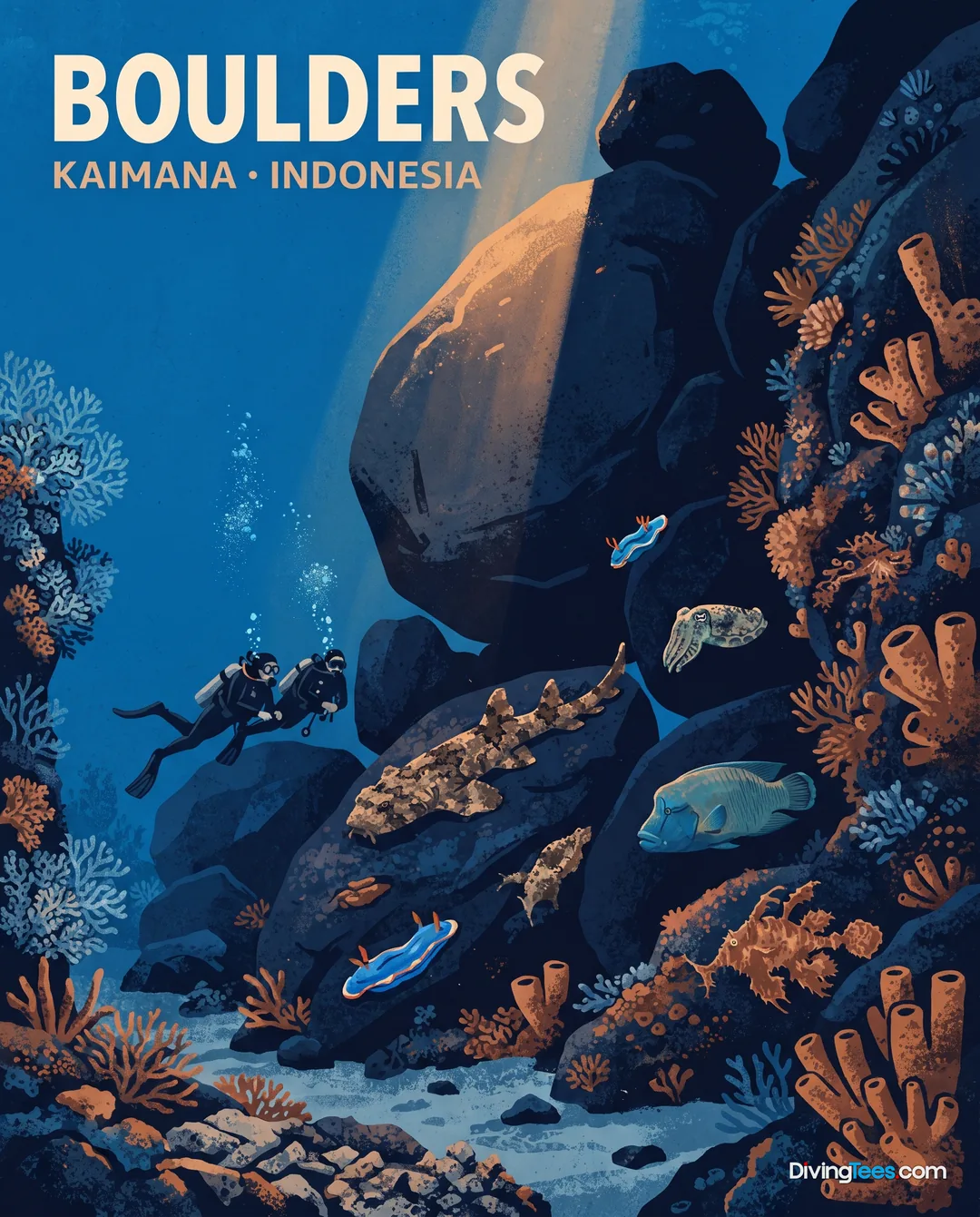
Boulders →
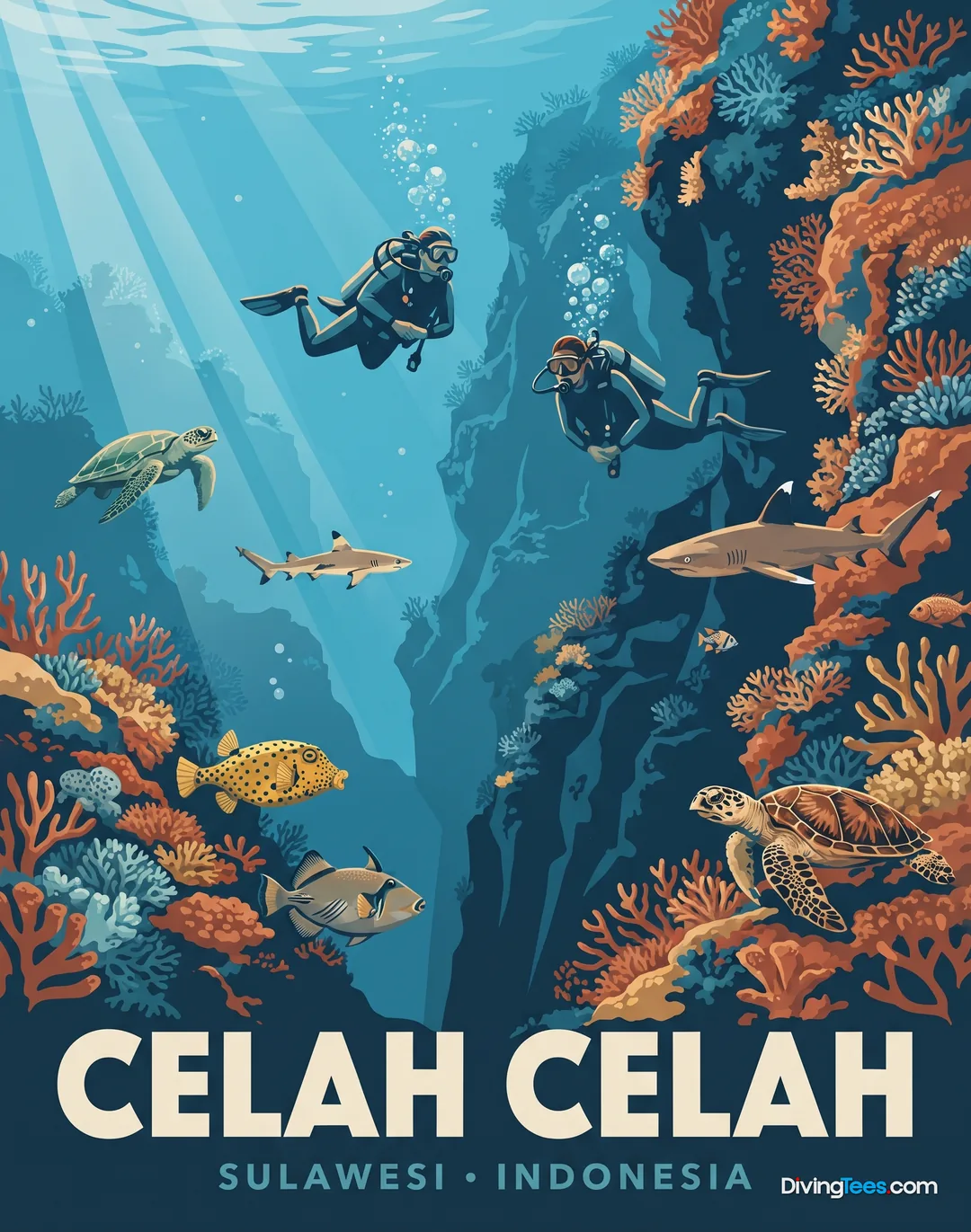
Celah Celah →
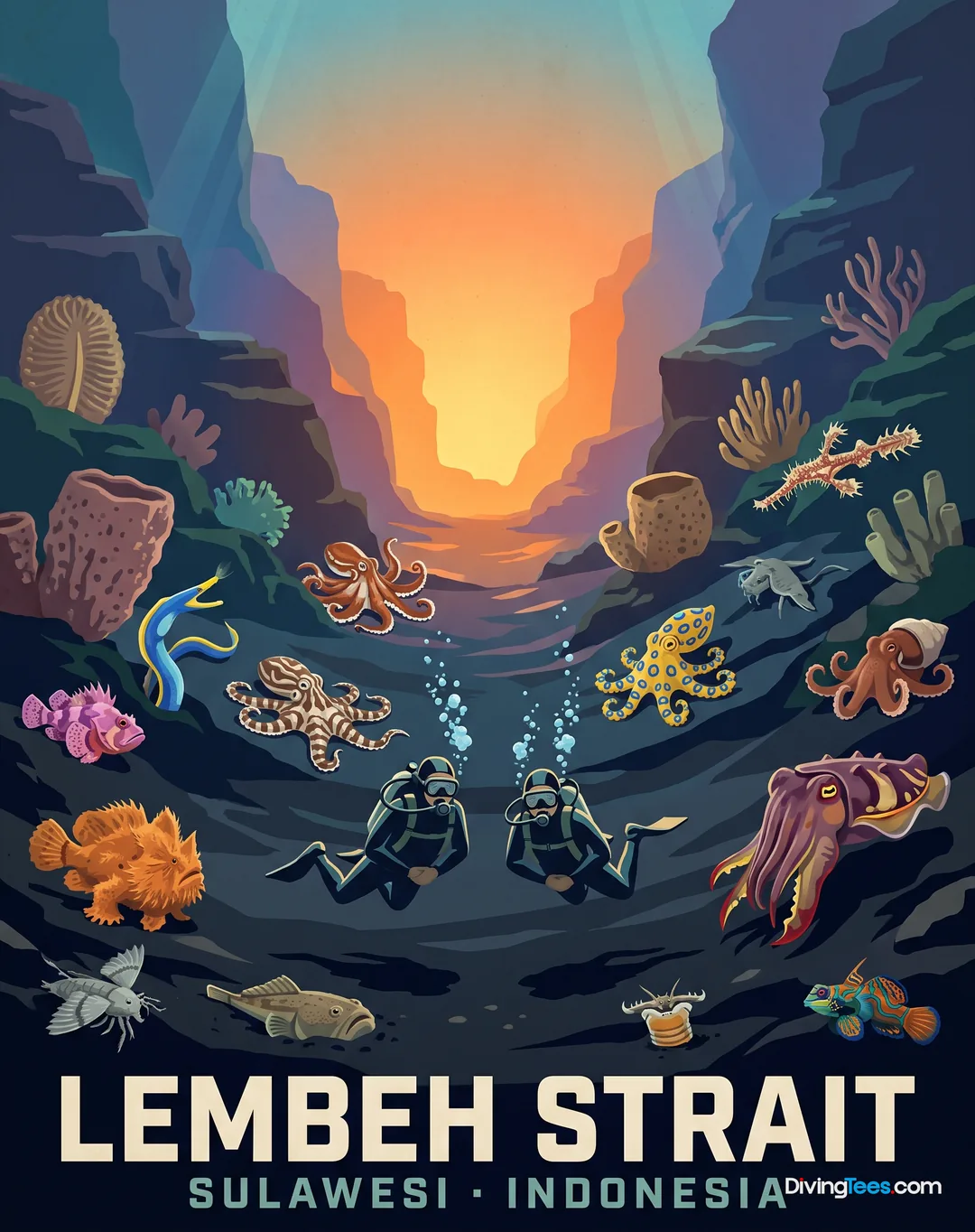
Lembeh Strait →
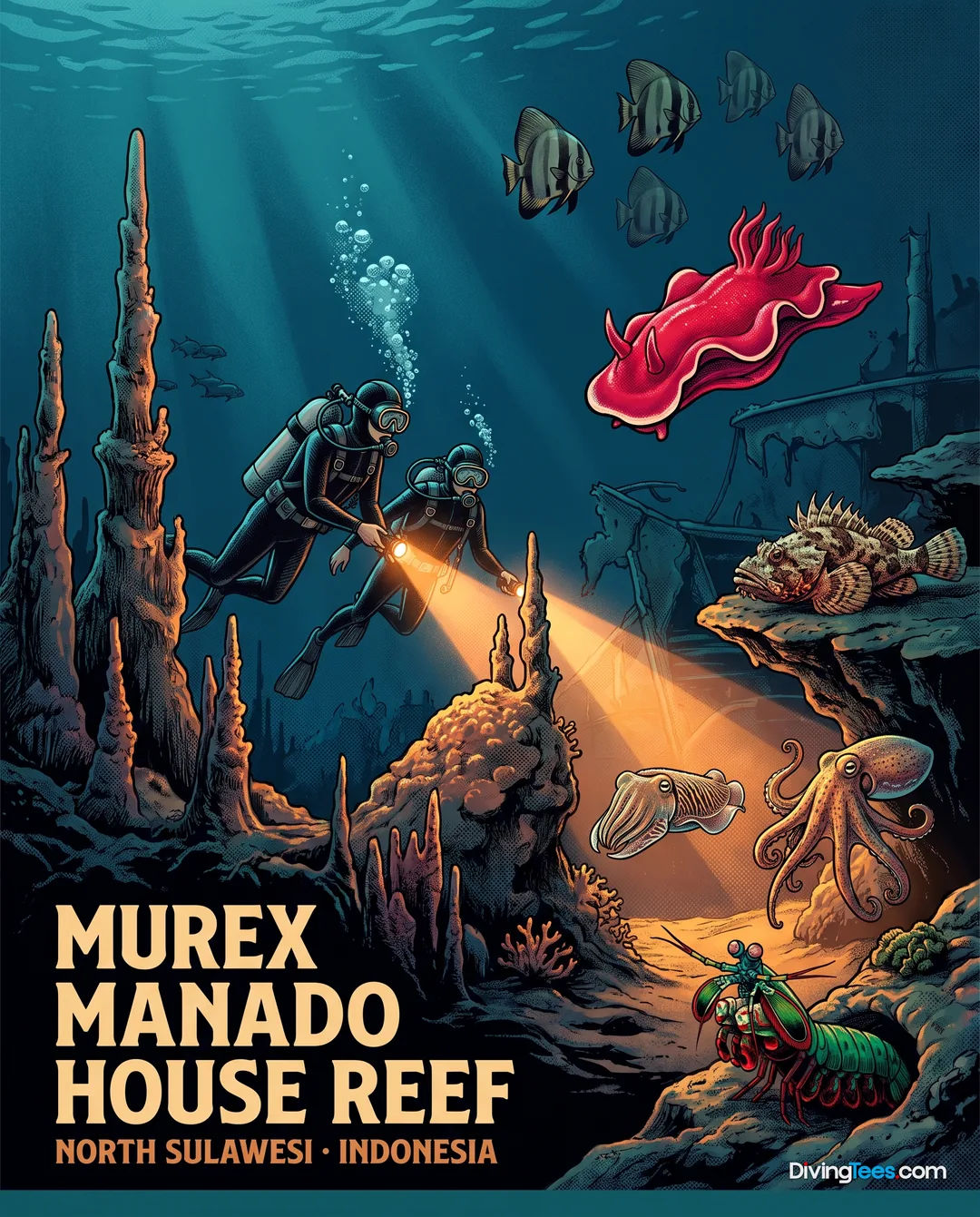
Murex Manado House Reef →
Max. depth · 20 m
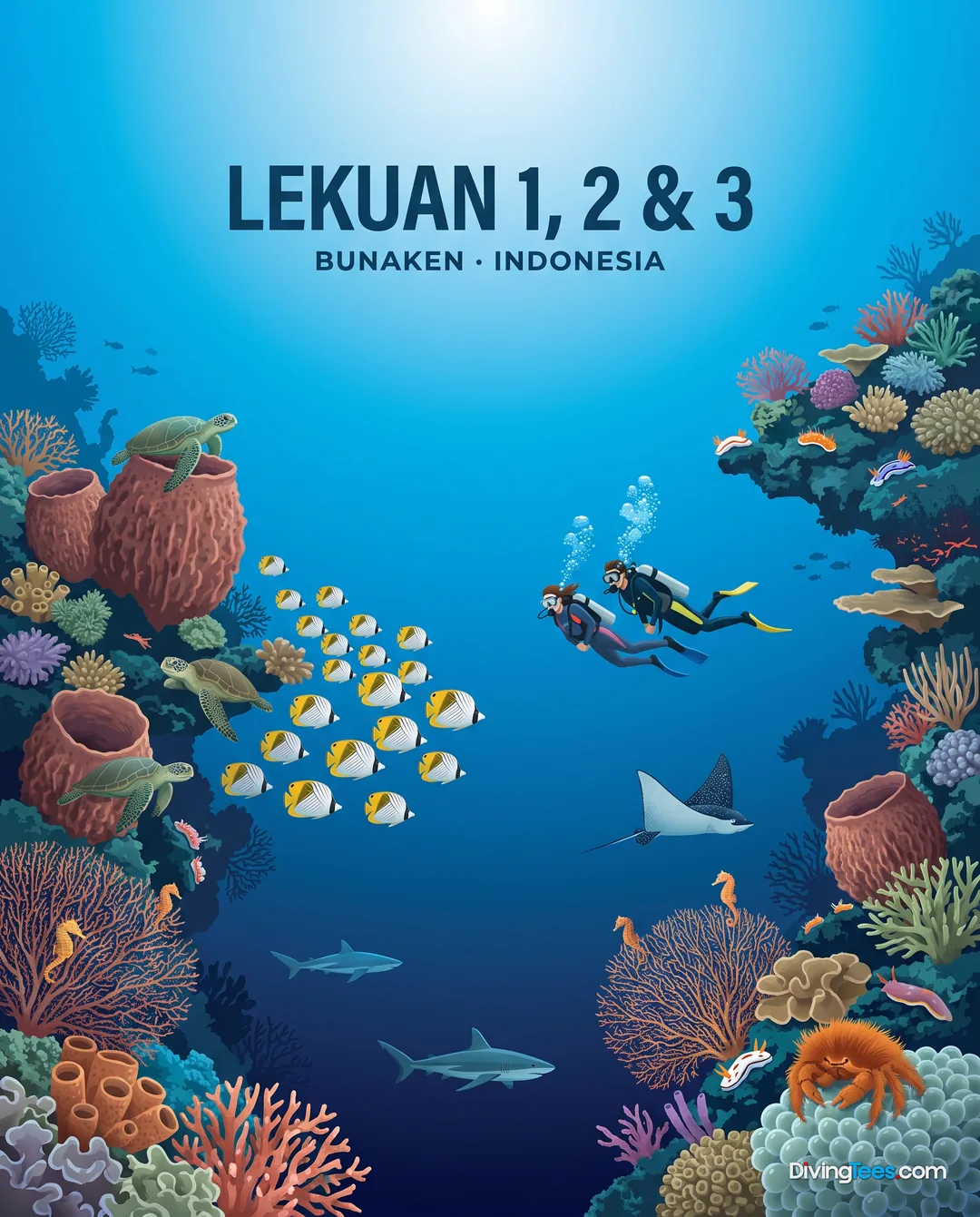
Lekuan →
Max. depth · 25 m
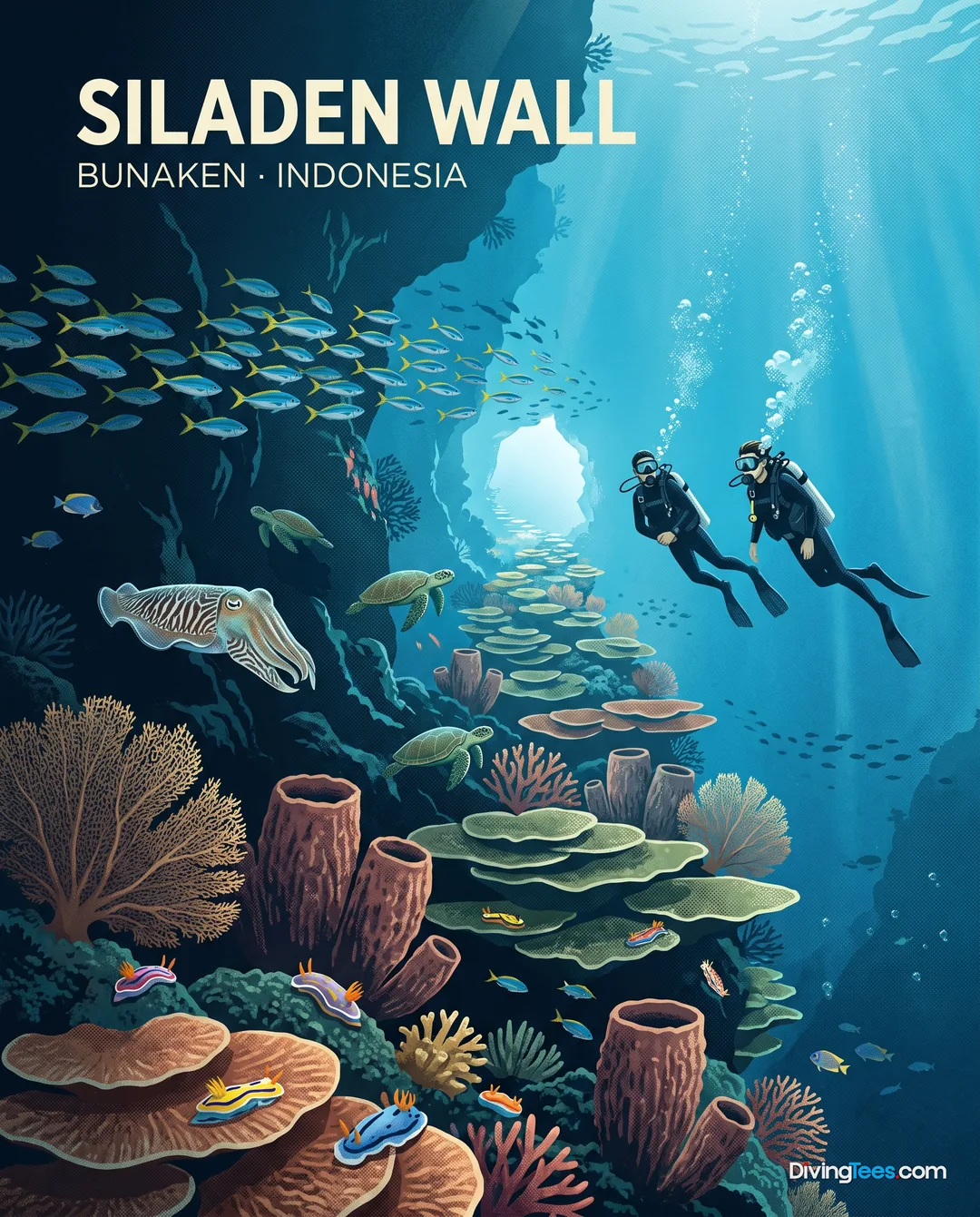
Siladen Wall →
Max. depth · 25 m
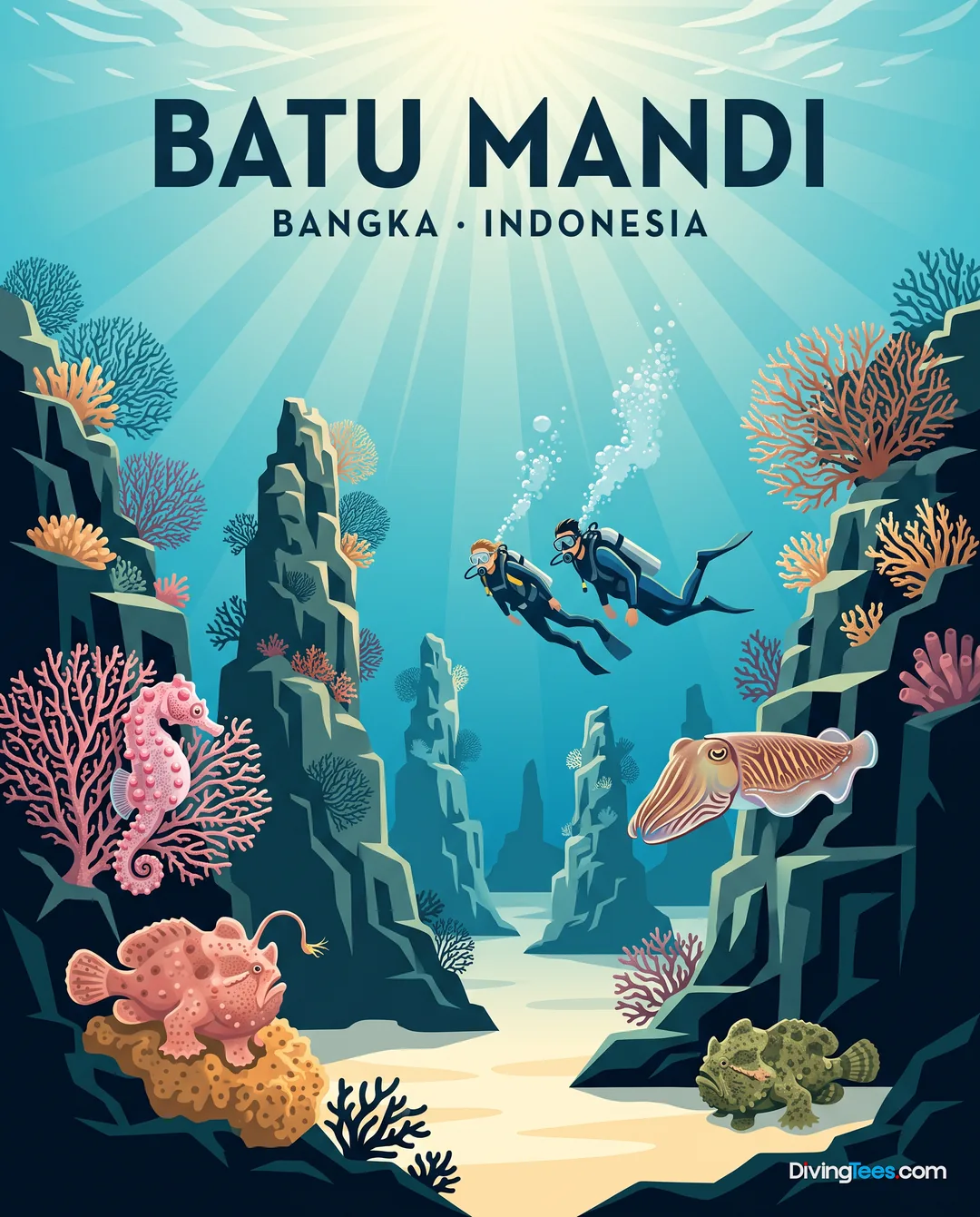
Batu Mandi →
Max. depth · 30 m
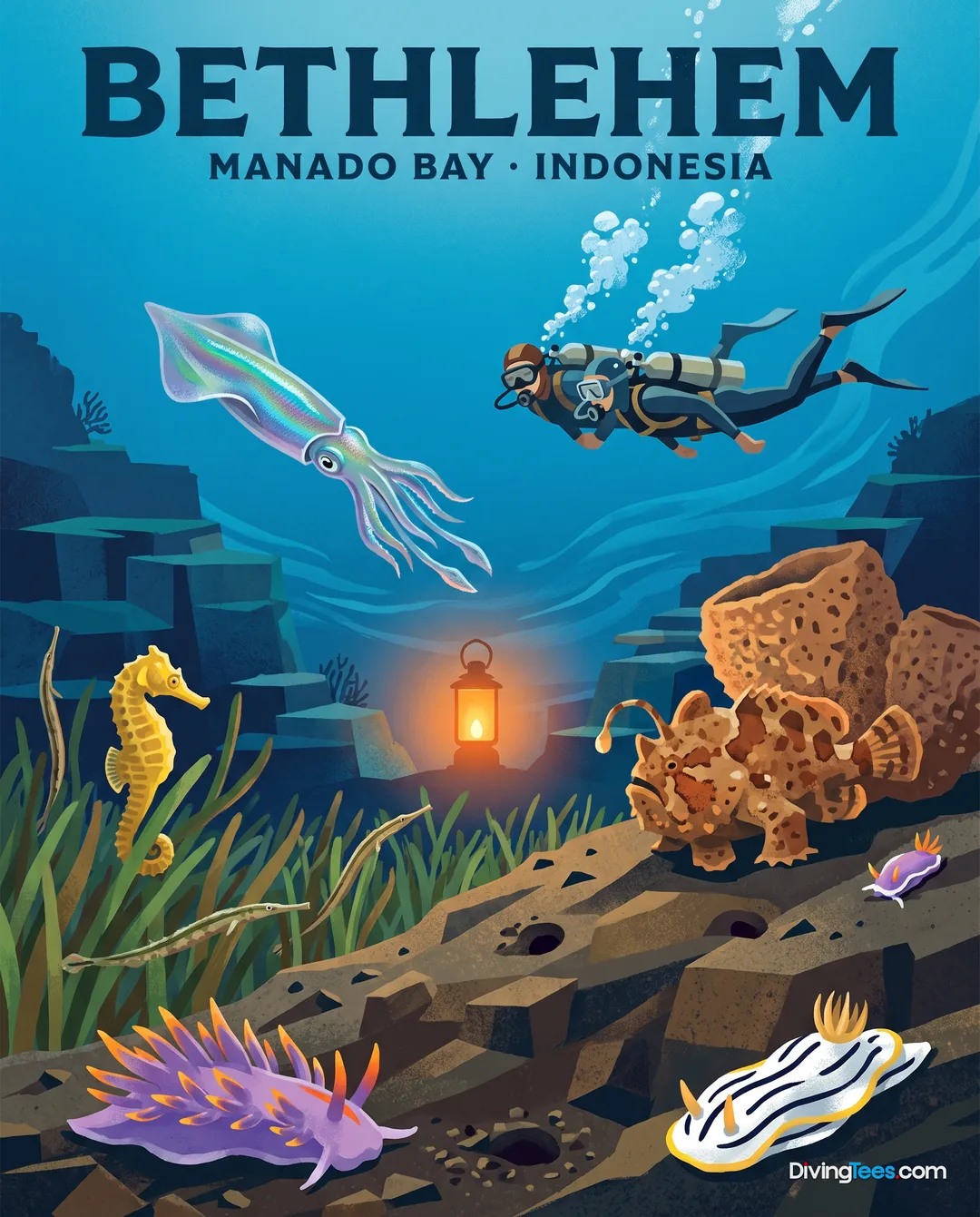
Bethlehem →
Max. depth · 20 m
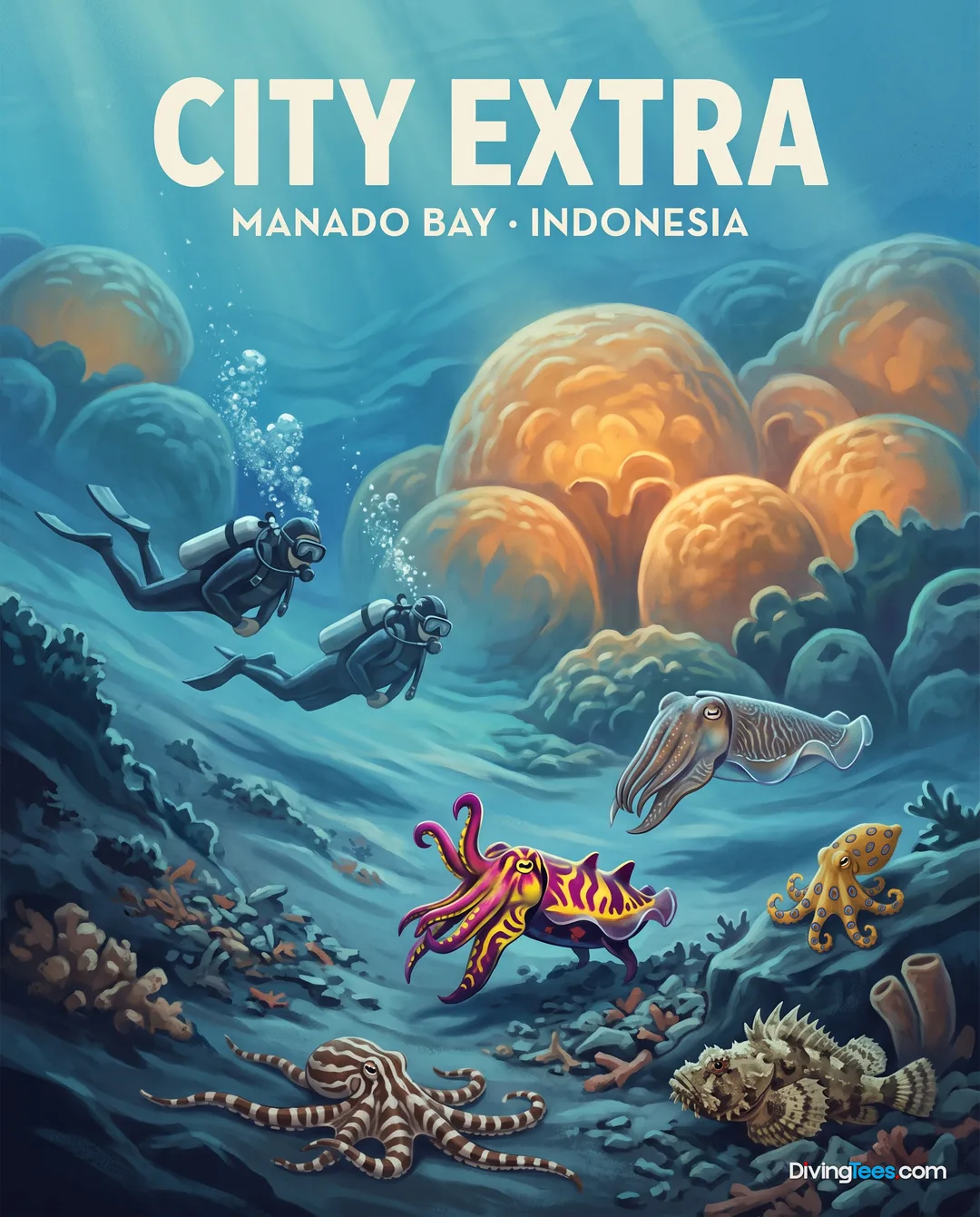
City Extra →
Max. depth · 20 m
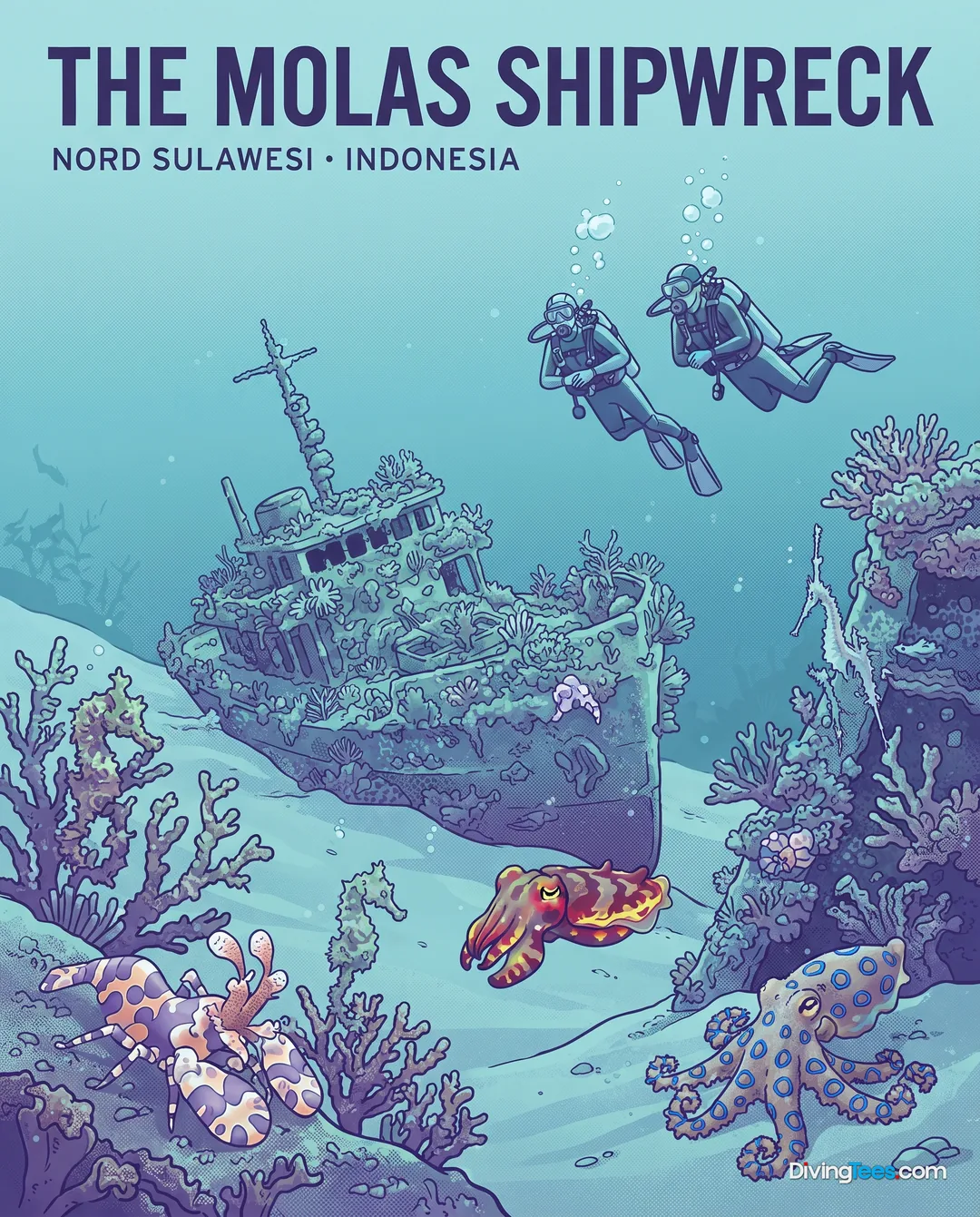
The Molas Shipwreck →
Max. depth · 40 m
Itineraries, dates and prices
Prices per person. Each month shows its lowest price: click a month, or pick an itinerary.
Next departures · 62 departuresfrom £874$1,169€1,044
October 2026
November 2026
See dates and prices
If you click these links and make a purchase on the partner site, DivingDeal may earn a commission, at no extra cost to you.
Dates and prices taken from liveaboard.com, updated 21 October 2026
What you’ll meet underwater
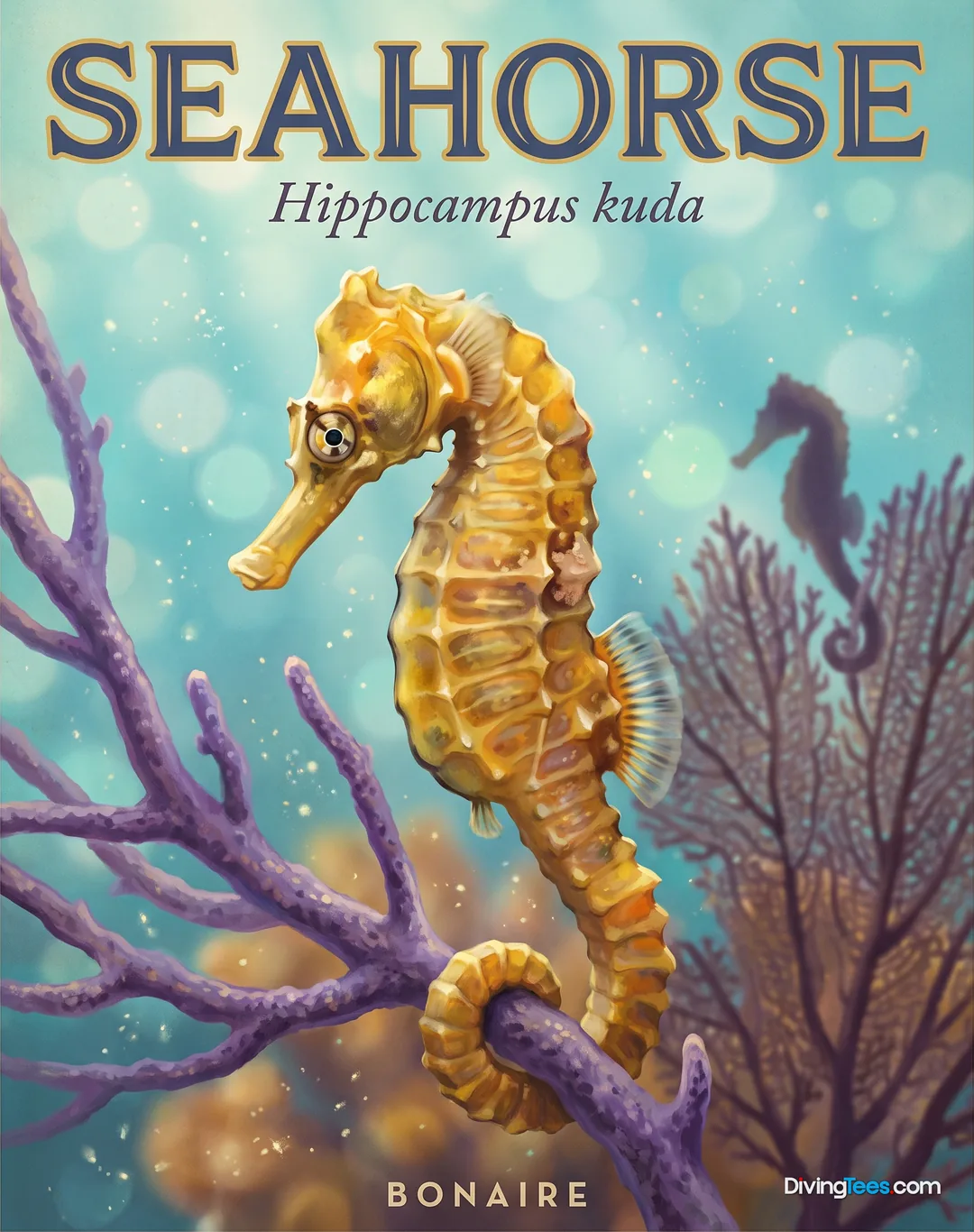
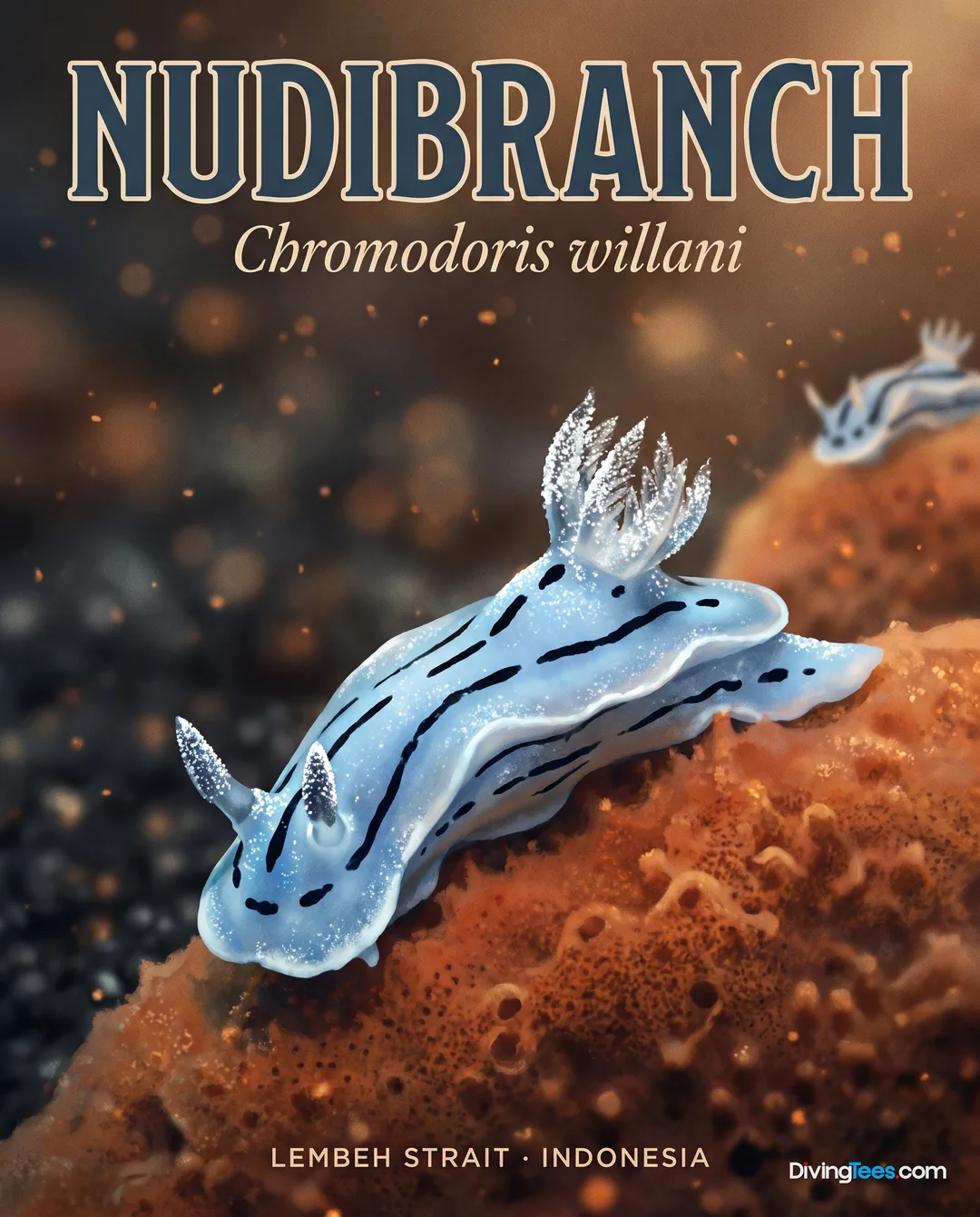
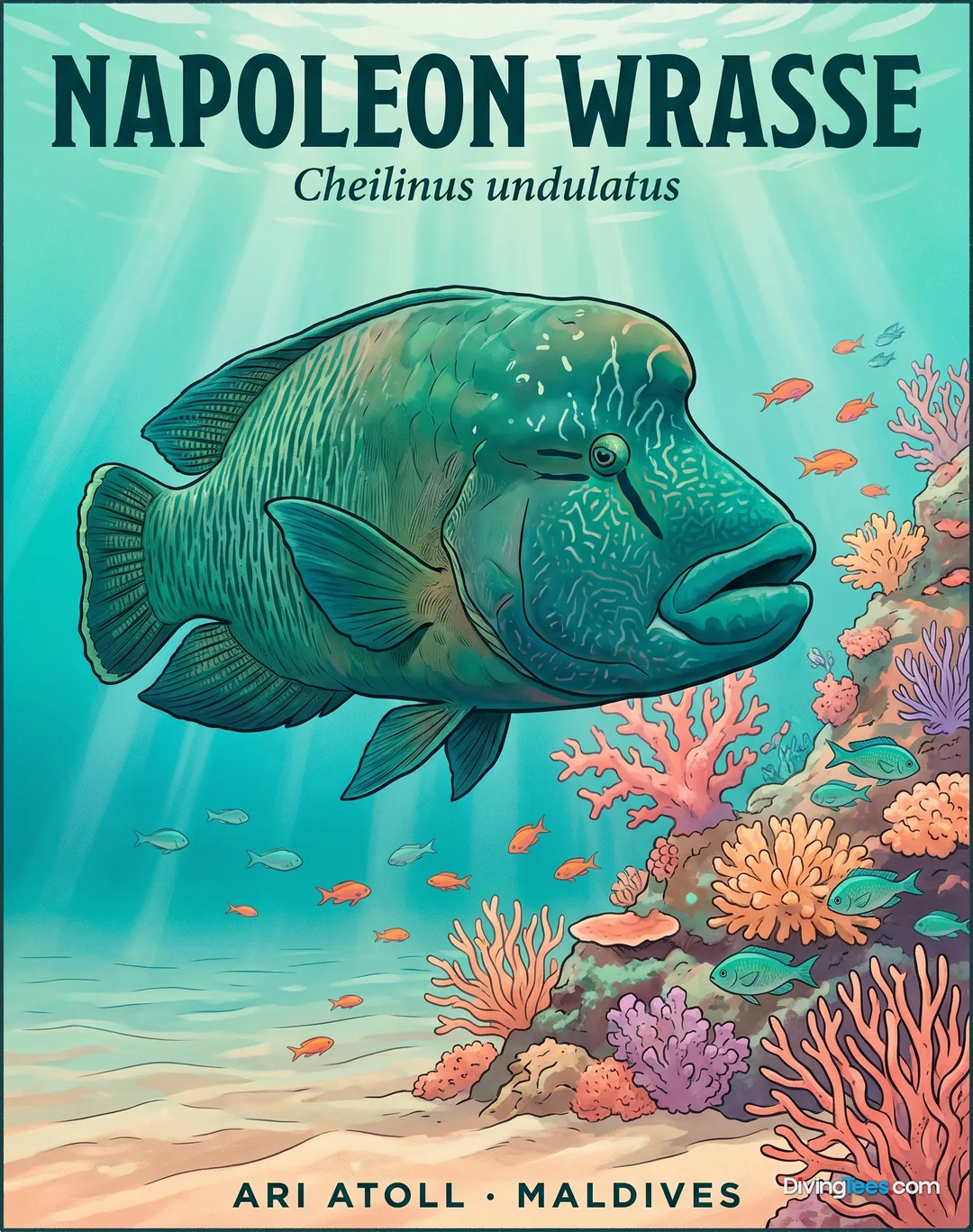
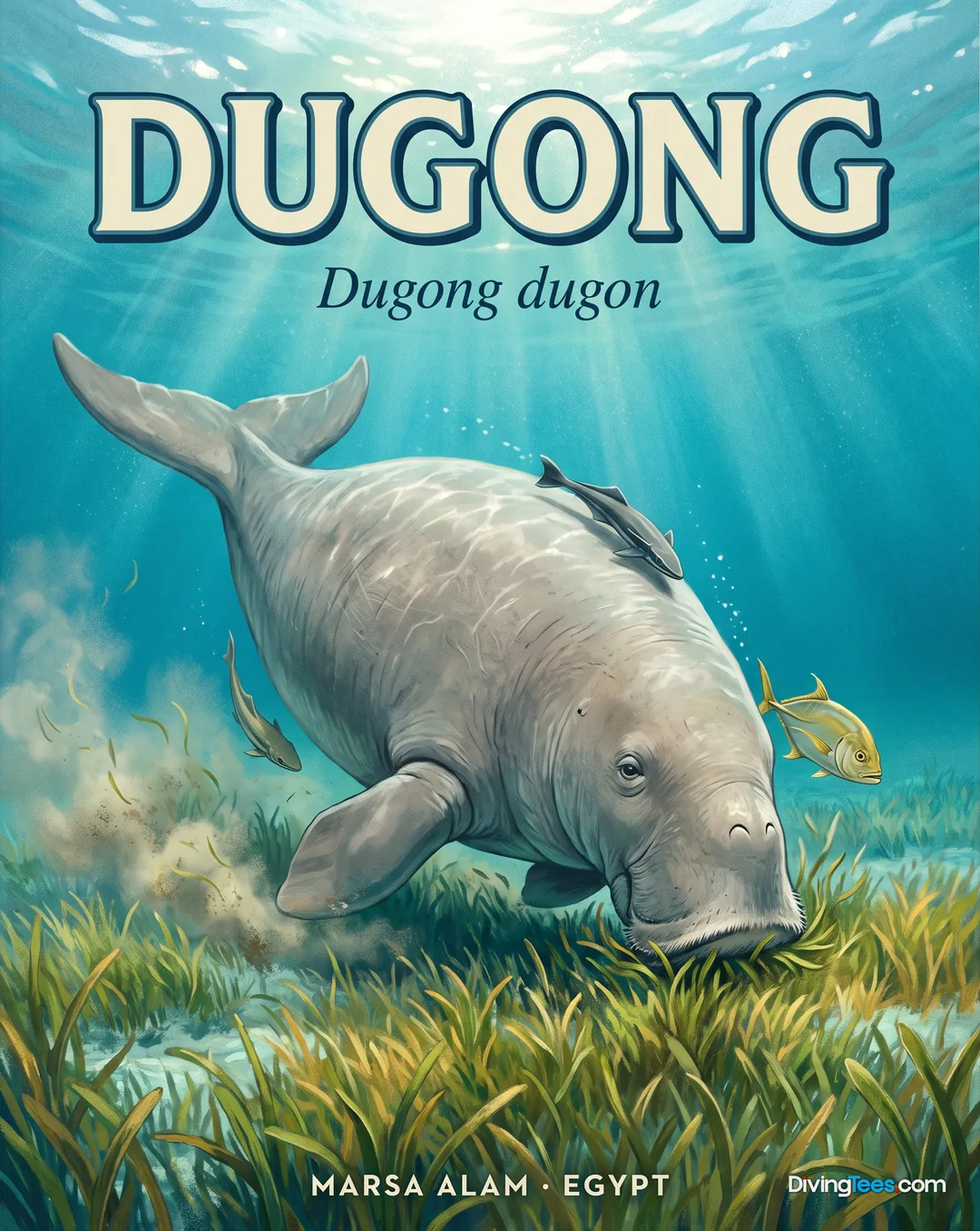
The recurring cast is strong enough to reward both wide-angle and macro divers: nudibranchs, pygmy seahorses, eagle rays, cuttlefish, moray eels, mantis shrimps, reef sharks, white-tip reef sharks, barracudas and Napoleon wrasse appear across several sites. Bunaken Marine Park is the place to look for the route's more unusual possibilities, including dolphins, dugongs, groupers, big-eye trevally and angelfish, alongside turtles and pelagic traffic. At Celah Celah, the cleft brings butterflyfish, parrotfish, wrasse, surgeonfish and triggerfish into the wall scene. Lembeh Strait is the deliberate macro detour, with octopus and the dense small-life that makes black sand worth examining inch by inch. Murex Bangka can produce glassfish, while Bunaken Timur is the named site for hard coral and unicornfish. The sites also offer nudibranchs and pygmy seahorses where patient searching pays off; none of these encounters is guaranteed.
Who puts you in the water
The crew speaks English and Indonesian, and a dive guide and naturalist guide are included in the operation. The small passenger load supports close supervision, but no fixed guide-to-diver ratio, instructor roster, qualification list, minimum logged-dive count or onboard course programme is stated. Briefings therefore matter: the site, tender movement and return procedure should be clear before each entry, particularly when the dive is on a wall, pinnacle or current-exposed reef. Safety equipment includes oxygen, first-aid kits, an EPIRB, radio, satellite communication, life rafts, fire systems and a recall system through the boat's communications equipment. There is also engine-room CCTV, radar, GPS, sonar and a fish finder. The practical level required depends on the route and conditions, so the guide's briefing is the reference for each dive.
The dive deck and the gear
The shaded dive deck is arranged around a proper platform, rinse tanks and two tenders. Divers use 12-litre aluminium tanks, with DIN adaptors available, while an Alkin compressor handles filling. The boat carries 24 tanks for its eight-guest operation, so cylinder changes stay straightforward. A separate camera rinse and dedicated photo area suit macro work, especially at Lembeh Strait and the house reefs. Underwater dive lights and assorted equipment are available, and rental gear is an optional extra. The tenders carry divers to the sites and collect them after the dive. Hot-water showers are available on board, and the platform makes entries and exits easier than climbing back over the side.
Between dives
Between dives, the useful choice is between shade, open air and water. The covered dive area protects tanks and cameras while the main deck and sundeck provide places to sit, dry off or watch the islands pass. A separate camera rinse keeps photo equipment away from the general wash, and charging stations make the quiet periods useful rather than anxious searches for a socket. Land excursions and snorkeling are included, so a surface interval can become a shore visit or a guided look above the reef. The boat also welcomes non-divers and snorkelers. On a no-dive stretch, the deck is the place to read, talk, eat outside or simply let the tender operation happen around the group.
A day on board
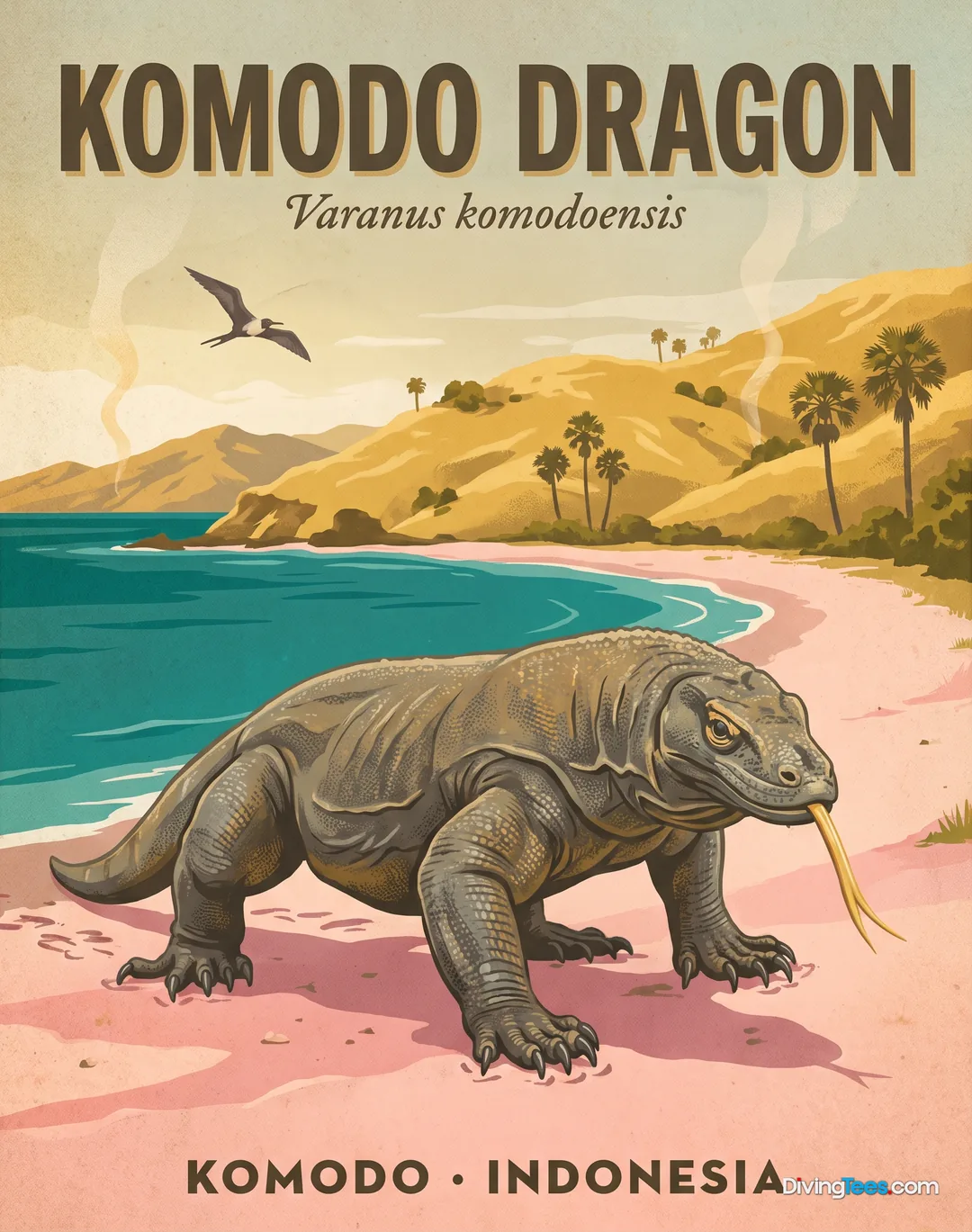
A sample Komodo day begins with the boat already preparing for the first briefing and dive, then builds around food, tender runs and the next entry rather than a single long excursion. Day one combines a check dive at Bidadari with a night dive at Wanilu. The following day adds a sunrise trek on Padar before dives at Three Sisters, Secret Garden and Small Padar. Another day pairs Pink Beach and a Komodo dragon trek with dives at Shotgun and Golden Passage, followed by a night dive. Crystal Rock, Castle Rock, Shotgun and Gili Lawa make one of the fuller diving days, while Manta Point, Takamakassar, Batu Bolong and Siaba Besar mix diving with beach and kayak time. The final day returns to Siaba Kecil and Mawan before the boat heads back to Labuan Bajo. Breakfast, lunch, dinner and snacks keep the gaps between entries functional; the evening night dive is the day's last deliberate push into the water.
What you eat aboard
Food is one of Queenesia's strongest points. Meals are served as full board, with buffet service, local and Western dishes, vegetarian choices, non-alcoholic drinks, tea, coffee and snacks available through the day. The cooking is built around local ingredients rather than treating Indonesian food as a token side dish. That matters after several dives: lunch needs to arrive without ceremony, while dinner becomes the proper pause after the last splash, especially on a night-dive day. Outdoor dining is available, so meals can be taken in the air instead of always under cover. Beer and selected wines are available separately, while the boat keeps the main offering practical for divers who need regular food and hydration more than elaborate service.
Nights at sea
The three cabins sit on the lower deck, with portholes, private bathrooms and individual air conditioning. The choices are straightforward: a double cabin, a twin cabin or a quad bunk cabin with four single bunks and two private bathrooms. The quad cabin shares its arrangement between occupants, while the double and twin cabins are non-sharing. These are compact liveaboard rooms, not suites, but the small passenger load keeps the rest of the boat usable when someone needs more than a bunk. Charging ports are provided in the cabins. After a night dive, the route back to the cabin is short, the air conditioning gives the room a reliable reset, and the porthole brings a small reminder that the boat is still moving outside.
Double Cabin
Twin Cabin
Quad Bunk Cabin
What to know before boarding
The recorded route departs from and returns to Labuan Bajo. Airport and hotel transfers are included, so the practical handover runs from the airport or hotel to the boat and back again. Transfer arrangements are communicated with the trip details before boarding. Arriving in Labuan Bajo the night before gives the trip enough margin for delays and makes embarkation less rushed.
- Year built
- 2014
- Year renovated
- 2022
- Length
- 22 m
- Beam
- 6 m
- Maximum number of passengers
- 8
- Number of cabins
- 3
- Number of bathrooms
- 4
- Engines
- 2 Mitsubishi 6-cylinder 6D16 units
- Cruising speed
- 8 knots
- Tenders
- 2
- Website
- queenesiafleet.com ↗
Hello, I'm Marina, DivingDeal.com's AI assistant. I answer in detail about hotels, dive centres and liveaboards.
Thinking about the whole trip and the flights? Talk it over with Edith →
Marina is an AI. Some links are affiliate links: DivingDeal may earn a commission, at no extra cost to you. Bookings are made with the partner.