
Rederis Plongee
Google 4.9/5 (436 reviews)
2.4 km away as the crow flies
Côte Vermeille · France · Mediterranean
Max. depth · 24 mDescend onto the diverse rocky topography of Cap l'Abeille, a site renowned for its abundant dusky groupers and extensive coralligenous formations within the Banyuls-Cerbère marine reserve.
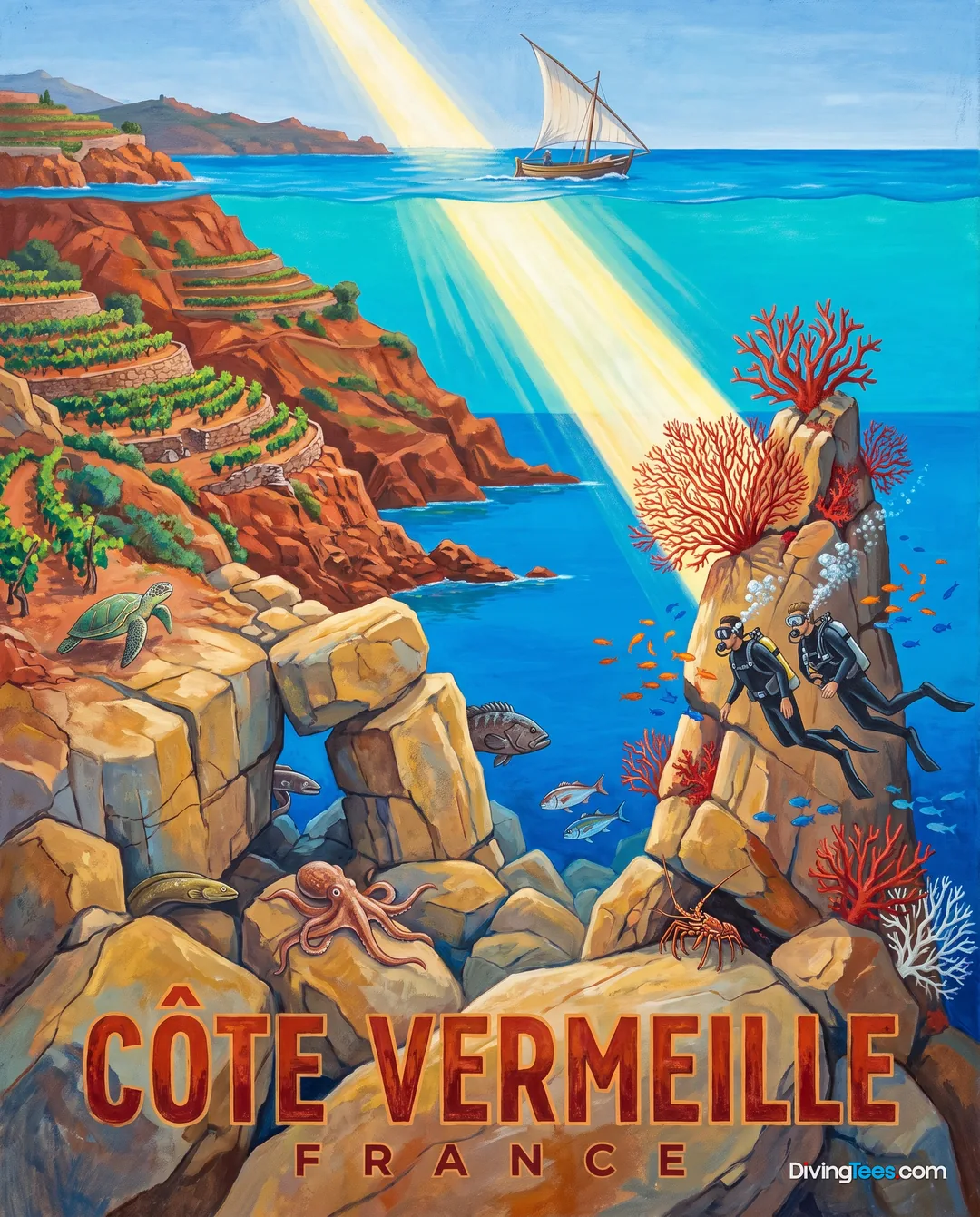
Cap l'Abeille lies within the Banyuls-Cerbère marine reserve, a rocky dive site characterized by its varied underwater topography. You'll navigate through large boulders, explore intricate coralligenous structures, and discover fissures and small drop-offs that carve out the seabed. This complexity offers multiple pathways and shelters, creating a dynamic environment that changes with each dive, whether you explore the northern or southern sections.
The site extends from a shallow 5 metres down to 24 metres, providing different depth zones to explore. The dive often centres around prominent rocky reliefs, notably a large formation known as "Le Dôme". Around these structures, sand patches host scattered rock formations, creating isolated habitats and feeding grounds. As you descend, the light shifts, revealing the vibrant hues of the fixed life that covers the rock faces.
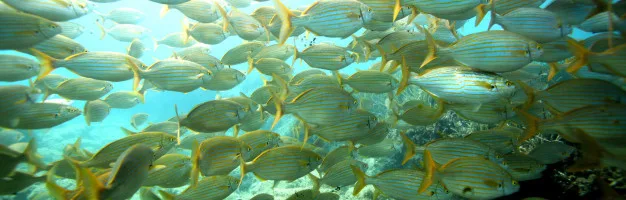
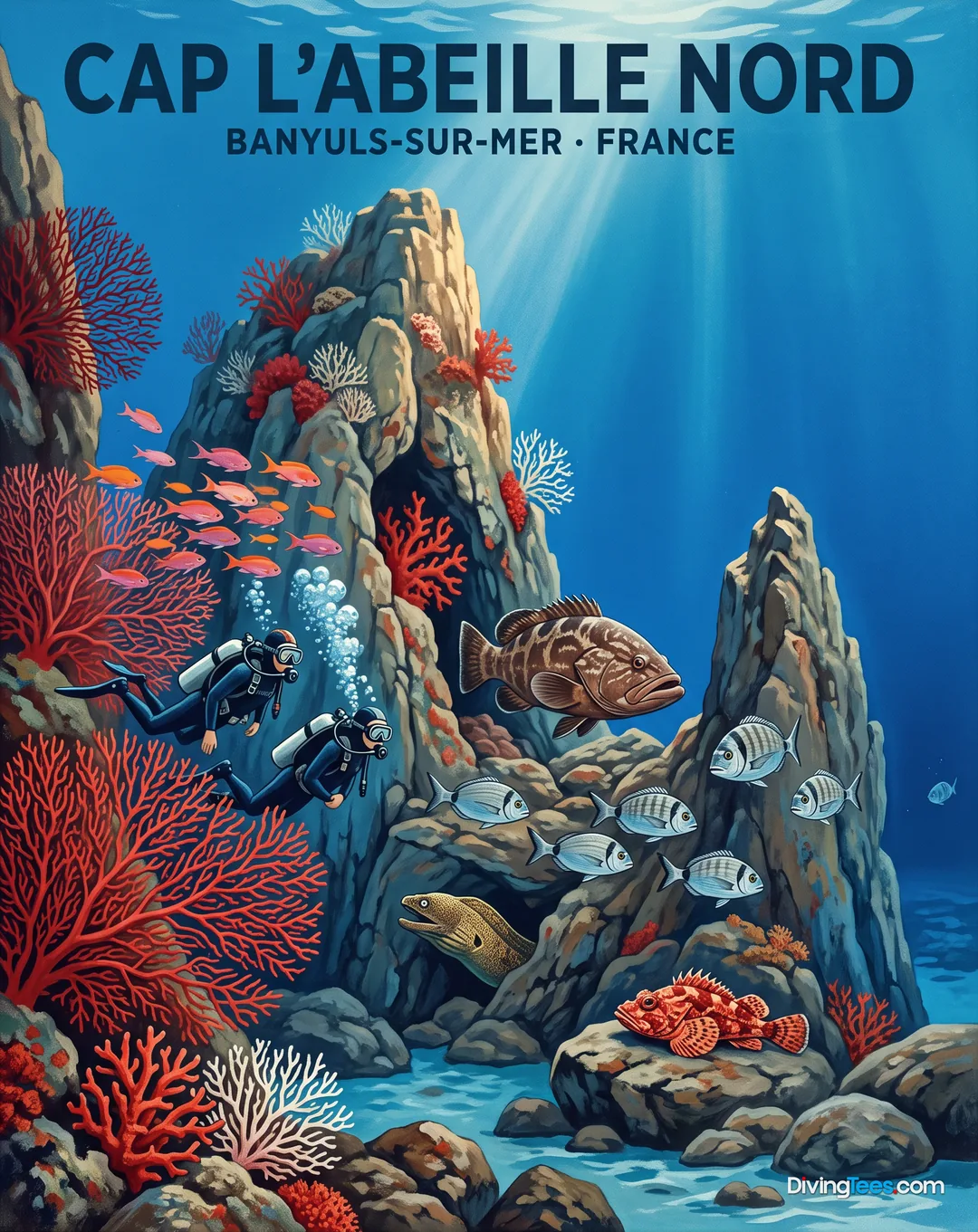
Expect frequent encounters with dusky groupers (Epinephelus marginatus) here, often seen patrolling their territories. Beyond groupers, the rock formations host schools of bream and salema (Sarpa salpa), while two-banded seabream (Diplodus vulgaris) and black seabream (Spondyliosoma cantharus) forage among the rocks. These fish are resident, providing constant activity around the site's main features.
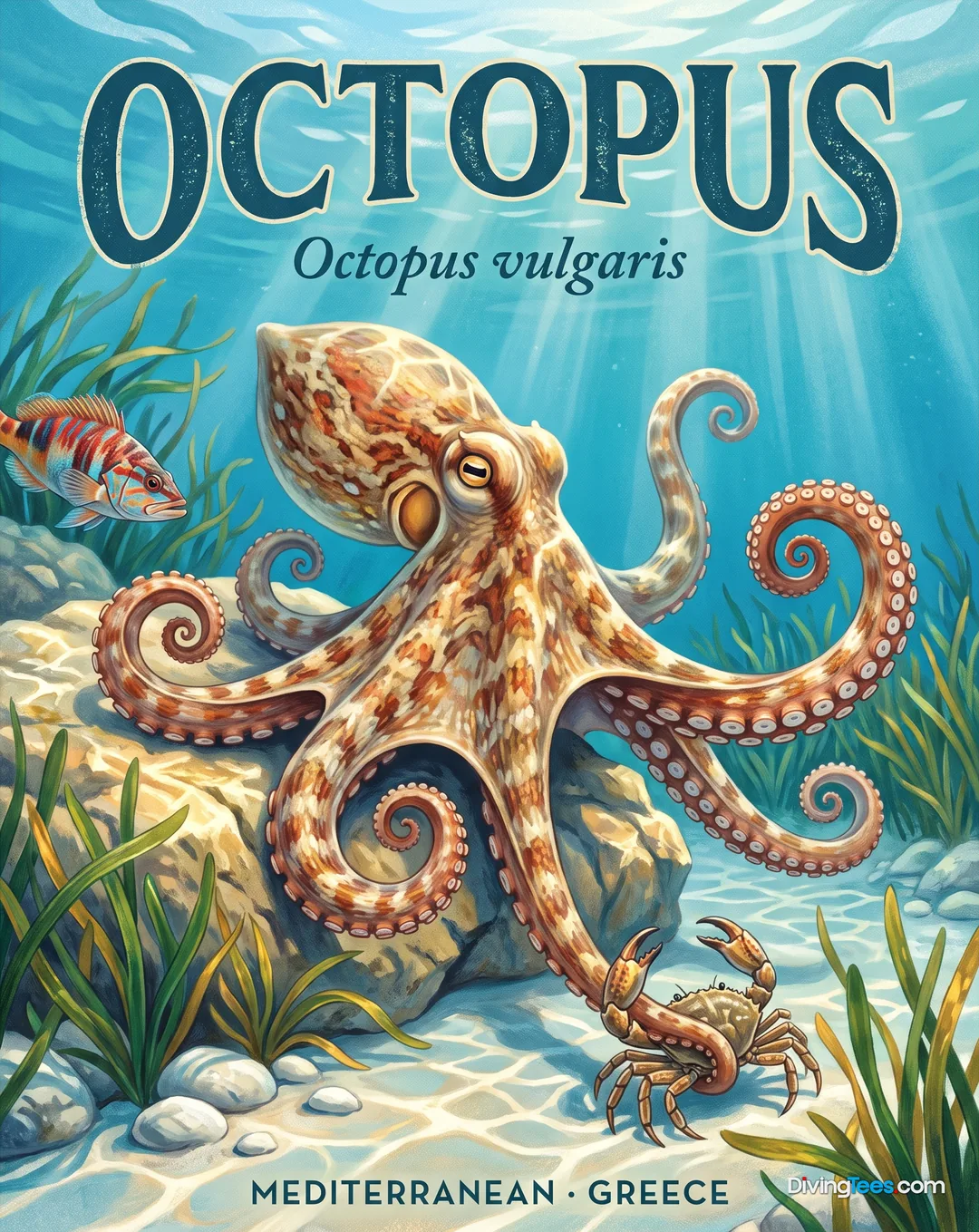
The intricate relief is home to a rich variety of smaller marine life. Keep an eye out for octopus (Octopus vulgaris) tucked into crevices, and you might spot spiny lobsters (Palinurus elephas) in their shelters. Conger eels (Conger conger) and forkbeards (Phycis blennoides) are also present, often hidden deeper within the cracks and under ledges, while nudibranchs add splashes of colour to the coralligenous growth.
Cap l'Abeille is recognized as one of the most biodiverse sites in the Banyuls marine reserve. The abundance of marine life, particularly the large numbers of resident groupers, sets it apart. The combination of varied topography and preserved marine fauna makes for a rewarding dive, appealing to those who appreciate a rich, natural reef environment rather than a single dramatic feature.
Currents at Cap l'Abeille are variable and directly influenced by local weather patterns and the cape's exposure. While certain conditions can bring stronger movements, the site's topography also provides some areas of shelter. This variability means planning your dive to account for potential shifts in water movement and maintaining good buoyancy control throughout the dive profile.
Visibility here can also be variable, though it often reaches around 20 metres, offering clear views of the extensive rock formations and the diverse marine community. Conditions are generally favourable for diving between April and November, when the Mediterranean waters are warmer and more settled. Access is primarily by boat, though local knowledge sometimes allows entry from Taillelauque beach for specific variants of the site.
This site is accessible to Advanced level divers with experience in rocky and exposed marine environments. Depths range from 5 metres to a maximum of 24 metres. Currents can be variable depending on weather and exposure, requiring good awareness and buoyancy control. Visibility often reaches around 20 metres. The optimal diving season runs from April through November.
You can dive Cap l’Abeille between April and November, when Mediterranean waters are warmer and generally more settled. Visibility is variable but often reaches around 20 metres, allowing you to view the rocky formations and marine life. Access is primarily by boat, with some variants reachable from Taillelauque beach using local knowledge.
Cap l’Abeille is suitable for Advanced divers with experience in rocky and exposed marine environments. You should be comfortable navigating large boulders, coralligenous structures, fissures and small drop-offs. Variable currents require good awareness and buoyancy control, while the site’s different depth zones offer options for advanced recreational diving.
Cap l’Abeille ranges from 5 metres to a maximum of 24 metres. Currents are variable and influenced by local weather patterns and the cape’s exposure. Stronger movement can occur in some conditions, although the rocky topography provides sheltered areas. Plan for possible changes in water movement and maintain good buoyancy control.
At Cap l’Abeille, you can explore plateaus, drop-offs, boulders, coralligenous formations, fissures, sand patches and the rocky formation known as Le Dôme. Marine life includes dusky groupers, bream, salema, two-banded seabream, black seabream, octopus, spiny lobsters, conger eels, forkbeards and nudibranchs.