

Rederis Plongee
Google 4.9/5 (436 reviews)
4.9 km away as the crow flies
Côte Vermeille · France · Mediterranean
Max. depth · 40 mCanadell offers a Mediterranean dive profile with a granite reef system, combining shallower islets with a main wall descending past 40 metres.
The Canadell dive site is part of a granite reef system located near Cap Canadell in the Côte Vermeille, often referred to as Cap Canadell or Les îles du Cap Canadell due to the small Campagies islets in the area. This site stands out for its pronounced relief, beginning in shallower sections around 8 metres and extending downwards. You can start your dive by exploring the islets, where the topography forms a complex network of rock formations and potential swim-throughs, offering diverse routes for different experience levels.
As you move away from the islets, the primary feature of Canadell is a main wall or slope that descends past the 40-metre mark. This deeper section is characterised by larger granite boulders and offers opportunities to observe marine life that prefers lower light levels. The transition from the shallow reef to the deeper wall allows for a varied dive profile, moving through different ecosystems as you gain depth. Attention to your dive computer is important here, as the topography encourages deeper exploration.
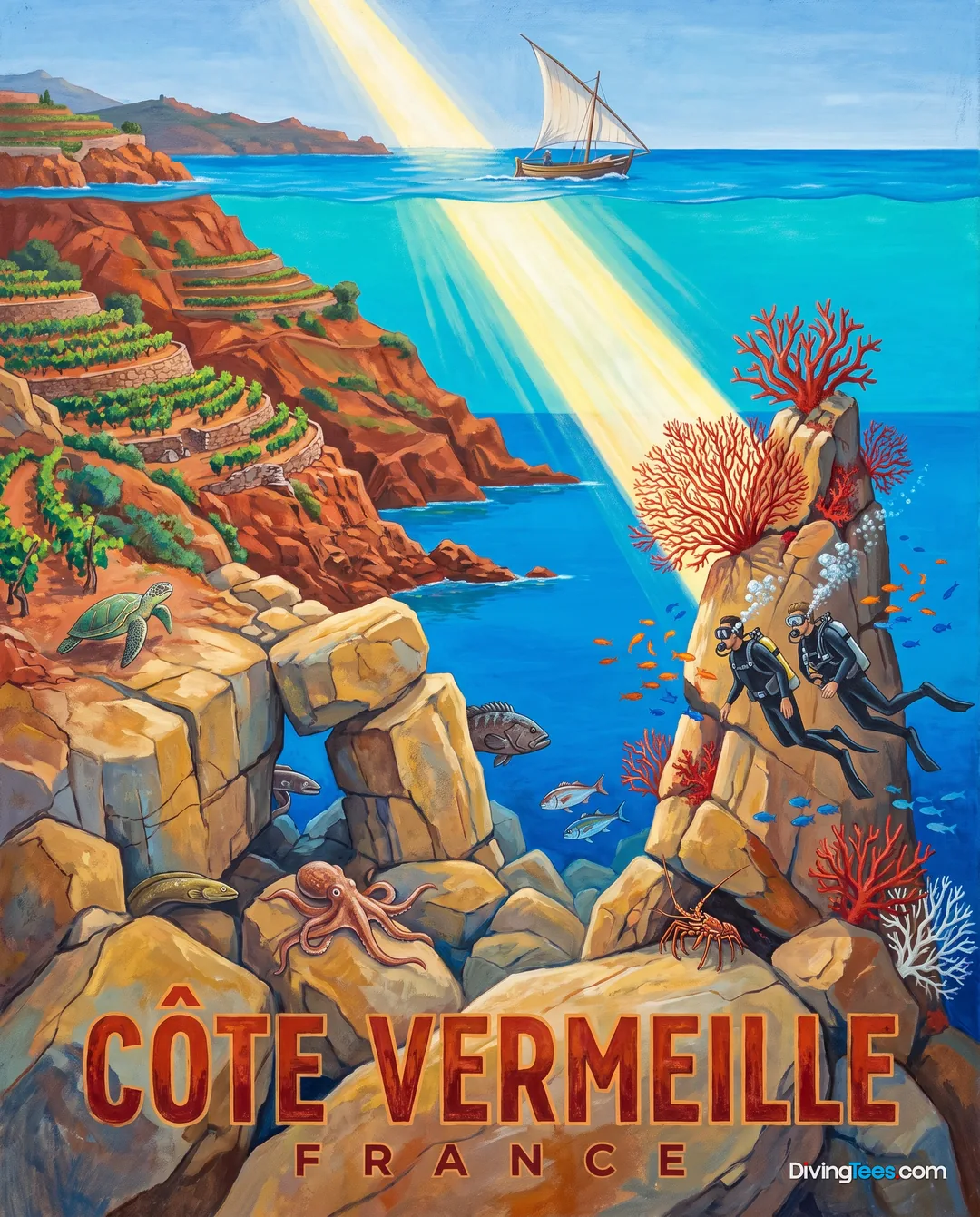
The underwater landscape at Canadell is notable for its coralligenous growth and gorgonian sea fans, particularly as you descend. These deeper formations are home to red coral, which is a key highlight for many divers at this site, as it is less common in shallower, more exposed areas. You will find moray eels (Muraena helena) in crevices and under rock ledges, often camouflaged against the granite. Look closely for nudibranchs (Nudibranchia) along the reef, moving across the vibrant invertebrate colonies.
While the site's current is variable, it is generally influenced by local wind and sea state rather than a consistent drift. This means conditions can change, but it is not typically known for permanent strong currents like those found in channels or open ocean passages. Plan your dive according to the forecast, as exposure around Cap Canadell can lead to different current patterns depending on your specific dive route. Visibility here typically ranges from 15 to 25 metres, often extending to 30 metres, especially in late summer and autumn.
Groupers (Epinephelus marginatus) are regularly sighted around the deeper sections of Canadell, often holding territory within the rock formations. Keep an eye on the blue for larger pelagics; dolphins (Delphinidae) and green turtles (Chelonia mydas) are occasionally reported passing through the area. These encounters, while not guaranteed, add another dimension to the dive, reflecting the site's position within a protected marine area.
Canadell differentiates itself from other sites in the Banyuls-Cerbère reserve by combining accessible shallow reef diving with substantial deeper wall exploration in a single location. The prominent granite relief and the presence of both red coral and large gorgonian sea fans at depth provide a richer environment than many nearby sites. This geological diversity, coupled with the potential for varied marine life, makes it a significant dive destination in the region.
The optimal time to dive Canadell extends from summer through autumn, with the clearest water often reported during late summer and into the autumn months. During these periods, you generally experience more settled conditions and better visibility, enhancing the exploration of the varied topography. Shore access can be possible depending on the operator and specific entry point, but boat access remains the primary method for reaching the most rewarding parts of the site.
Canadell offers a varied dive profile with depths ranging from a minimum of 8 metres to over 40 metres. It is accessible from Open Water Diver certification for the shallower sections, but the deeper wall past 20 metres and the associated experiences are better suited for Advanced Open Water Divers. Current at the site is variable, influenced by local weather conditions rather than consistent drift, so assess conditions on arrival. Visibility typically holds between 15 and 25 metres, frequently reaching 30 metres. The best diving conditions are generally found from summer through autumn, with late summer often providing the clearest water.
You can dive Canadell from summer through autumn, when conditions are generally more settled and visibility is typically between 15 and 25 metres. Late summer and autumn often bring the clearest water, with visibility frequently reaching 30 metres. Local weather and sea state can still influence conditions around Cap Canadell.
You can explore the shallower sections of Canadell with an Open Water Diver certification, including the Campagies islets, rock formations and potential swim-throughs around 8 metres. The deeper wall past 20 metres and its associated experiences are better suited to Advanced Open Water Divers, particularly where the wall descends beyond 40 metres.
Canadell offers a varied profile from 8 metres to beyond 40 metres. You can begin around the Campagies islets, then follow granite relief, large boulders and swim-throughs toward the deeper wall. As you descend, coralligenous growth, gorgonian sea fans and red coral become notable features, so monitor your dive computer.
Currents at Canadell are variable and influenced by local wind, weather and sea state rather than a consistent drift, so assess conditions on arrival and plan for your route. Around the granite formations, you may see moray eels, groupers and nudibranchs. Deeper areas feature red coral and gorgonian sea fans, with occasional dolphins and green turtles.