CMAS
Argeles Plongee
Google 4.9/5 (250 reviews)
7.4 km away as the crow flies
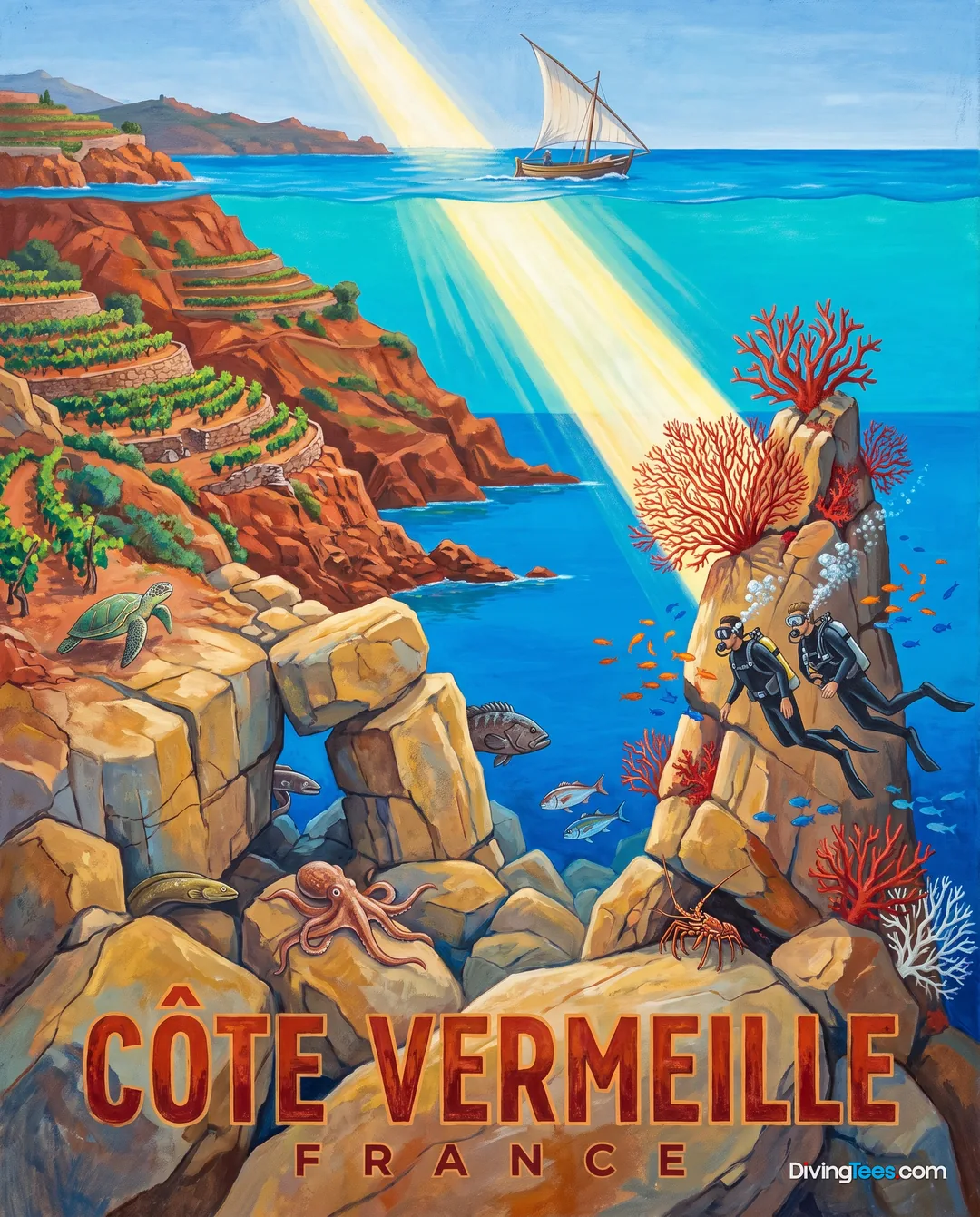
Côte Vermeille · France · Mediterranean
Max. depth · 48 mExplore the massive steel remains of a WWII cargo ship resting at 40 metres, covered in thick gorgonian growth.
For subtitles in English: start the video firstthen click the gearat the top right of the video, select “Subtitles/CC”, then “Auto-translate” and choose “English”.
Le Bananier, historically known as the Alice Robert, lies on a sandy seabed off the coast of Cap Béar and Argelès-sur-Mer. This large steel cargo ship follows a roughly north-south orientation, providing a significant vertical relief from the ocean floor. The wreck is not a single continuous structure but is broken into at least two main sections. The forward two-thirds of the hull remain separated from the aft third by a notable distance. This layout creates distinct zones for exploration, with the hull rising substantially off the seabed to create a complex, multi-level environment.
As you descend toward the wreck, the profile shifts from the open sandy bottom to the intricate superstructure and decks of the vessel. The ship's holds and various deck levels form a series of architectural layers that have been reclaimed by the sea. Over the decades, these steel structures have become heavily encrusted with life, transforming the industrial silhouette into a biological reef. The sheer scale of the wreck is evident once you arrive at the bottom, where the large steel sections dominate the landscape. Navigating the perimeter allows you to appreciate the massive volume of the hull as it sits in the deep water.
The depth profile of the site is consistent with a deep wreck dive, with the main structure resting between 35 and 48 metres. Because of this depth, the light levels are lower than on shallower coastal sites, creating a more moody atmosphere as you move around the various sections. This depth also dictates the type of marine life you will encounter, as the wreck provides a stable, high-pressure habitat for larger species. The multi-level nature of the decks and holds provides numerous overhangs and sheltered pockets. These structural features are essential for the resident fauna that use the wreck as both a hunting ground and a refuge.
Current conditions at Le Bananier are heavily influenced by the open Mediterranean environment off Cap Béar. On calm days, the water around the wreck can remain relatively still, allowing for a controlled descent and exploration. However, the site is known to experience moderate currents when wind or swell picks up in the region. These currents often interact with the wreck's relief, potentially creating localized flow along the hull. Divers should be prepared to manage their buoyancy and position carefully when moving between the different sections of the ship. Understanding the local weather patterns is a practical necessity for anyone planning to dive this site.
The biological character of the wreck is defined by its dense covering of gorgonians and other encrusting organisms. These growths have effectively bonded the steel structure to the local ecosystem, providing a textured surface that supports a wide variety of life. The intricate network of branches and sponges creates countless small crevices and hiding spots. For those observing closely, the wreck acts as a massive artificial reef that attracts significant numbers of Mediterranean fish. The interaction between the heavy steel architecture and the soft biological growth is what makes this site a standout feature of the Roussillon coastline.
Large predators are frequently found patrolling the perimeter of the wreck or resting within its shadows. You can often observe Dusky groupers and large Conger eels established in the more protected areas of the hull. The structural complexity of the broken sections provides perfect ambush points for these resident species. It is common to see Moray eels tucked into the crevices of the superstructure or near the deck edges. The presence of these large, sedentary fish is a direct result of the stable habitat the wreck provides at these depths. Watching them move through the wreckage offers a clear look at the natural hierarchy of the site.
The mid-water column around the wreck is often active with schooling fish and passing predators. You will encounter species such as Bream, European seabass, and Brown meagre moving through the currents near the hull. Smaller, more colorful life like Anthias and various Damselfish can be seen darting around the gorgonians and the edges of the steel plates. For those with a keen eye, Scorpionfish and Forkbeard often blend into the encrusted surfaces of the wreck. The combination of large schooling fish and cryptic, stationary species ensures that there is always movement to observe throughout the dive.
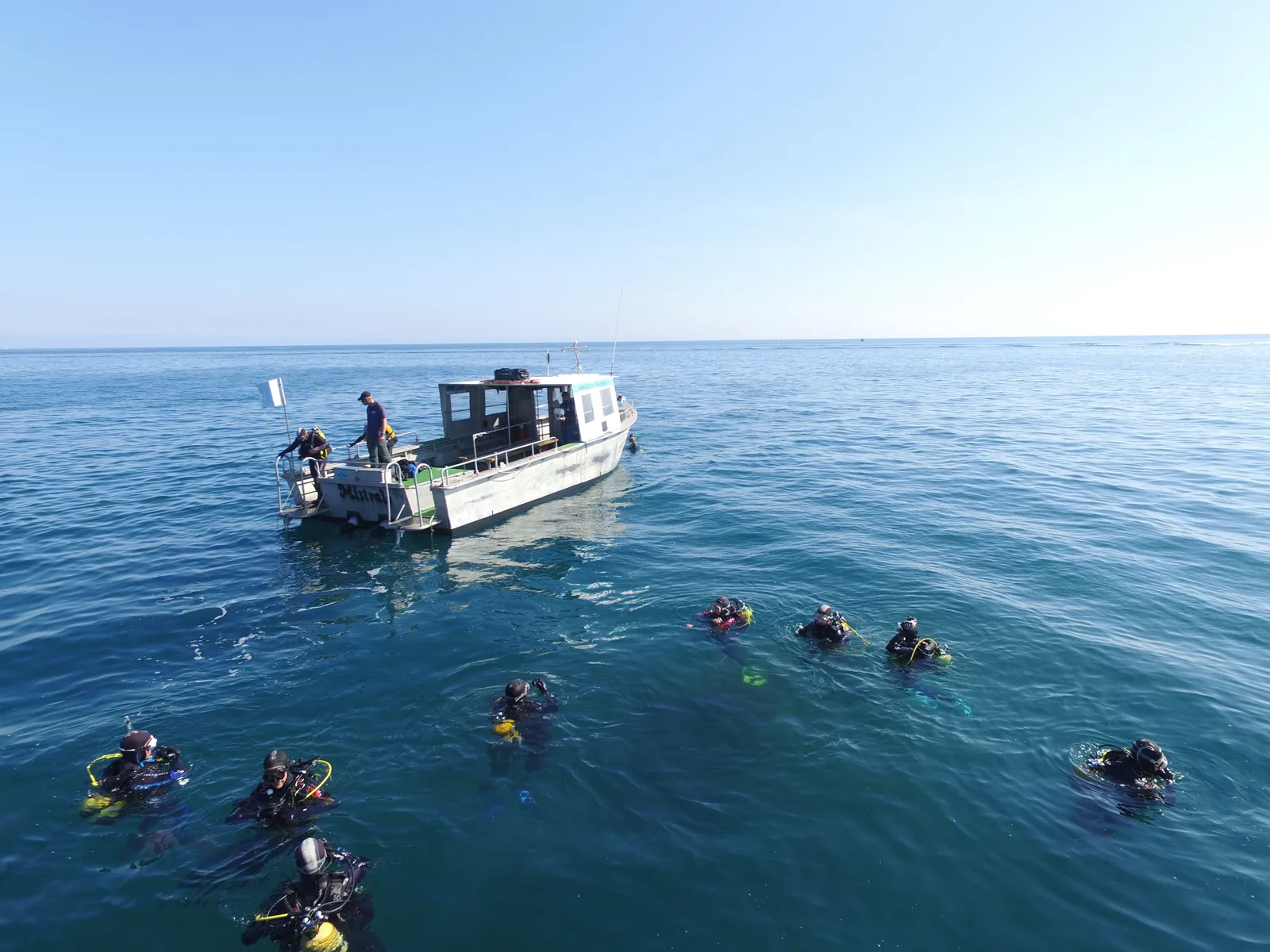
Safety and site access are critical considerations due to the wreck's depth and the potential for environmental shifts. Most dives are conducted via boat from Port-Vendres, Banyuls-sur-Mer, or Argelès-sur-Mer, with a transit time of approximately 15 to 20 minutes. Descent and ascent should ideally be managed along the anchor or mooring line to ensure stability. Due to recent demining operations and historical restrictions, diving is primarily confined to the exterior of the wreck. This limitation focuses the experience on the impressive silhouette of the ship and the rich life clinging to its outer surfaces.
The dive depth ranges from 35 to 48 metres. This is an advanced site requiring deep wreck experience; an equivalent to N2/PA40–PE40 or higher is strongly recommended. Due to the depth and the potential for moderate currents influenced by local wind and swell, divers should have significant experience in deep, open-water environments. Visibility typically ranges between 10 and 25 metres. The best season to dive this site is from April to October.
The best season for diving Le Bananier is from April to October. The wreck lies off Cap Béar and Argelès-sur-Mer, and boat trips commonly depart from Port-Vendres, Banyuls-sur-Mer, or Argelès-sur-Mer. The journey takes approximately 15 to 20 minutes, placing this deep wreck within reach during the recommended season.
Le Bananier is an advanced deep-wreck site, with the main structure resting between 35 and 48 metres. Significant deep, open-water experience is needed, and an equivalent to N2/PA40 to PE40 or higher is strongly recommended. The wreck’s complex, multi-level steel structure makes experience especially important while exploring its separated sections and exterior.
At Le Bananier, conditions can be relatively still on calm days, but moderate currents may develop when local wind or swell increases. Flow can become localized along the hull’s relief and between the wreck’s sections. You should manage buoyancy and position carefully, use the anchor or mooring line for descent and ascent, and understand local weather patterns.
On Le Bananier, you can explore a large WWII cargo ship split into two main sections, with steel decks, holds, overhangs, and gorgonian-covered surfaces. Look for Dusky groupers, Conger eels, Moray eels, Bream, European seabass, Brown meagre, Anthias, Damselfish, Scorpionfish, and Forkbeard around the wreck and its sheltered pockets.