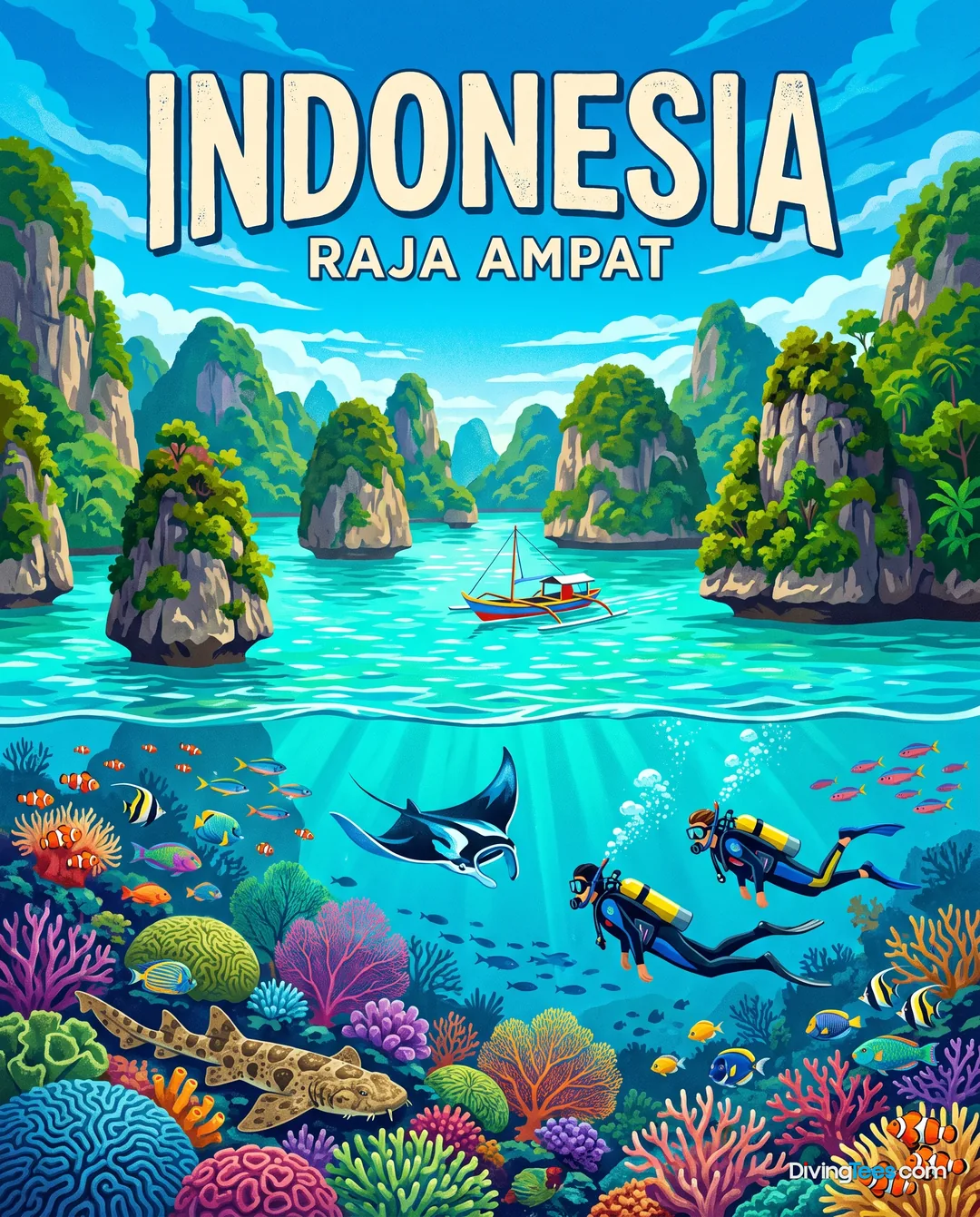
Liveaboards · Indonesia
Neomi — a purpose-built Indonesian phinisi for current-rich diving
What makes this boat unique
- Neomi is a 47.22-metre ironwood Bugis schooner built in 2018, carrying up to 22 passengers in 10 en-suite cabins.
- Her dive setup includes a shaded platform, 200-bar air fills, INT/DIN-compatible tanks, nitrox, sidemount support and a dedicated camera area.
- Routes cover Komodo, Alor, Banda, Raja Ampat and longer crossings through eastern Indonesia.
- Two aluminium tenders, an ENOS diver locator system, oxygen and first-aid kits support the diving operation.
For subtitles in English: start the video firstthen click the gearat the top right of the video, select “Subtitles/CC”, then “Auto-translate” and choose “English”.
The invitation
Neomi makes sense for divers who want more than a short Komodo loop. The same boat can take you from Komodo’s current-swept pinnacles to Alor’s walls, then farther across Banda and eastern Indonesia on crossing itineraries. Its character comes from the combination: a traditional Bugis phinisi hull, modern cabin comforts and a dive operation built around serious days in the water. You come aboard for trevallies, mantas, reef sharks and small things hiding in coral, but also for the range of sites that makes a week feel properly exploratory. Komodo departures run from Labuan Bajo and return there over 6 days and 5 nights or 7 days and 6 nights. Alor trips leave from Kalabahi, with routes returning to Kalabahi or continuing through Lucipara to Ambon. Longer departures connect Ambon, Banda and Sorong.
Boarding
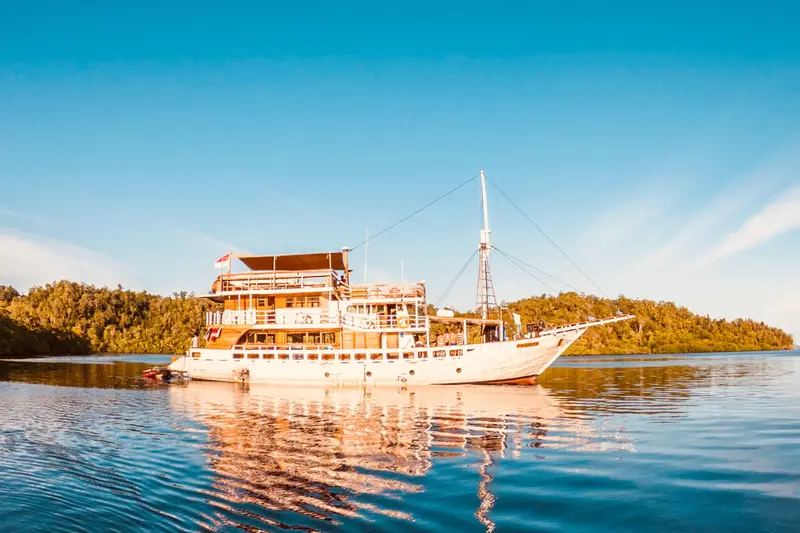
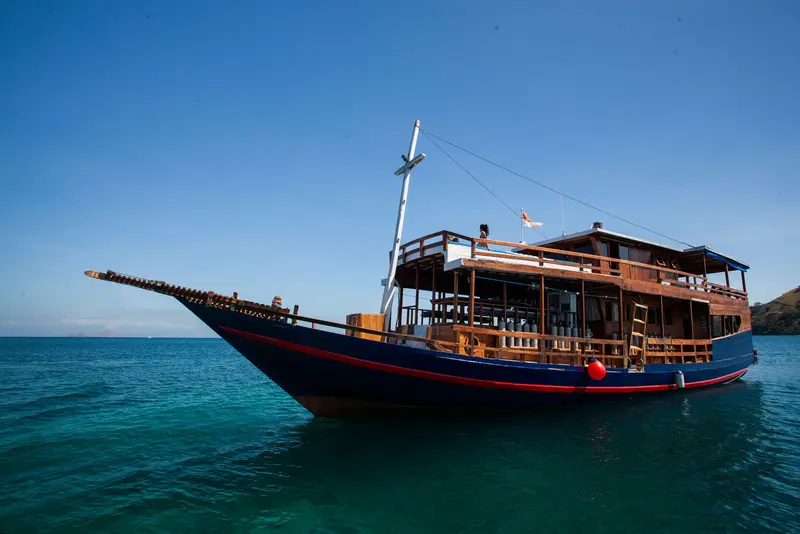
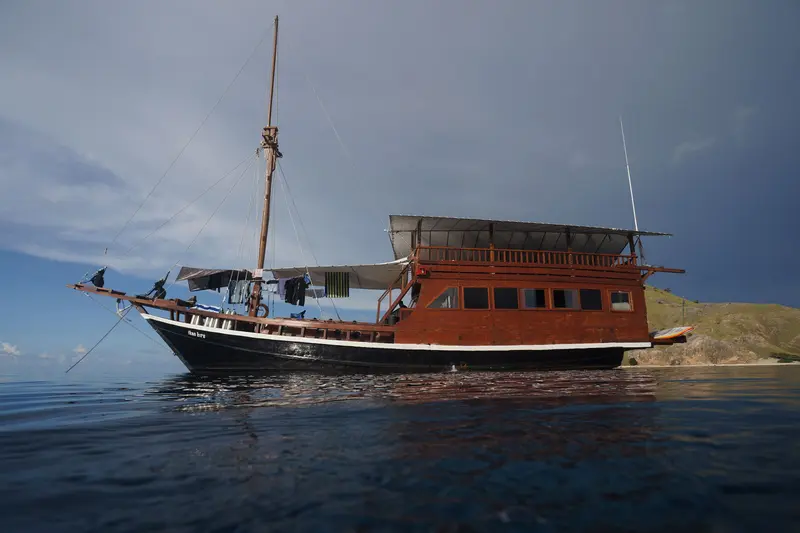
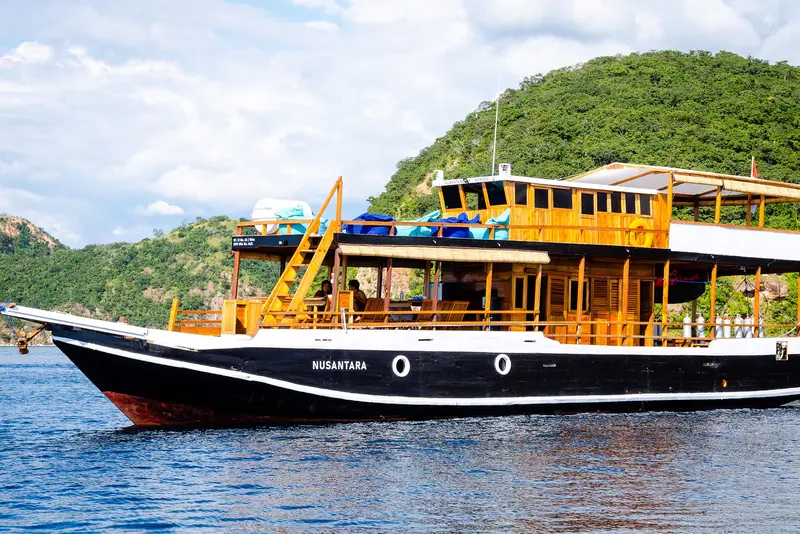
From the dock, Neomi has the long, high-sided profile of a working Indonesian phinisi rather than a compact yacht. The ironwood construction gives the boat a traditional backbone, while the accommodation and dive spaces are arranged for modern liveaboard use. Inside, air conditioning, a restaurant and lounge, private bathrooms and hot-and-cold showers make the boat feel settled after a long crossing. Outside, the upper deck and observation areas open the boat back to the sea, with two jacuzzis and room to sit between dives. The layout separates cabins across lower, middle and upper levels, so moving from bunk to meal to dive deck does not mean crossing the same crowded passage every time. Neomi is a large liveaboard, but the passenger limit remains low enough for the crew to run diving, meals and transfers as one operation rather than a queue.
The atmosphere on board
Neomi is set up for a mixed group of divers and non-divers, including people who snorkel, kayak, fish or join shore excursions. That broadens the group without taking the boat away from diving: the crew still has a dedicated dive department, while service, deck and machine departments keep the rest of the day moving. English and Indonesian are spoken aboard. Passenger feedback places the crew just below the food and diving scores, while the boat itself scores lower than the people running it. That is a fair way to read Neomi: the vessel is a working liveaboard with an older, traditional character, not a silent floating resort. What passengers gain is the crew’s practical attention across a long day—getting meals out, moving tenders, resetting the dive deck and keeping the operation coherent when currents change the plan.
The sites you’ll dive
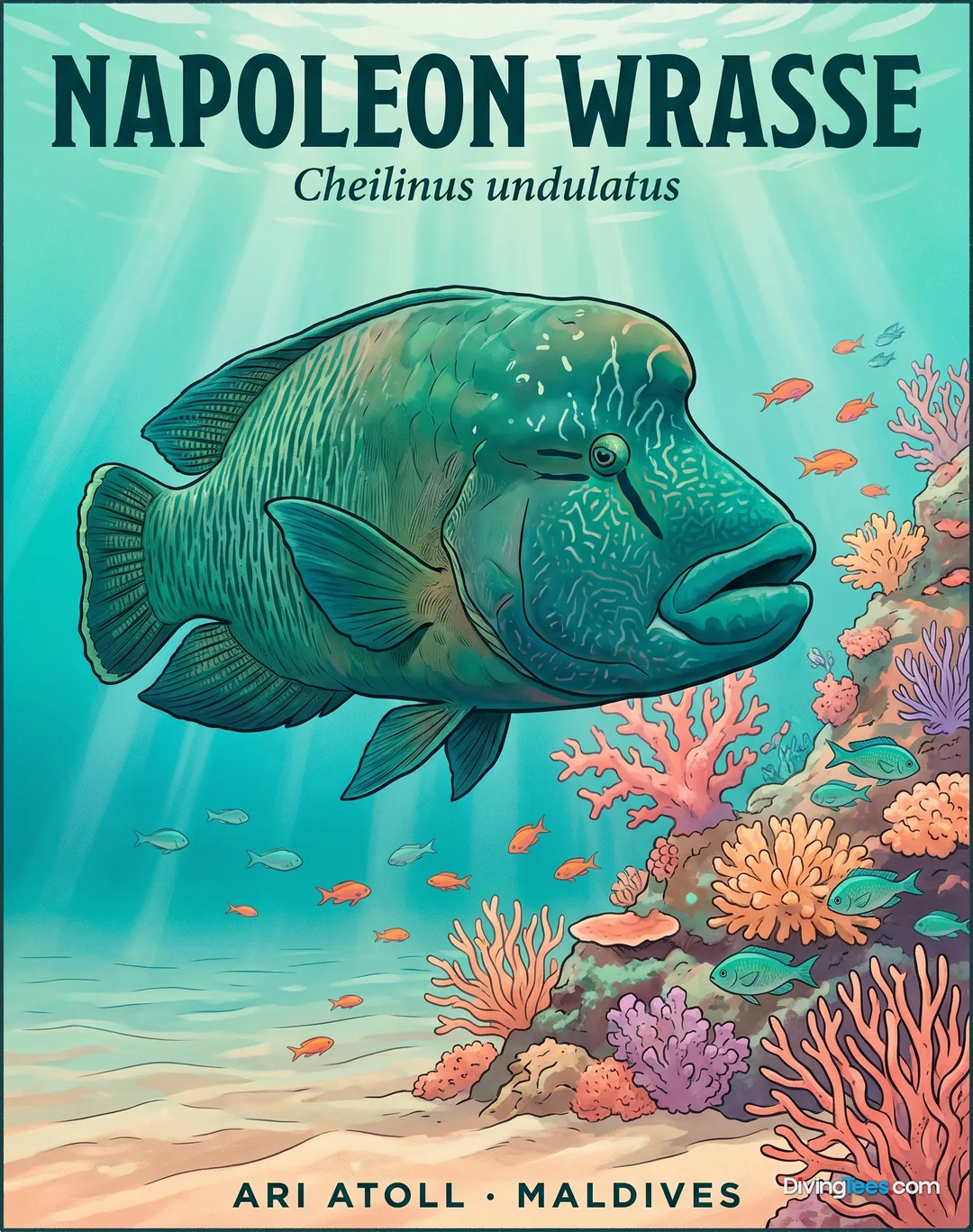
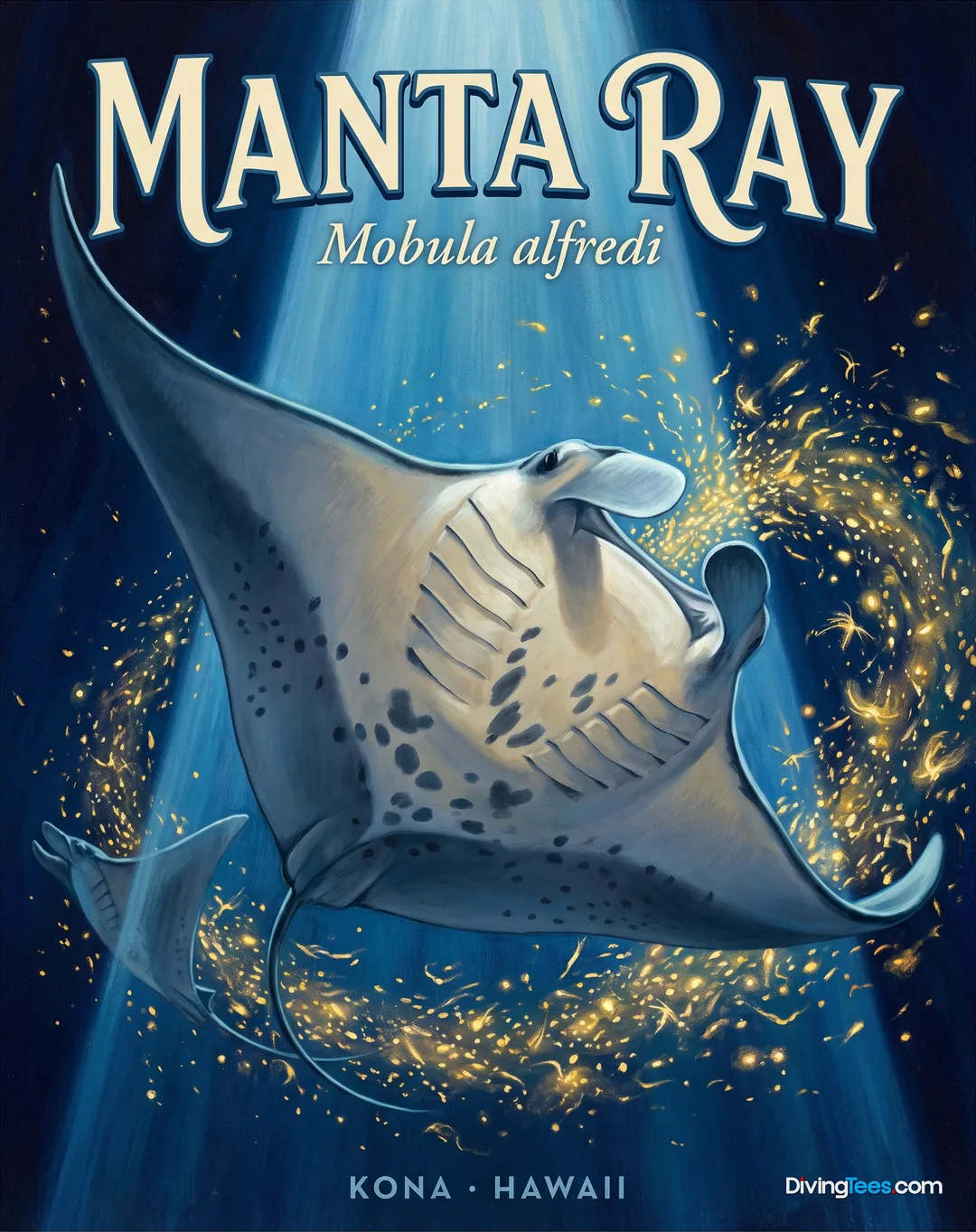
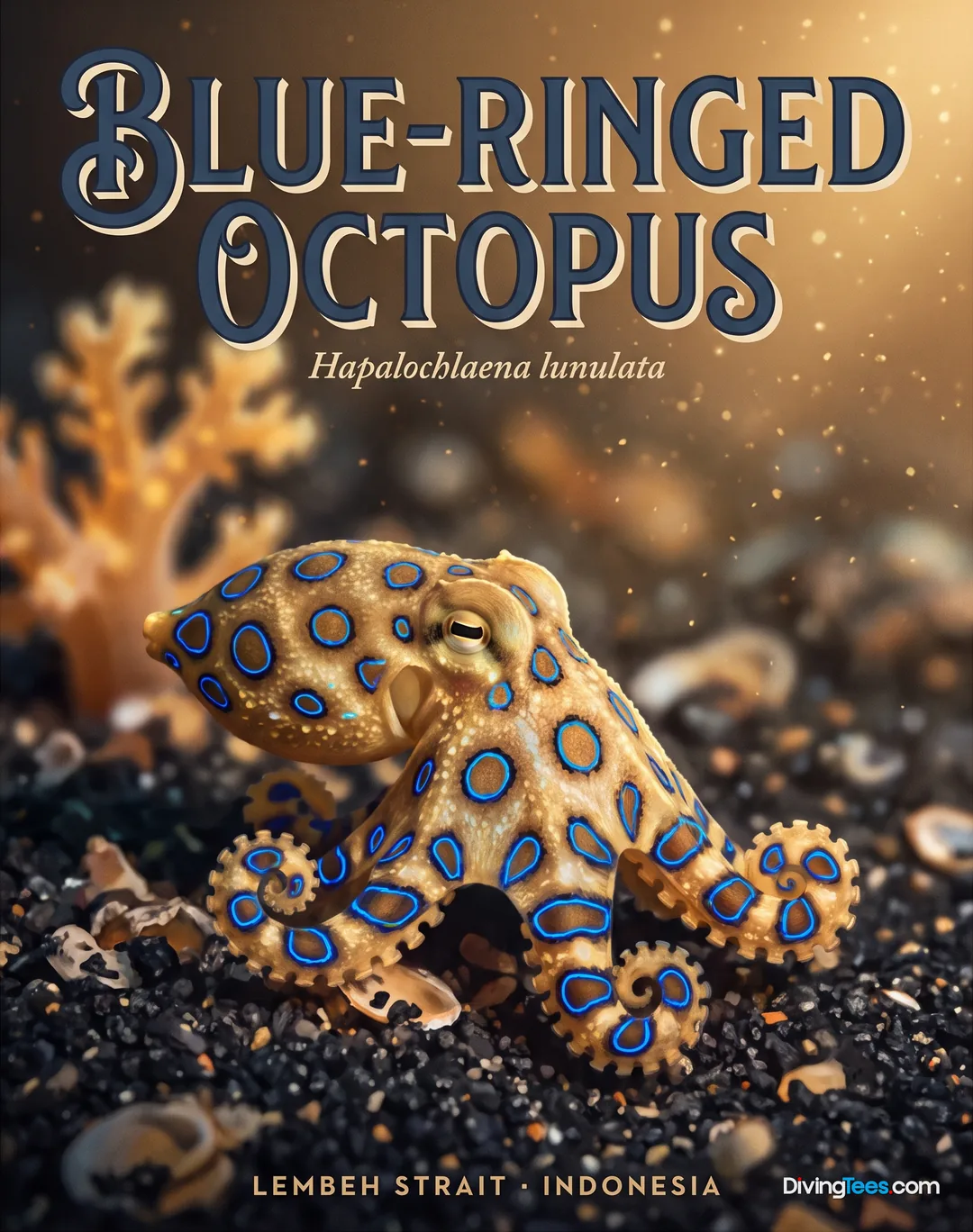
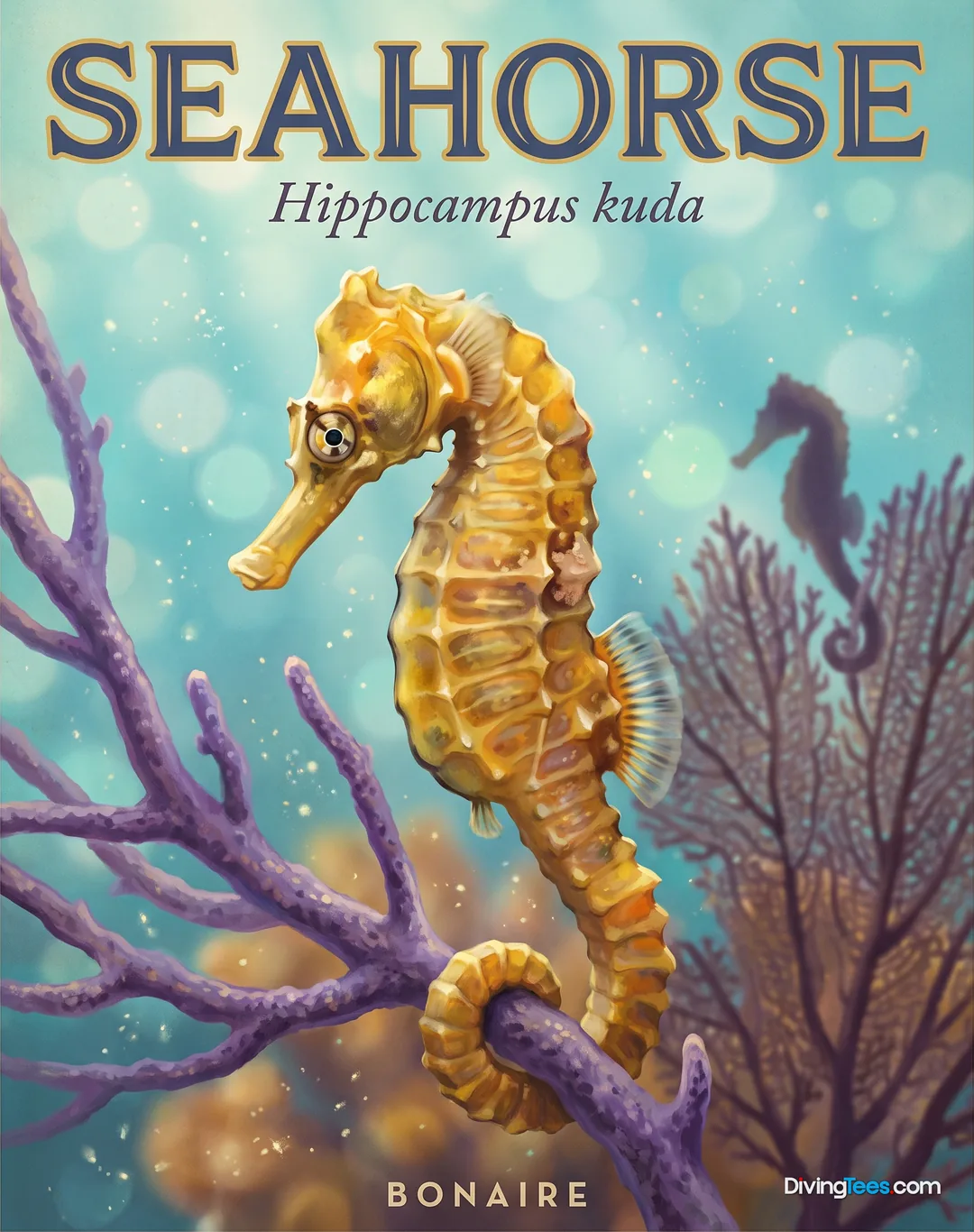
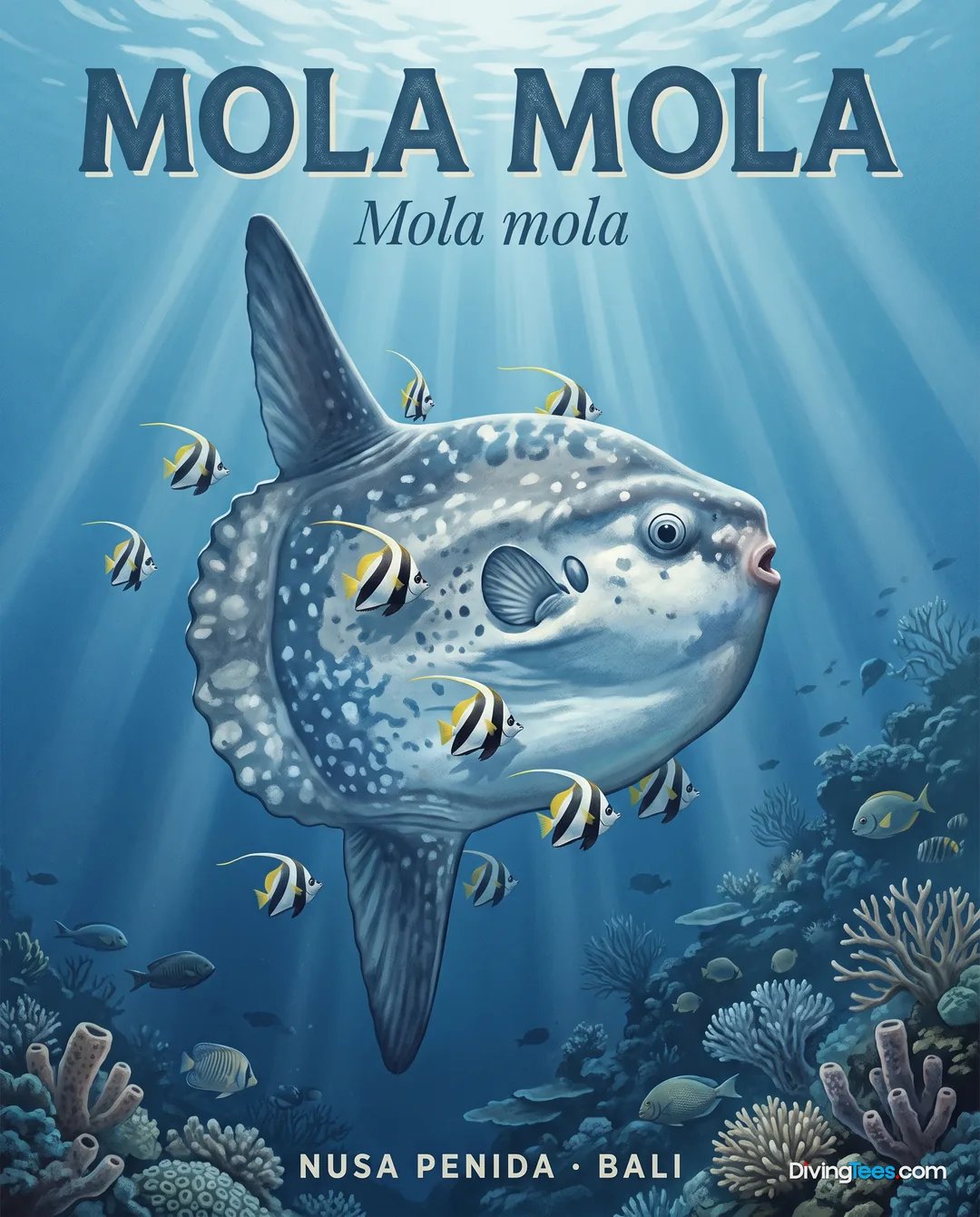
Komodo is the compact, high-impact route: Labuan Bajo to Labuan Bajo in 6 days and 5 nights or 7 days and 6 nights. Batu Bolong is a tiny pinnacle with dense coral cover, giant trevally, Napoleon wrasse and reef sharks, down to -40m. Castle Rock drops to -30m on a submerged pinnacle where nutrient-rich currents draw white-tip and grey reef sharks, eagle rays, barracuda and the occasional grouper. Crystal Rock reaches -30m in the Lintah Strait, with strong current, hard and soft coral, giant trevally and manta rays. Shotgun is a current ride over a wall to -25m, where mantas and sharks can gather. Siaba Besar is the gentler, shallower option at -18m, with frogfish, blue-ringed octopus, seahorses and macro life among coral bommies. Tatawa Besar reaches -25m through soft corals, turtles and reef sharks; Cannibal Rock reaches -30m and combines macro life with schooling pelagics in Horseshoe Bay. Alor departures from Kalabahi run 6 days and 5 nights, or continue through Lucipara to Ambon over 8 days and 7 nights. Crucifixion, Bama Wall and Wolang Cavern each reach -40m, with overhangs, a vertical wall, schooling fish, macro life and resting pelagics. Cathedral reaches -30m and has a swim-through at 25 to 30 metres. Andy’s Bus Stop reaches -25m along a coral-draped wall before the blue opens to giant trevally; Yellow Corner is the high-current alley for large pelagics, while Biatabang combines a reef wall with traditional bubu fish traps.
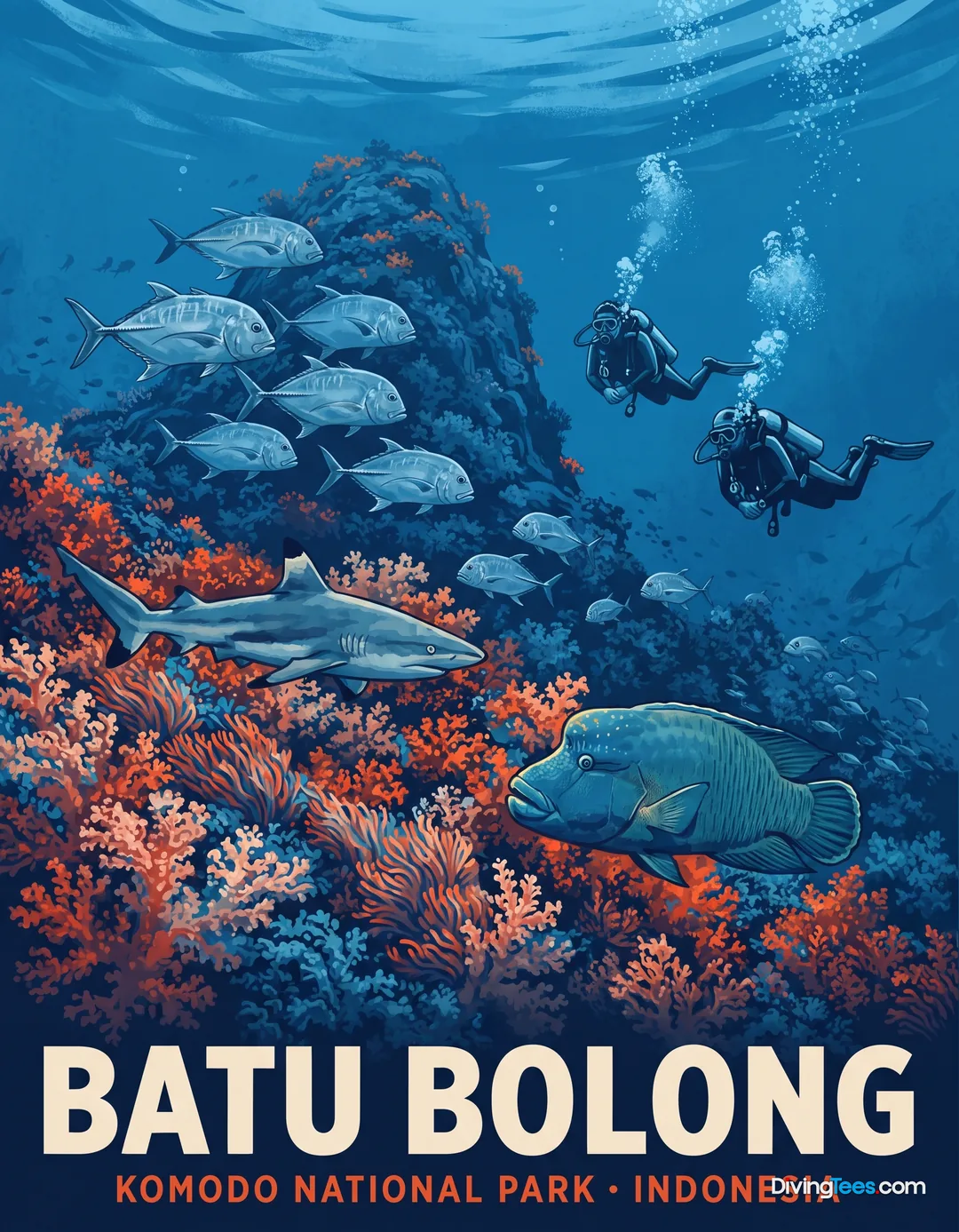
Batu Bolong →
Max. depth · 40 m
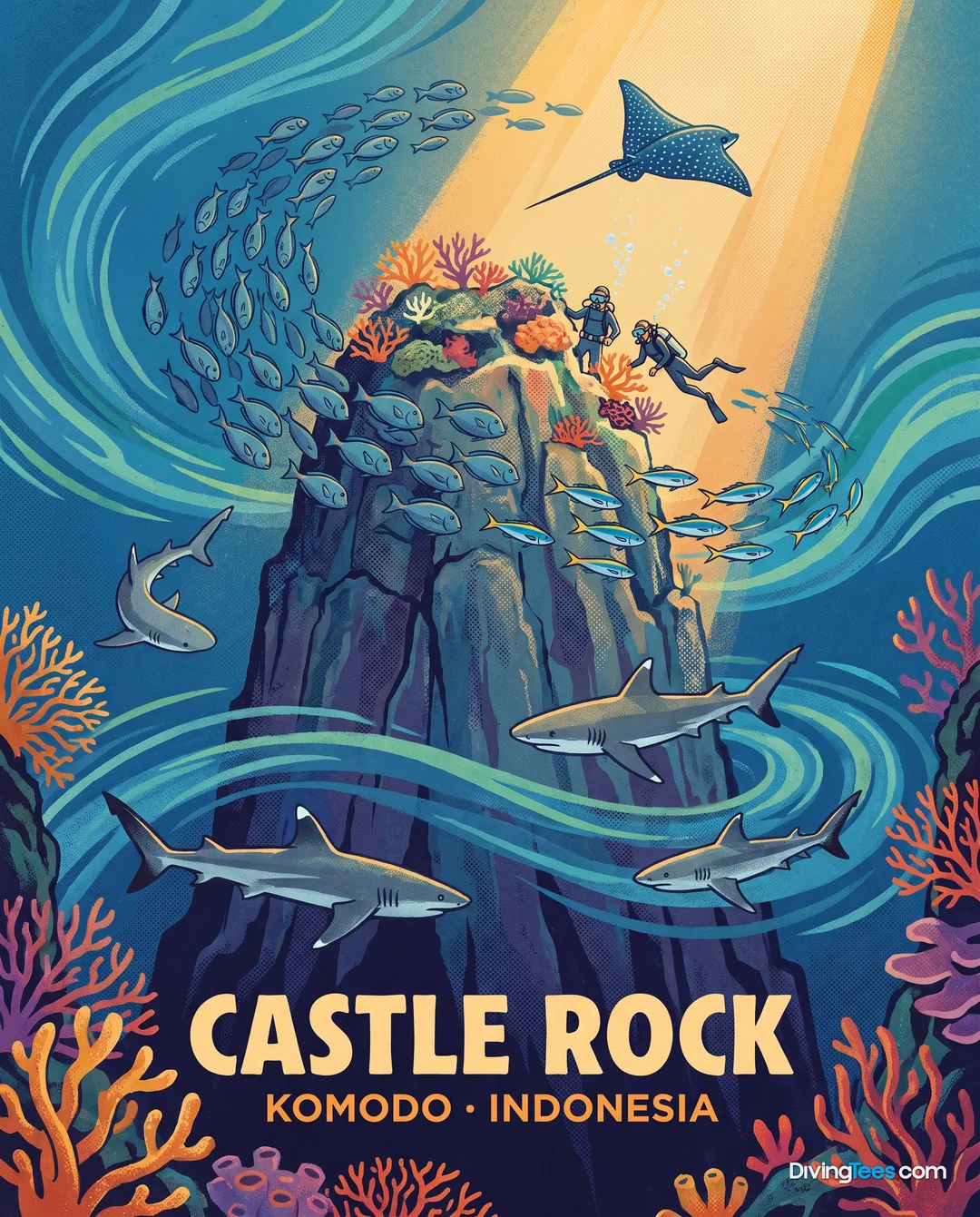
Castle Rock →
Max. depth · 30 m
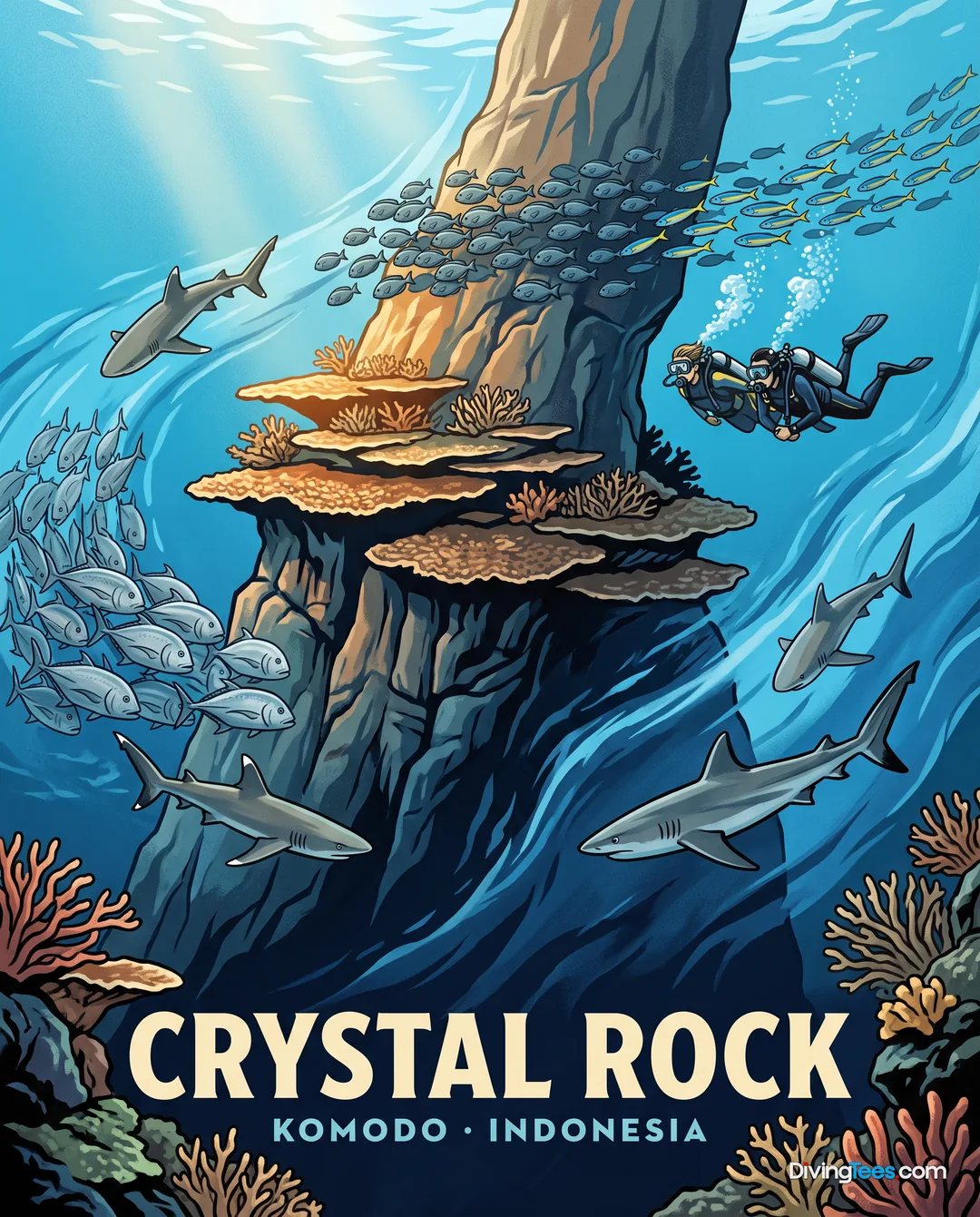
Crystal Rock →
Max. depth · 30 m
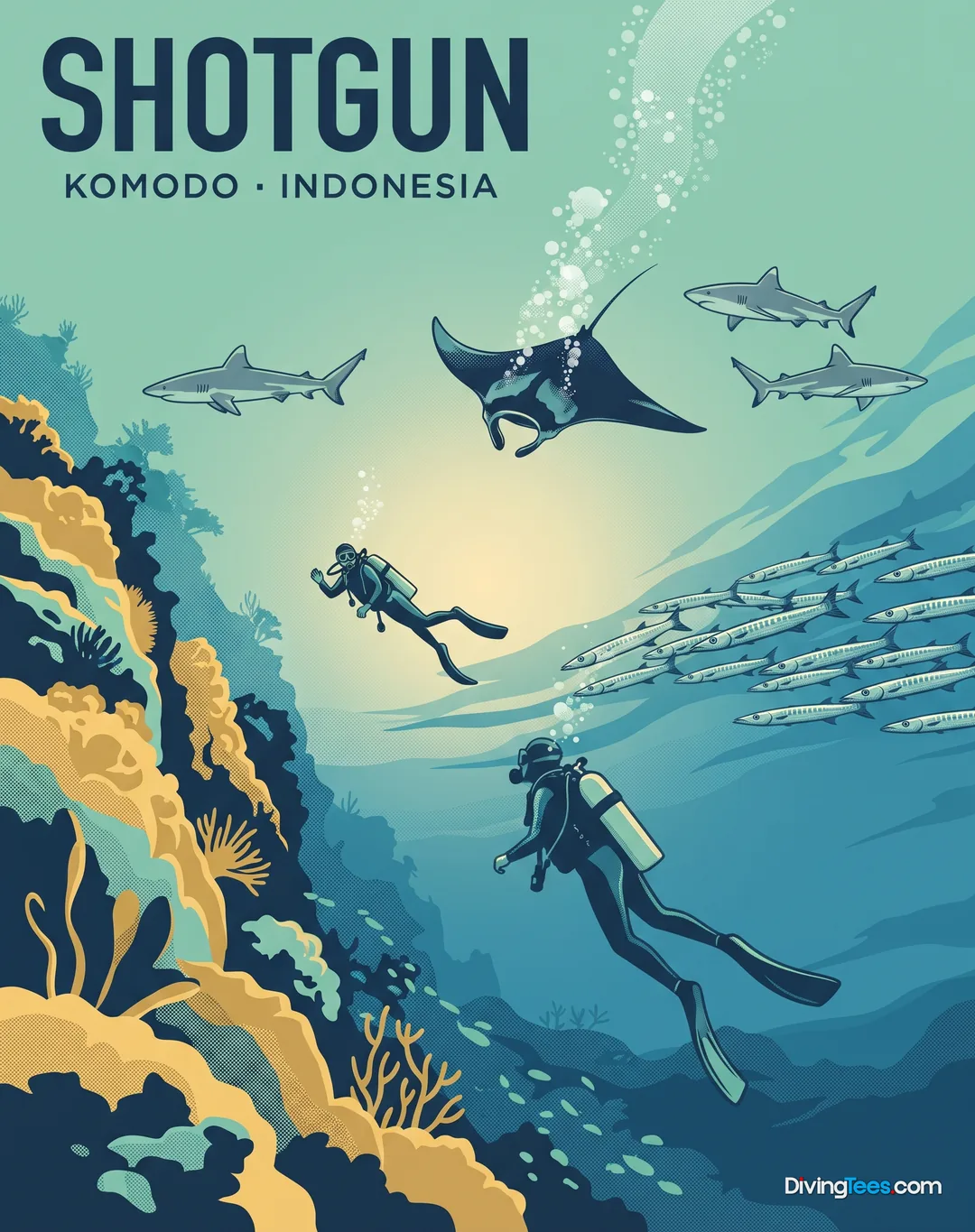
Shotgun →
Max. depth · 25 m
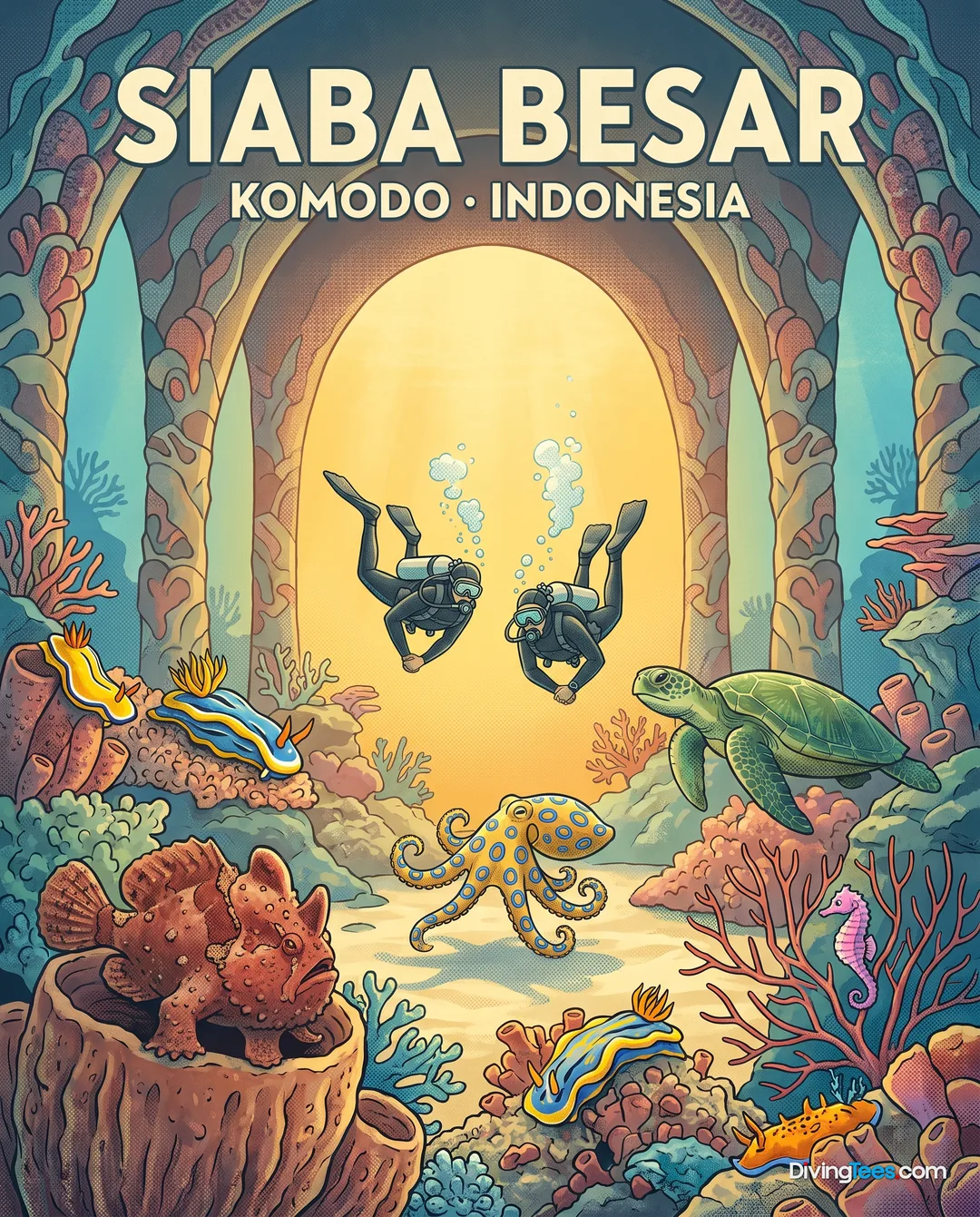
Siaba Besar →
Max. depth · 18 m
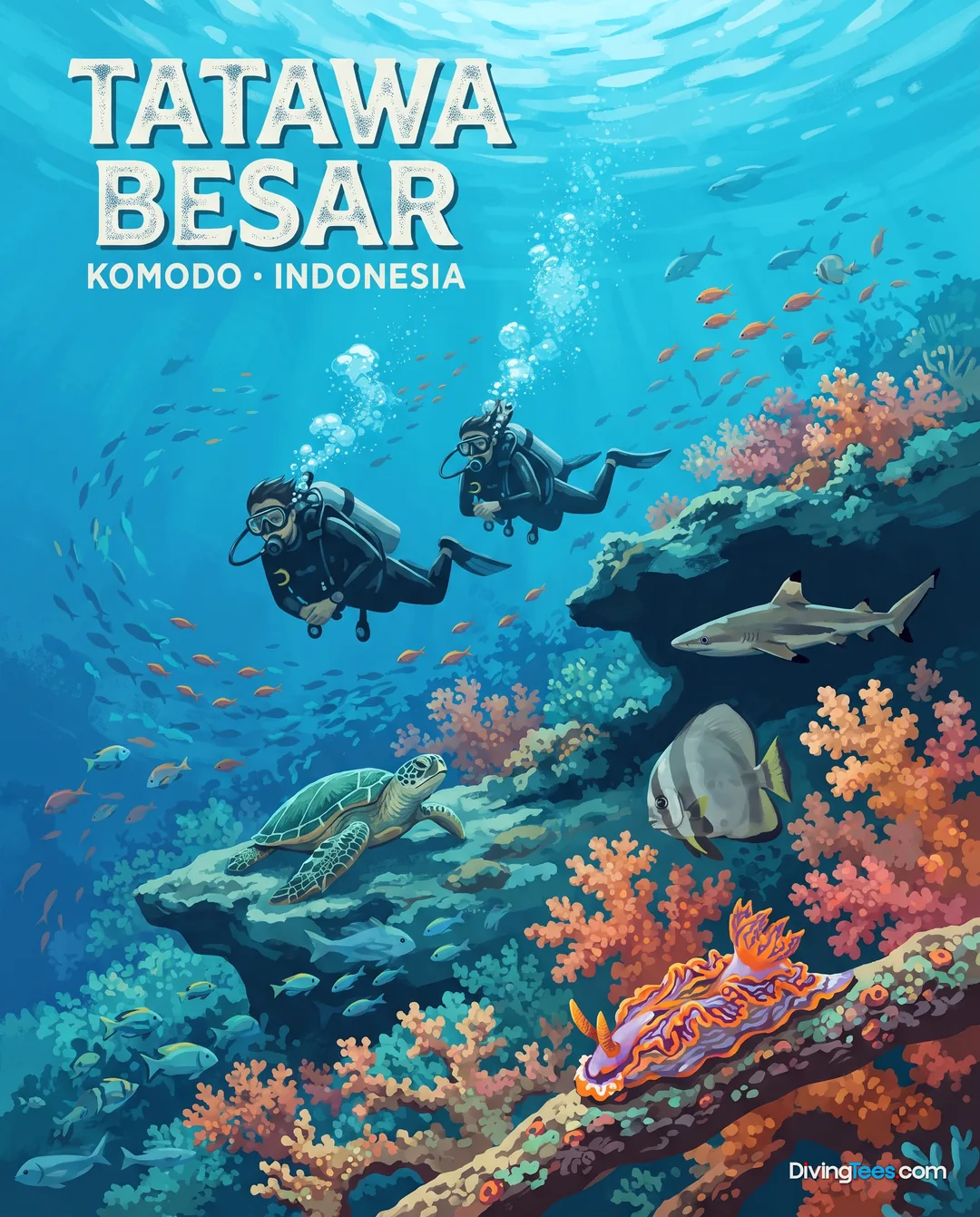
Tatawa Besar →
Max. depth · 25 m
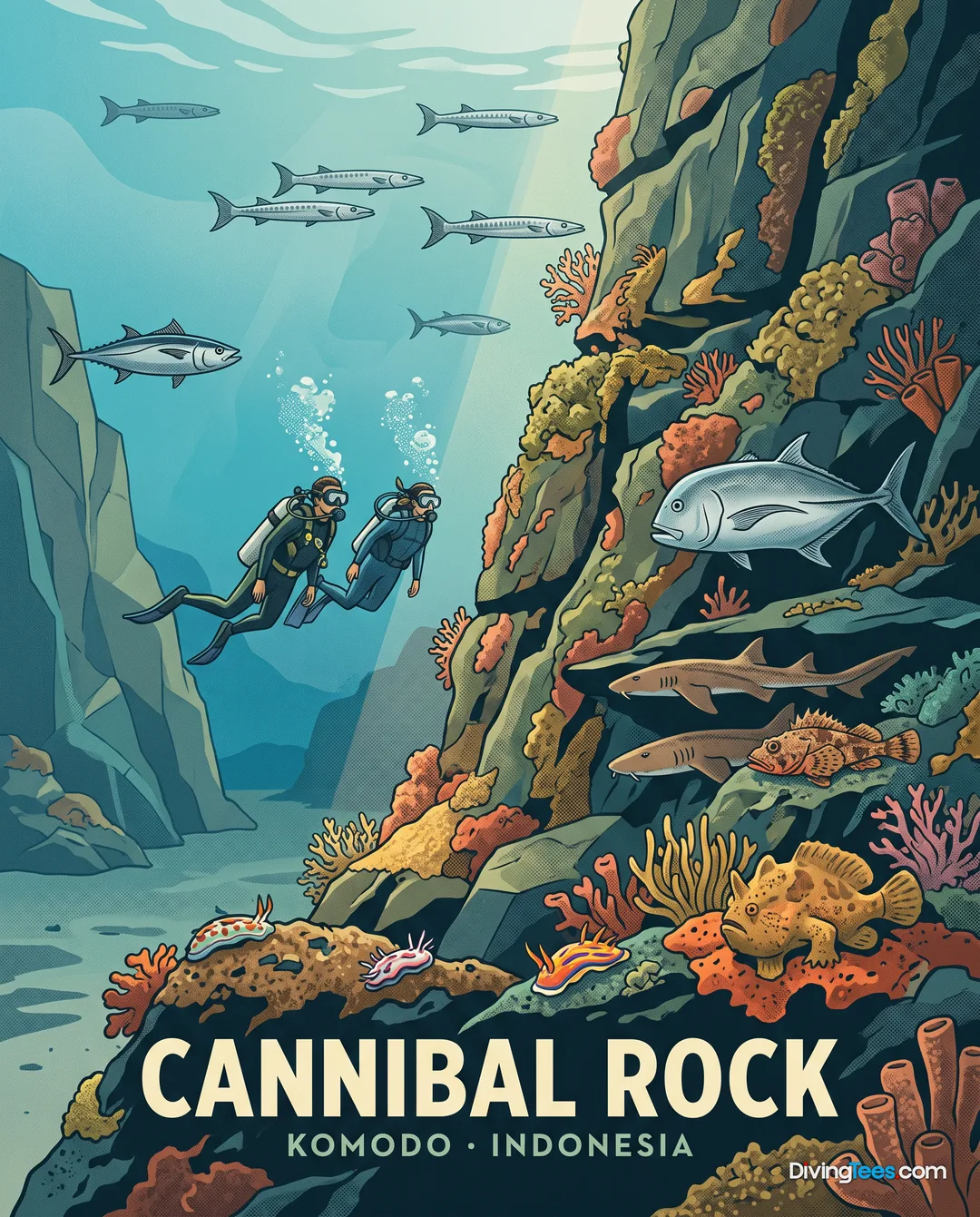
Cannibal Rock →
Max. depth · 30 m
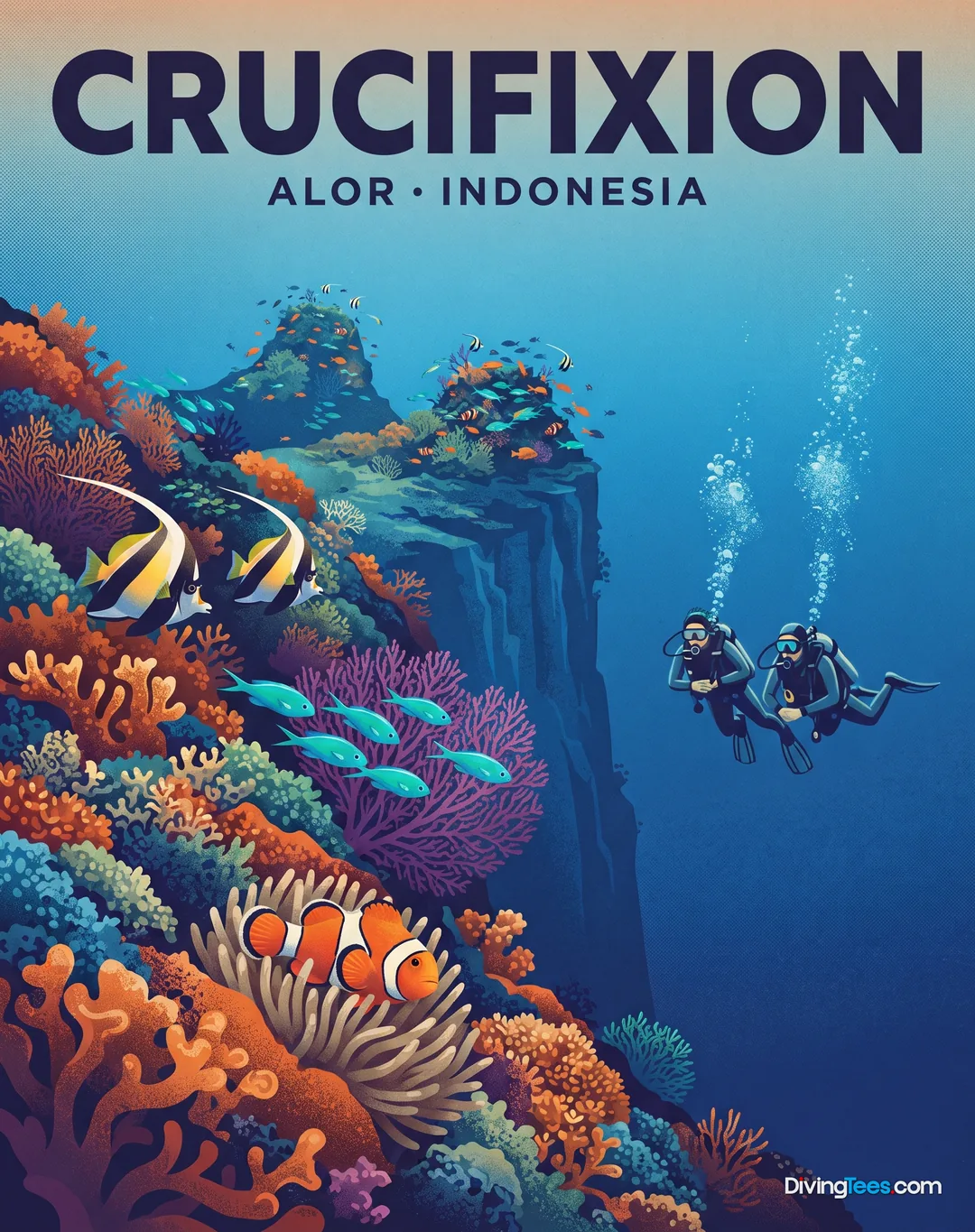
Crucifixion →
Max. depth · 40 m
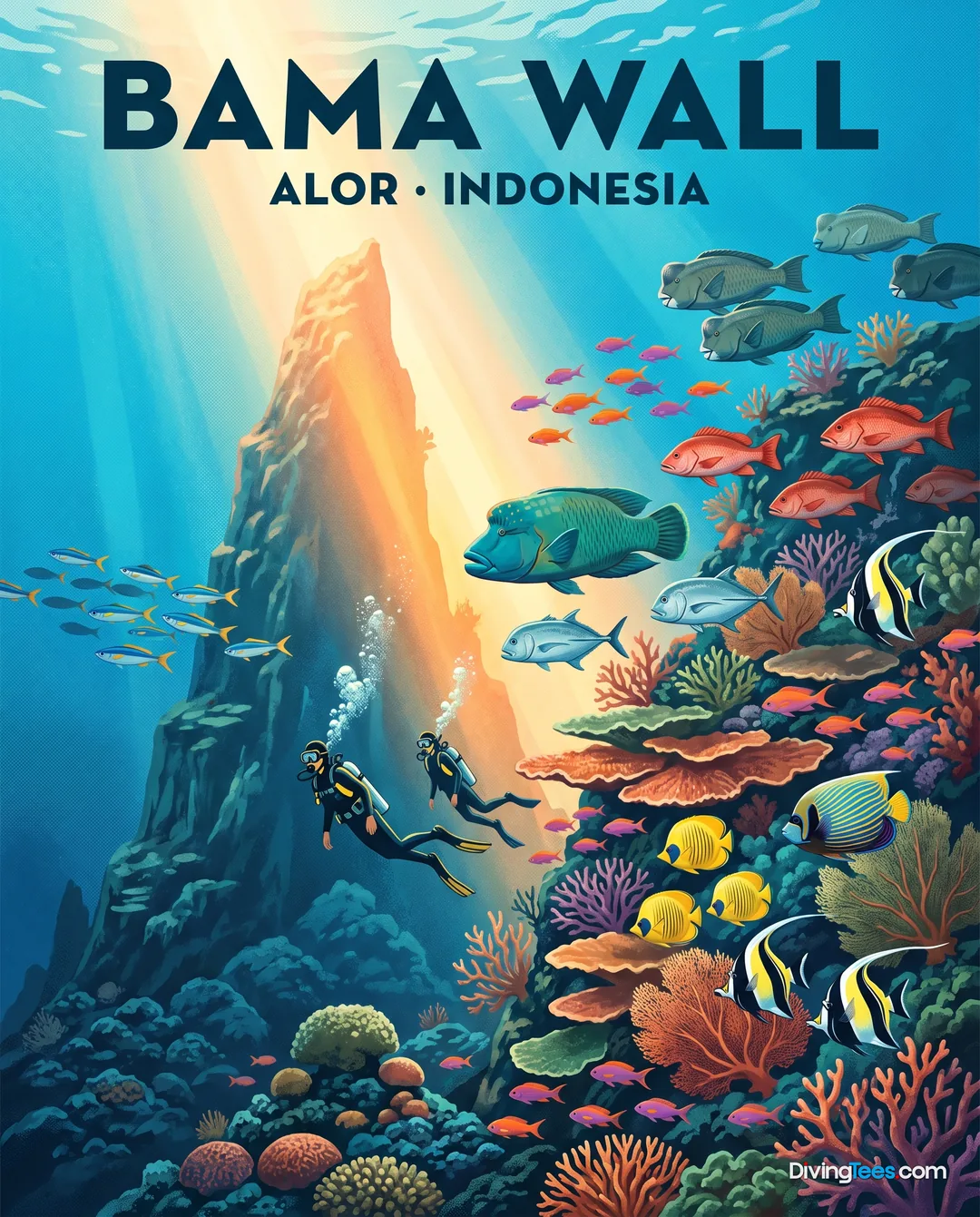
Bama Wall →
Max. depth · 40 m
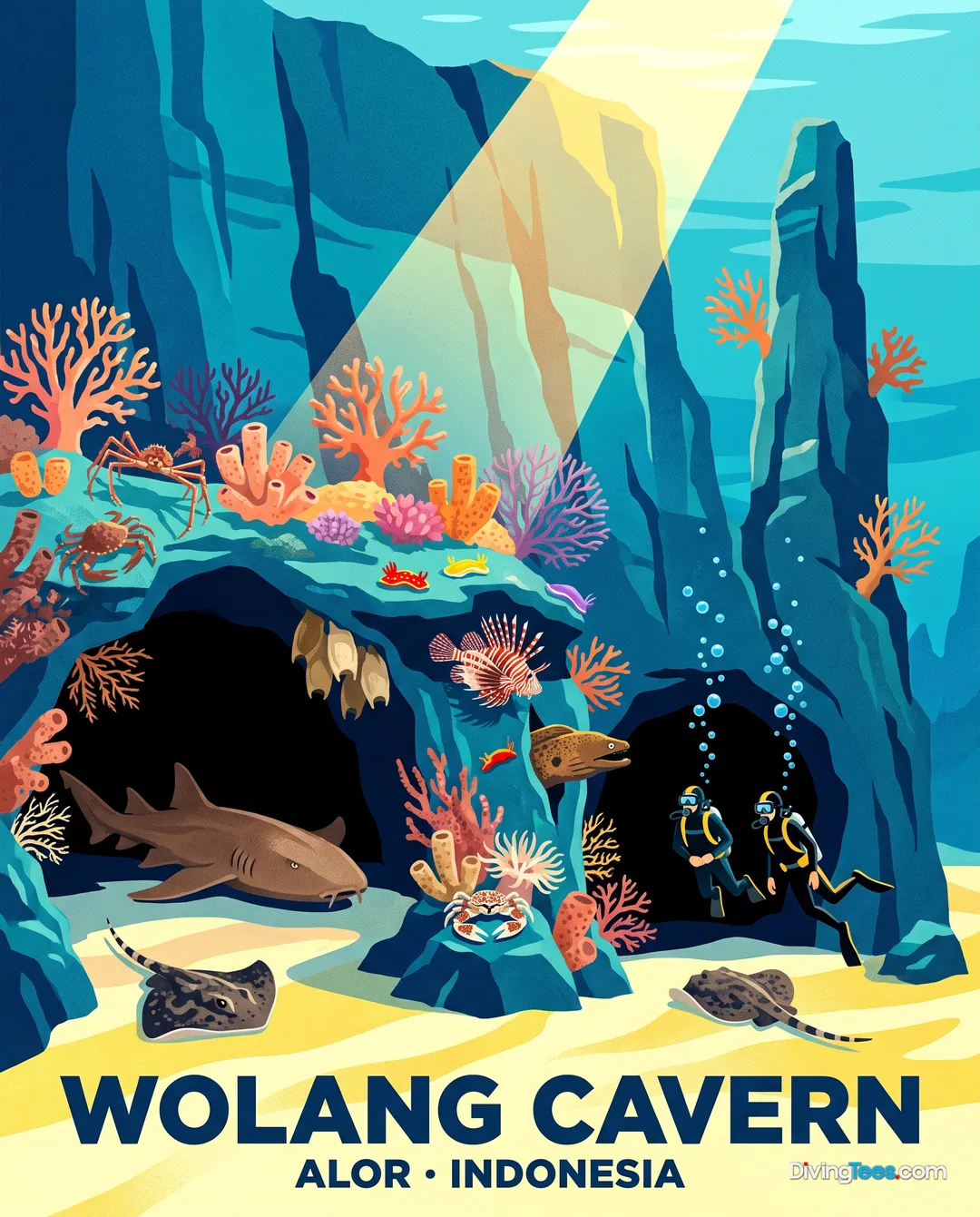
Wolang Cavern →
Max. depth · 40 m
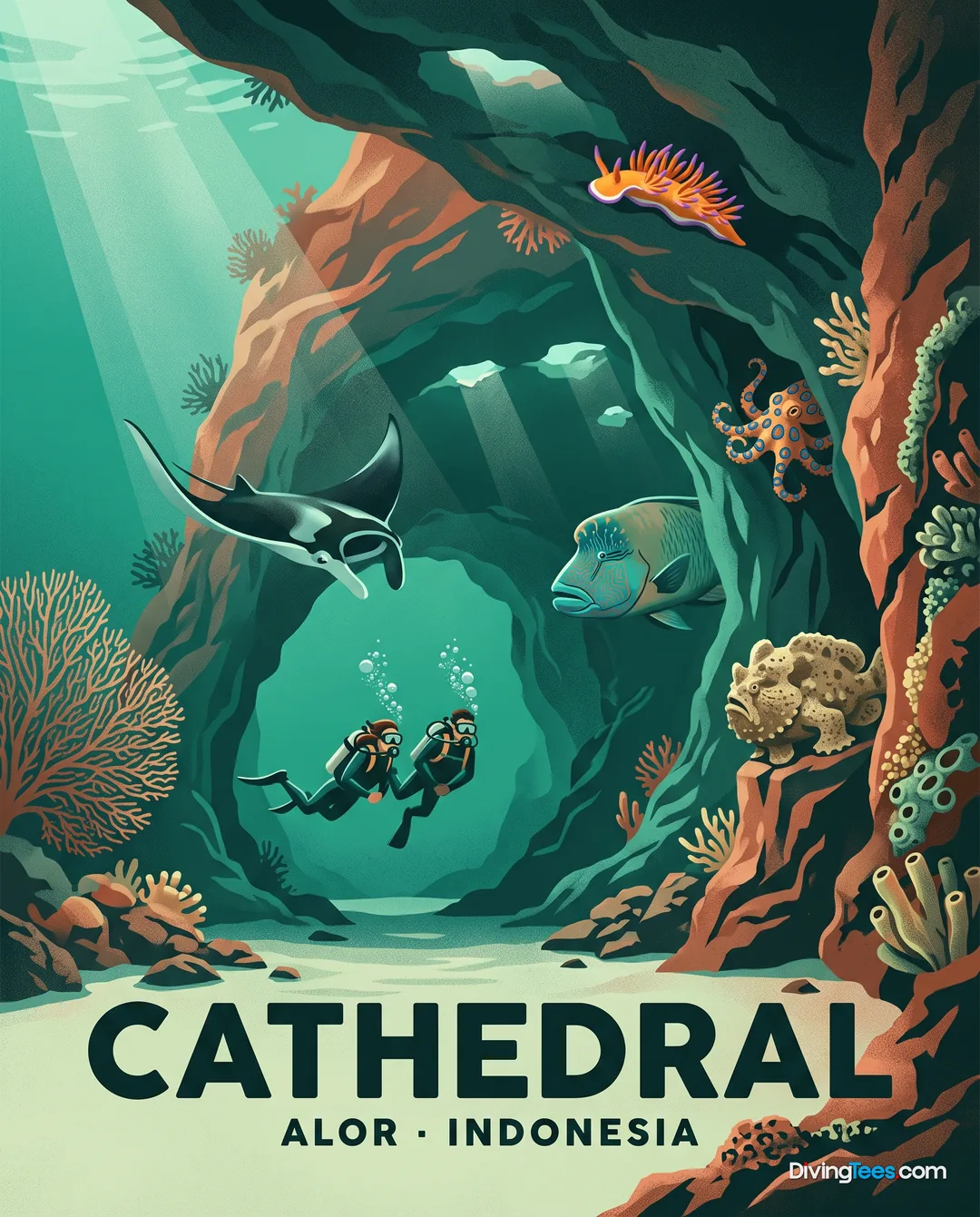
Cathedral →
Max. depth · 30 m
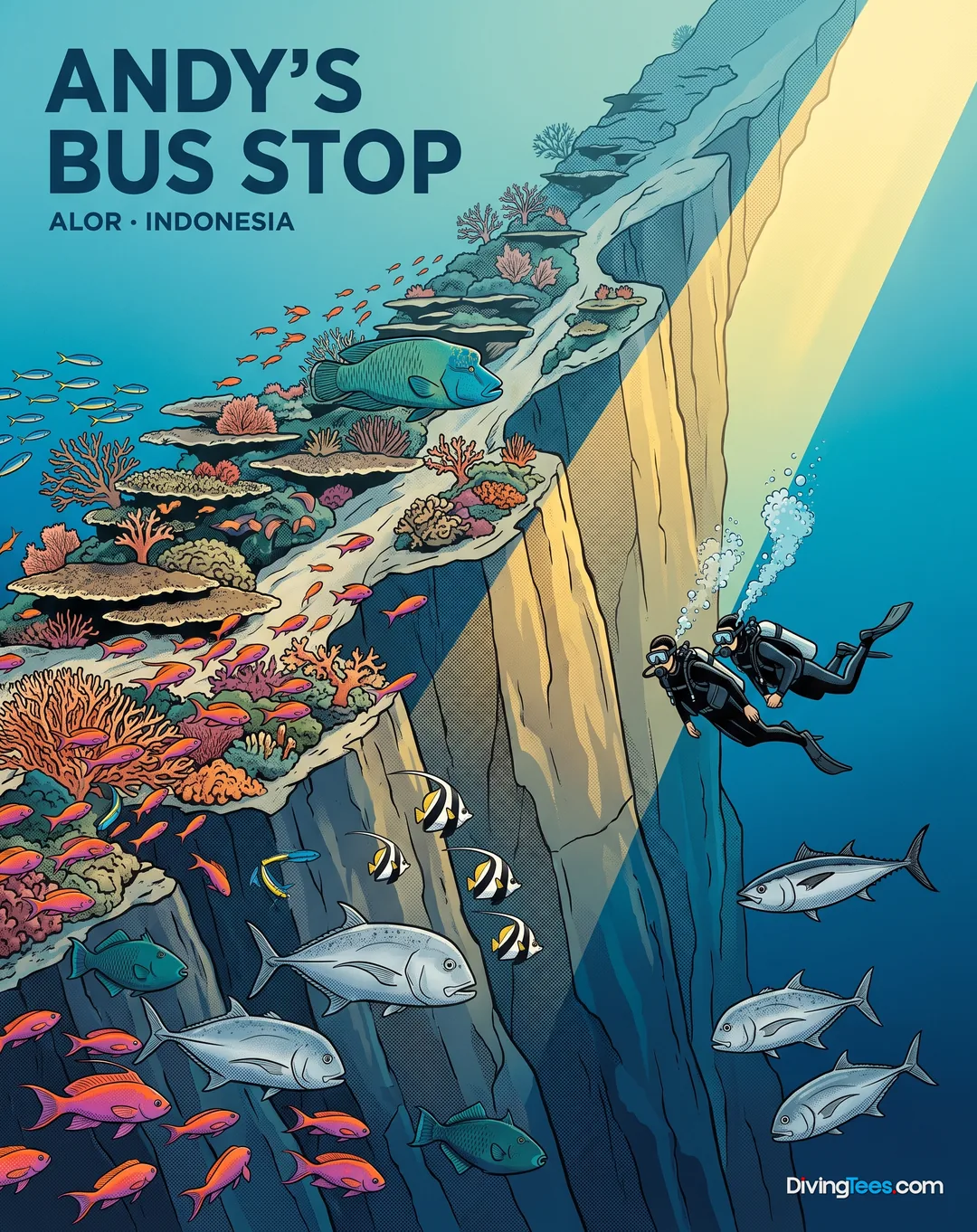
Andy’s bus stop →
Max. depth · 25 m
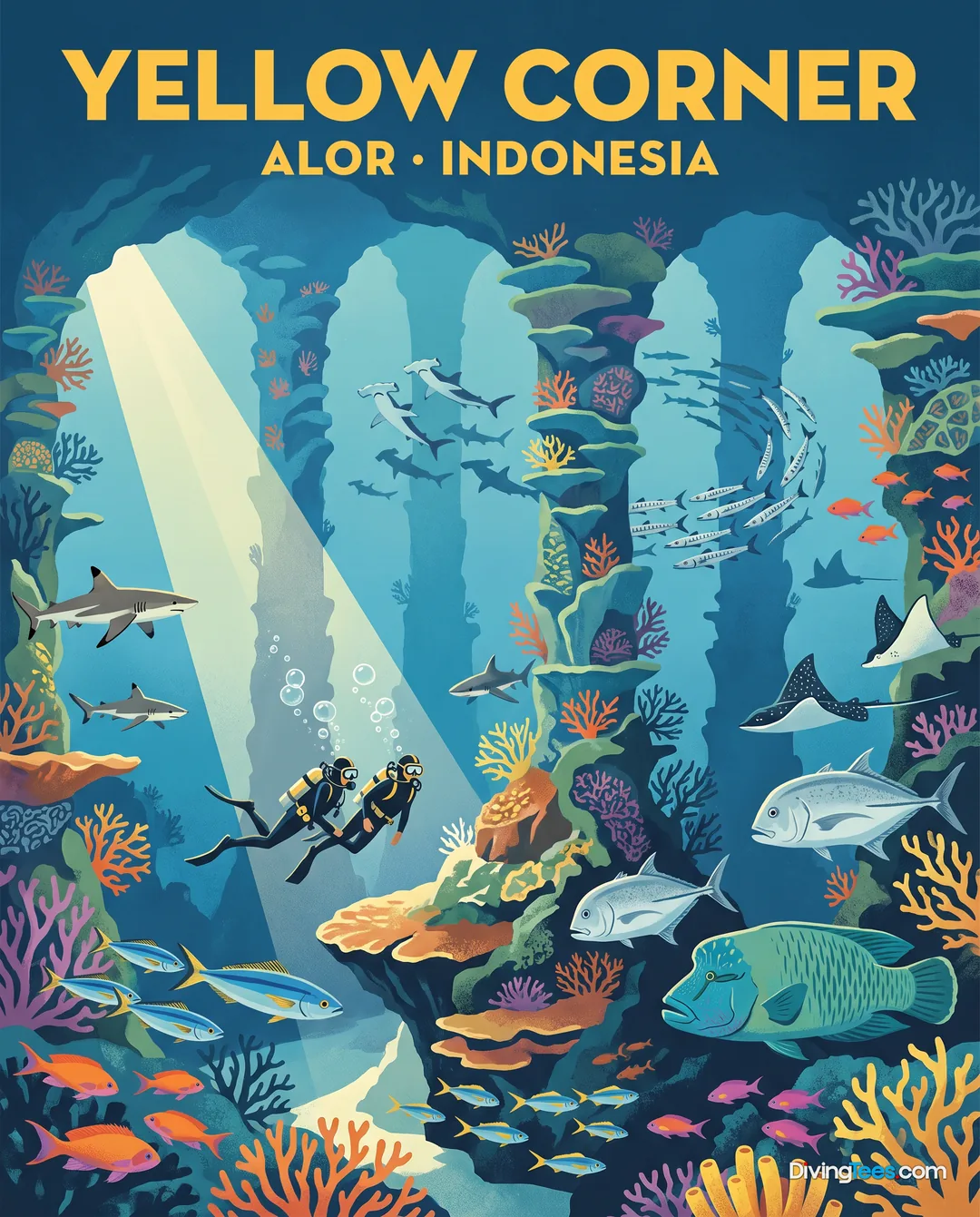
Yellow Corner →
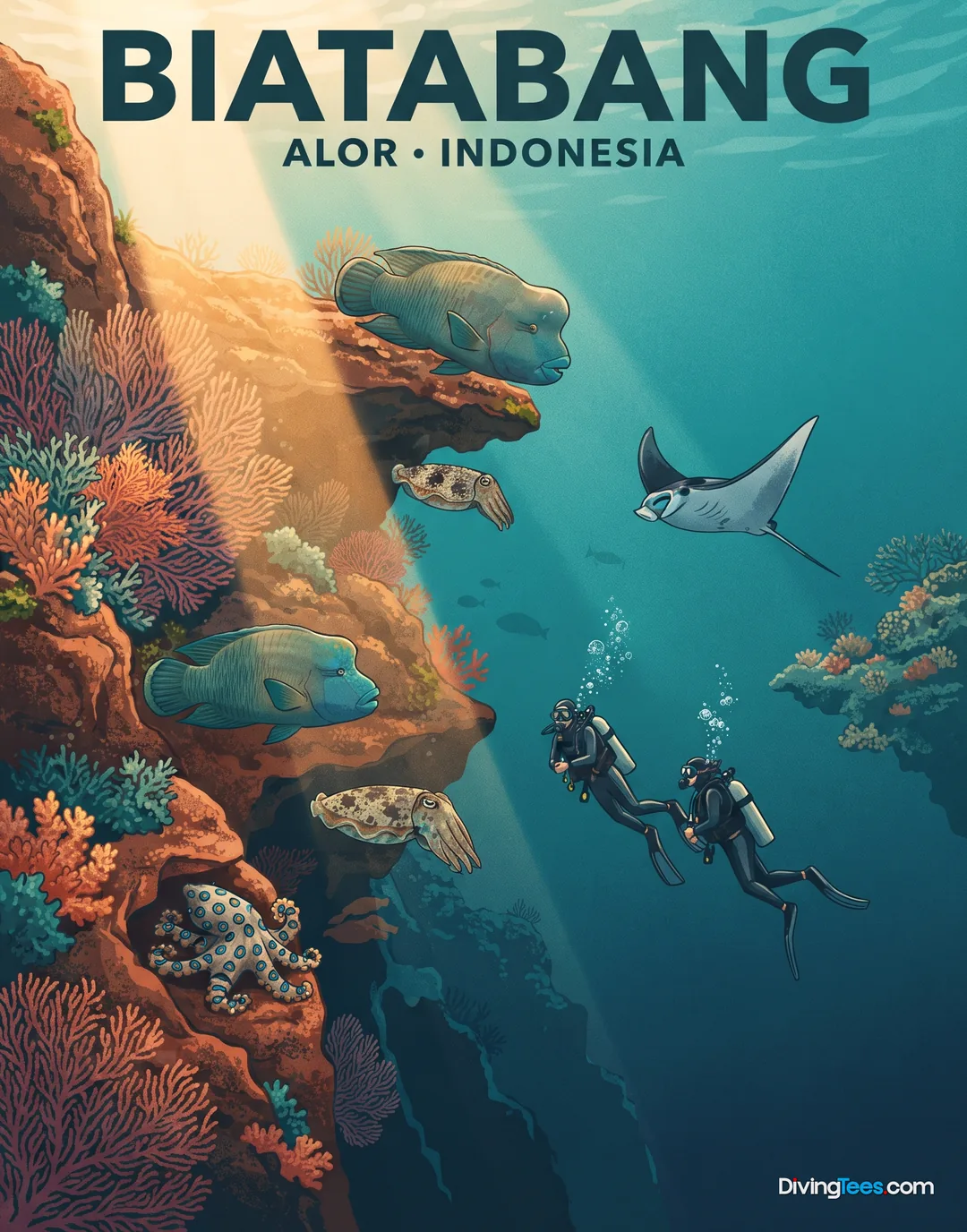
Biatabang →
Itineraries, dates and prices
Prices per person. Each month shows its lowest price: click a month, or pick an itinerary.
Next departures · 63 departuresfrom £1,417$1,894€1,692
November 2026
January 2027
February 2027
See dates and prices
If you click these links and make a purchase on the partner site, DivingDeal may earn a commission, at no extra cost to you.
Dates and prices taken from Divebooker and liveaboard.com, updated 22 October 2026
What you’ll meet underwater
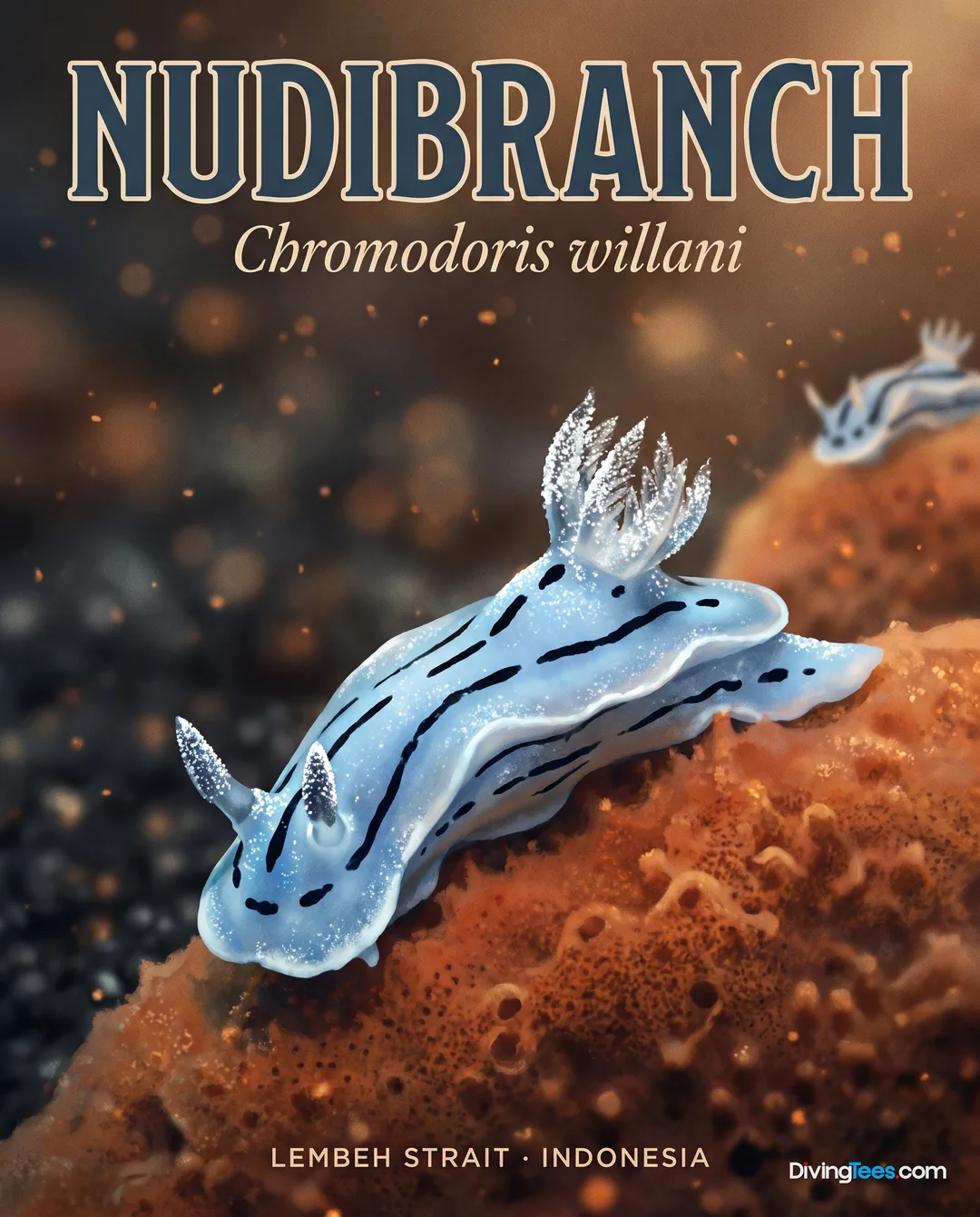
The recurring spectacle is scale: Napoleon wrasse, reef sharks, manta rays, barracuda, turtles, tuna, giant trevally, eagle rays, anthias, fusiliers, soft corals, nudibranchs and pygmy seahorses appear across the route’s recorded sites. Currents explain much of the larger action, concentrating pelagic fish around pinnacles, walls and passes. The small life is not an afterthought; nudibranchs recur widely, while pygmy seahorses reward a slower look. Some sightings give a specific site its reason for being there. Castle Rock is the place to look for grouper and bannerfish. Siaba Besar holds the route’s recorded shrimp, seahorse and unicornfish sightings. Wolang Cavern is where langoustes are recorded. Andy’s Bus Stop is notable for butterflyfish and parrotfish. Tatawa Besar is the site associated with triggerfish, Batu Bolong with hard coral, and Cathedral with the route’s recorded ocean sunfish. Yellow Corner is the one named site associated with hammerhead sharks, barracuda, blacktip sharks and eagle rays; the current is part of the attraction and part of the work.
Who puts you in the water
Certified dive guides lead the groups at a ratio of one guide to four divers. The crew speaks English and Indonesian, and the dive operation requires certification from a recognised agency such as PADI, SSI, NAUI or CMAS. Every dive has a briefing, with the guide setting the profile, limits and procedures for the site. In Komodo and Alor, that matters because current, down-current and eddies can turn a calm-looking surface into a serious underwater decision. Oxygen, first-aid kits and the ENOS diver locator system are carried aboard. Neomi runs an Advanced Open Water course, a nitrox course and speciality courses on board, as well as introductory dives for non-certified guests. The operation suits mixed experience levels, but divers still need to respect the guide’s limits and be comfortable refusing a dive when conditions exceed their training or fitness.
The dive deck and the gear
The dive deck is shaded and built around a proper platform, with tank racks, weight belts, gear-rinse bins and a separate rinse for cameras. The boat supplies regular air fills to 200 bar through tanks compatible with INT and DIN valves. Nitrox is available as an extra, and 12-litre sidemount tanks and 15-litre tanks can be rented; rental dive gear also includes BCDs, regulators, fins, masks, wetsuits, torches, computers and underwater cameras. Brand names are not given. Two aluminium tenders, each 6 by 2 metres, take divers from the vessel to the sites and back. The precise pickup routine is handled on the day by the dive team, according to the site and conditions. Photographers get a dedicated camera space rather than a corner claimed at the last minute, and the boat carries an ENOS diver locator system for surface support.
Between dives
Between dives, the useful spaces are outside: a shaded dive area for gear and a terrace or observation deck for the surface interval. The jacuzzis can be set for hot or cold water and hold four people each, giving a group somewhere to sit without retreating to a cabin. Kayaks are carried for shore time, and excursions include land visits on selected itineraries. The lounge and restaurant are air-conditioned when the heat has taken enough out of the day. On crossings, the boat itself becomes part of the scenery: the sea replaces the reef while Neomi moves between Komodo, Alor, Banda and the farther eastern routes. A camera station and separate camera rinse keep photographers from having to improvise on a dining table.
A day on board
A diving day starts before the heat has built, with the first briefing followed by the first descent. Breakfast follows the opening dive, then the boat and dive teams reset for the next entry. Lunch lands between dives, snacks cover the shorter gaps, and dinner comes after the final daytime activity. On Komodo itineraries, the pattern can reach three daytime dives and a night dive on the busiest days; other days carry two dives alongside a trek or a crossing. The night dive changes the job completely: torches replace sun, and the reef’s smaller residents become the point of attention. Between entries, divers move from the shaded deck to the restaurant, lounge or outside terrace, while Neomi repositions for the next site. Some days include a land excursion, such as Komodo or Padar trekking; others leave more of the interval to the sea. The return to port comes after breakfast on the final morning.
What you eat aboard
Meals are served as full board, with breakfast, lunch, dinner and snacks built around the diving day. The kitchen covers both local Indonesian and Western food, with buffet service and vegetarian or vegan options available by request. Beer, wine, cocktails and other drinks are separate from the included water, coffee and tea. That distinction matters on a four-dive day: meals need to be available without turning every surface interval into a formal sitting. The table is where divers compare the first pass over a pinnacle with what another group found on the other side, then eat again before the next briefing. Local dishes give the route a sense of place; Western choices and dietary requests make the long stretches aboard easier for mixed groups.
Nights at sea
The cabins are practical places to recover between dives, with air conditioning, private bathrooms and hot-and-cold water. Lower-deck cabins have portholes, emergency exits and shared water heaters; middle- and upper-deck cabins add sea views and private balconies. The upper deck has twin, double and master options, while the master cabin adds a private balcony, bathtub, water heater, refrigerator and a 42-inch Android TV. The smaller cabins have 32-inch TVs. The important difference is not the screen: it is whether the cabin opens onto the sea or keeps the outside world to a porthole. After a night dive, the lower deck offers a quieter, more enclosed feel; higher cabins give more light and a place to step outside. Neomi has 10 private bathrooms for its 10 cabins, so there is no shared-cabin washroom routine to manage after a full day in the water.
Master Cabin
Upper Deck Twin Cabins
Upper Deck Double Cabin
Main Deck Cabins
Lower Deck Cabins
What to know before boarding
Komodo trips depart from and return to Labuan Bajo. Alor trips depart from Kalabahi and either return there or continue to Ambon; other recorded routes connect Ambon, Banda and Sorong. Airport and hotel transfers to and from the vessel are included, with arrangements made through the cruise team. Because domestic connections in Indonesia are changeable, arriving the night before embarkation is the sensible choice.
Deck plan
What the boat does for the ocean
On fishing trips, Neomi follows a catch-and-release policy in permitted fishing zones and prohibits littering at sea. The boat also carries an ENOS diver locator system, supporting faster location of divers at the surface rather than relying only on visual tracking.
- Year built
- 2018
- Length
- 47.2 m
- Beam
- 10 m
- Maximum number of passengers
- 22
- Number of cabins
- 10
- Number of bathrooms
- 10
- Engines
- Cummins 19
- Cruising speed
- 7 knots
- Tenders
- 2 aluminium tender boats 6 m × 2 m
- Website
- neomicruise.com ↗
Hello, I'm Marina, DivingDeal.com's AI assistant. I answer in detail about hotels, dive centres and liveaboards.
Thinking about the whole trip and the flights? Talk it over with Edith →
Marina is an AI. Some links are affiliate links: DivingDeal may earn a commission, at no extra cost to you. Bookings are made with the partner.