Liveaboards · Indonesia
TemuKira — a traditional phinisi built around small-group diving
What makes this boat unique
- A traditional wooden phinisi carrying no more than 12 divers in six air-conditioned cabins.
- Komodo itineraries run from Labuan Bajo back to Labuan Bajo over 8 days and 7 nights.
- The shaded dive platform has a dedicated camera rinse, charging stations, DIN adapters and one 40 HP tender.
- Private bathrooms, hot-water showers, a camera room, photo space and an outdoor terrace make the boat practical between dives.
- The route combines current-swept pinnacles and channels with shallow macro reefs, turtle sites and manta encounters.
For subtitles in English: start the video firstthen click the gearat the top right of the video, select “Subtitles/CC”, then “Auto-translate” and choose “English”.
The invitation
TemuKira suits divers who want Komodo from a real working phinisi rather than from a floating resort. The reason to choose it is the scale: six cabins, a maximum of 12 guests, and a dive operation small enough that the crew can learn how each group moves in the water. The route is not built around one kind of dive. Batu Bolong, Castle Rock and Crystal Rock bring pinnacles, current and pelagic life; Siaba Besar and Wainilu slow things down for frogfish, nudibranchs and other small subjects. That contrast matters over a full week. So does the crew. The boat scores more modestly for the vessel itself than for its crew, food and diving, which points to a practical choice: less emphasis on polished finish, more on the people running the days and the reefs waiting outside.
Boarding
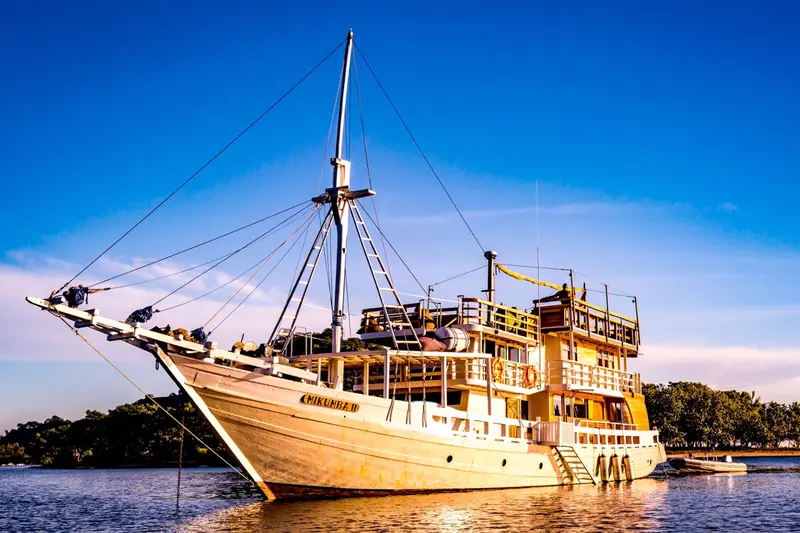
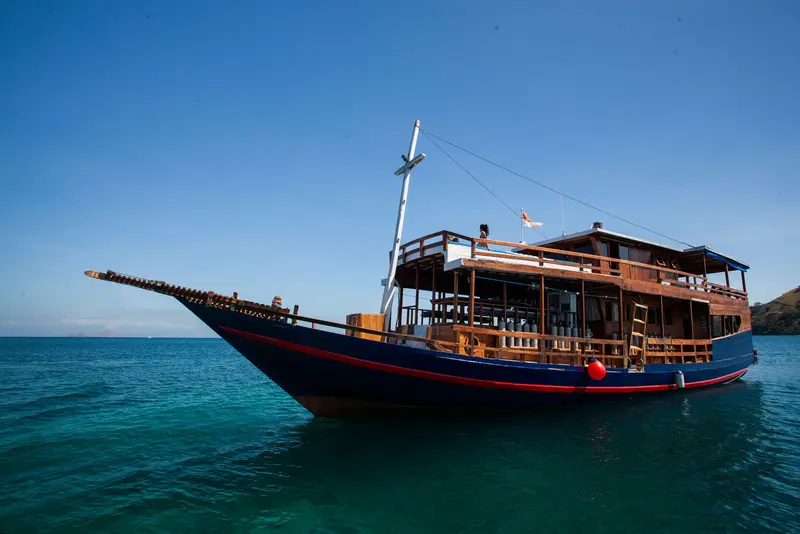
TemuKira arrives as a wooden phinisi with the long, purposeful lines expected of a traditional Indonesian liveaboard. It is large enough to carry a proper diving operation, yet the guest count stays low, so the boat should feel more like a shared expedition than a busy charter platform. Boarding leads into an air-conditioned lounge, then out towards the terrace and shaded dive platform. The layout gives the trip a clear centre: eat, brief, gear up, dive, return and repeat without having to negotiate a crowd. The boat is not presented as a new-build yacht, and its vessel score sits below its crew, food and diving scores. That is useful context rather than a flaw to hide. Guests choose TemuKira for the traditional hull, the small group and the time spent underwater, accepting a more workmanlike boat in exchange for a strong dive-focused week.
The atmosphere on board
TemuKira's atmosphere is shaped by the fact that only 12 guests share the boat. The group becomes recognisable quickly: the diver who waits for nudibranchs, the one watching the blue for sharks, the photographer guarding a memory card. The crew speaks English and Indonesian and works across the practical details that keep a diving day moving, from food and cabins to the platform and tender. Passenger experience points most clearly to the people rather than to a pristine vessel: the crew and diving score well above the boat score, while the food scores highest. That tells a prospective guest where the value lies. This is a traditional working phinisi whose memory is likely to be made by the guides, cooks and deck crew, not by designer furniture. Evenings belong to dinner, stories, images and the next day's sites.
The sites you’ll dive
The 8-day, 7-night Komodo route runs from Labuan Bajo back to Labuan Bajo and mixes high-energy current sites with macro reefs. Batu Bolong is a tiny pinnacle with dense coral, trevally, Napoleon wrasse and reef sharks to -40m. Castle Rock reaches -30m, where nutrient-rich current draws white-tip and grey reef sharks, eagle rays and barracuda. Crystal Rock, also -30m, is an exposed Lintah Strait pinnacle where strong current concentrates pelagic life. Shotgun reaches -25m and carries divers over a wall where mantas and sharks gather; Manta Alley is a channel dive to -20m, with strong current bringing groups of manta rays. Siaba Besar, to -18m, is gentler and hides frogfish and blue-ringed octopus among coral bommies. Cannibal Rock and Golden Passage both reach -30m, while Tatawa Besar, Tatawa Kecil and Sebayur Kecil offer current and shallower reef. Wainilu has no stated maximum depth and is the sandy-slope macro stop. Siaba Kecil reaches -30m, and Pengah Kecil -25m.
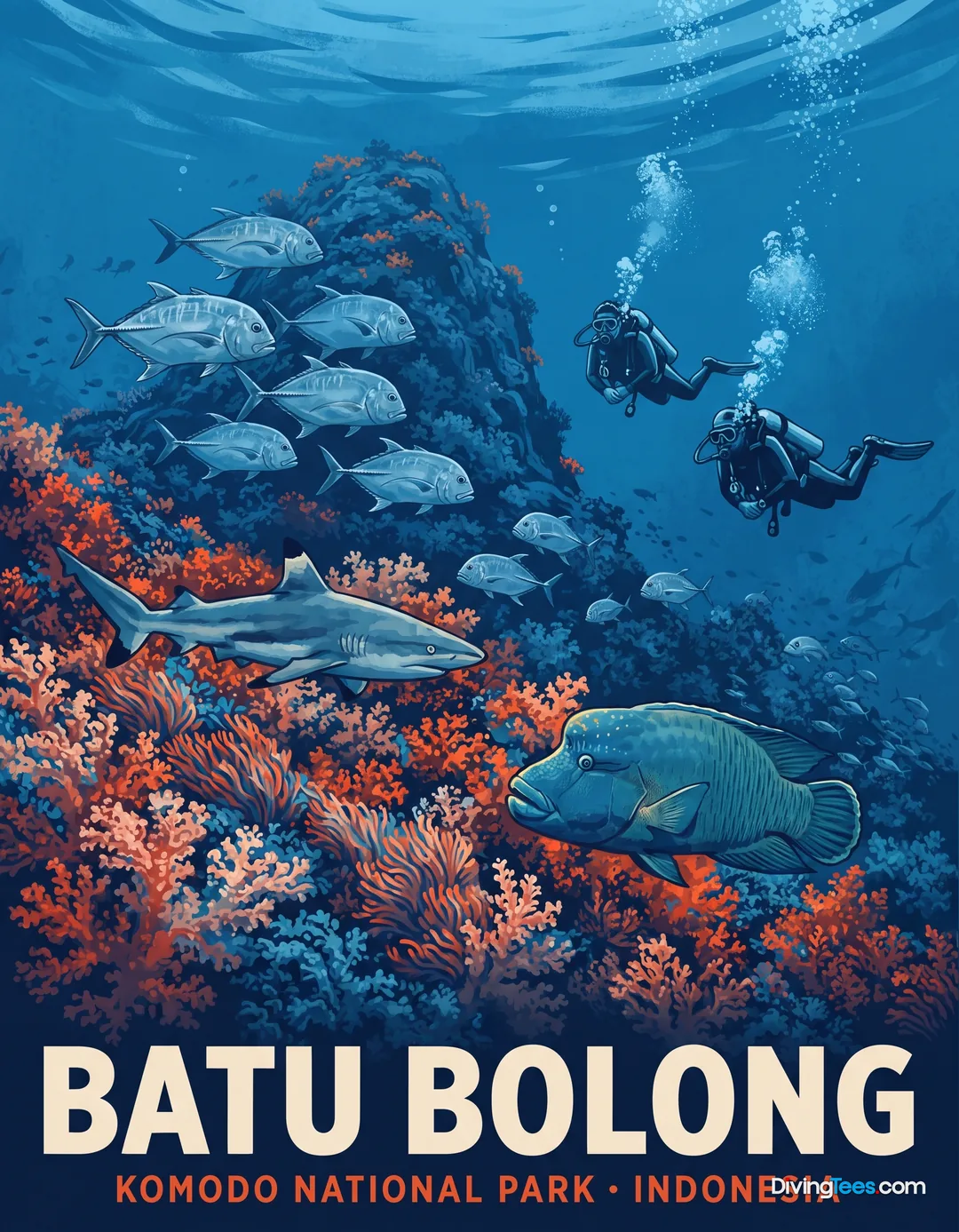
Batu Bolong →
Max. depth · 40 m
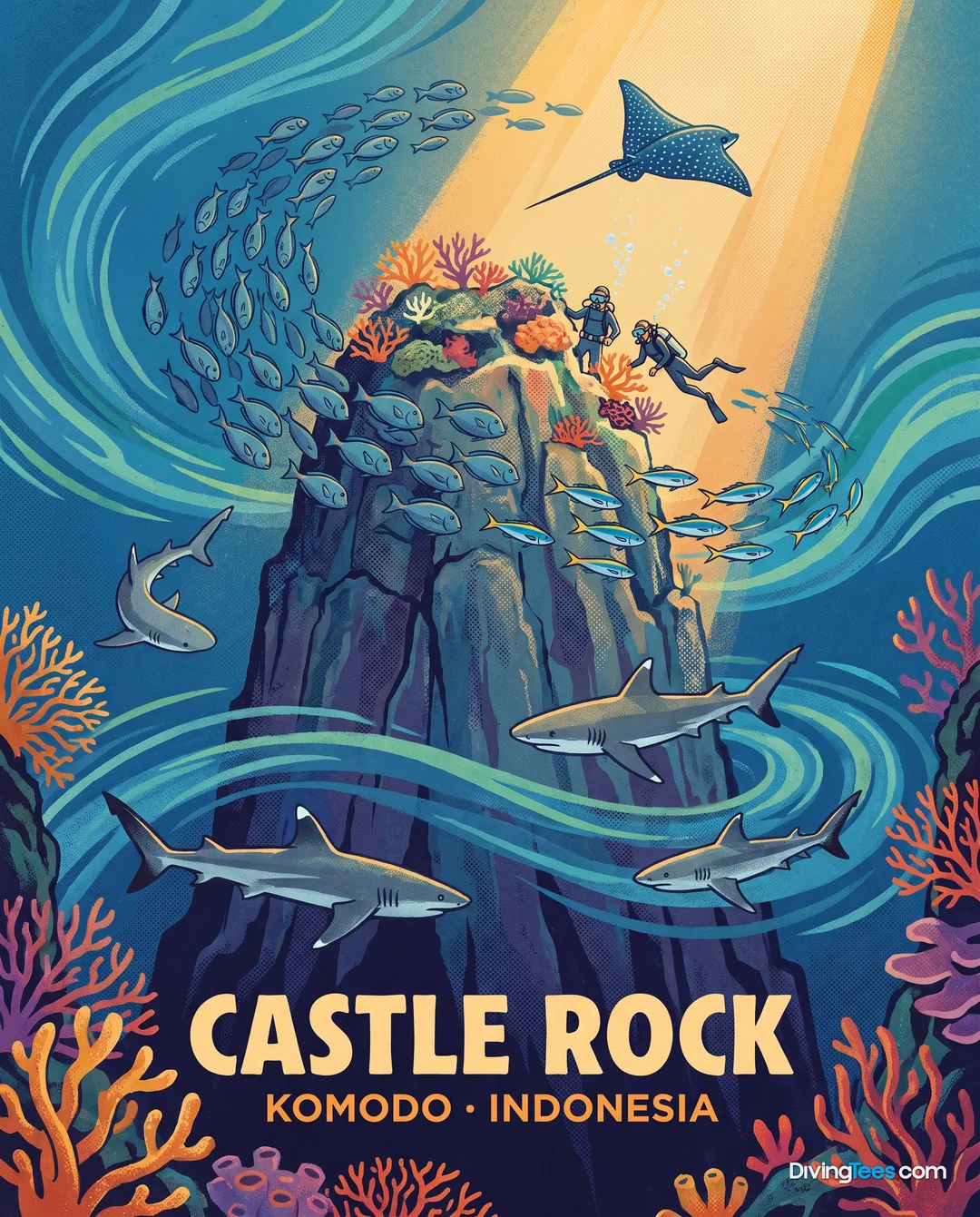
Castle Rock →
Max. depth · 30 m
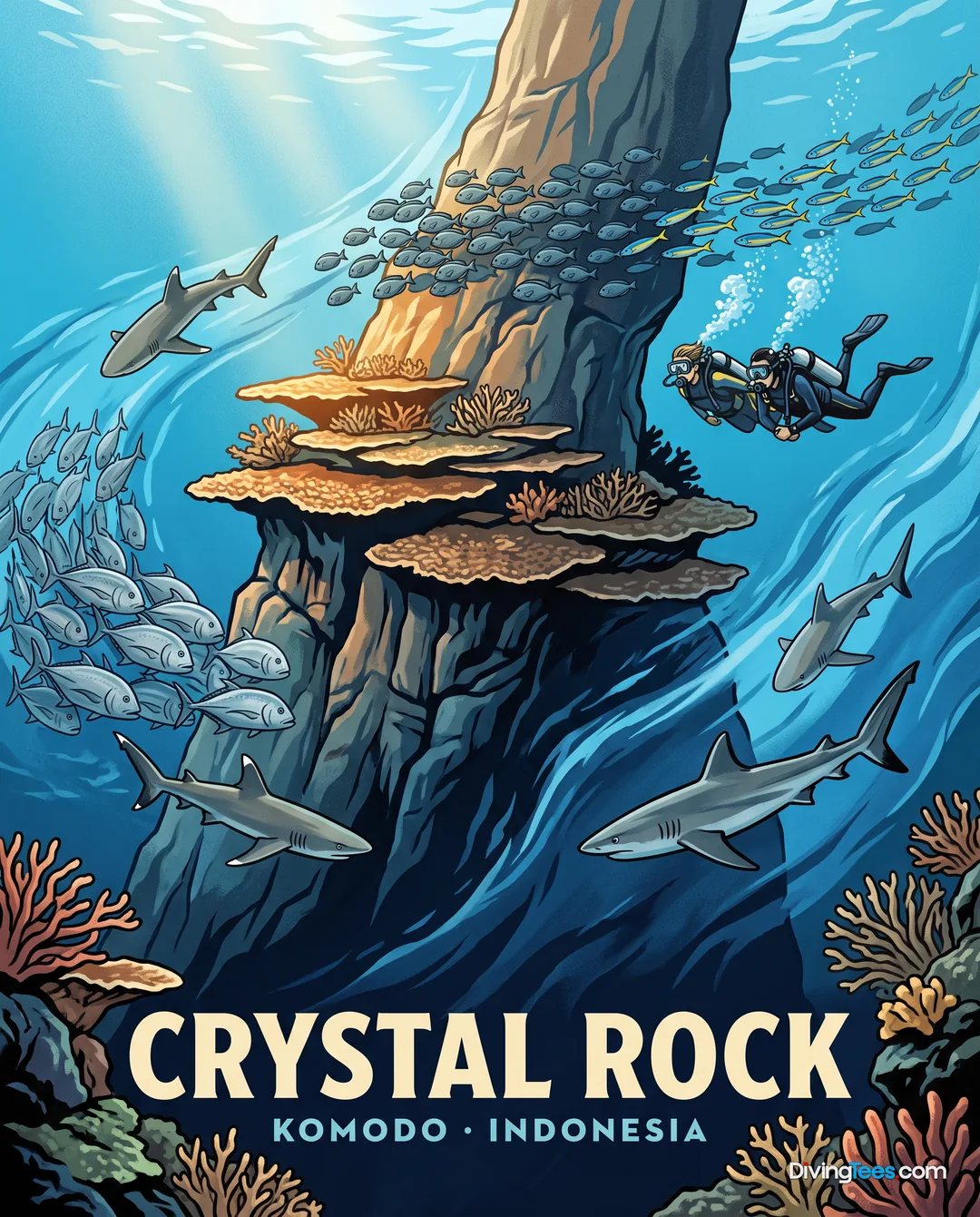
Crystal Rock →
Max. depth · 30 m
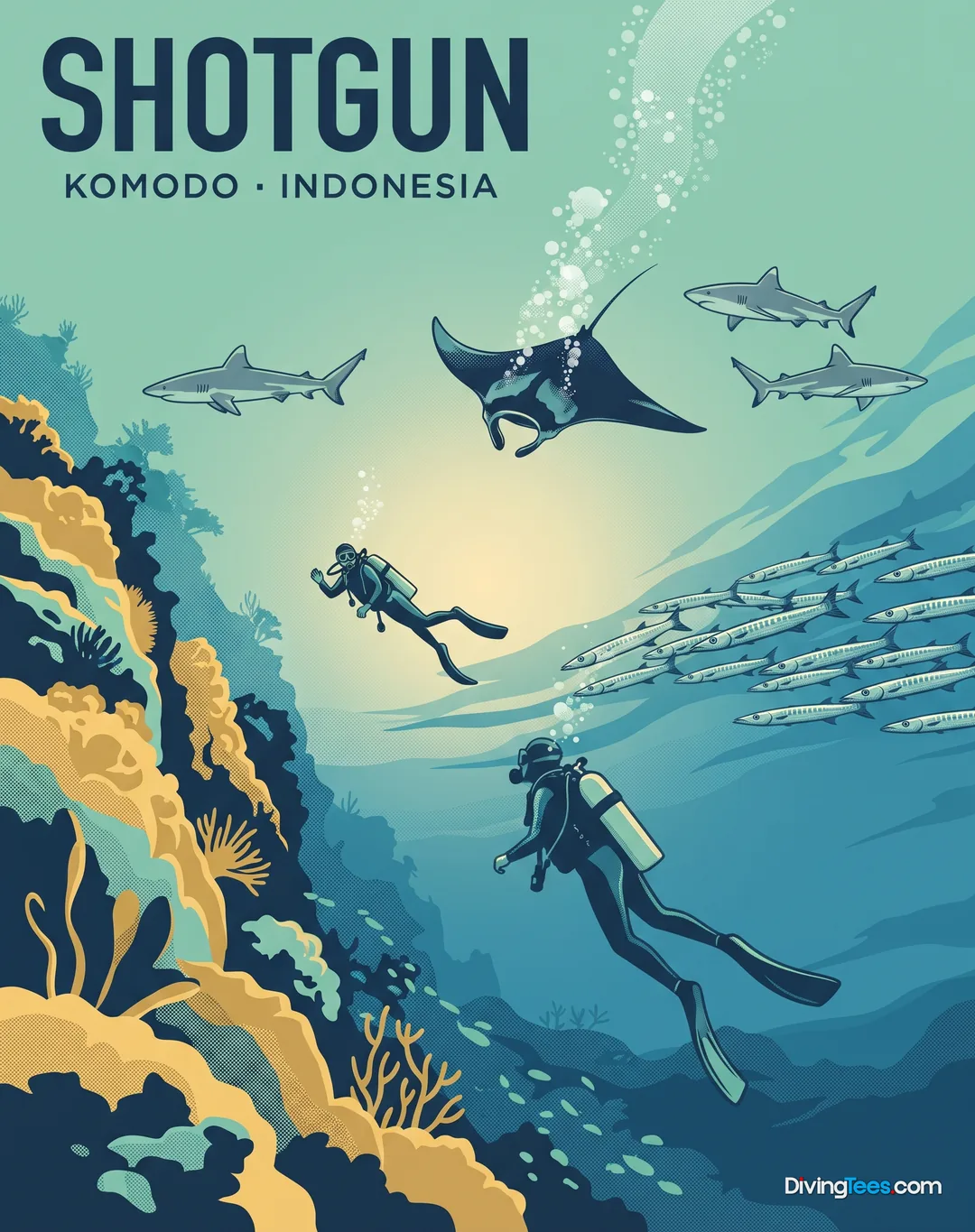
Shotgun →
Max. depth · 25 m
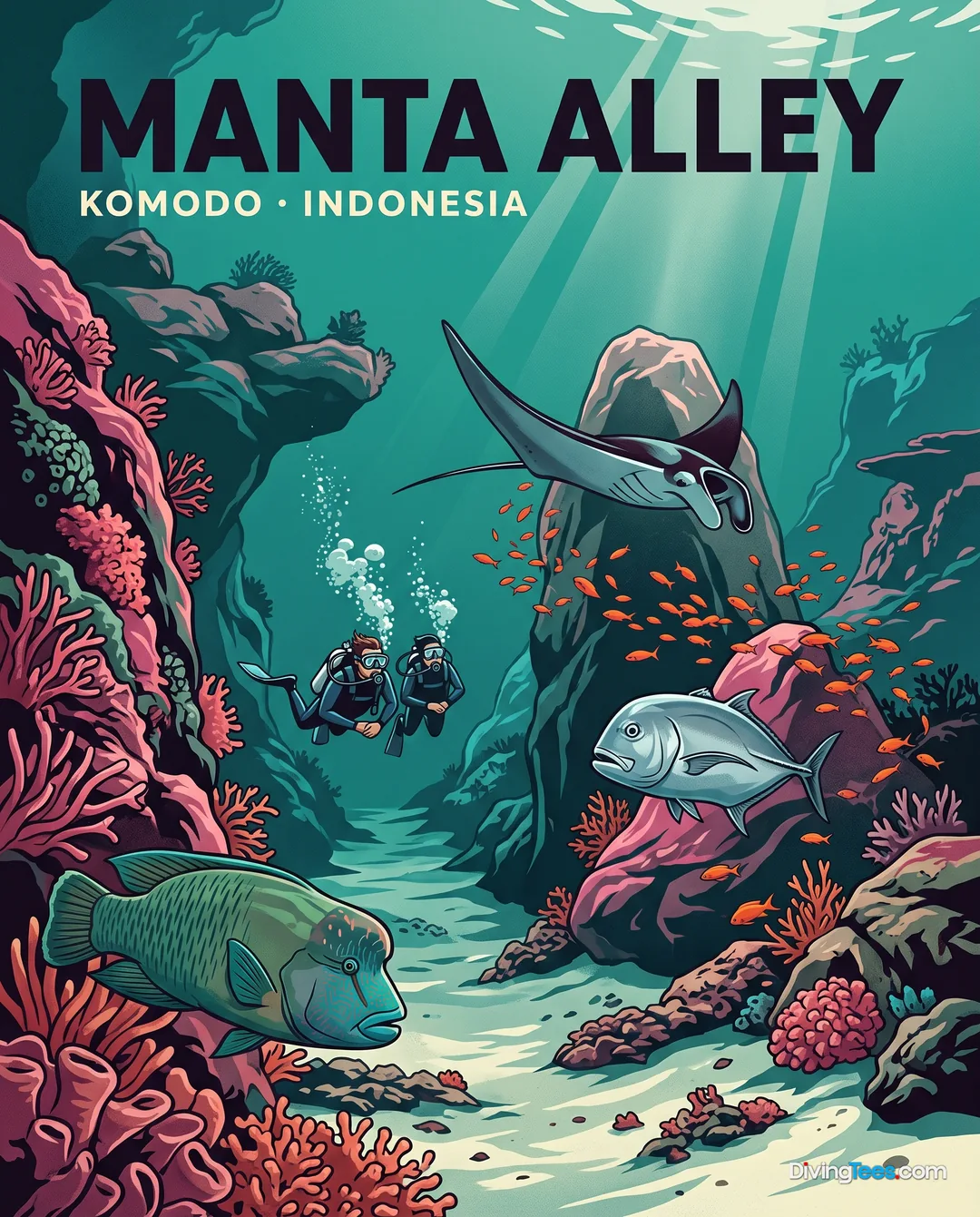
Manta Alley →
Max. depth · 20 m
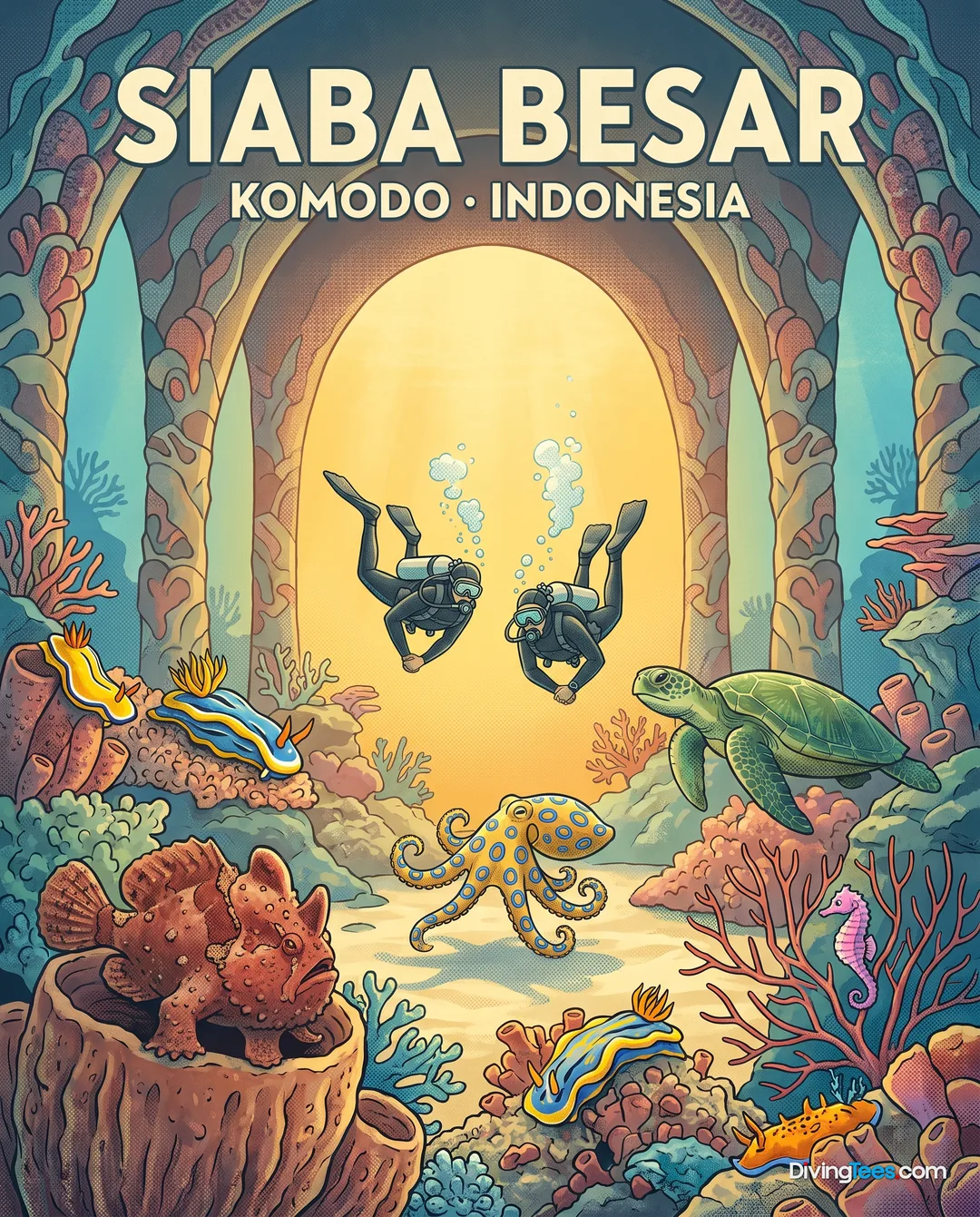
Siaba Besar →
Max. depth · 18 m
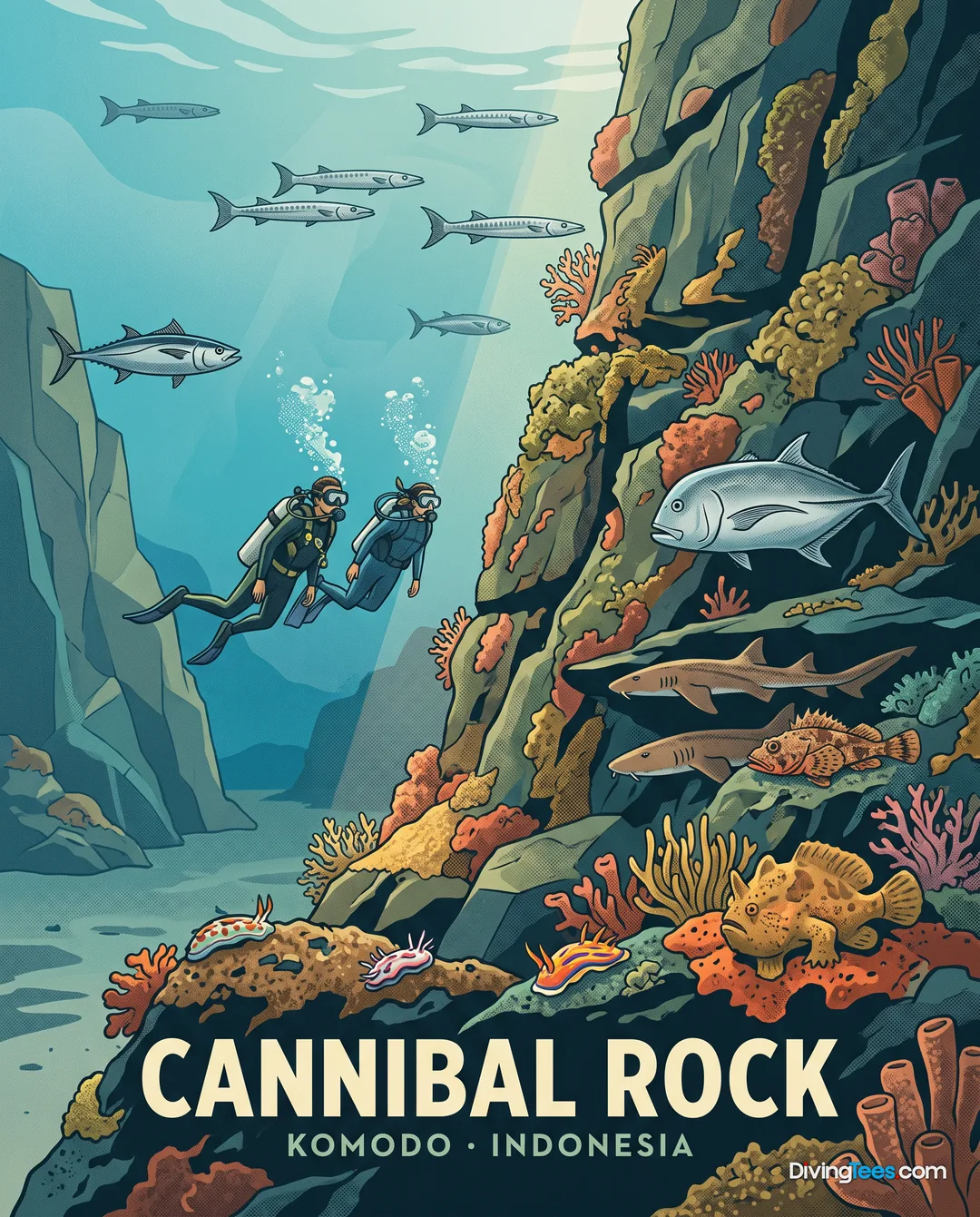
Cannibal Rock →
Max. depth · 30 m
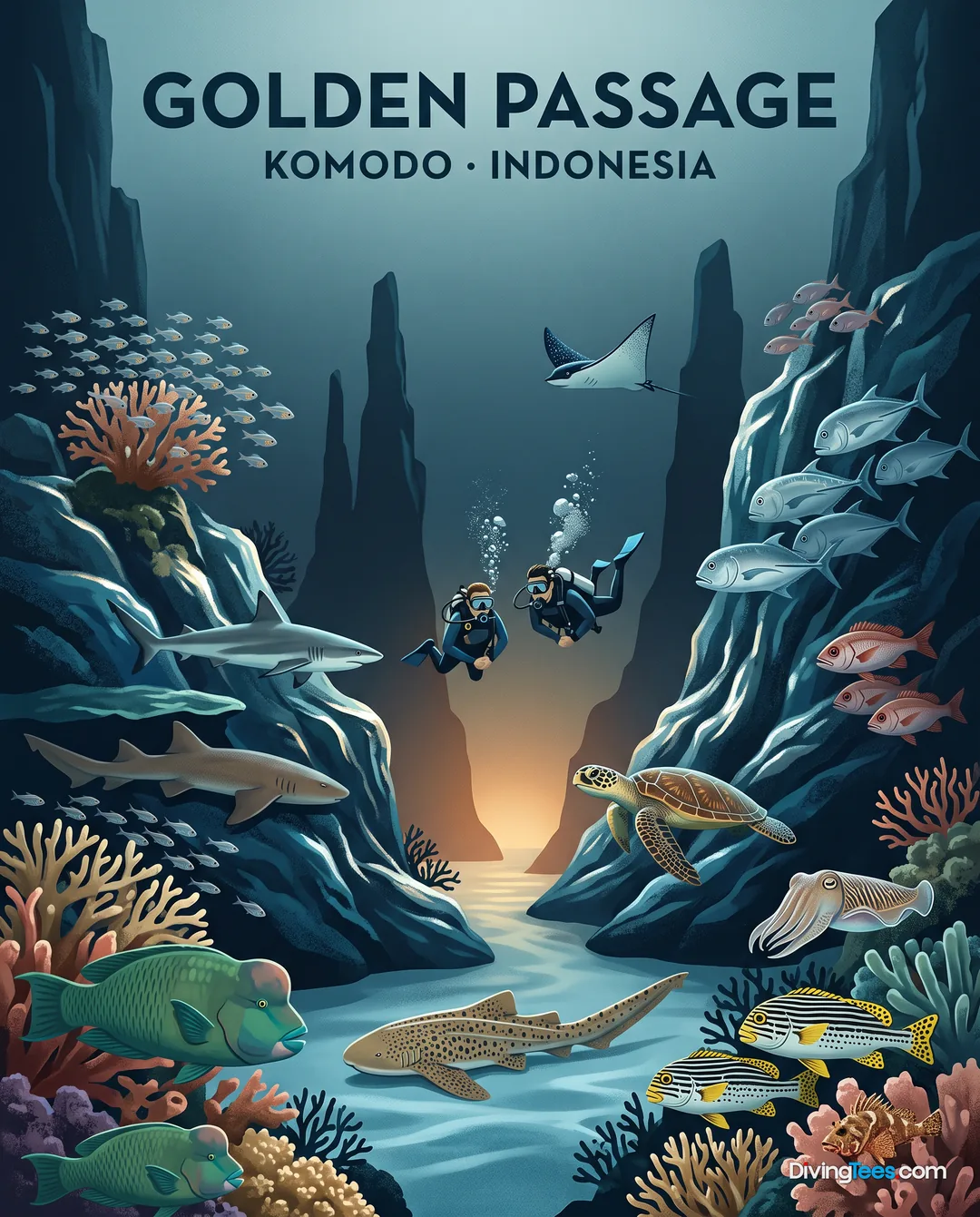
Golden Passage →
Max. depth · 30 m
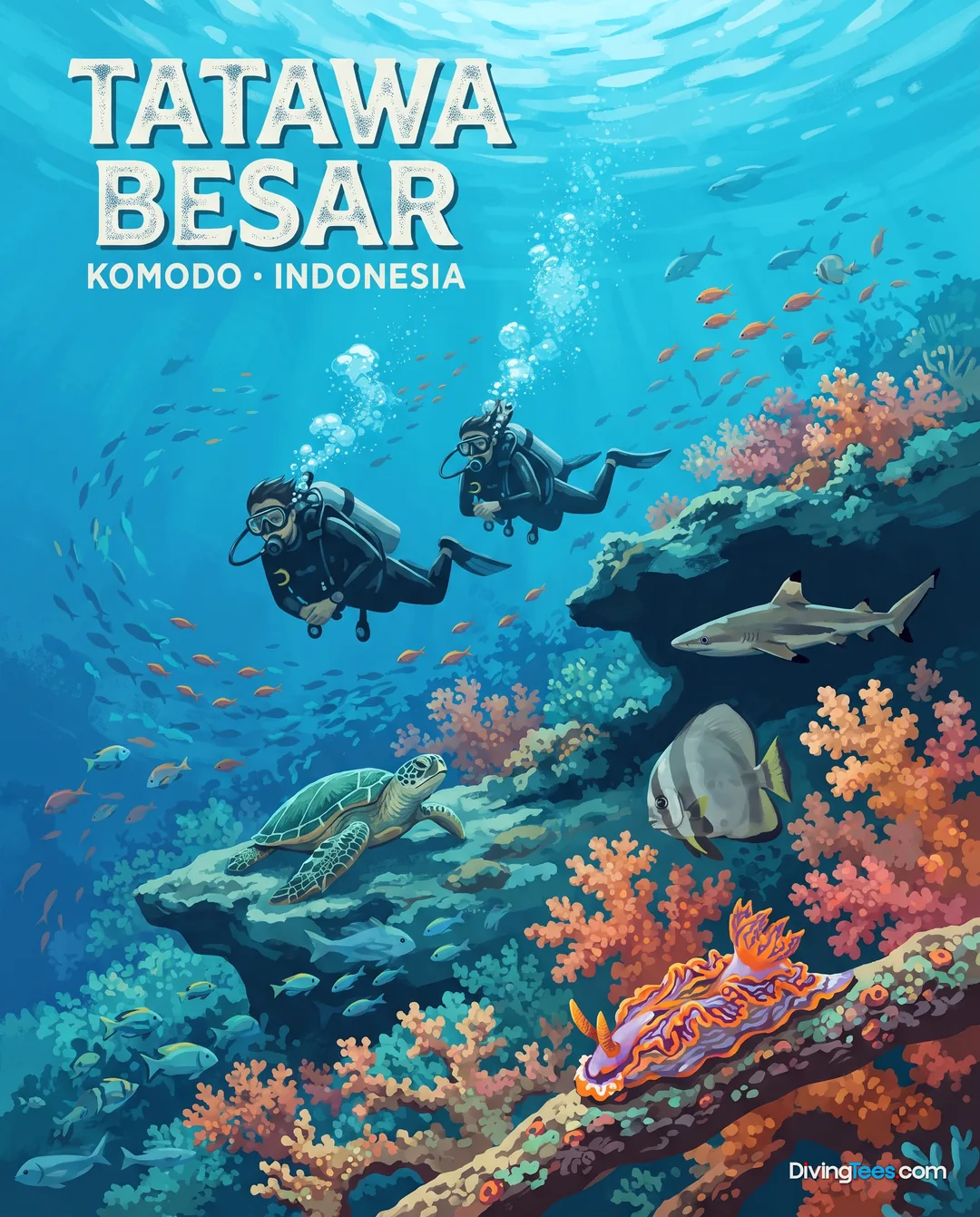
Tatawa Besar →
Max. depth · 25 m
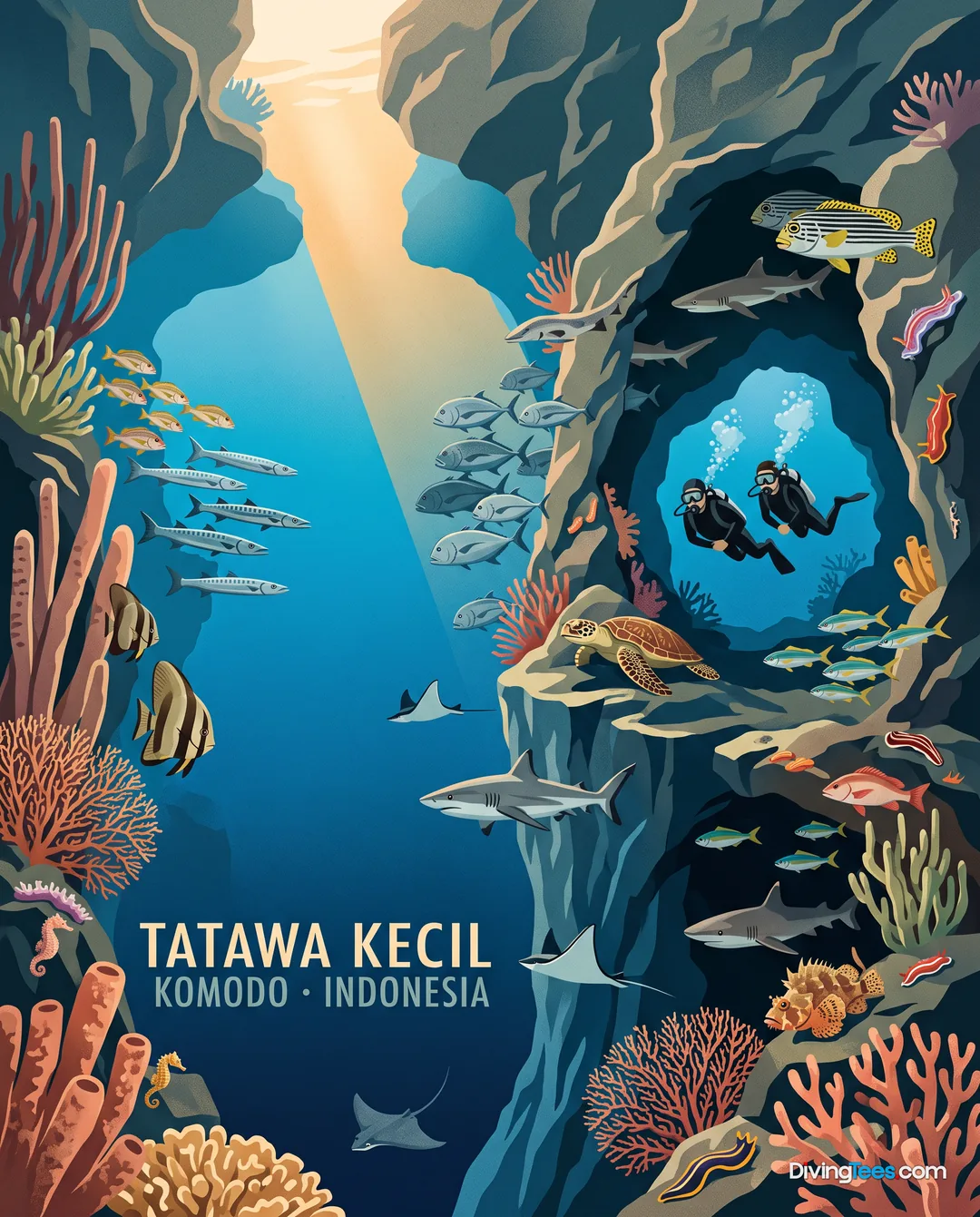
Tatawa Kecil →
Max. depth · 30 m
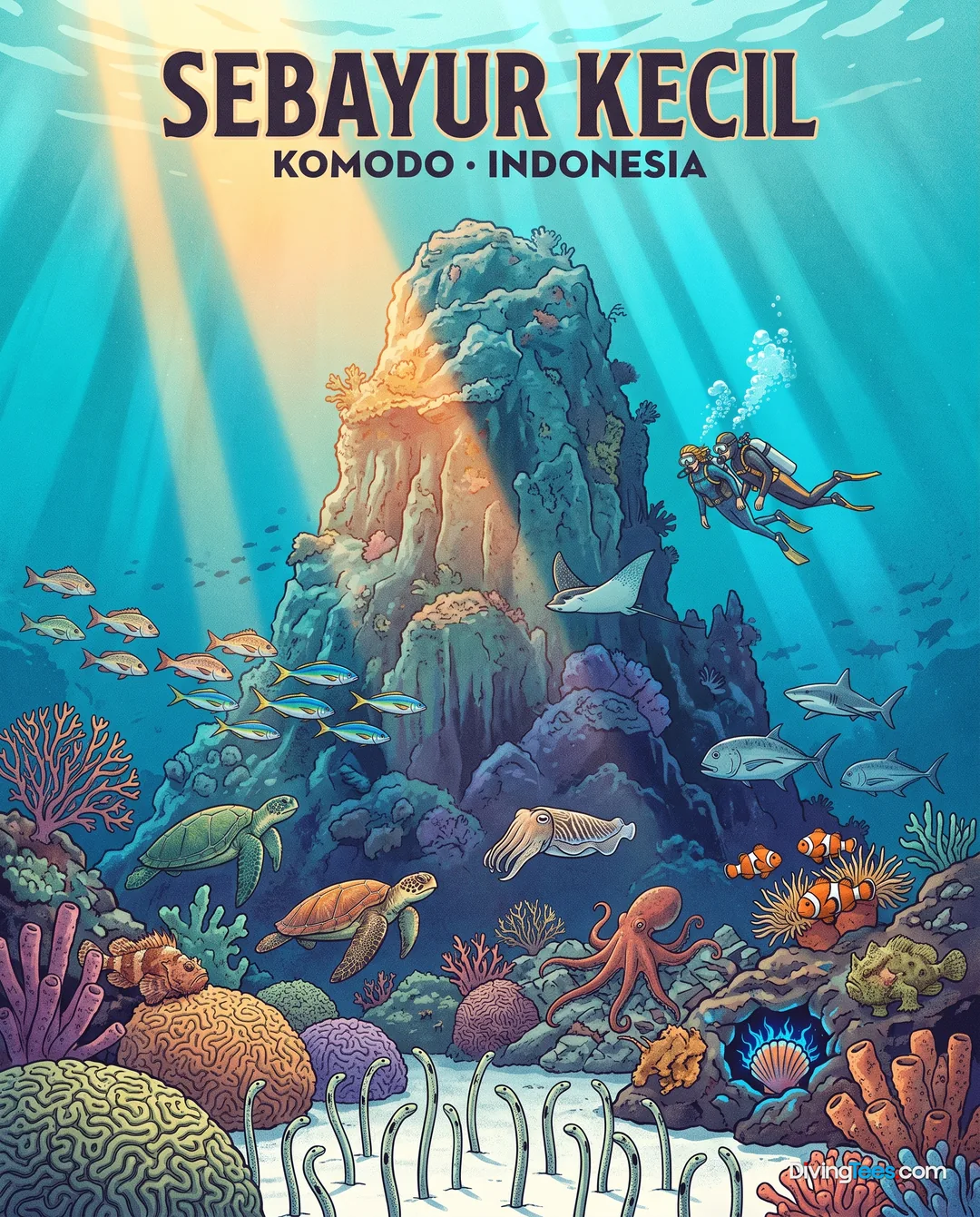
Sebayur Kecil →
Max. depth · 25 m
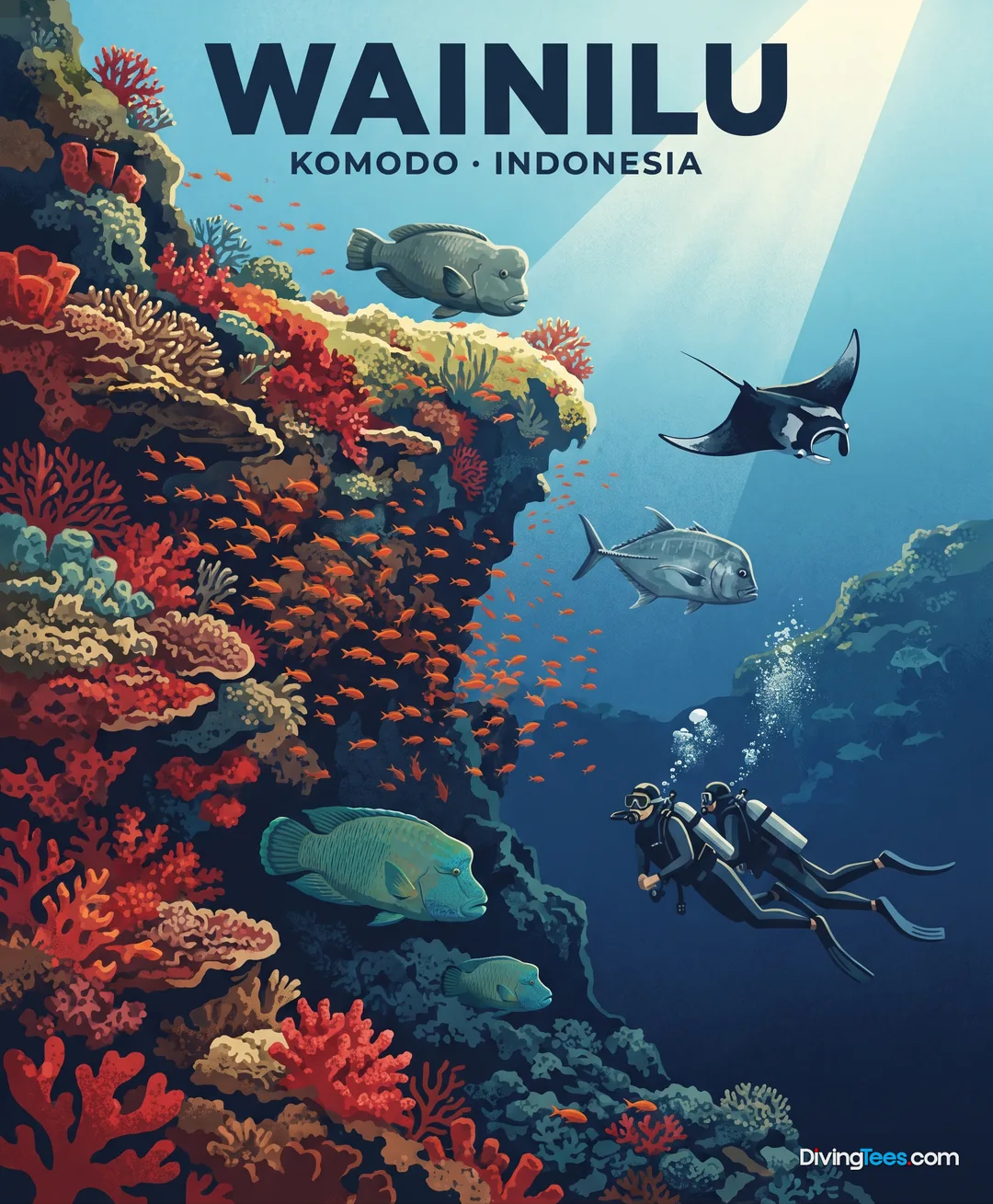
Wainilu →
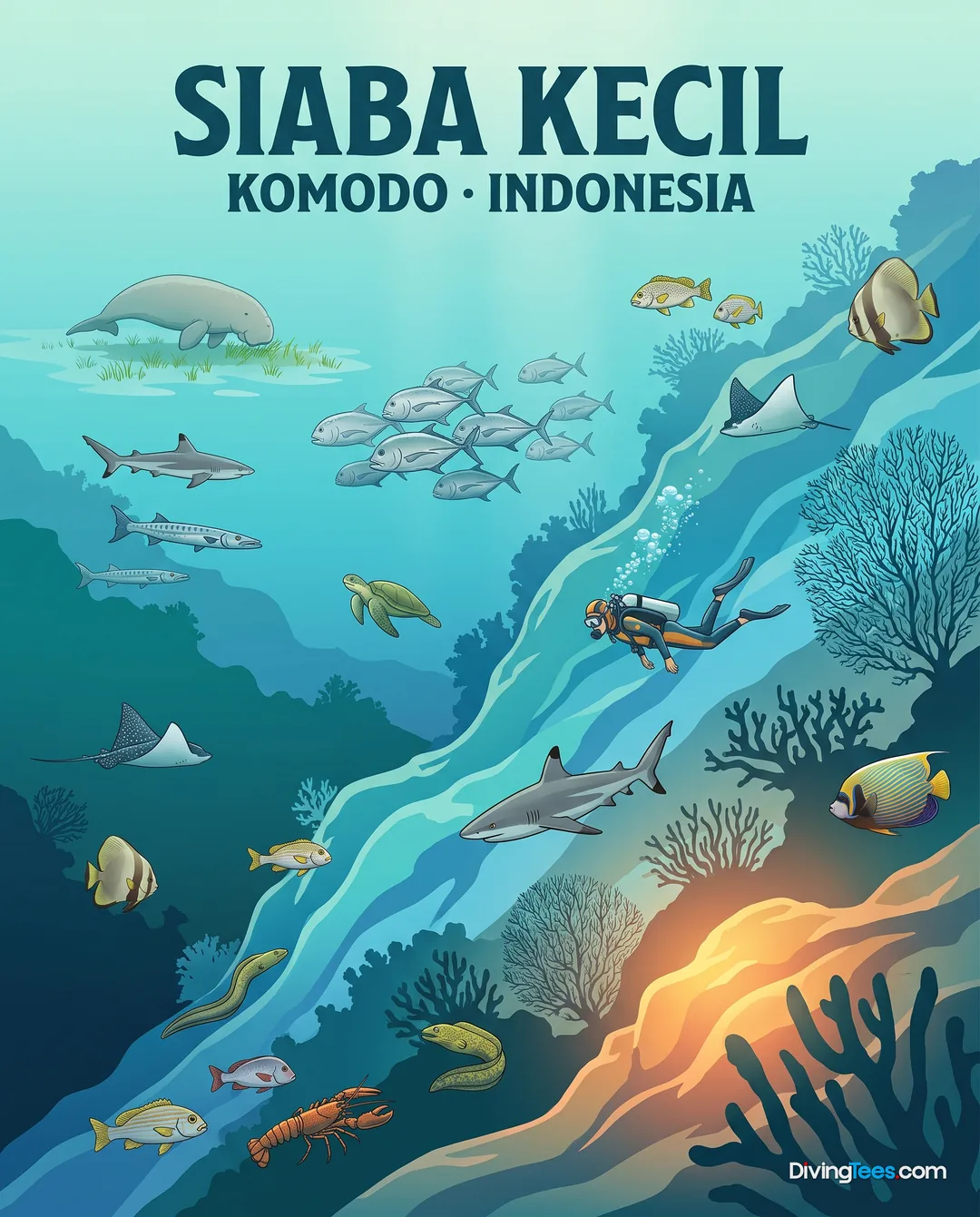
Siaba Kecil →
Max. depth · 30 m
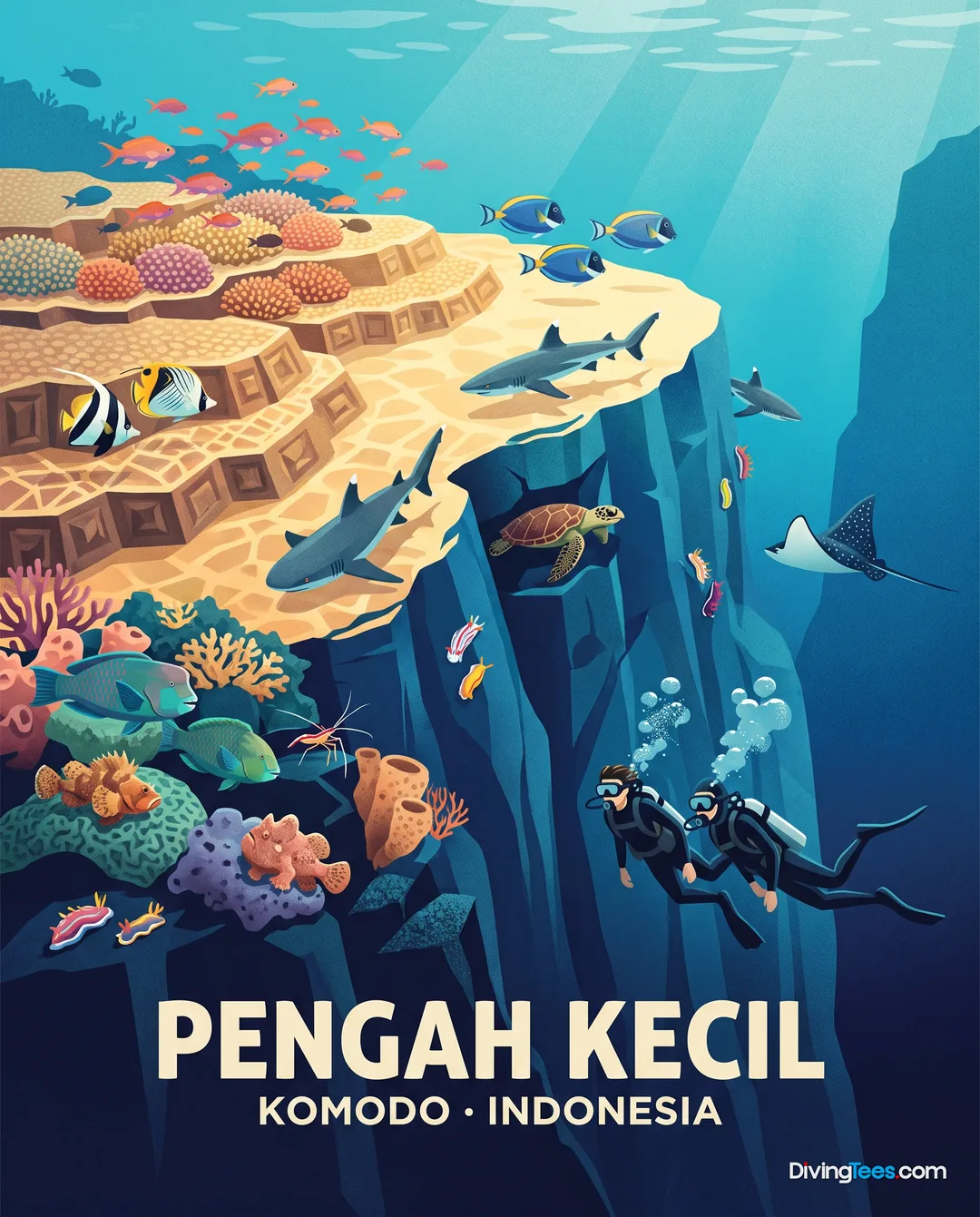
Pengah Kecil →
Max. depth · 25 m
What you’ll meet underwater
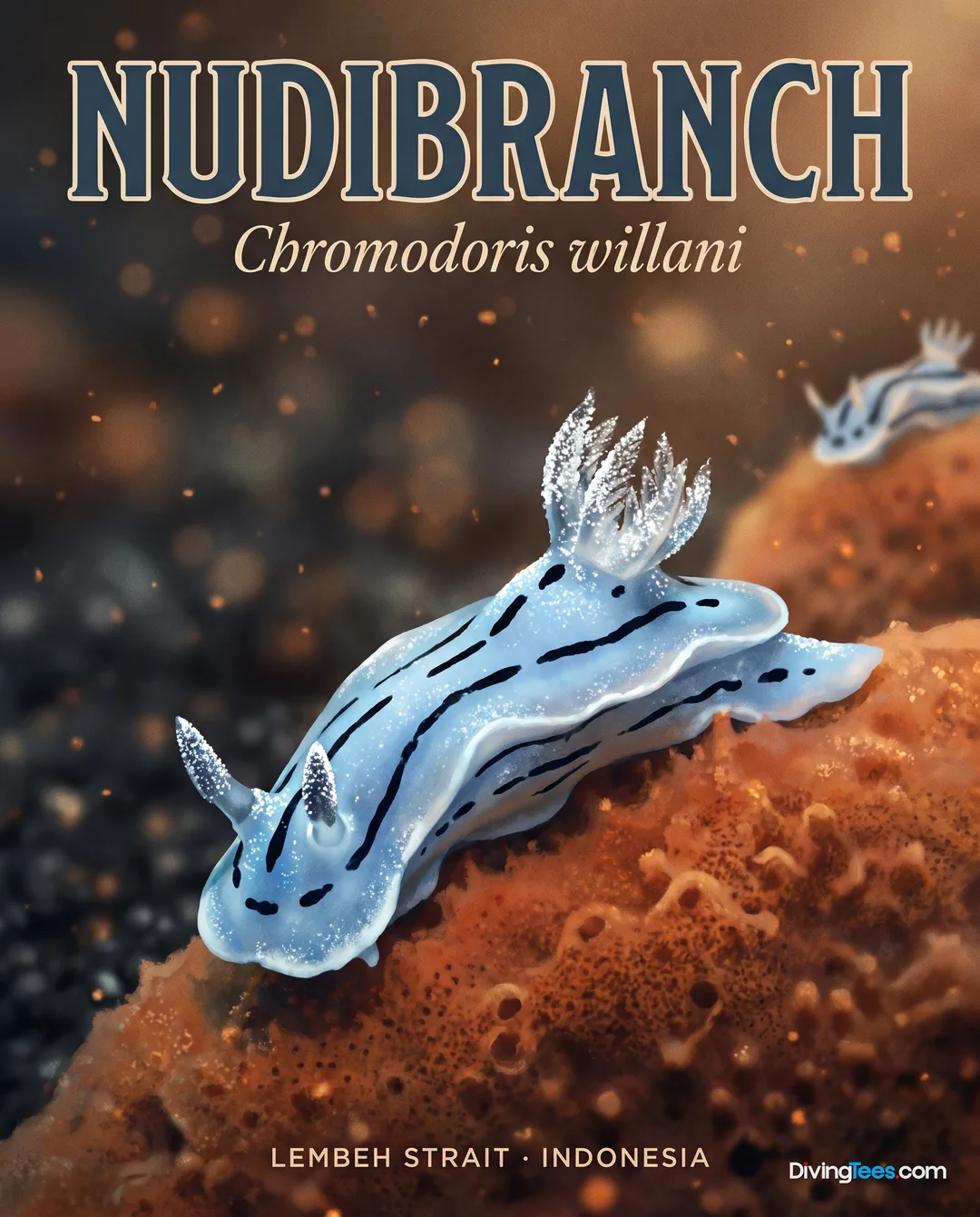
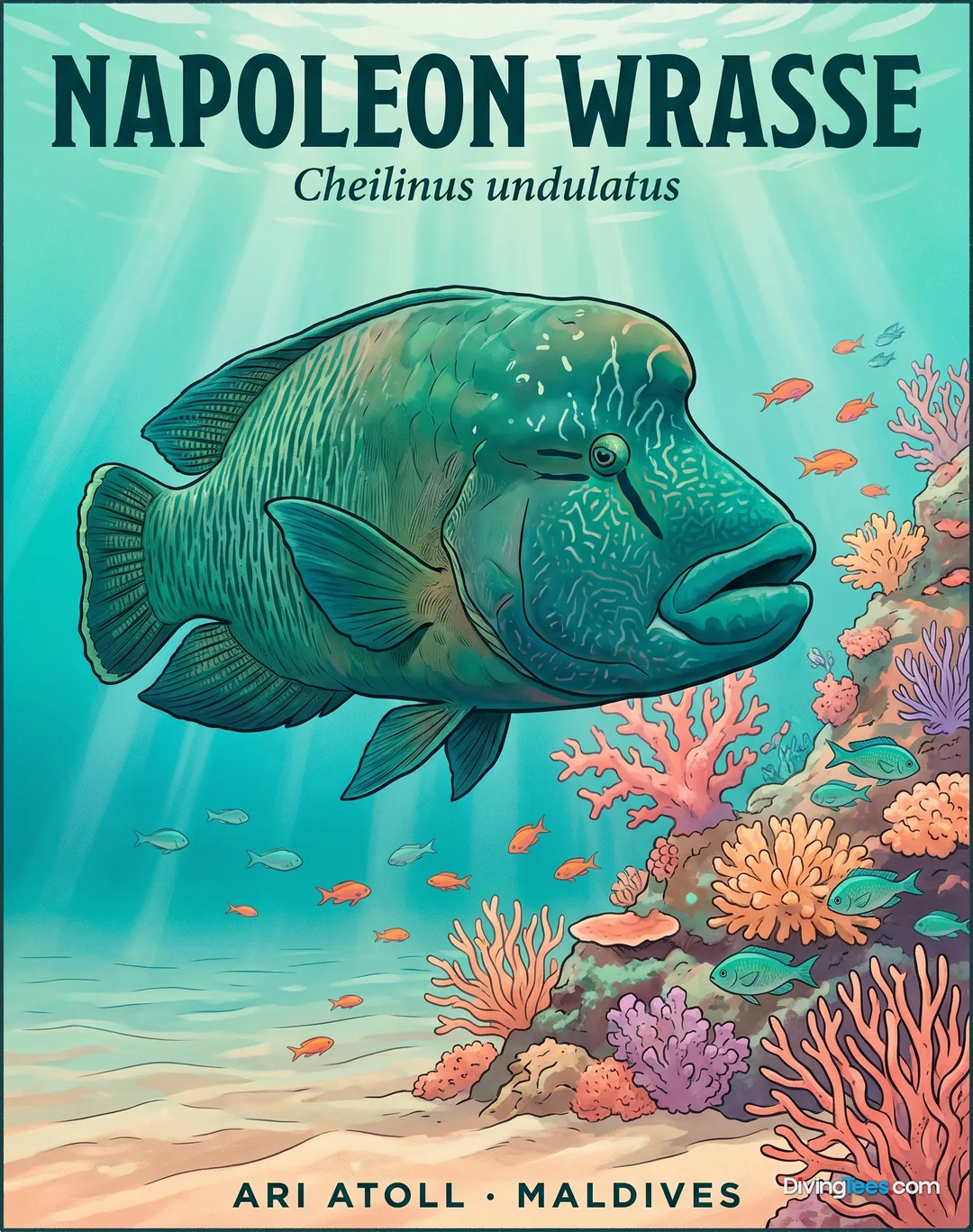
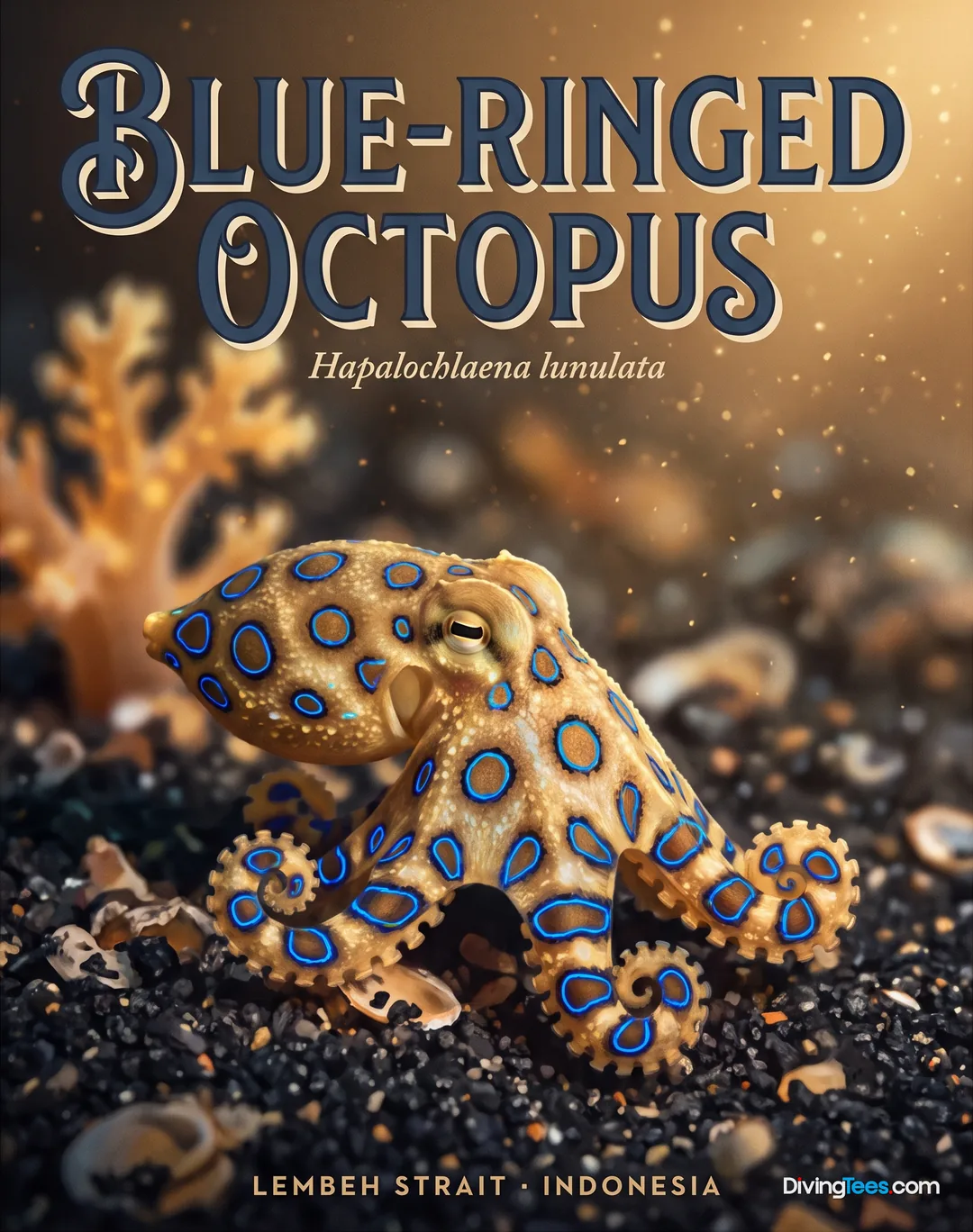
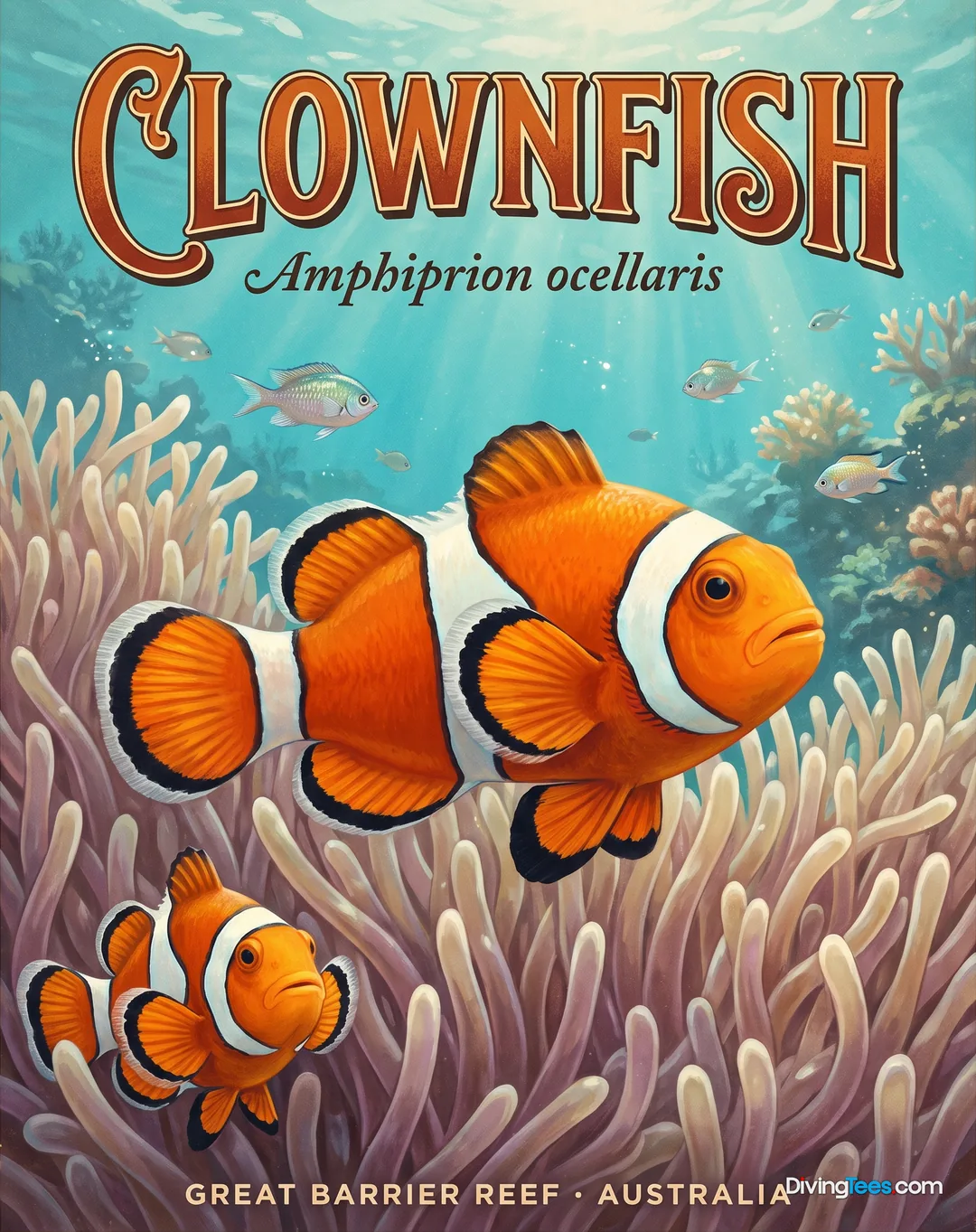
Mantas, reef sharks, sea turtles and nudibranchs form the recurring cast of this Komodo route, with eagle rays, giant trevally, soft corals and barracuda appearing across several sites. Currents are the engine behind much of the spectacle: they feed Crystal Rock, Golden Passage, Siaba Kecil and Tatawa Kecil, bringing pelagic action to the reef. The quieter sites reward a slower search. Wainilu is the place to look for mandarin fish on a sandy slope, while Siaba Besar is recorded for ghost pipefish, frogfish and blue-ringed octopus. Golden Passage is the only named site on this route associated with leopard sharks and glassfish. Siaba Kecil is the specific stop for lobster and angelfish; Sebayur Kecil for clownfish and filefish. Castle Rock has the recorded butterflyfish, and Sebayur Kecil combines macro subjects with turtles and reef life. Sightings remain conditions-dependent, especially where current brings the larger animals in.

Who puts you in the water
The diving crew speaks English and Indonesian, and the operation is intended for certified divers rather than first-day instruction. The minimum stated level is Open Water with 50 logged dives, together with the fitness needed for Komodo's changing conditions. Briefings cover the day's current, site shape and entry plan before divers get in. Oxygen and first-aid equipment are carried on board, alongside life-saving and navigation equipment. The practical fit is a diver who is comfortable following a guide in current, managing buoyancy and surfacing with the tender's support rather than expecting a training-centre programme.
The dive deck and the gear
The dive operation is set up for repeated use, with a shaded platform, gear-up stations, a dedicated camera area, charging points and a separate camera rinse. DIN adapters are available. A Bauer compressor is listed on board. Nitrox is available on request as an additional service. One 40 HP tender handles transfers between the boat and the sites, collecting divers after the dive rather than leaving the main vessel to manage every entry. The platform has a diver shower and outdoor showers are available for rinsing off salt water. Camera users get the equipment separation that matters most: a work area, charging space and a rinse dedicated to underwater cameras rather than sharing it with all wet gear.
Between dives
Between dives, the shaded platform is the natural place to sit with wet gear nearby while the tender moves or the boat holds position. The terrace offers a change of air and a view of the islands, while the air-conditioned lounge is the refuge when the heat has built up after a current dive. Photographers have more useful territory than a sofa alone: a camera room, photo space, charging stations and a separate rinse for cameras. Those details remove some of the small frictions that become large over a week of repeated diving. There is also a library and audio-video entertainment for the quiet stretches. An afternoon without a dive can be spent outside, in the lounge or reviewing images rather than searching for somewhere to put a camera and its batteries.
A day on board
A day on TemuKira is organised around diving rather than around a sightseeing timetable. The first briefing comes before the first entry, followed by gear-up, tender transfer and the return to the platform for a shower, food and a surface interval. Later briefings lead into the next sites, with meals and snacks placed between dives so the group can eat without losing the day to a long break. The sequence changes with the site: a pinnacle or channel demands attention to current and exit, while Siaba Besar or Wainilu gives photographers more time to search the reef. During the gaps, divers move between the shaded platform, the terrace and the air-conditioned lounge, checking cameras or simply cooling down. When the boat is underway, the islands replace the dive site as the view. The day ends with dinner, a review of what appeared below and rest in the cabin before the next departure.
What you eat aboard
Food is one of TemuKira's strongest parts. Meals are served buffet-style, with both Western and local Indonesian cooking, vegetarian options and snacks available through the day. That mix matters when diving is the spine of the itinerary: breakfast has to be ready before the first entry, the next meal has to restore energy without taking over the surface interval, and something small is useful when the gap between dives is short. The table is practical rather than ceremonial, but it gives 12 guests a place to compare sightings and plan the next dive. Tea, coffee, drinking water and full-board meals are included. Beer and other alcoholic or non-alcoholic drinks are available separately. Local dishes keep the galley tied to Indonesia instead of offering the same generic menu found on every route.
Nights at sea
The cabins are air-conditioned and each has a private bathroom with hot water, so the basic demands of a week at sea are covered without turning the accommodation into the main event. The choice is between a double cabin on the lower deck, twin cabins on the lower deck and twin cabins on the upper deck. Panoramic windows bring daylight into the cabins, while the cabin deck arrangement gives the upper accommodation a different position from the lower rooms. After a dive, the useful luxury is simple: a shower, a towel, a cool room and somewhere to put the body down before the next briefing. The boat also has six bathrooms for its maximum guest load, which avoids the usual liveaboard queue. Expect compact liveaboard quarters, not hotel-sized rooms. The point is to sleep well enough to go back into Komodo's currents.
Double Cabin Lower
Twin Cabin Lower Deck
Twin Cabin Upper Deck
What to know before boarding
Departures and returns are in Labuan Bajo, with the recorded Komodo itinerary returning to the same port after 8 days and 7 nights. Airport transfer to the boat is included. Hotel transfer is optional, so guests staying in Labuan Bajo should arrange that part separately. Arriving in Labuan Bajo the night before is the sensible plan, leaving the boarding day clear of flight delays.
Deck plan
- Length
- 33.5 m
- Beam
- 7.1 m
- Maximum number of passengers
- 12
- Number of cabins
- 6
- Number of bathrooms
- 6
- Engines
- 2280 hp
- Cruising speed
- 8-9 knots
- Tenders
- 1 with 40 hp engine
- Website
- grandkomodo.com ↗
See dates and prices
If you click these links and make a purchase on the partner site, DivingDeal may earn a commission, at no extra cost to you.
Hello, I'm Marina, DivingDeal.com's AI assistant. I answer in detail about hotels, dive centres and liveaboards.
Thinking about the whole trip and the flights? Talk it over with Edith →
Marina is an AI. Some links are affiliate links: DivingDeal may earn a commission, at no extra cost to you. Bookings are made with the partner.