Liveaboards · Indonesia
Damai I — a purpose-built Indonesian dive vessel with room to breathe
What makes this boat unique
- Damai I carries a maximum of 12 passengers in seven air-conditioned cabins with private bathrooms.
- Two Yamaha 40hp tenders, a shaded dive area, DIN adaptors, camera facilities and separate camera rinse tanks support the diving operation.
- A 4:1 divemaster-to-diver ratio keeps dive groups small, with guides speaking English, German, Spanish, Portuguese, Indonesian and Italian.
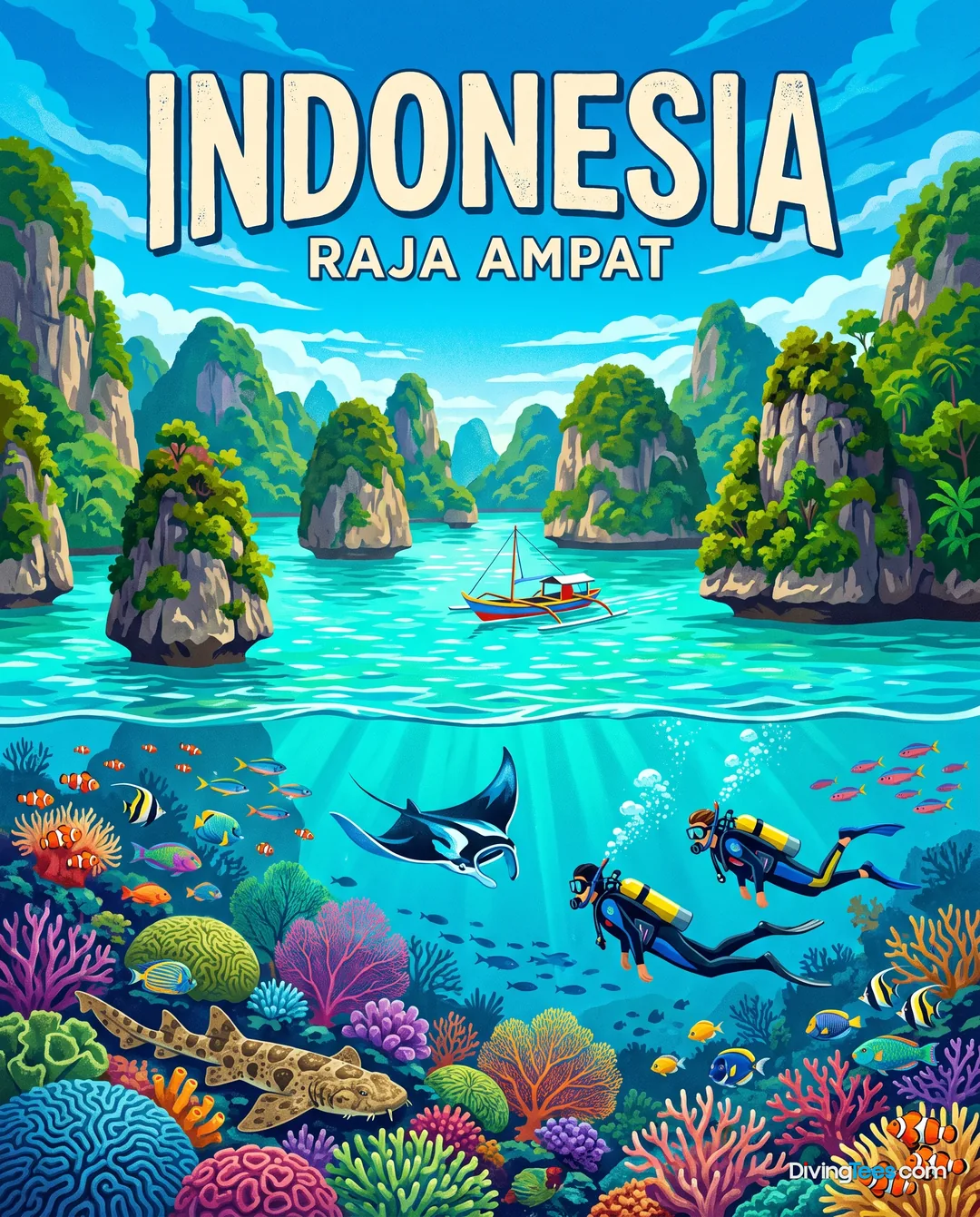
- Routes run year-round through Bali, Raja Ampat, Kaimana, Komodo, the Forgotten Islands, Banda Sea and Alor.
- Full board, non-alcoholic drinks, snacks, dinner wine and night dives are included; nitrox, rental equipment and massages are optional extras.
The invitation
Damai I suits divers who want Indonesia’s long crossings and remote sites without accepting the cramped feel of a small working boat. The vessel was designed around diving, not adapted to it later: the dive operation has its own shaded working area, tenders, camera facilities and space for technical and sidemount equipment. The guest count stays low enough for the crew to know who is entering the water and how each diver likes to work. That matters when the itinerary moves between reef walls, current-swept pinnacles, muck sites and pelagic cleaning stations. The choice is not only between cabins or destinations. It is between a boat that treats diving as the main event and one that merely carries divers to it.
Boarding
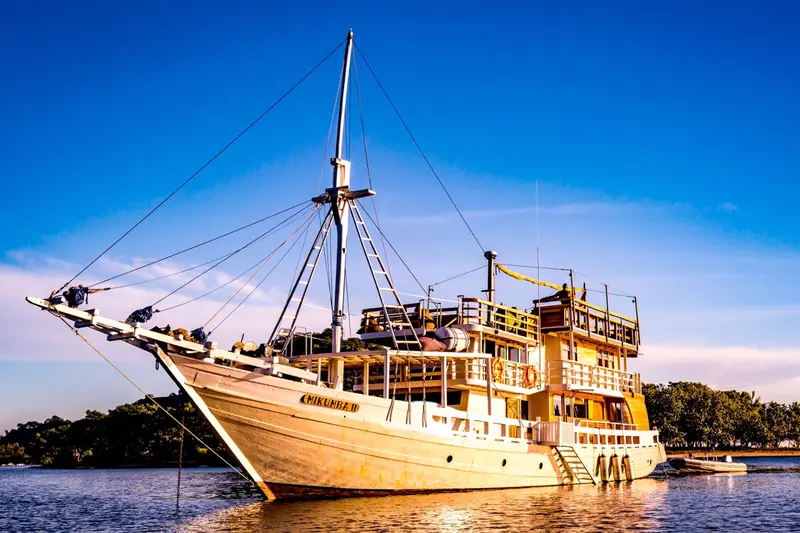
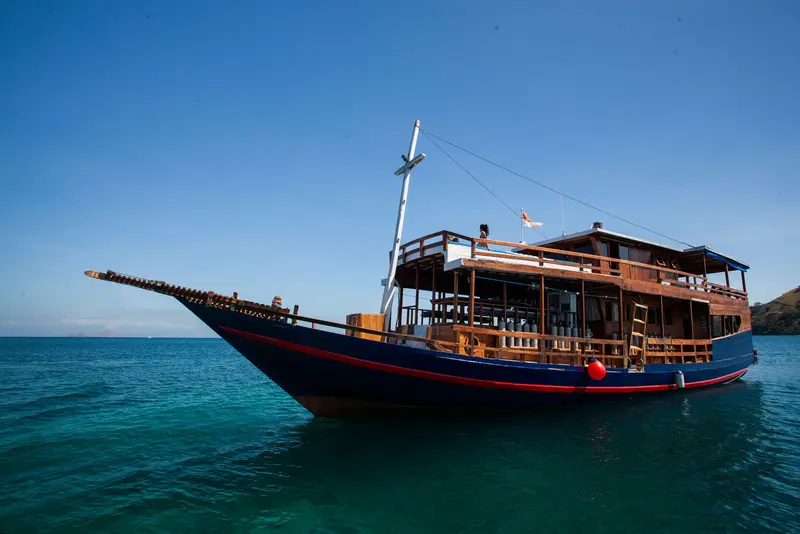
From the dock, Damai I presents as a substantial wooden liveaboard built for Indonesia’s open-water crossings rather than a converted yacht dressed up for a holiday. Ironwood is used in the structural work, giving the boat a solid, workmanlike character. Once aboard, the impression is less of a floating hotel than a carefully arranged dive vessel with enough room to step out of the traffic: an indoor air-conditioned lounge, open areas for meals and rest, and a dive setup kept apart from the living spaces. The boat’s broad proportions help explain why the interior feels composed even with a full group aboard. The engine, navigation equipment and working parts remain part of the vessel’s character, but the layout keeps the trip centred on getting divers safely to the next reef.
The atmosphere on board
Damai I has the feel of a small expedition group rather than a crowded resort. With few guests, the crew can keep track of individual divers, cameras and equipment without making the operation feel managed from a distance. The local and international crew speak six languages between them, which helps a mixed group settle quickly. Passenger feedback points to the people and the diving as the lasting strengths, while the food is singled out even more strongly. In the evening, the day’s encounters carry into the saloon: manta rays, currents, macro finds and the question of what the next site might bring. The crew’s role is practical and visible—moving the boat, preparing the dives, keeping meals going and making the complicated parts disappear—without turning the trip into a performance.
The sites you’ll dive
The sites change sharply with the route. In Bali, Manta Point reaches -40m and brings divers to manta cleaning stations, while Batu Kelebit drops to -60m around huge pinnacles rising from white sand, with pelagics, sharks, tuna and barracuda in the blue. Bias Tugel is a coral-covered slope to -30m where pygmy seahorses and Wally’s squat lobster reward slow searching. Gili Mimpang, Gili Biaha and Gili Tepekong each reach -40m: walls, an ancient volcanic blowhole and the current-prone Canyon bring white-tip sharks, mola mola and other pelagics. Tulamben’s Coral Garden reaches -30m and mixes natural and artificial reef with macro life; Crystal Bay reaches -45m and is known for mola mola, corals and a bat cave. Blue Corner and Jangka Point reach -30m, with strong current, sharks, eagle rays, turtles and a mangrove drift. In Raja Ampat, Manta Sandy is a cleaning-station encounter for reef mantas, while Mike’s Point reaches -40m through soft-coral overhangs, sweetlips, schooling fish and eagle rays. Kaimana adds Saruenus Island’s strong-current soft corals and wobbegongs, plus Bo’s Rainbow to -16m over coral-covered boulders and gentle sand slopes. Current departures include Raja Ampat loops of 8 or 12 days, Cenderawasih Bay/Mapia/Raja Ampat for 12 days, Triton Bay–Forgotten Islands–Alor for 15 days, Alor–Forgotten Islands for 10 days, and 12-day crossings linking Alor, Komodo and Bali or the Forgotten Islands, Banda Sea and Raja Ampat.
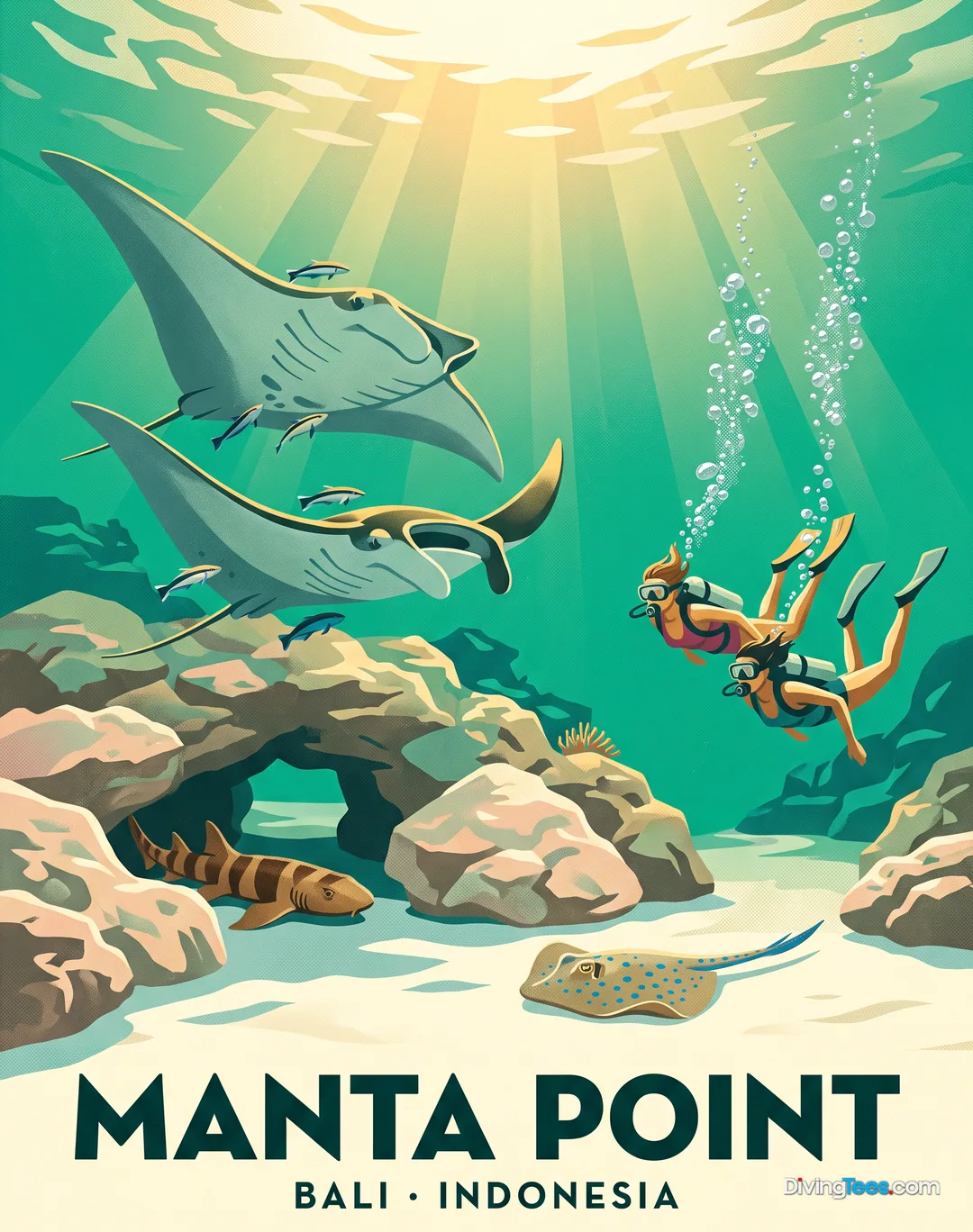
Manta Point →
Max. depth · 40 m
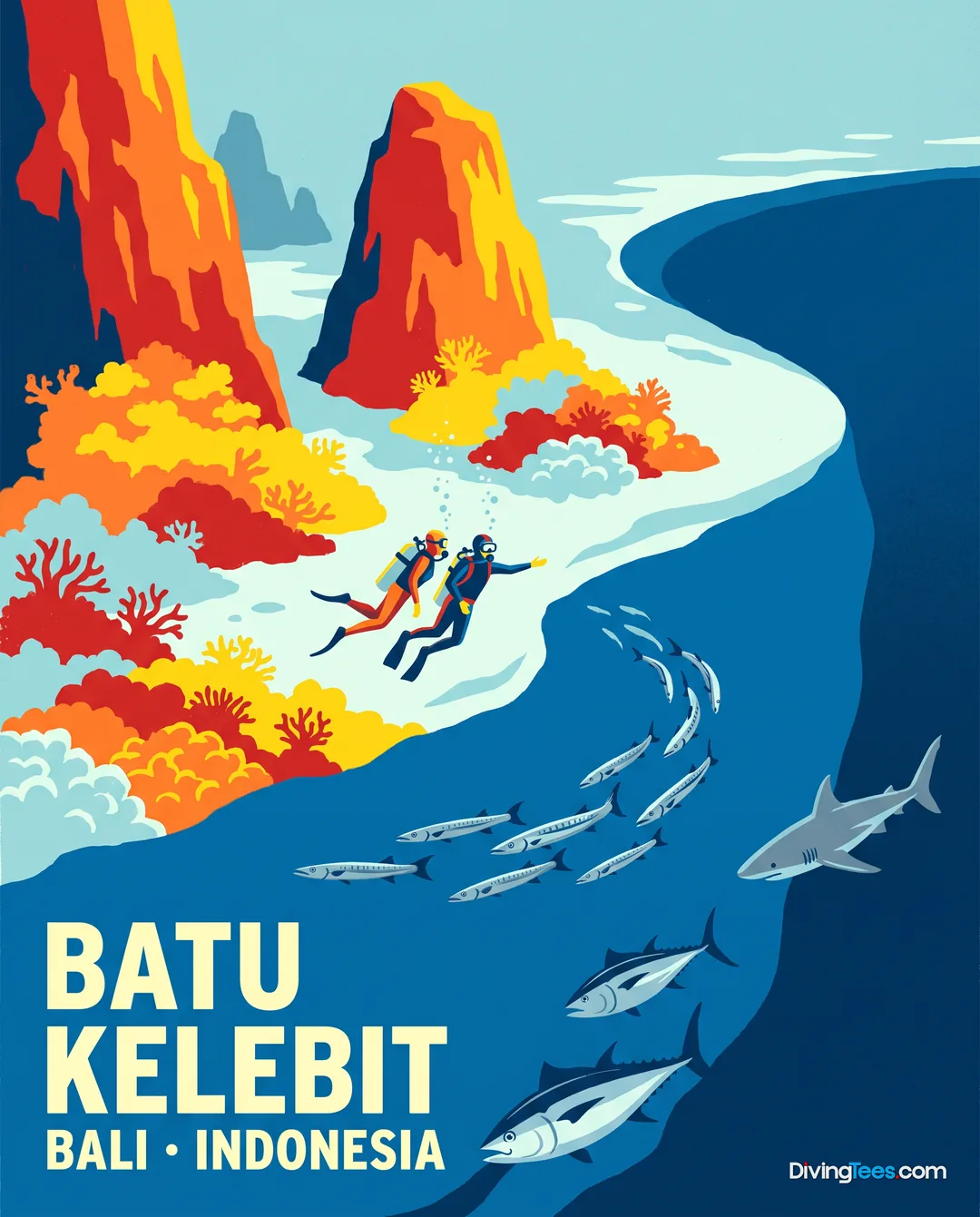
Batu Kelebit →
Max. depth · 60 m
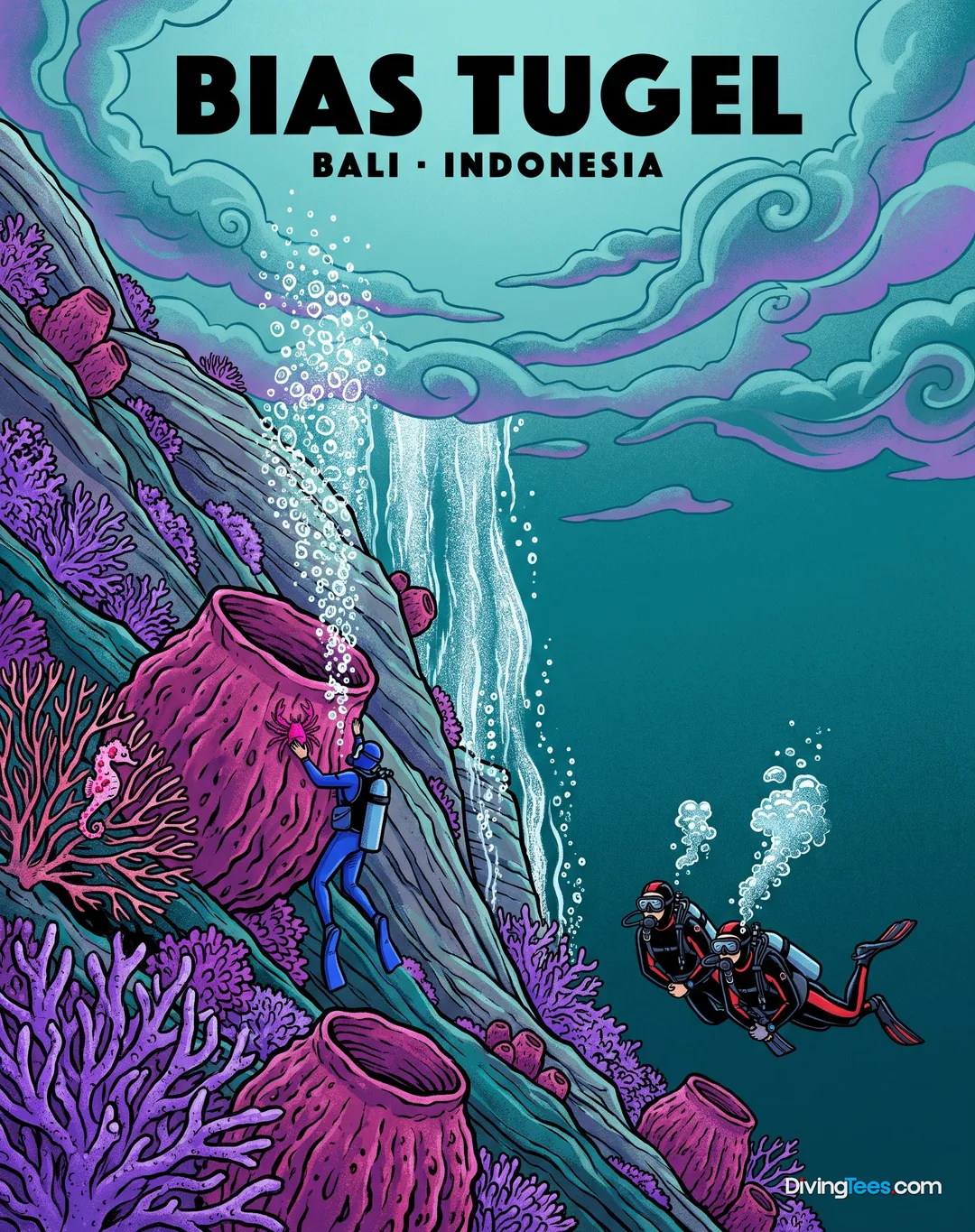
Bias Tugel →
Max. depth · 30 m
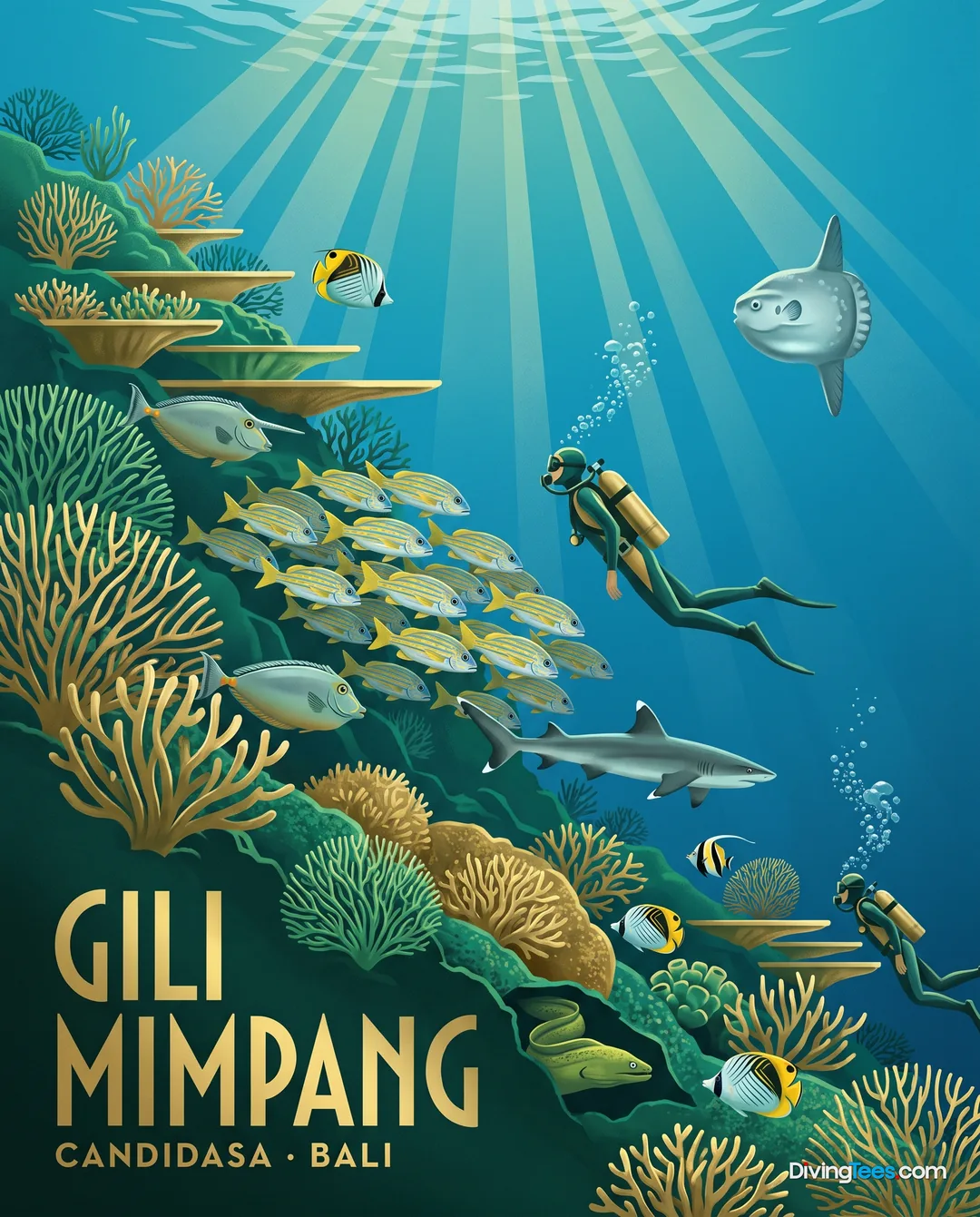
Gili Mimpang →
Max. depth · 40 m
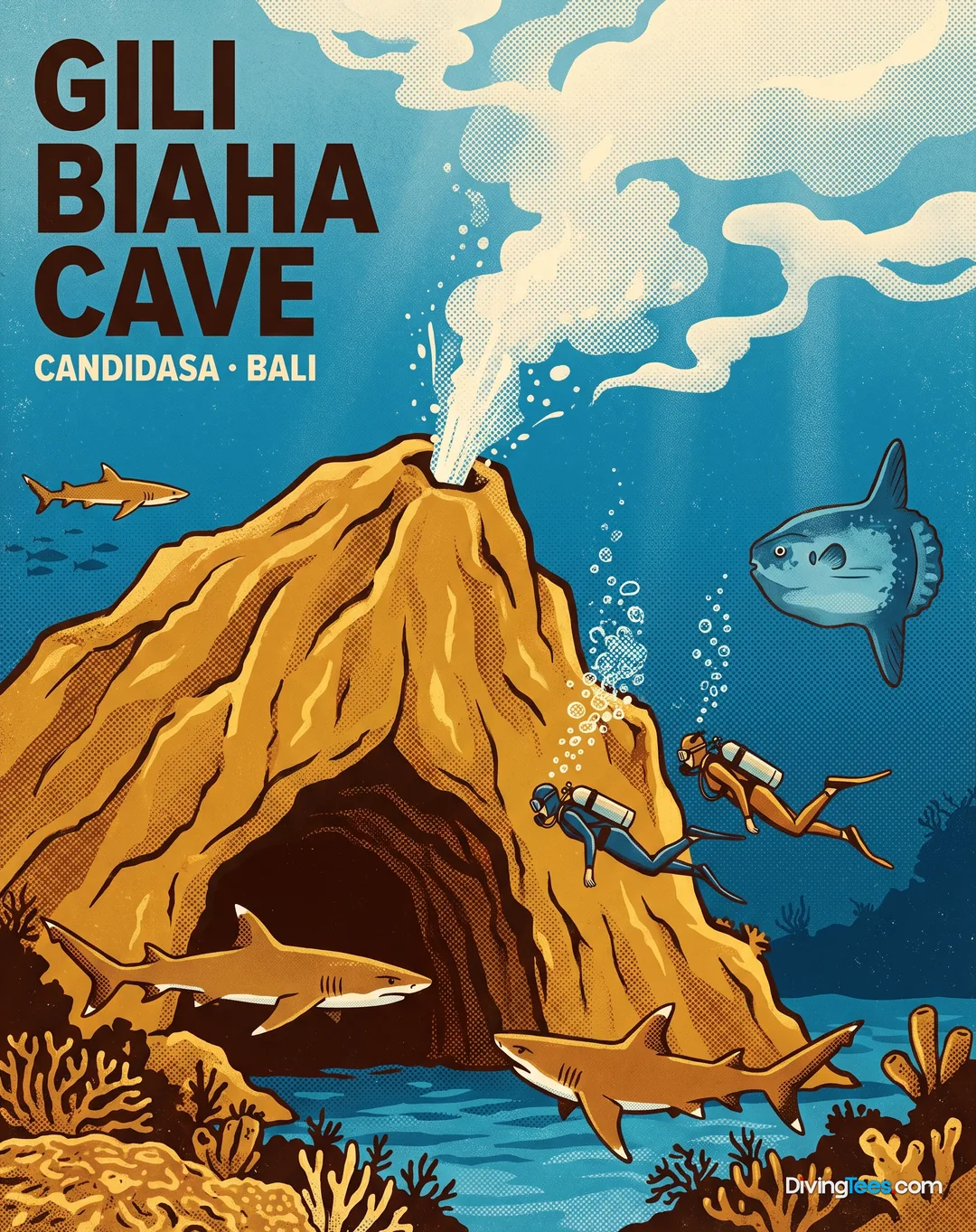
Gili Biaha →
Max. depth · 40 m
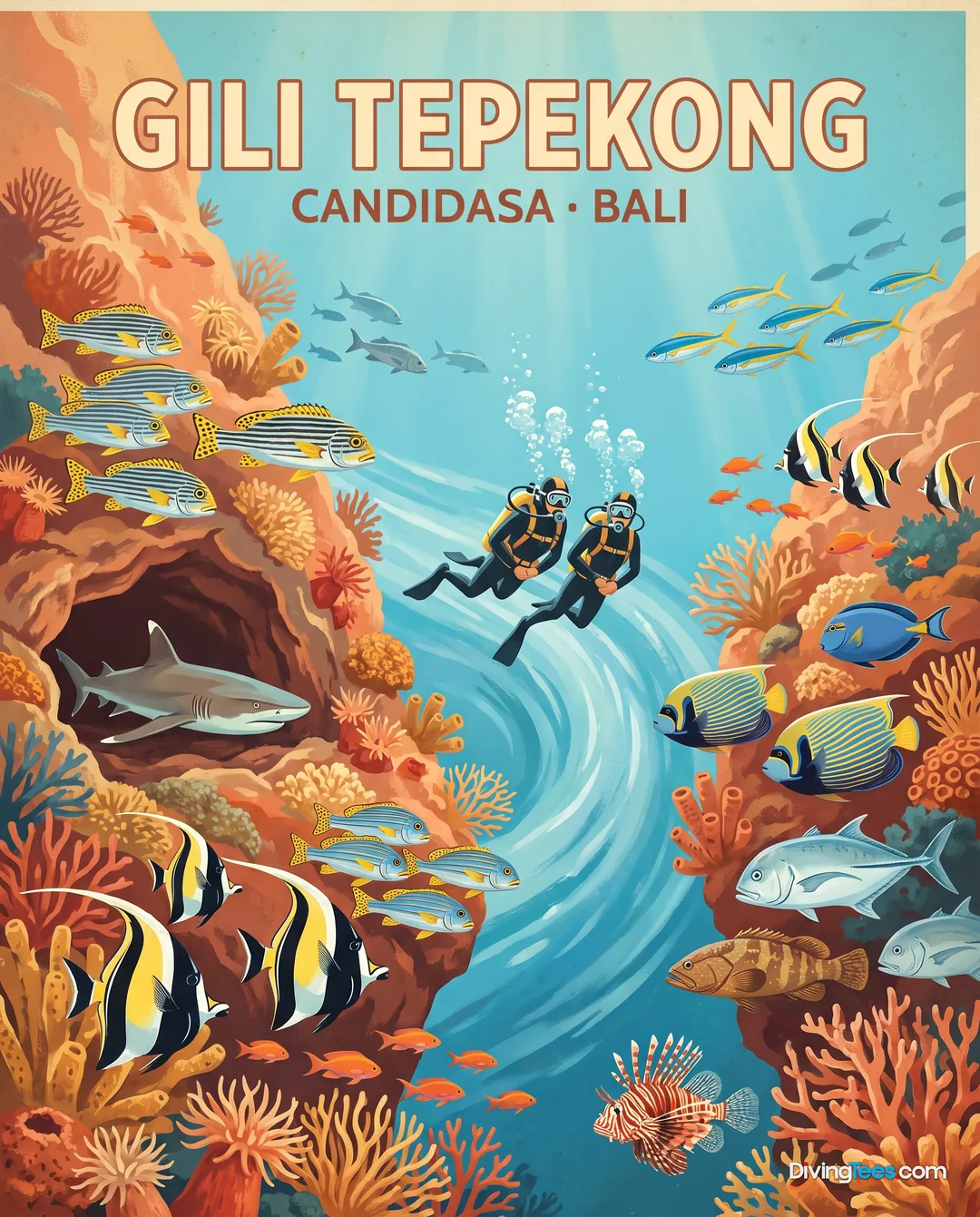
Gili Tepekong →
Max. depth · 40 m
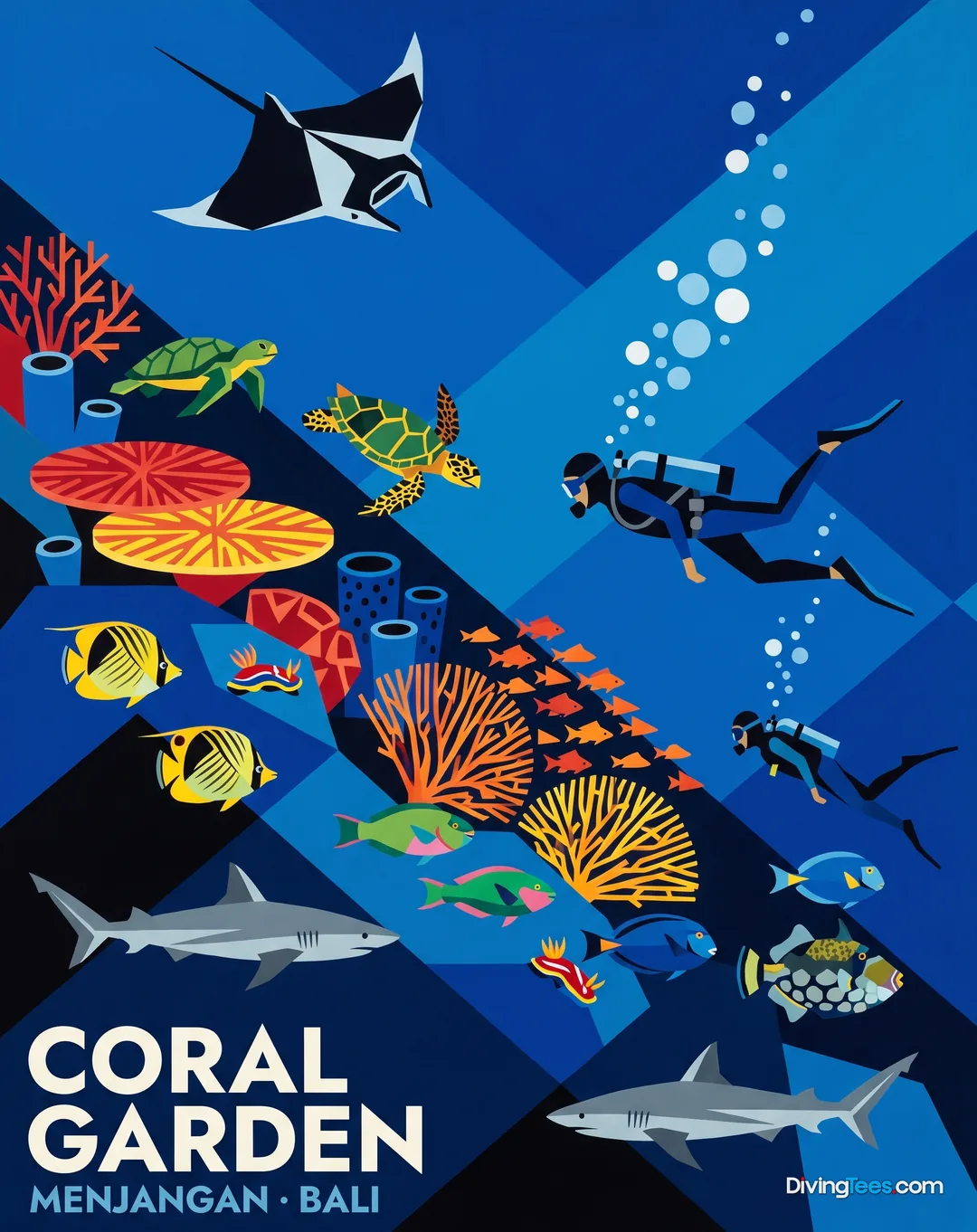
Coral Garden →
Max. depth · 28 m
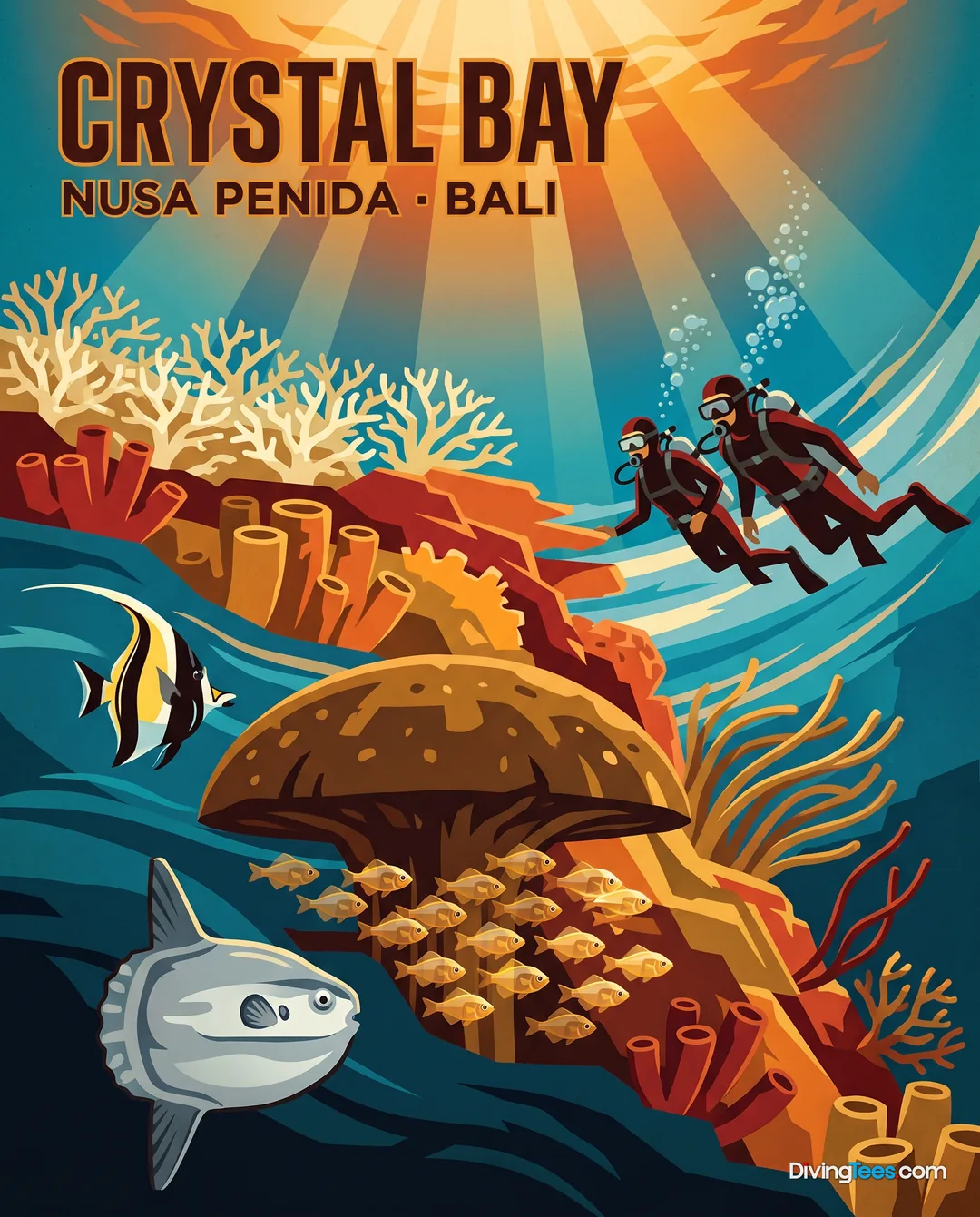
Crystal Bay →
Max. depth · 45 m
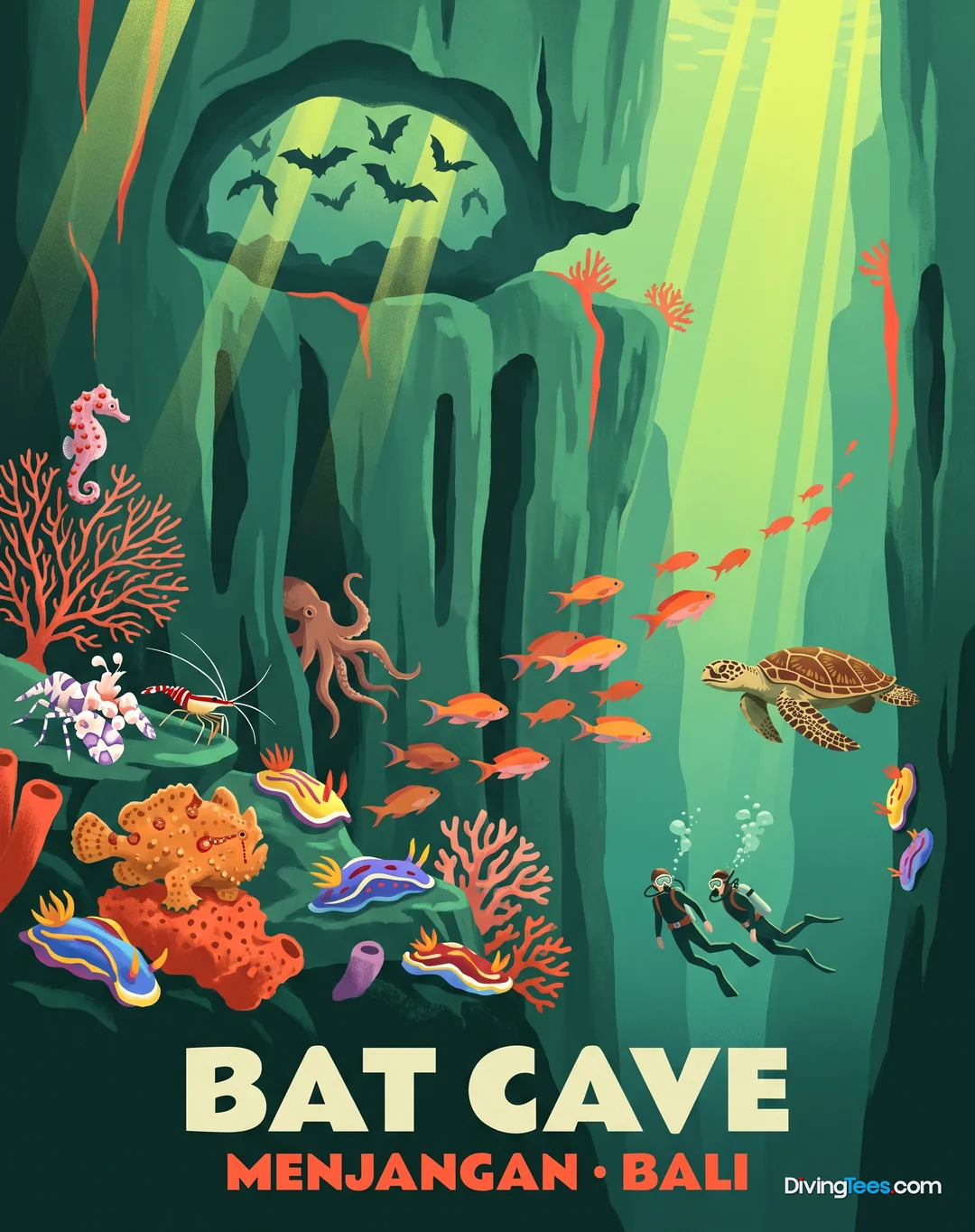
Bat Cave →
Max. depth · 35 m
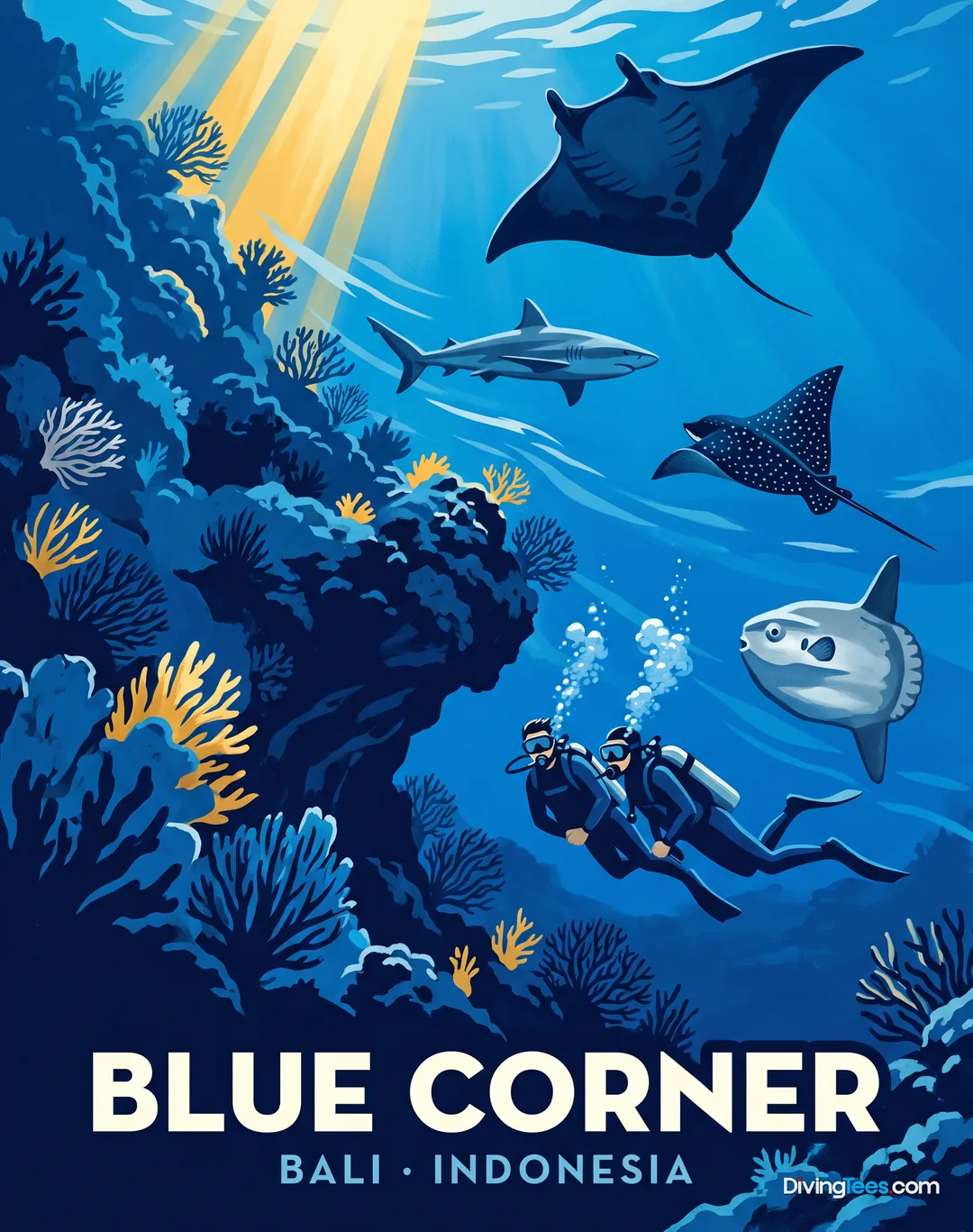
Blue Corner →
Max. depth · 30 m
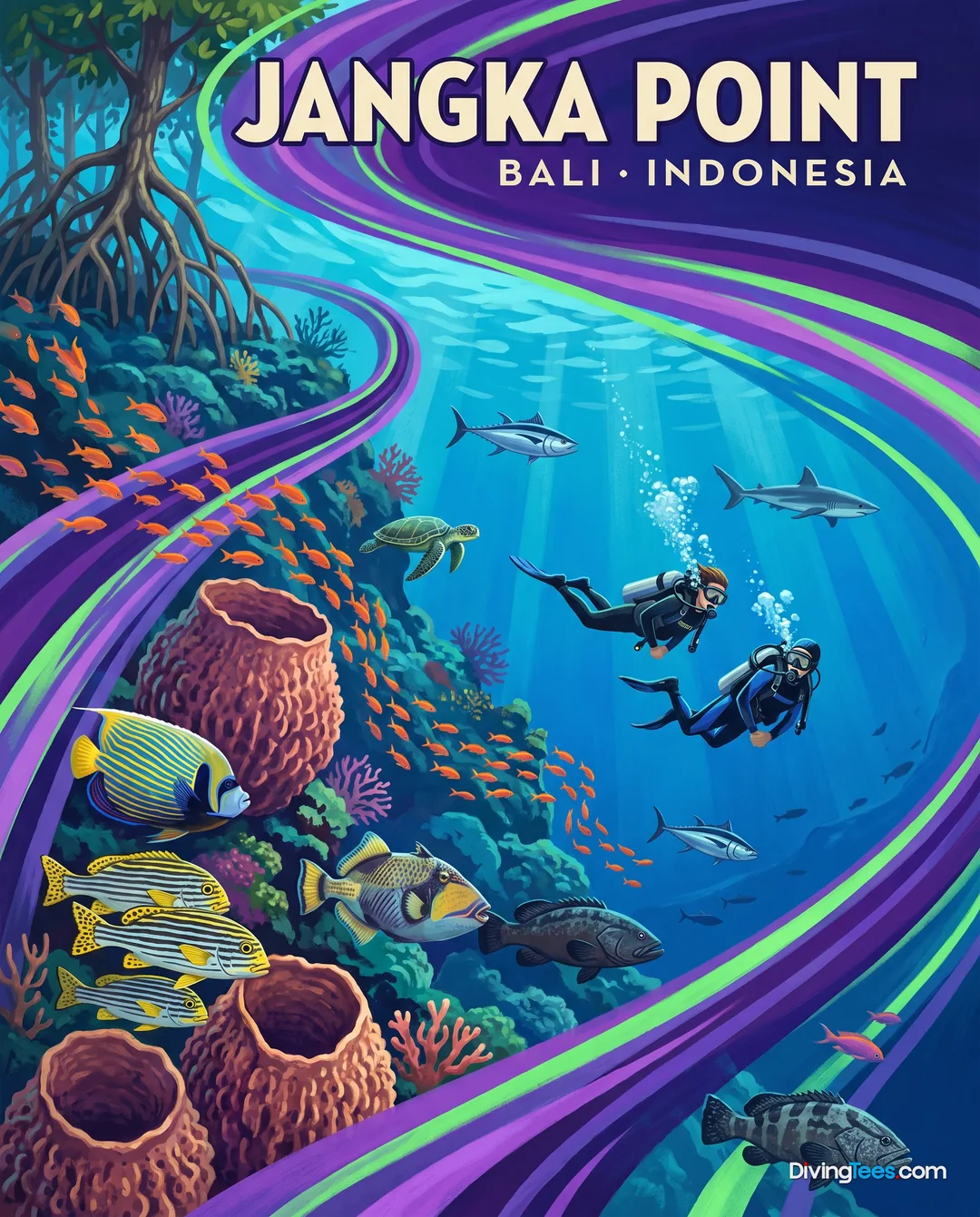
Jangka Point →
Max. depth · 30 m
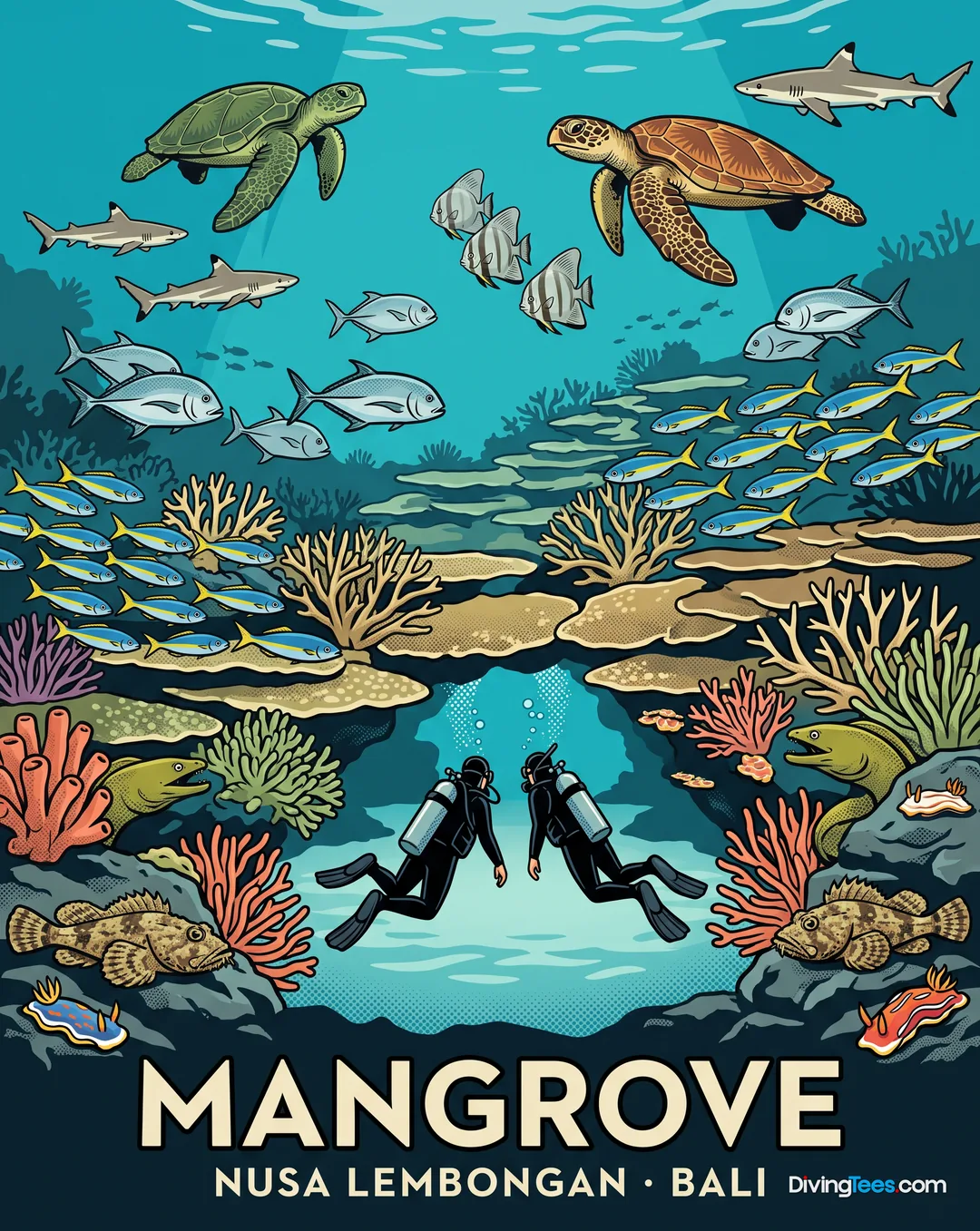
Mangrove →
Max. depth · 30 m
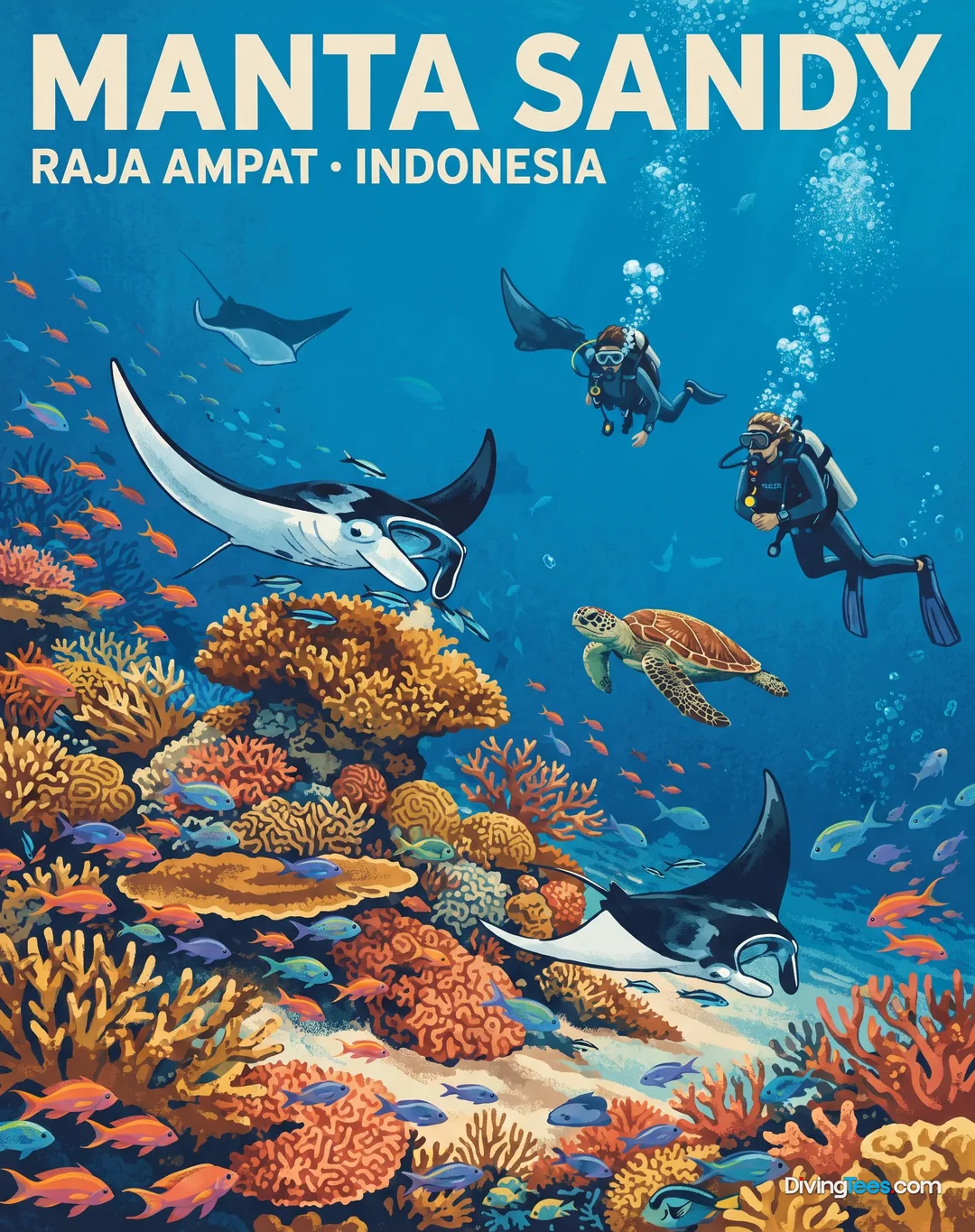
Manta Sandy →
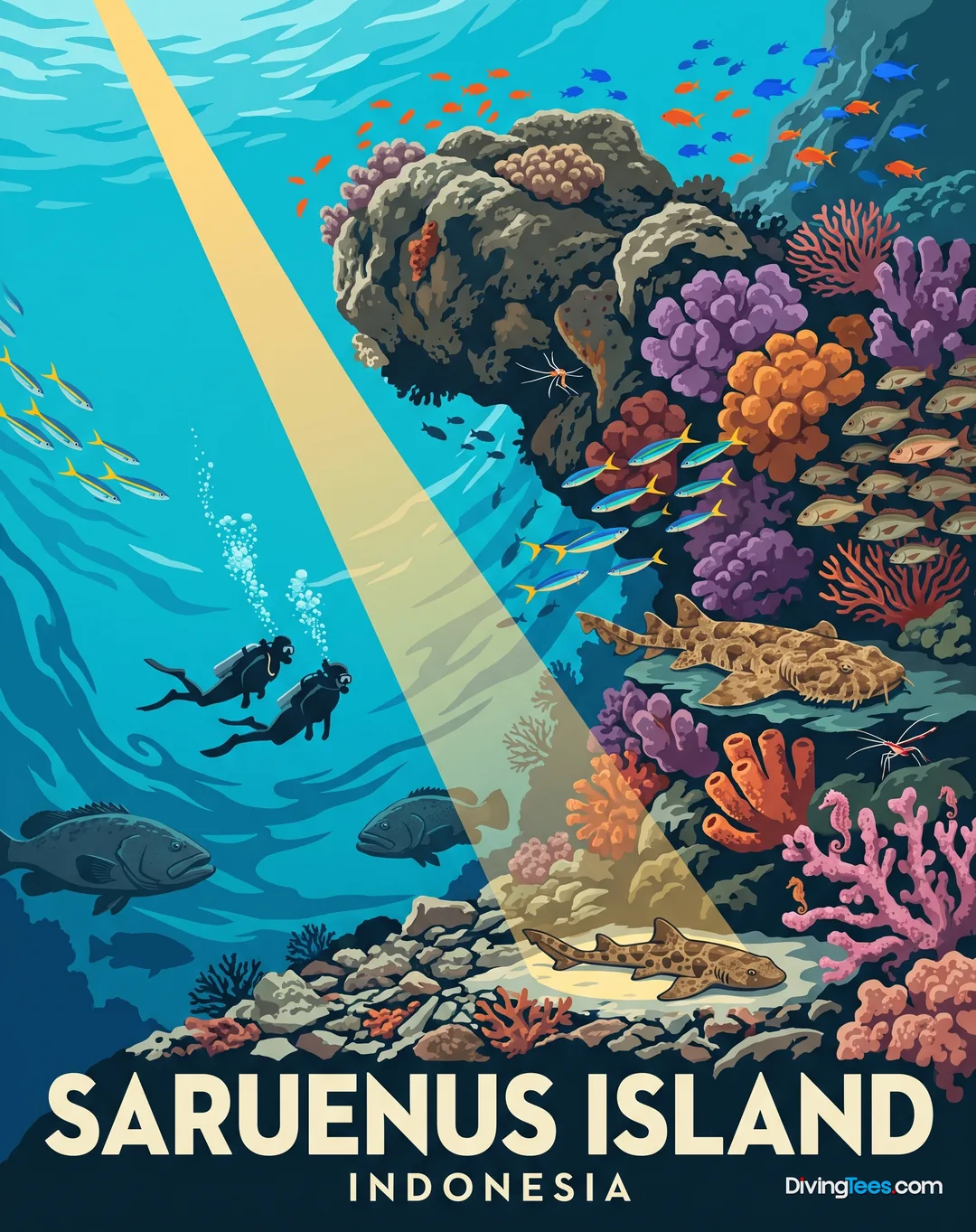
Saruenus Island →
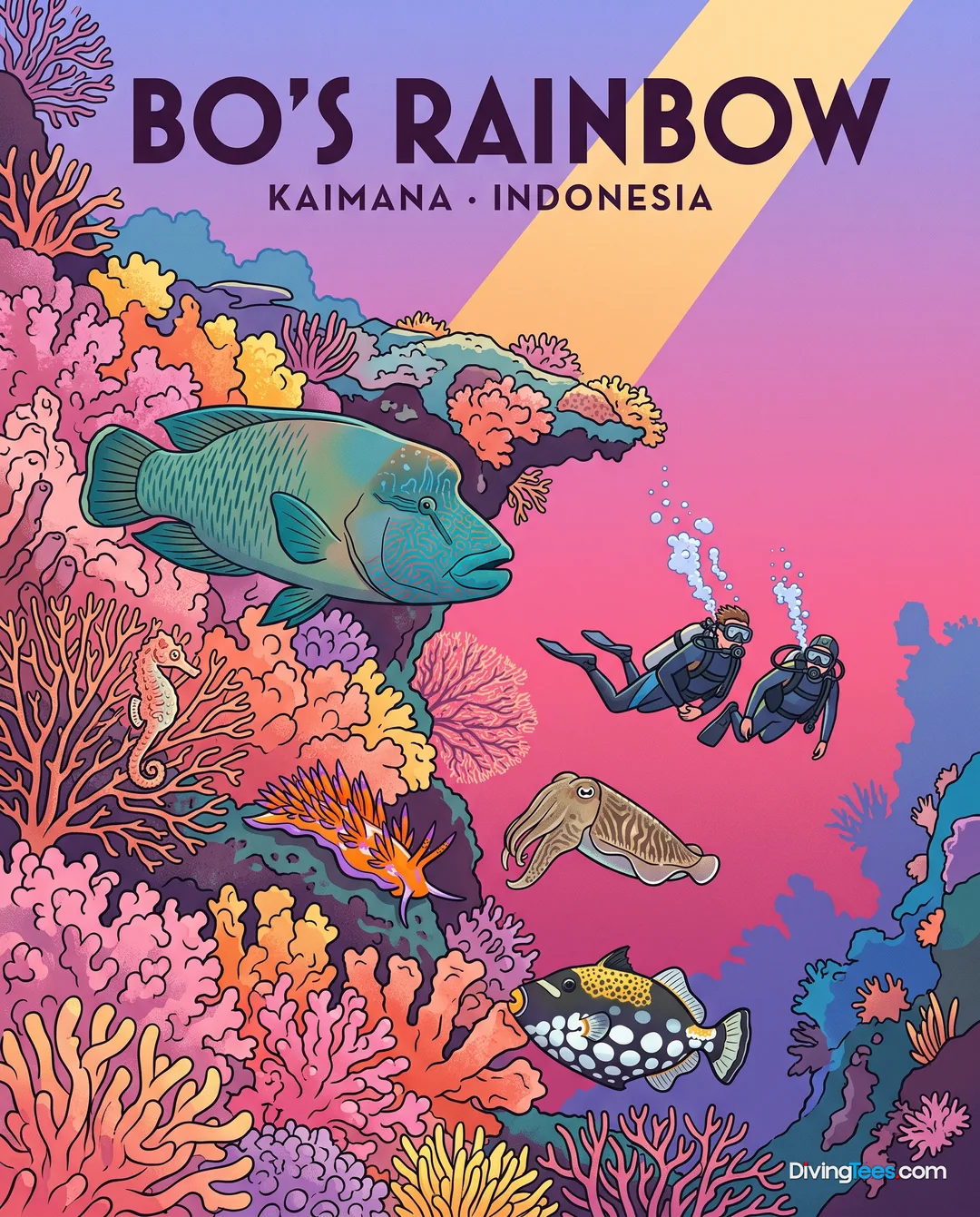
Bo’s Rainbow →
Max. depth · 16 m
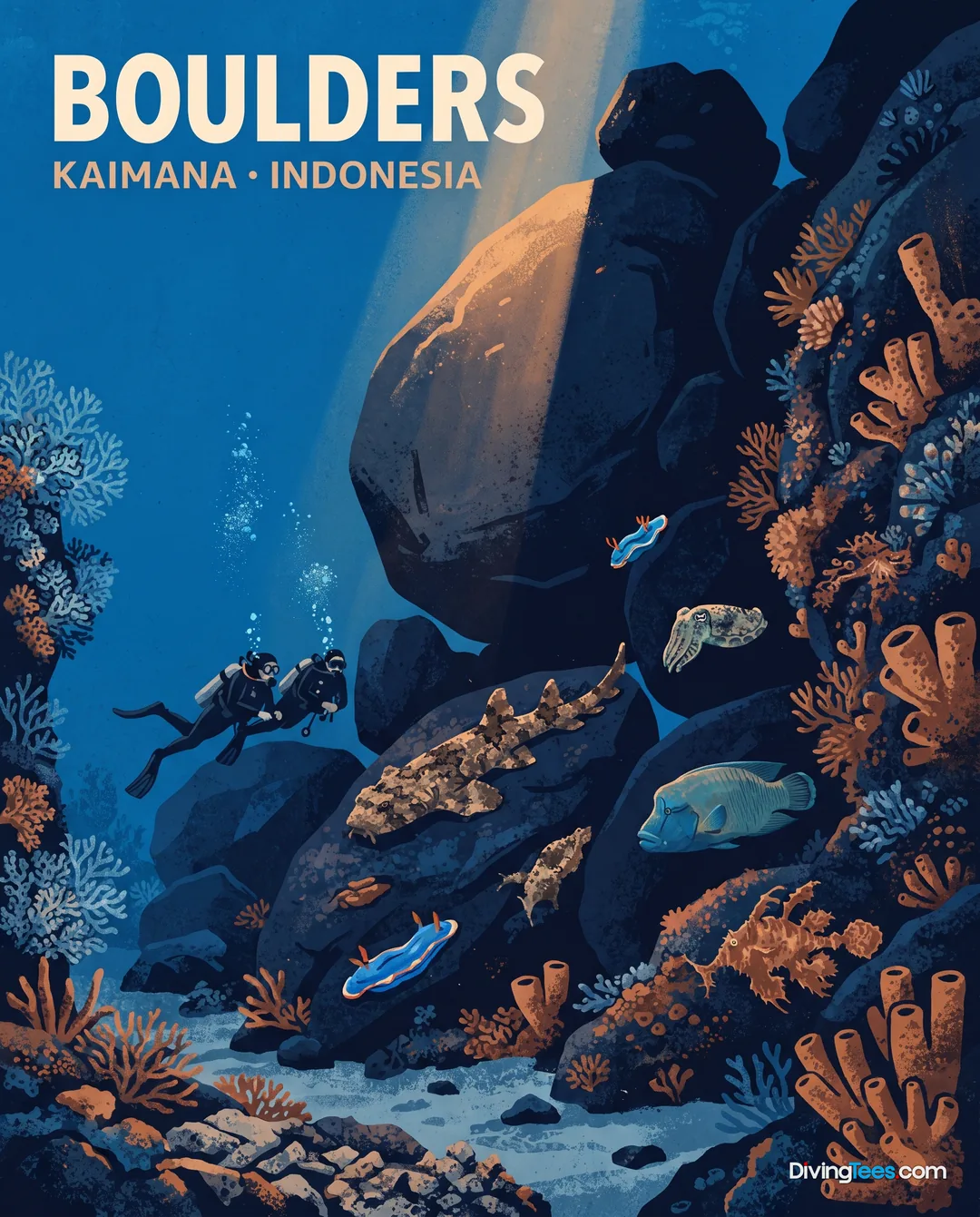
Boulders →
Itineraries, dates and prices
Prices per person. Each month shows its lowest price: click a month, or pick an itinerary.
Next departures · 3 departuresfrom £3,481$4,654€4,158
June 2027
June 2028
July 2028
See dates and prices
If you click these links and make a purchase on the partner site, DivingDeal may earn a commission, at no extra cost to you.
Dates and prices taken from Divebooker and liveaboard.com, updated 25 October 2026
What you’ll meet underwater
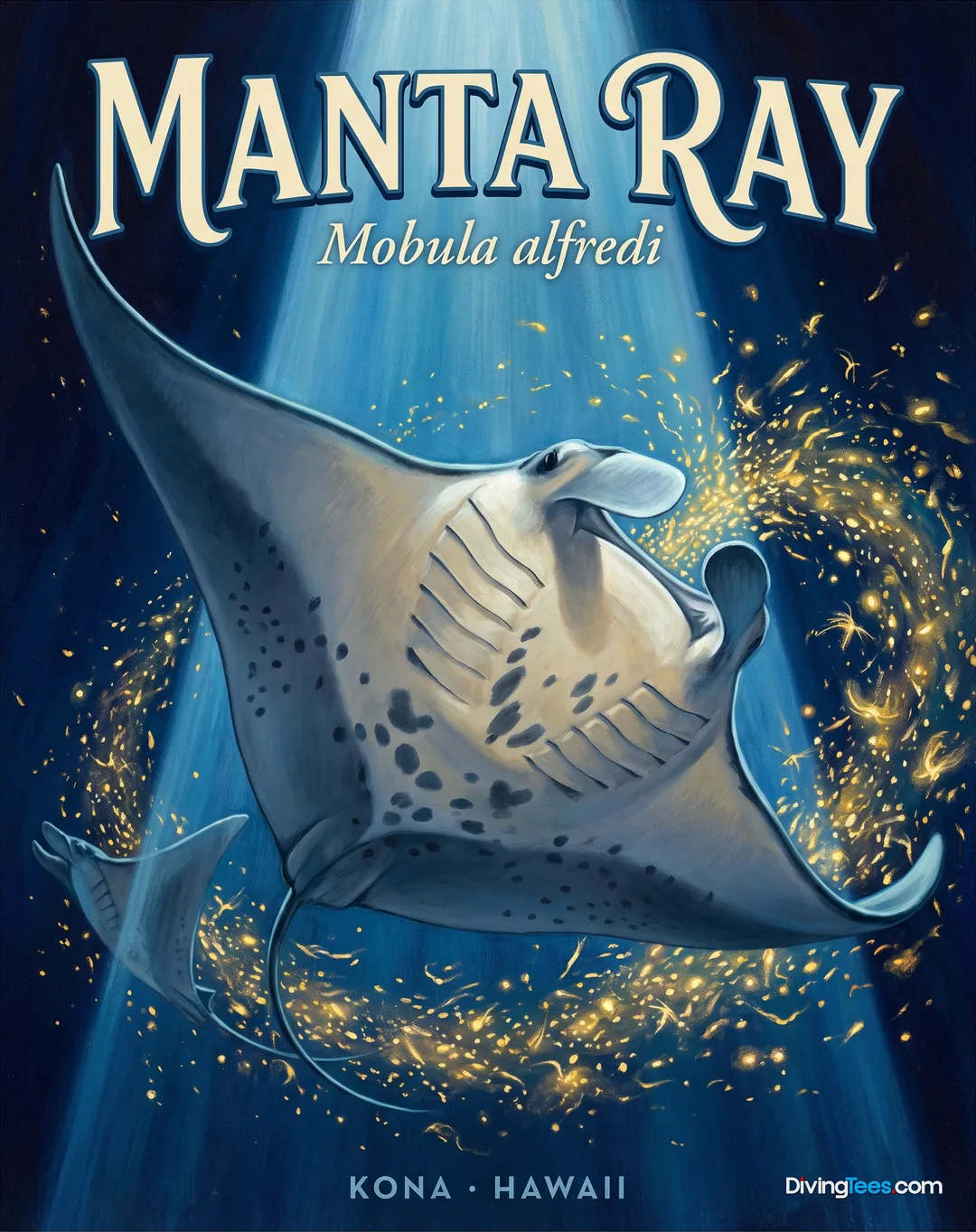
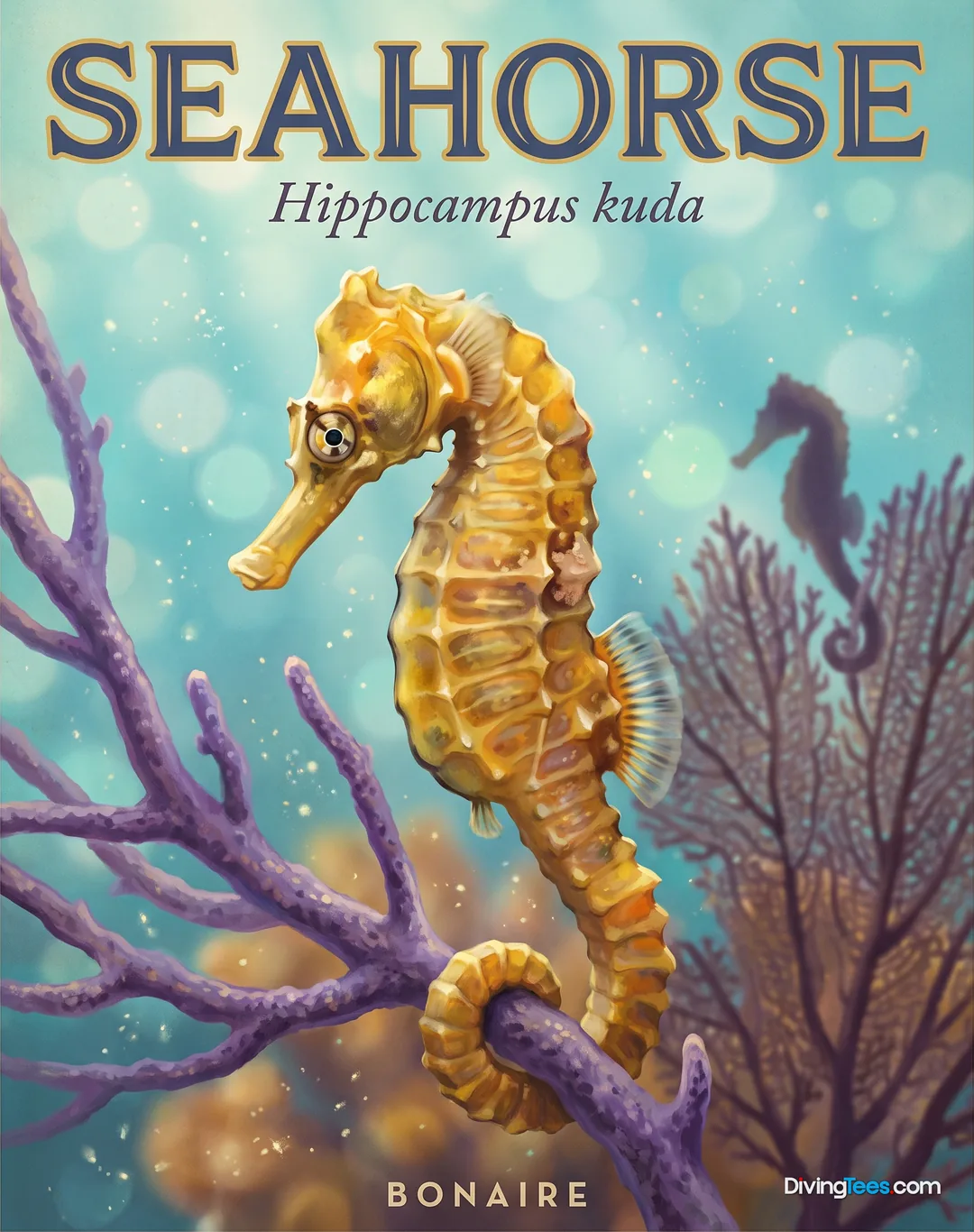
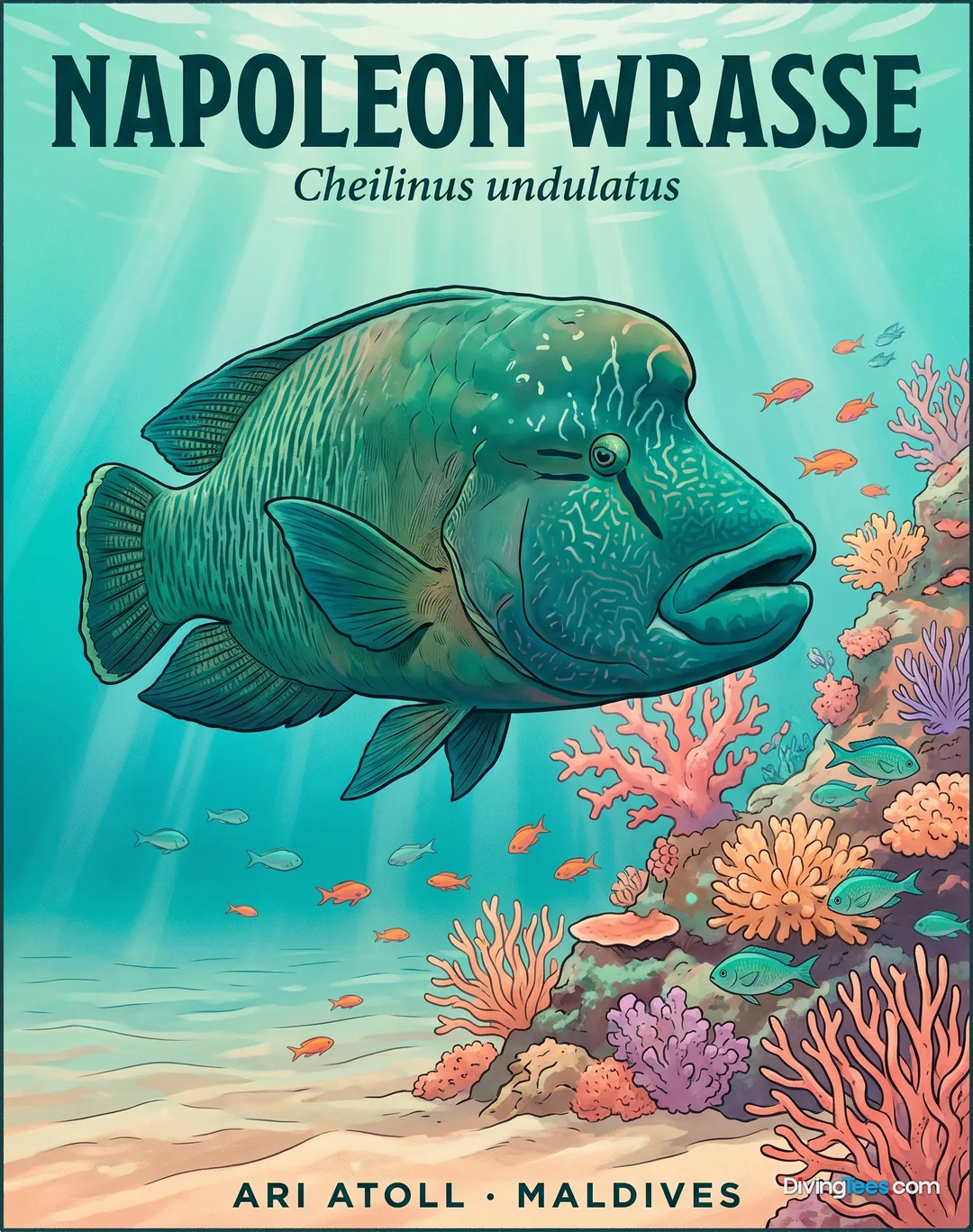
Across the route, the recurring spectacle is large life in moving water: reef sharks and turtles are recorded at nine sites, mola mola at seven, manta rays and nudibranchs at six or seven, and white-tip reef sharks at six. Barracuda, tuna, Napoleon wrasse, eagle rays, groupers and trevally add the scale, while pygmy seahorses keep the close-focus diver busy on suitable reefs. The reason to choose particular sites is often one animal in one setting. Manta Point and Manta Sandy bring mantas to cleaning stations; Blue Corner uses strong current to deliver pelagics, including sharks, eagle rays and mola mola. Crystal Bay is the only listed site for green turtles, garden eels, seahorses and squid. Coral Garden de Tulamben is the place for angelfish, triggerfish, eels and anemones among the mixed reef. Saruenus Island is the only listed site for giant grouper and Chromis, while Gili Biaha is the named site for lobster. None of these encounters is guaranteed, but the sites give the search a clear purpose.

Who puts you in the water
Dive groups are organised around a 4:1 diver-to-guide ratio, with three dive guides and one instructor on board, so briefings and in-water supervision can stay specific to the group rather than generic to the whole boat. The multilingual crew covers English, German, Spanish, Portuguese, Indonesian and Italian. That is useful on a route where a wall, a muck slope, a pinnacle and a current-swept corner may all require different briefings. The diving operation carries oxygen, first-aid kits and emergency communications including VHF, DSC, SSB, mobile and satellite phones, alongside radar, GPS and a locator beacon. Safety equipment includes life rafts, life jackets, fire alarms, extinguishers and flares.
The dive deck and the gear
The dive operation is built for more than standard recreational diving. Damai I has a shaded dive area, platform, rinse tanks, separate camera rinse tanks, charging stations and a dedicated camera room. DIN adaptors are available, and the boat supports technical, rebreather and sidemount diving. Nitrox is available as an optional extra, while rental equipment can also be arranged. Divers reach the sites from two Yamaha 40hp tenders, which take them out from the main vessel and collect them after the dive; the arrangement suits sites where the boat cannot sit directly over the entry or exit point. Oxygen and first-aid kits are carried on board. What is clear from the setup is that cameras, different equipment configurations and current work have been considered from the start, not added as an afterthought.
Between dives
Between dives, the boat gives divers several ways to get out of the working space. The shaded dive area is the practical refuge after a hot entry and a long surface interval; the open terrace, observation deck and outdoor dining area are for air and daylight. The air-conditioned lounge and indoor saloon make sense when the sun is too strong or the boat is underway. There is also a photo area and camera room for the people who need to download, rinse and work before the next briefing. A spa and massage service are available for those who want recovery to be part of the trip. On longer crossings, that separation between dive work, quiet, and shared space is what keeps the boat comfortable.
A day on board
A normal itinerary day is built around three dives, with the first briefing and entry setting the shape of everything that follows. Divers return to food, shade, water and camera work before the next descent, then repeat the process through the day as the boat moves between islands or settles over a reef. On some routes the boat begins with easy orientation dives, then progresses through walls, pinnacles, muck slopes and current sites as the geography changes. Night dives are included, adding a second kind of day when the reef changes character and the focus shifts to hunting creatures and small life after dark. Meals and snacks mark the surface intervals more reliably than a clock: dive, recover, eat, prepare, and go again. The exact first-dive time can shift where local permission is required, so the order is fixed more often than the hour.
What you eat aboard
Meals combine local Indonesian cooking with Western dishes, and vegetarian and vegan options are available. Full board covers the meals, while snacks remain available through the day for the gaps between dives. Non-alcoholic drinks, water, tea and coffee are included; beer and wine are available, with wine included at dinner. The food is not an afterthought to the diving: it has the strongest passenger score on the boat. That matters on a route built around three scheduled dives a day, with the possibility of a night dive. The table becomes the place where divers refuel, compare sightings and get ready to do it again, rather than a formal dining room that interrupts the day.
Nights at sea
The seven cabins range from standard rooms to two larger master cabins, with single, twin and double configurations. All have air-conditioning, a private toilet and shower; some have accessible balconies and sea views. The larger rooms give two people genuine breathing space, while the standard cabins are designed for living aboard rather than simply sleeping between dives. The useful detail is the private bathroom after a current-heavy dive, when nobody wants to queue for a shared shower. A desk, wardrobe and reading lights make the cabin workable for a longer route, and the enclosed shower area keeps the rest of the room dry. At night, the cabin is a quiet retreat from the saloon and dive deck, with the boat’s movement reminding you that the next site may be far from the last one.
Standard Cabin 1
Standard Cabin 2
Standard Cabin 3
Standard Cabin 4
Master Cabin 5
Master Cabin 6
Standard Cabin 7
What to know before boarding
Departure and return ports depend on the route: listed itineraries include Sorong, Nabire, Kaimana, Kupang, Saumlaki, Labuan Bajo and Benoa. Airport and hotel transfers are included, with the pickup and meeting arrangements communicated for the specific trip. Arriving in the departure town the night before is the sensible choice, especially on routes beginning in remote ports or involving a domestic connection. Return transfers take guests to the airport at the end of the cruise where the itinerary specifies it.
Deck plan
- Year built
- 2009
- Length
- 40 m
- Beam
- 8 m
- Maximum number of passengers
- 12
- Number of cabins
- 7
- Number of bathrooms
- 7
- Engines
- Mitsubishi 10M20-OA - 520 hp
- Cruising speed
- 6 knots
- Tenders
- 2 × Yamaha 40 hp
- Website
- dive-damai.com ↗
Hello, I'm Marina, DivingDeal.com's AI assistant. I answer in detail about hotels, dive centres and liveaboards.
Thinking about the whole trip and the flights? Talk it over with Edith →
Marina is an AI. Some links are affiliate links: DivingDeal may earn a commission, at no extra cost to you. Bookings are made with the partner.