Liveaboards · Indonesia
Mutiara Laut — a hand-built Indonesian schooner for serious exploration
What makes this boat unique
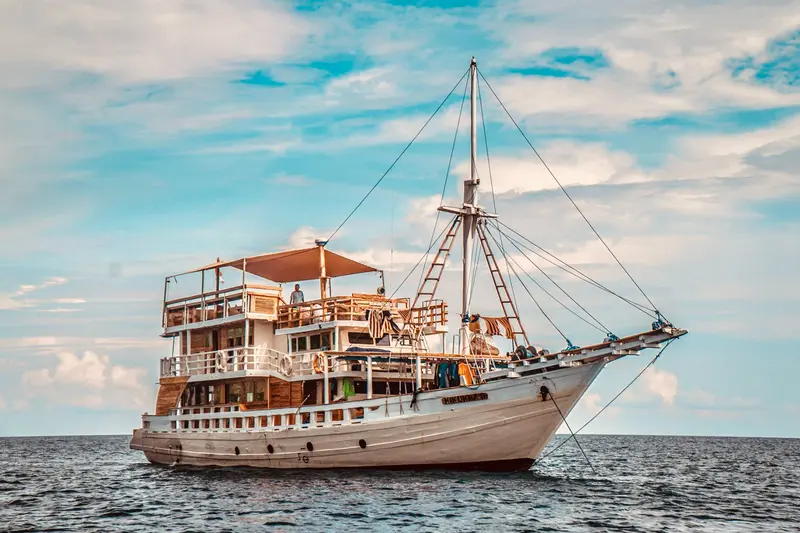
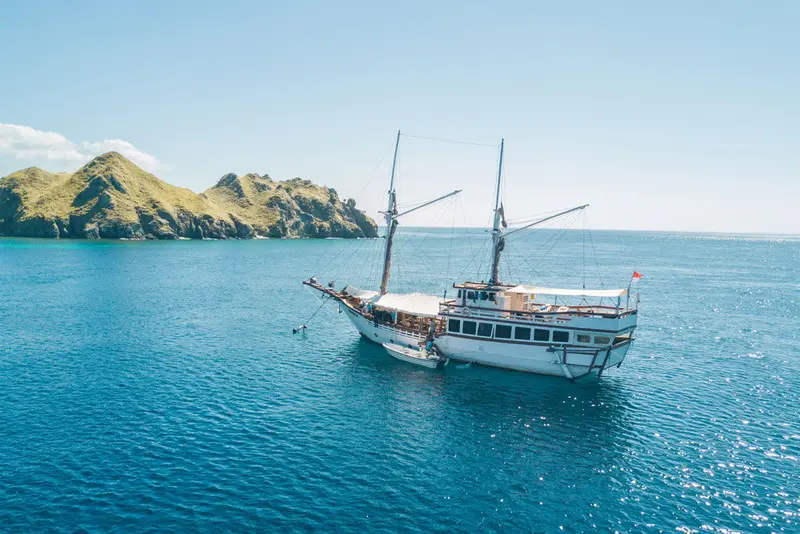
- A 46-metre sailing yacht combining the lines of an 18th-century North Atlantic schooner with Indonesian phinisi craftsmanship.
- Seven cabins accommodate up to 14 passengers, with private bathrooms and air conditioning throughout.
- The dive setup includes nitrox, DIN adapters, rinse tanks and two diver tenders.
- Recorded voyages include 5- and 6-day Komodo trips and a 10-day Komodo–Alor expedition.
For subtitles in English: start the video firstthen click the gearat the top right of the video, select “Subtitles/CC”, then “Auto-translate” and choose “English”.
The invitation
Mutiara Laut is for divers who want the Indonesian archipelago to remain part of the trip, not just the view from a cabin. Her character comes from the meeting of two traditions: a British schooner profile and the hand-built woodwork of Sulawesi’s phinisi boats. The result is a sailing yacht that can take the long way between reefs, remote islands and villages, while still giving the voyage the practical shape of a dive liveaboard. Komodo is the main draw in the recorded departures, with a longer route continuing to Alor. That matters because the diving changes as the boat moves east: current-swept pinnacles and pelagics in Komodo, then walls, caverns and high-current sites around Alor. The boat also suits mixed groups. Non-divers and snorkellers are welcome, and the crew can fill surface hours with kayaks, stand-up paddleboards, shore excursions and island activities. The reason to choose Mutiara Laut is not a resort imitation at sea. It is the combination of a real sailing identity, a small passenger group and access to Indonesian routes that reward time on the water.
Boarding
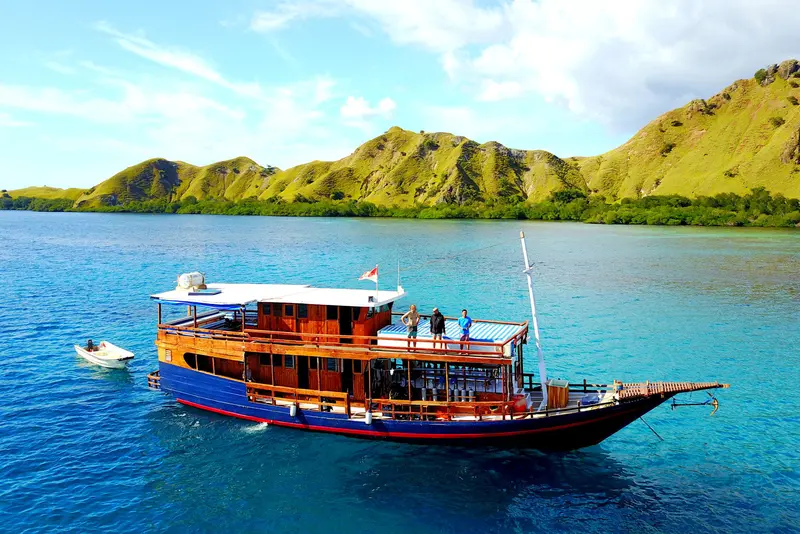
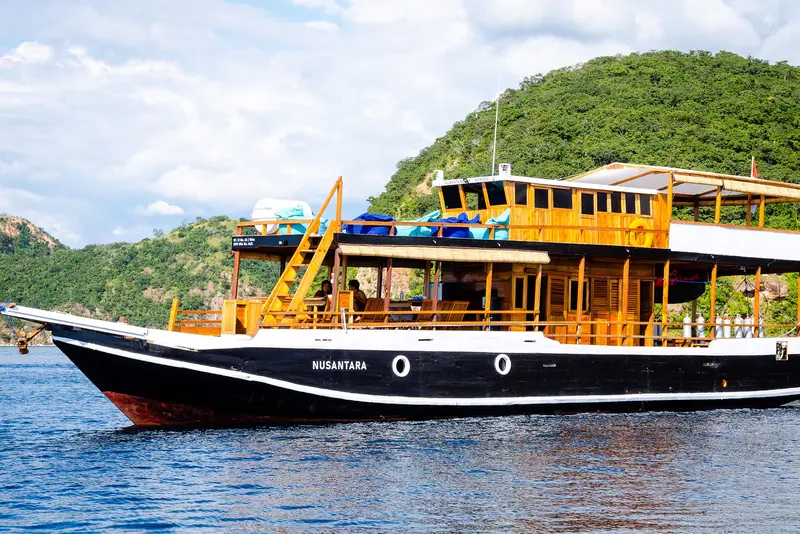
From the dock, Mutiara Laut reads as a working sailing vessel before she reads as a luxury yacht. Her dark traditional wood, broad teak decks and schooner rig give her a presence that newer motor liveaboards do not have. The design joins an 18th-century North Atlantic schooner with the construction traditions of Sulawesi, so the boat feels rooted in Indonesia rather than decorated with a generic nautical theme. She was built in 2009 and renovated in 2023; that recent work supports the contrast visible in the concept: traditional materials and lines, with modern comfort inside. Once aboard, the deck gives the group room to spread out for meals, sun and briefings, while indoor areas provide air conditioning when the tropical heat builds. The boat is made to sail, with more than 850 square metres of sail area, but the voyage is not sold as a sailing lesson. The pleasure is simpler: leaving the engine-led routine behind when conditions allow, hearing the rig work, and watching islands arrive slowly instead of being reduced to a transfer between dive sites.
The atmosphere on board
The atmosphere is shaped less by formal luxury than by the crew’s habit of noticing what needs doing. Divers describe a staff that handles small requests quickly and keeps the service warm without making the boat feel staged. With a crew-to-passenger ratio close to one, the group is looked after closely during meals, transfers, shore time and diving. That support is particularly useful on a vessel where the day moves between wet gear, tenders, decks and cabins. The crew speaks English and Indonesian, and many crew members have been part of Mutiara Laut’s story for years. That continuity gives the boat a settled feel: people learn names, preferences and the pace at which each guest wants to be helped. In the evening, the focus can shift from the day’s dives to dinner outside, a beach barbecue, audio or video entertainment, or simply conversation in the saloon. Passengers come away remembering the people because the crew is present throughout the voyage, not only at check-in and mealtimes.
The sites you’ll dive
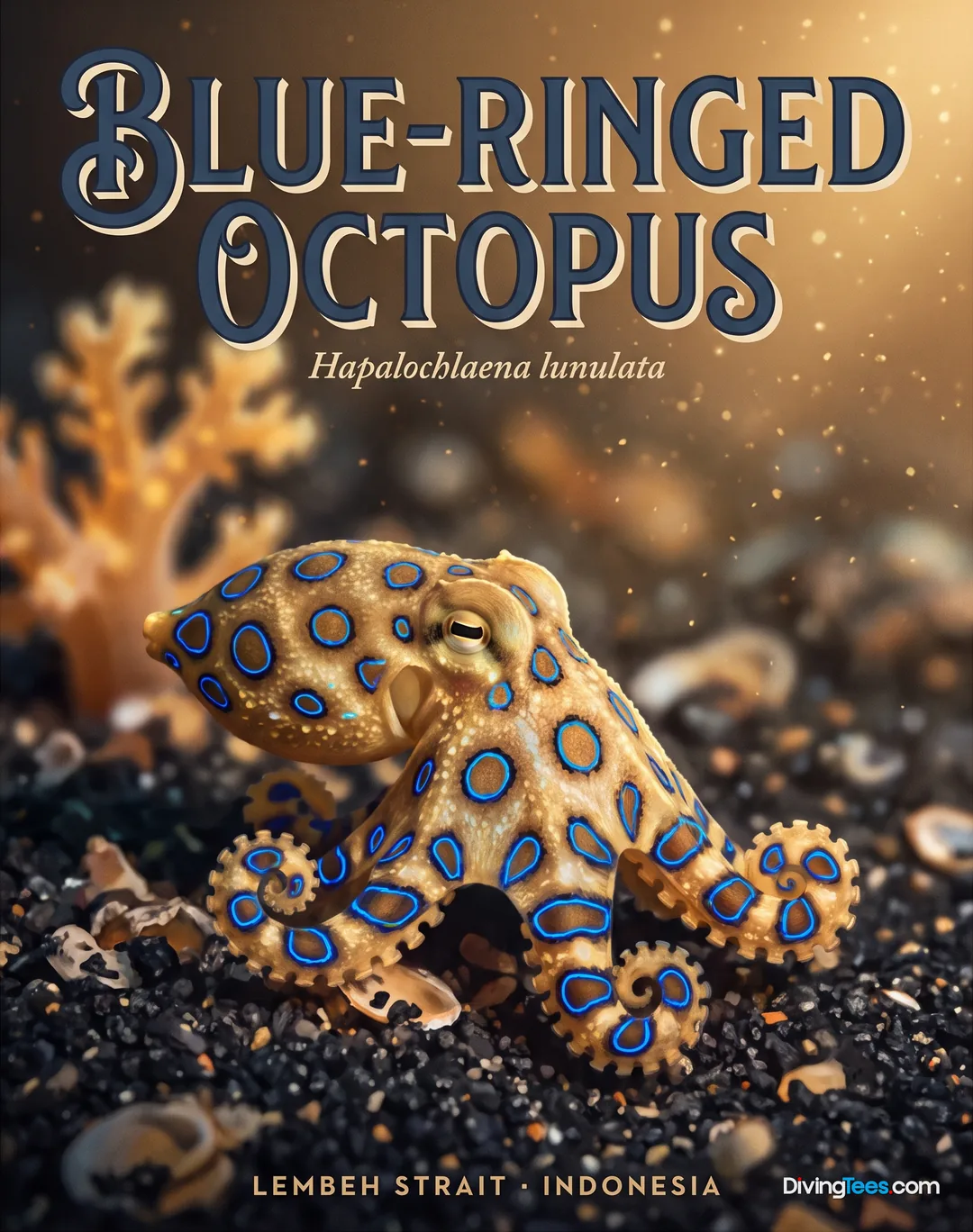
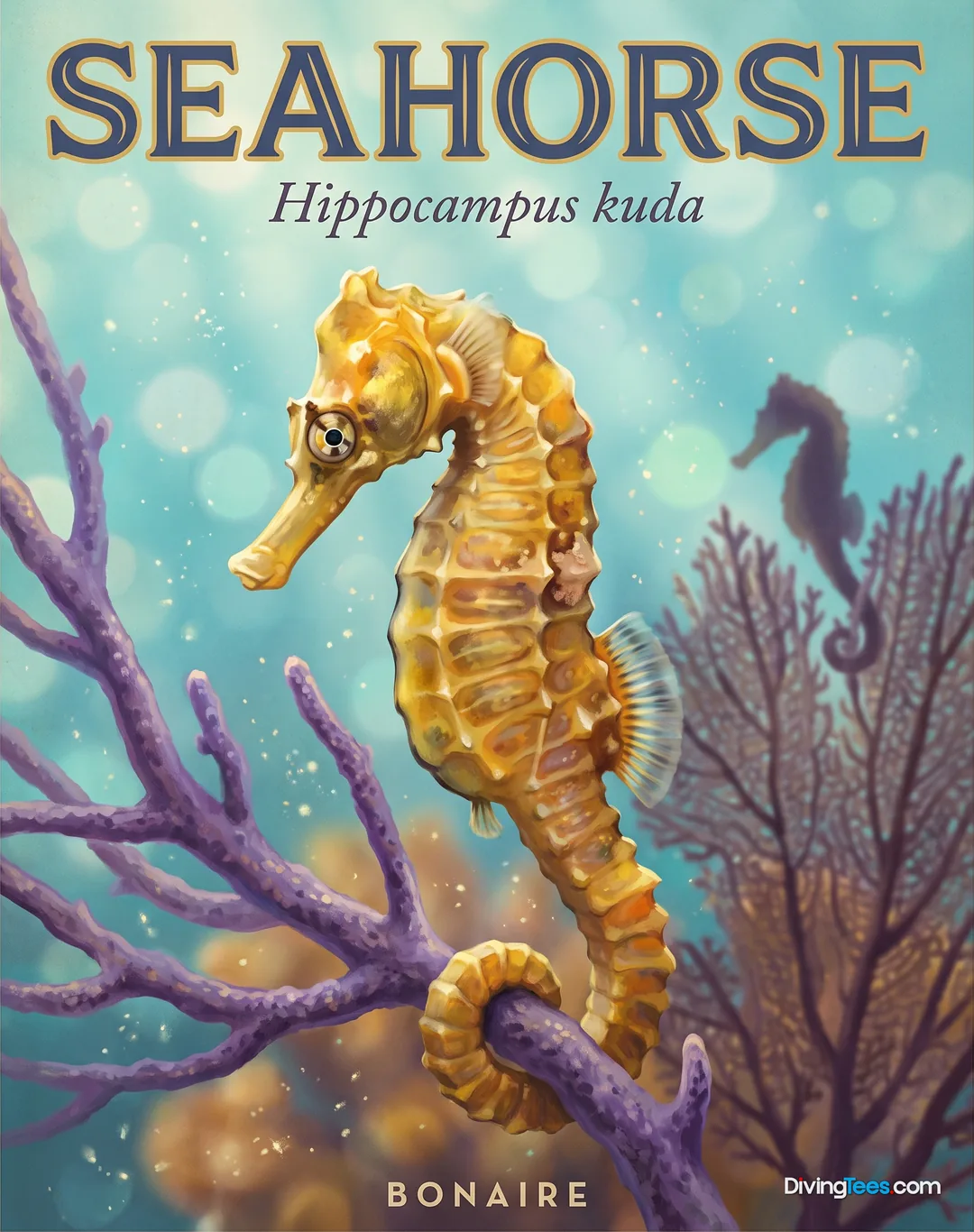
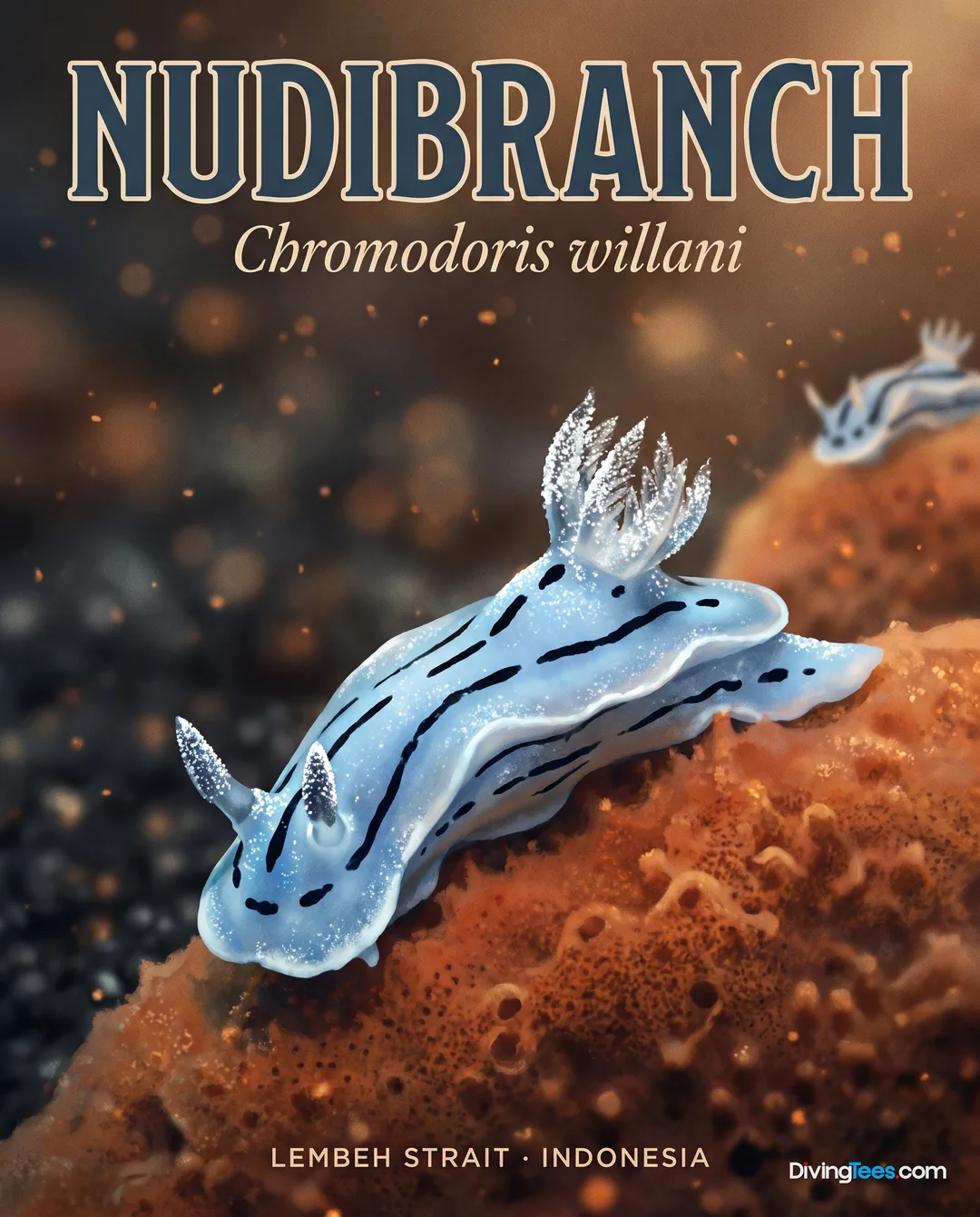
The recorded departures concentrate on Komodo National Park, with 5-day/4-night and 6-day/5-night round trips from Labuan Bajo; one 10-day/9-night voyage runs from Labuan Bajo to Alor. Komodo begins with pinnacles and current. Batu Bolong is a tiny pinnacle with exceptional coral cover, giant trevally, Napoleon wrasse and reef sharks, reaching -40m. Castle Rock is a submerged pinnacle to -30m, where nutrient-rich current draws reef sharks, eagle rays, barracuda and schooling fish. Crystal Rock, also to -30m, rises in the Lintah Strait and concentrates pelagic life, including manta rays and reef sharks. Siaba Besar is the shallower change of pace at -18m, with frogfish, blue-ringed octopus, seahorses and nudibranchs among coral bommies. Shotgun reaches -25m and uses the current to carry divers along a wall where mantas and sharks gather. Tatawa Besar, to -25m, combines soft coral, green turtles and reef sharks. Cannibal Rock reaches -30m in Horseshoe Bay, mixing macro life with schooling pelagics. The longer route adds Alor: Crucifixion, Bama Wall and Wolang Cavern reach -40m; Cathedral reaches -30m, with a swim-through at 25 to 30 metres; Andy’s Bus Stop reaches -25m; Yellow Corner is a high-current alley known for large pelagics.
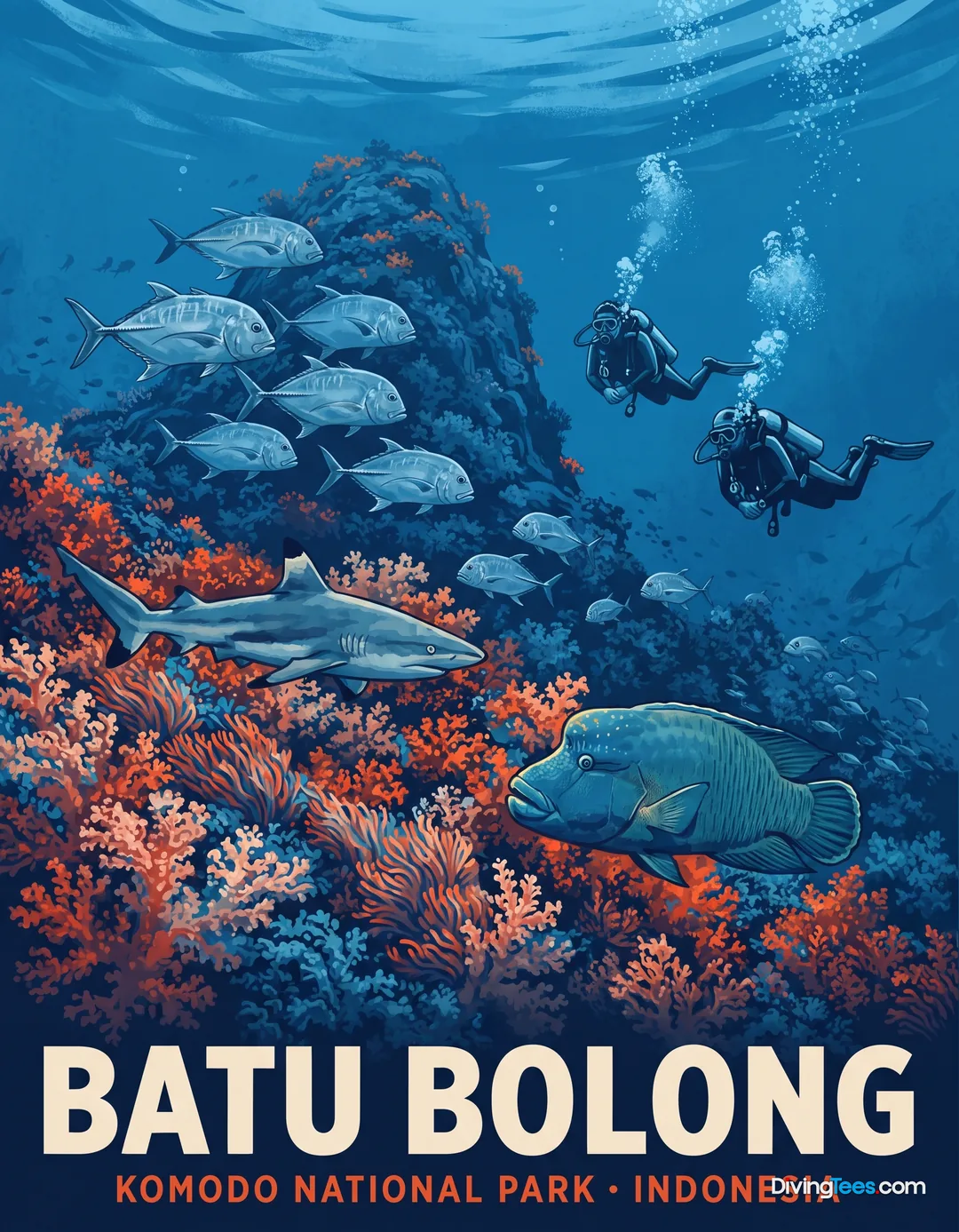
Batu Bolong →
Max. depth · 40 m
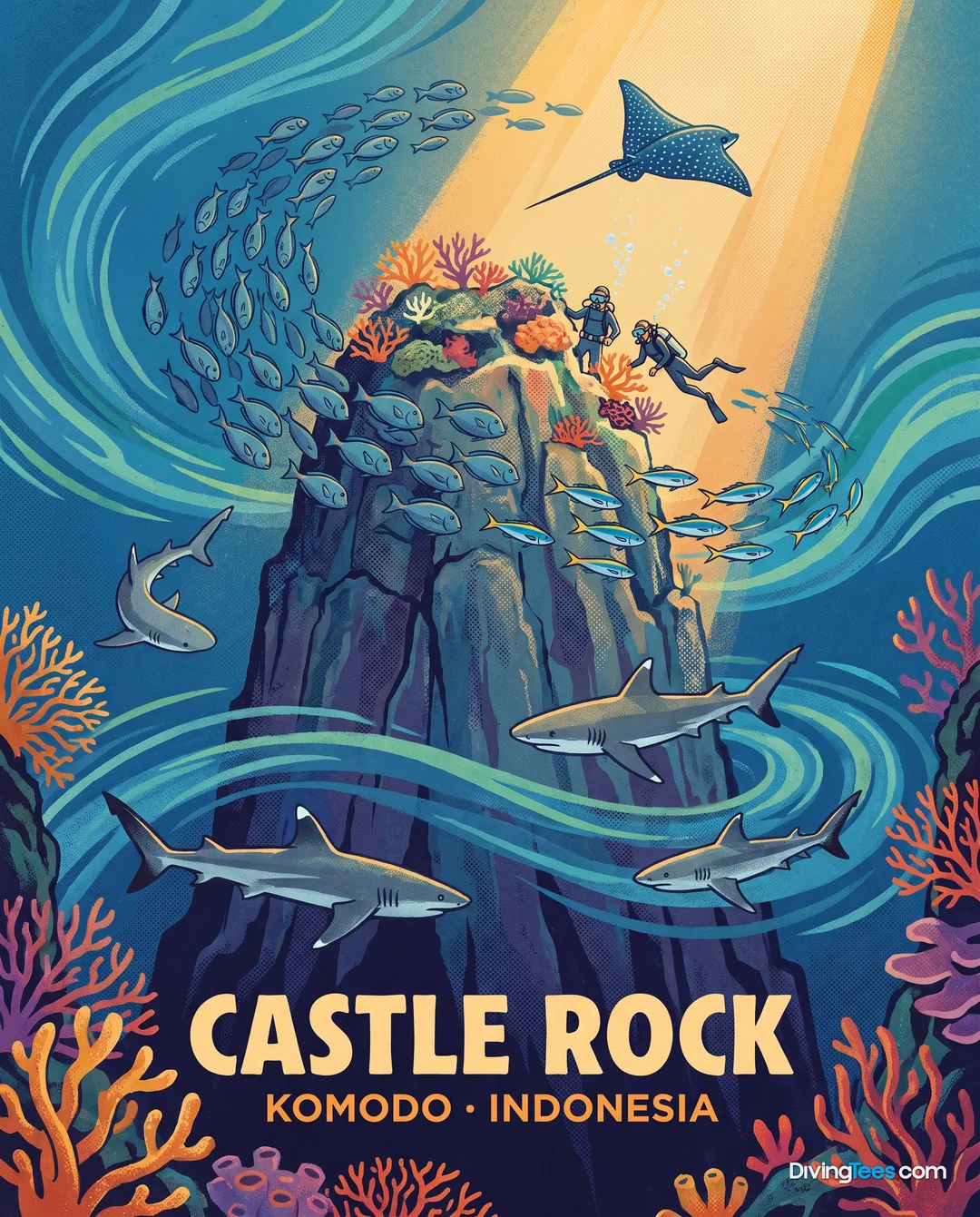
Castle Rock →
Max. depth · 30 m
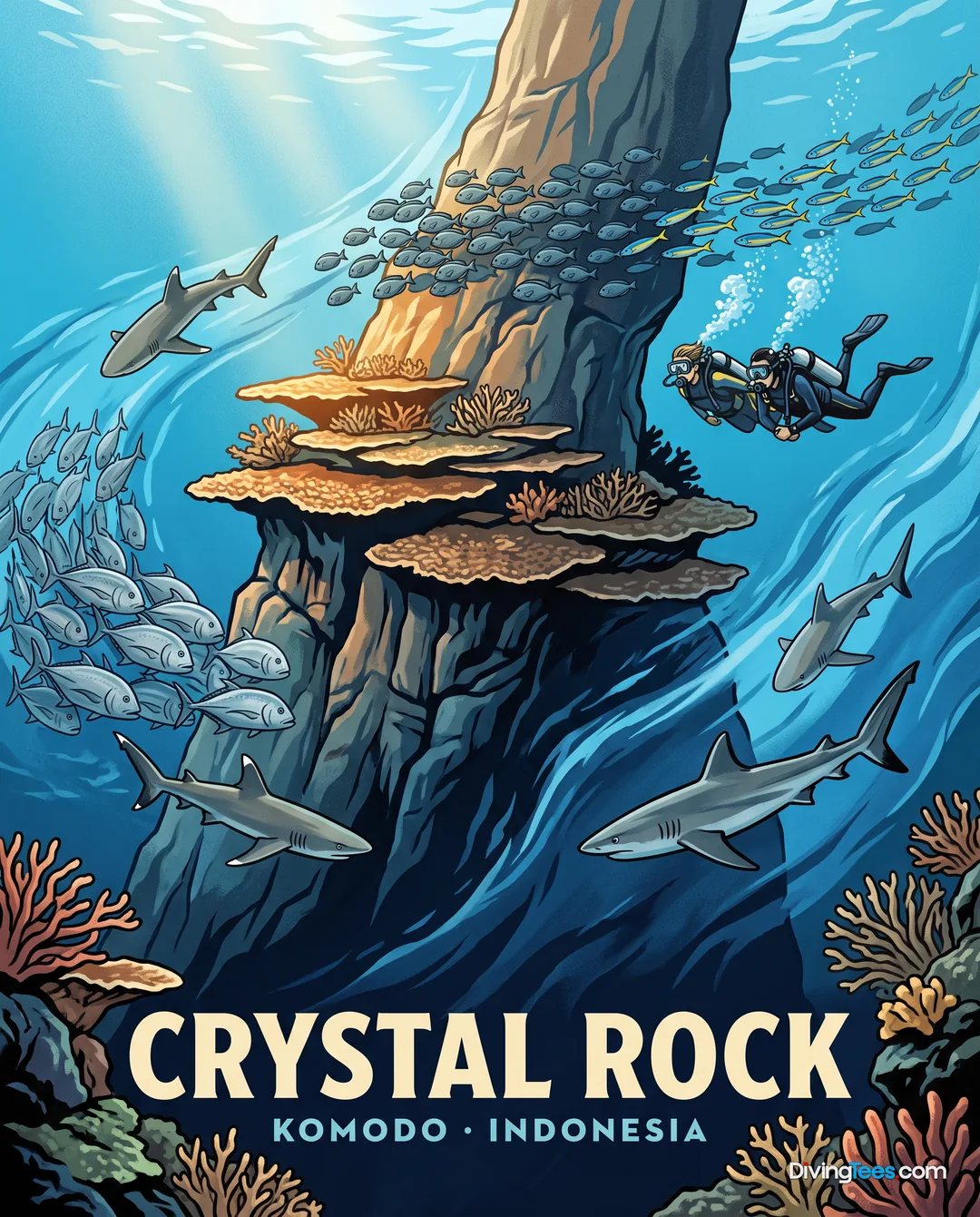
Crystal Rock →
Max. depth · 30 m
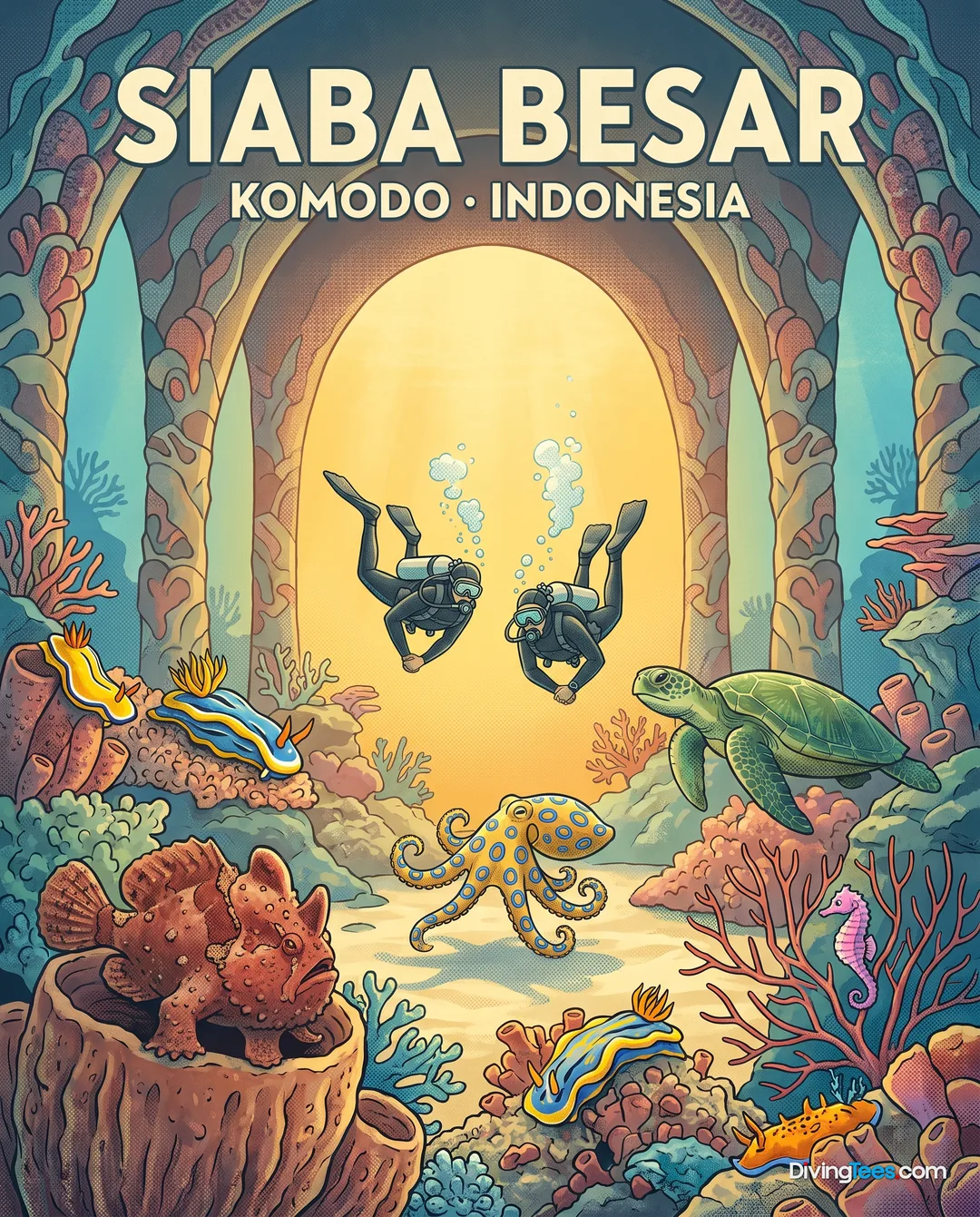
Siaba Besar →
Max. depth · 18 m
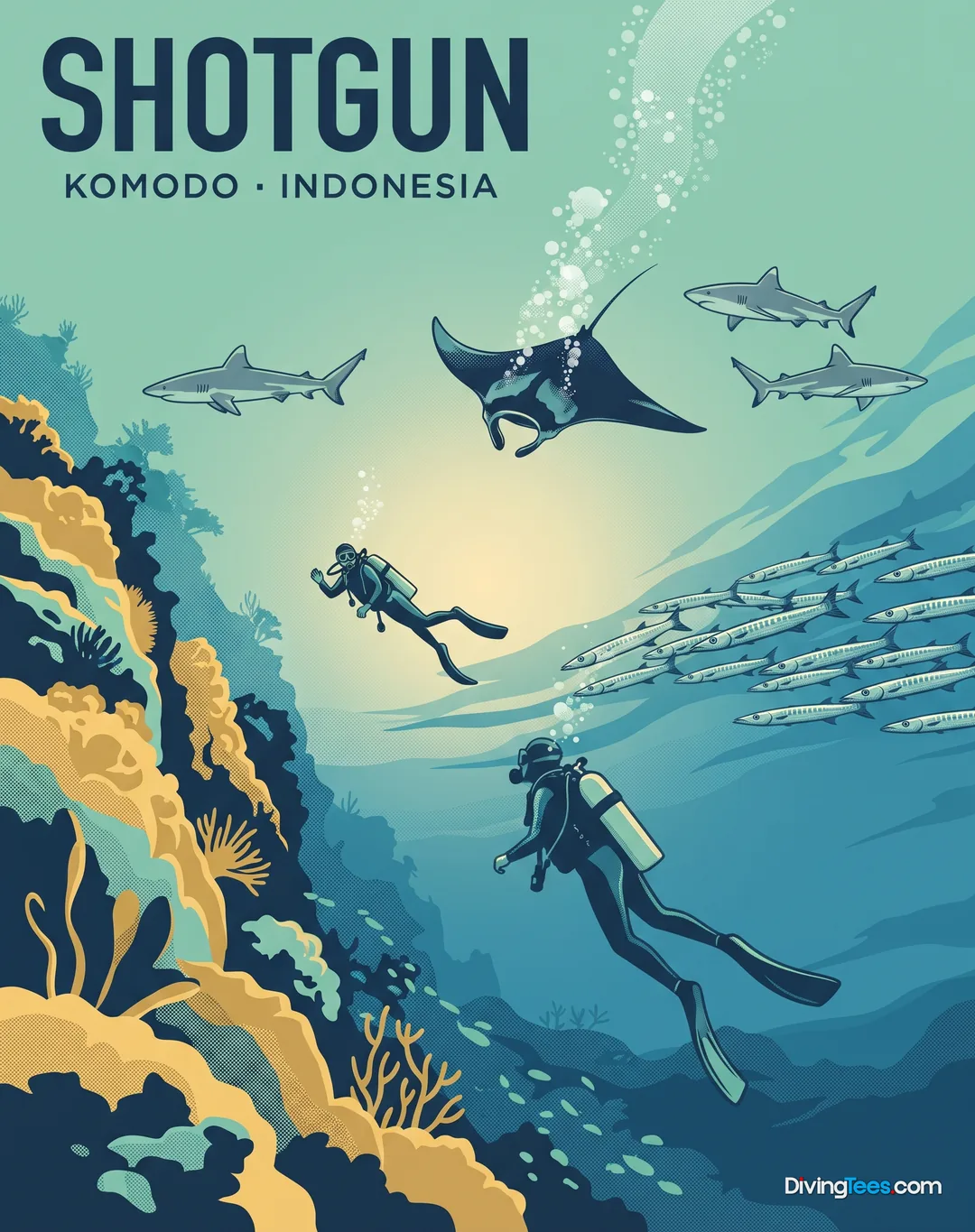
Shotgun →
Max. depth · 25 m
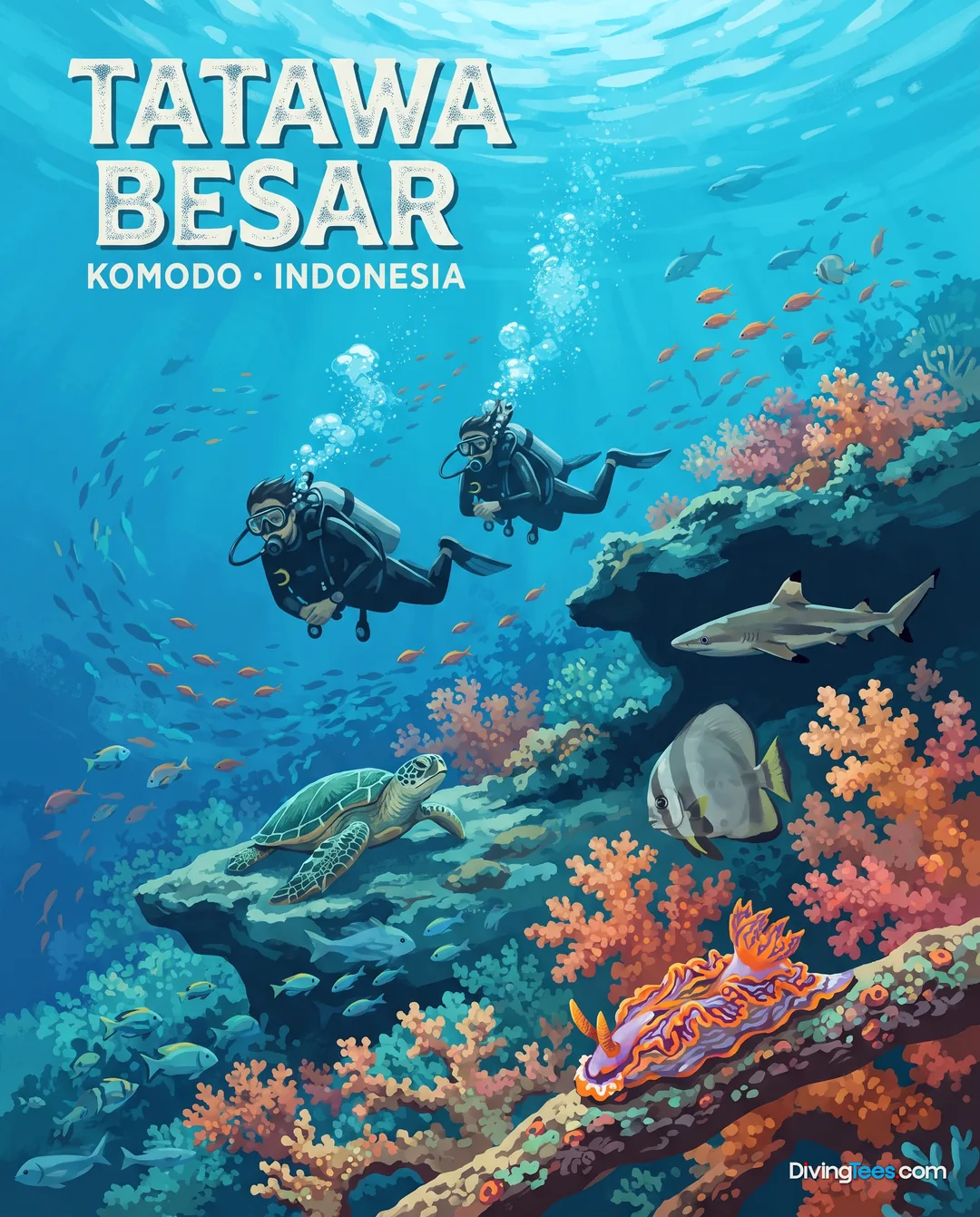
Tatawa Besar →
Max. depth · 25 m
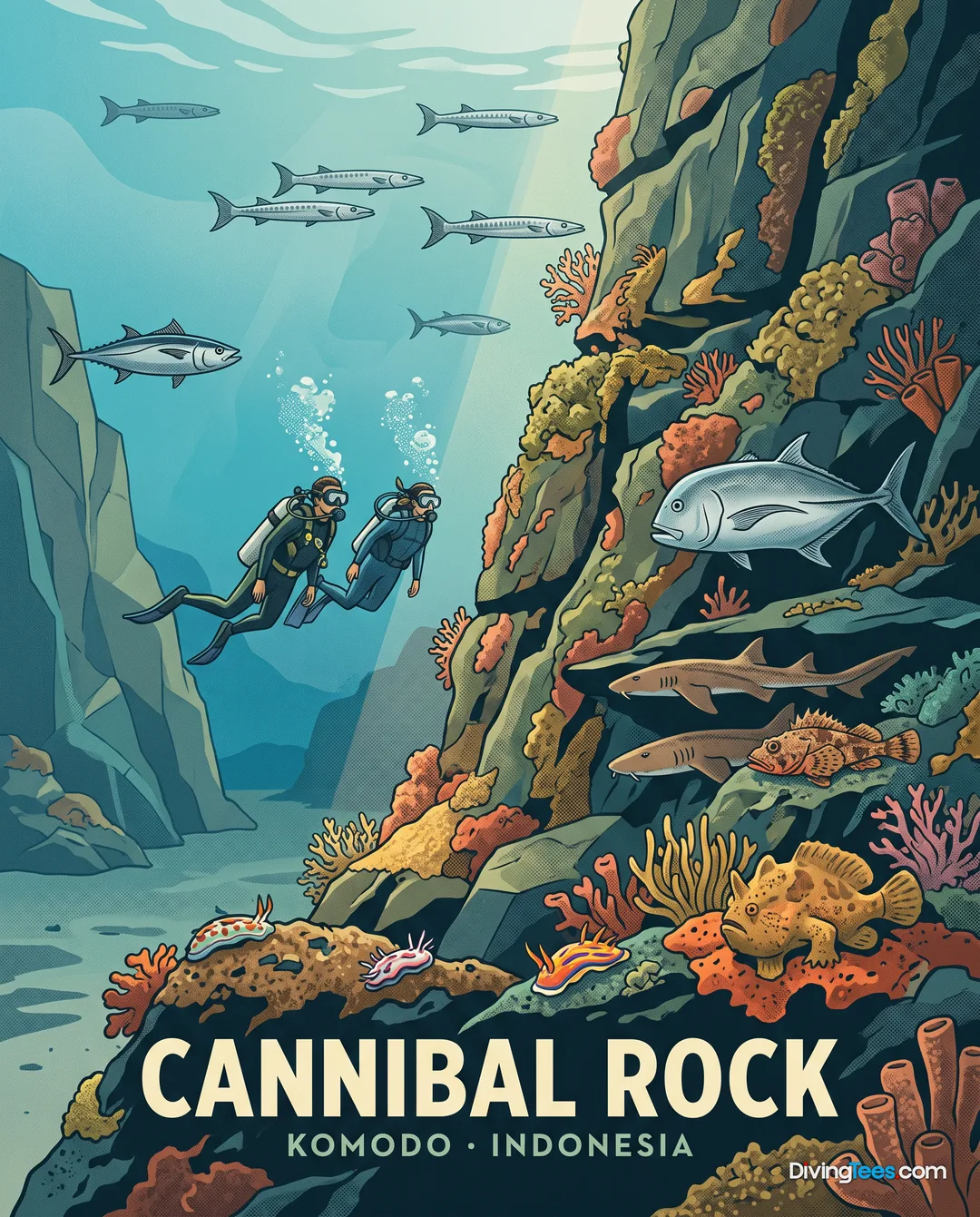
Cannibal Rock →
Max. depth · 30 m
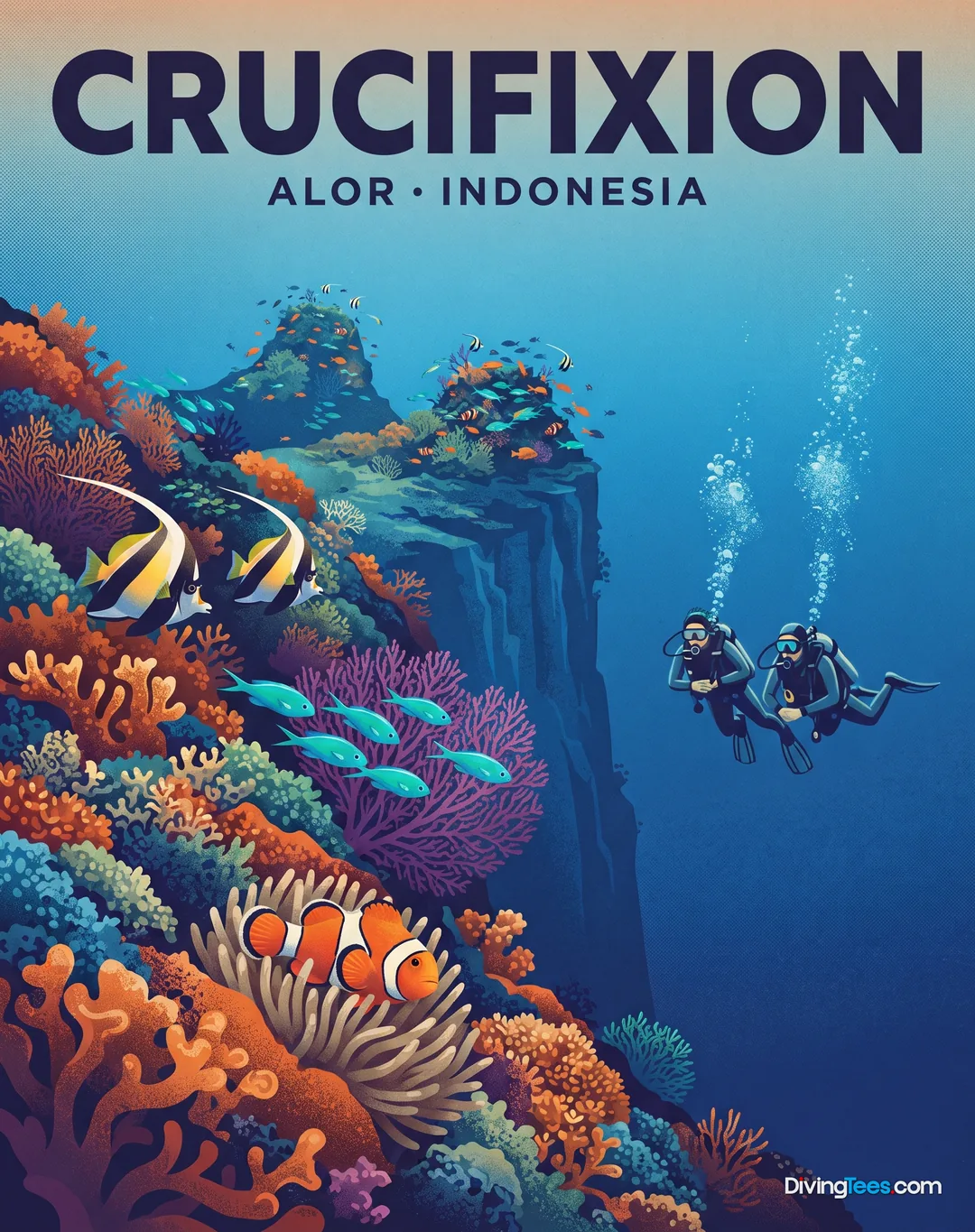
Crucifixion →
Max. depth · 40 m
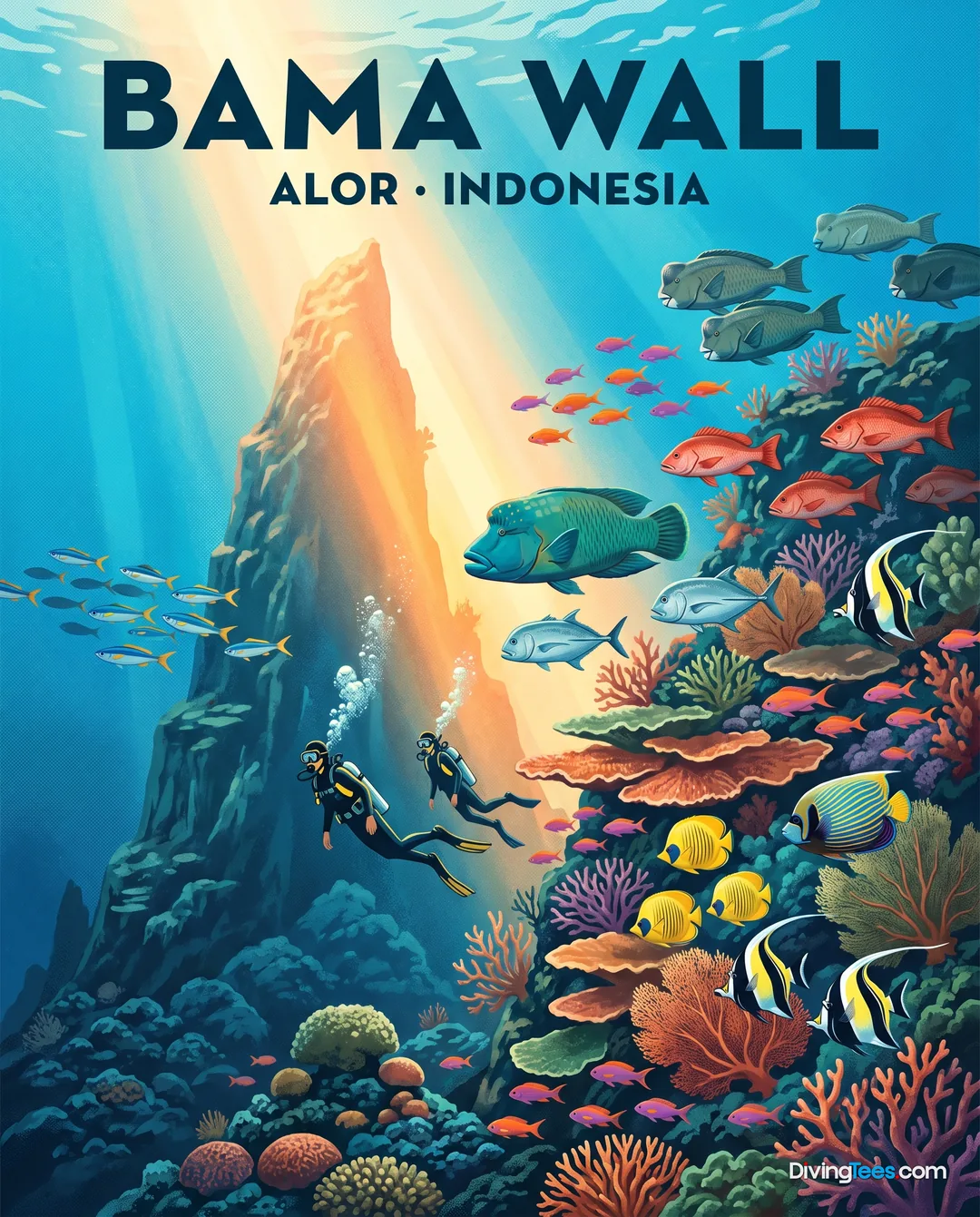
Bama Wall →
Max. depth · 40 m
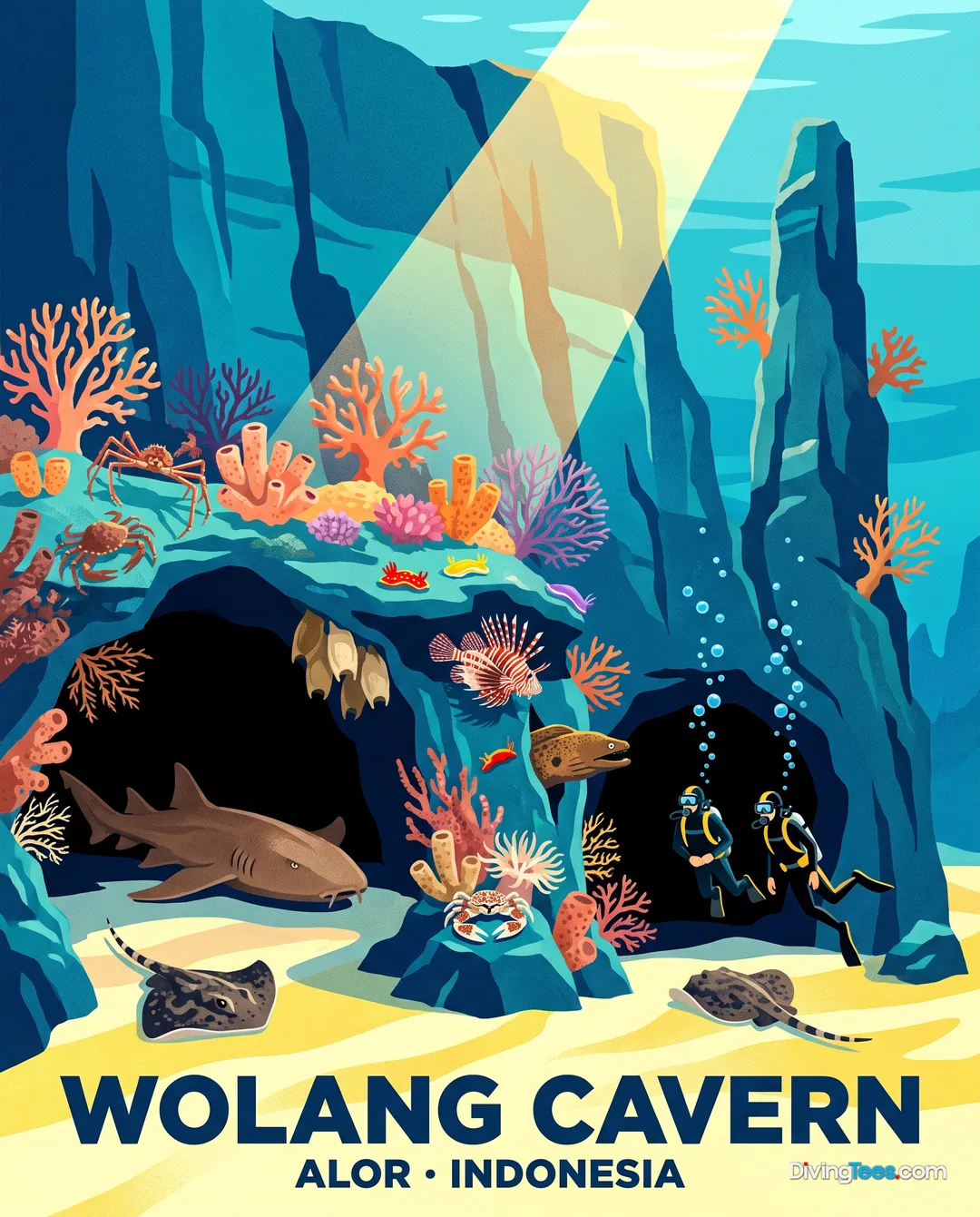
Wolang Cavern →
Max. depth · 40 m
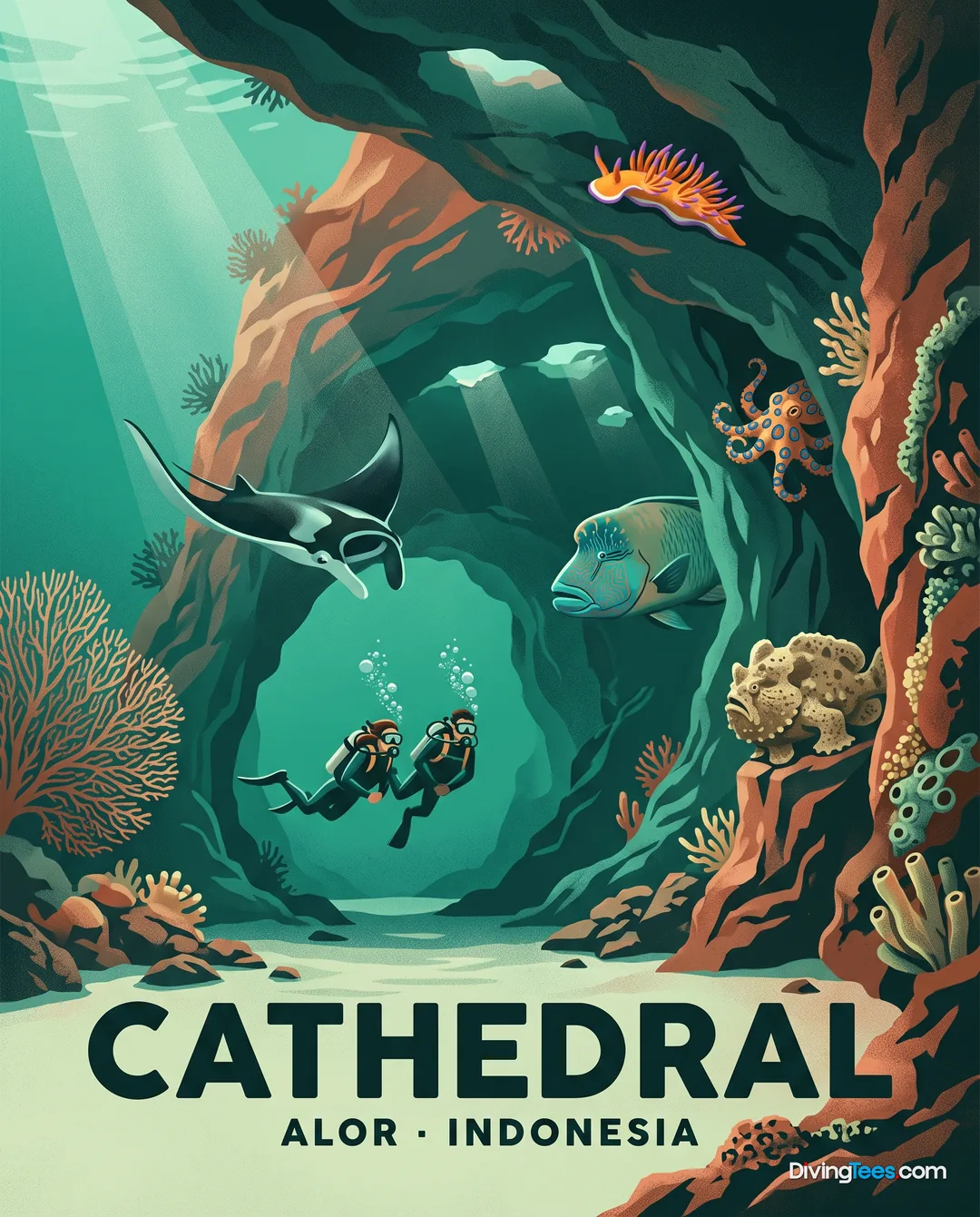
Cathedral →
Max. depth · 30 m
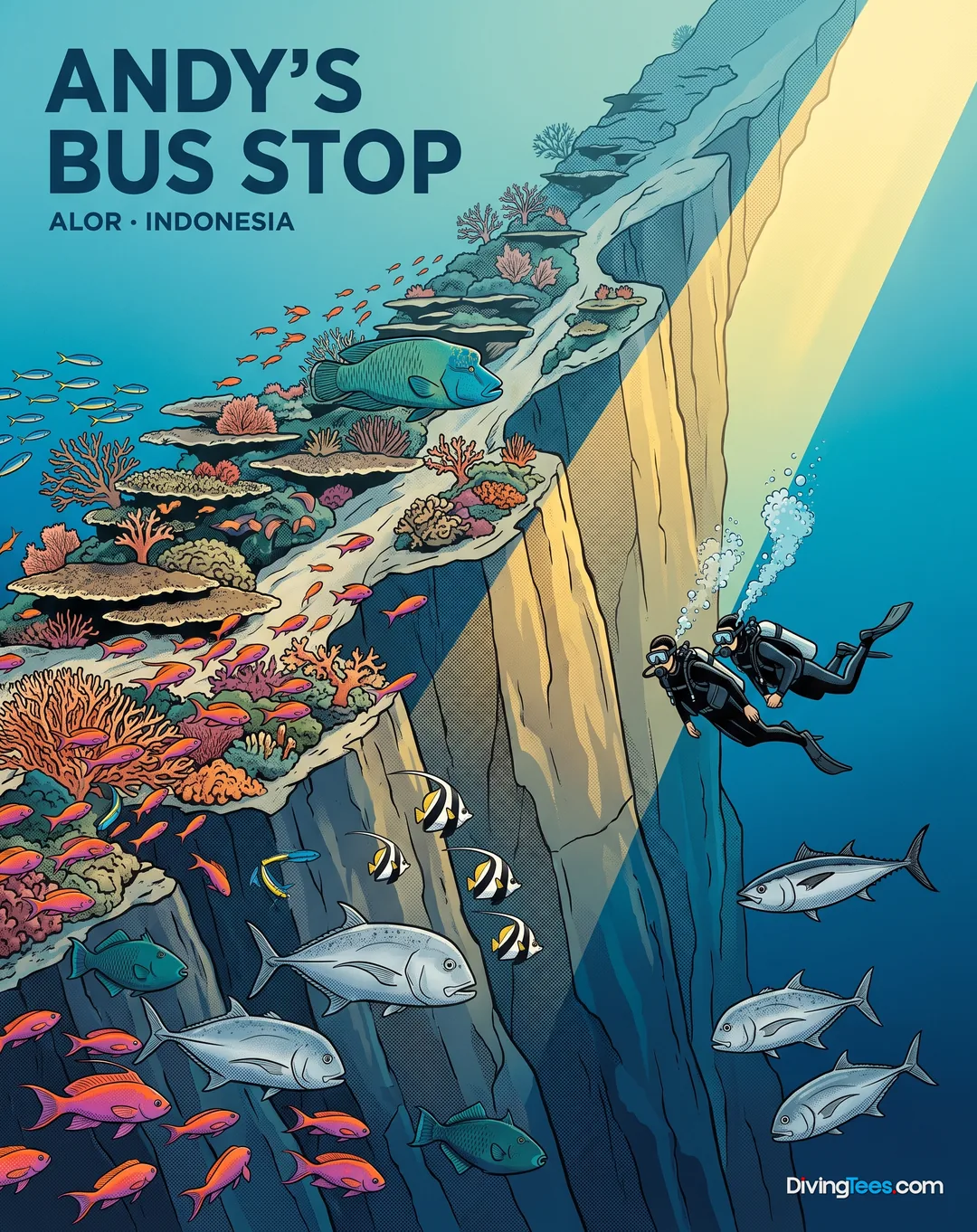
Andy’s bus stop →
Max. depth · 25 m
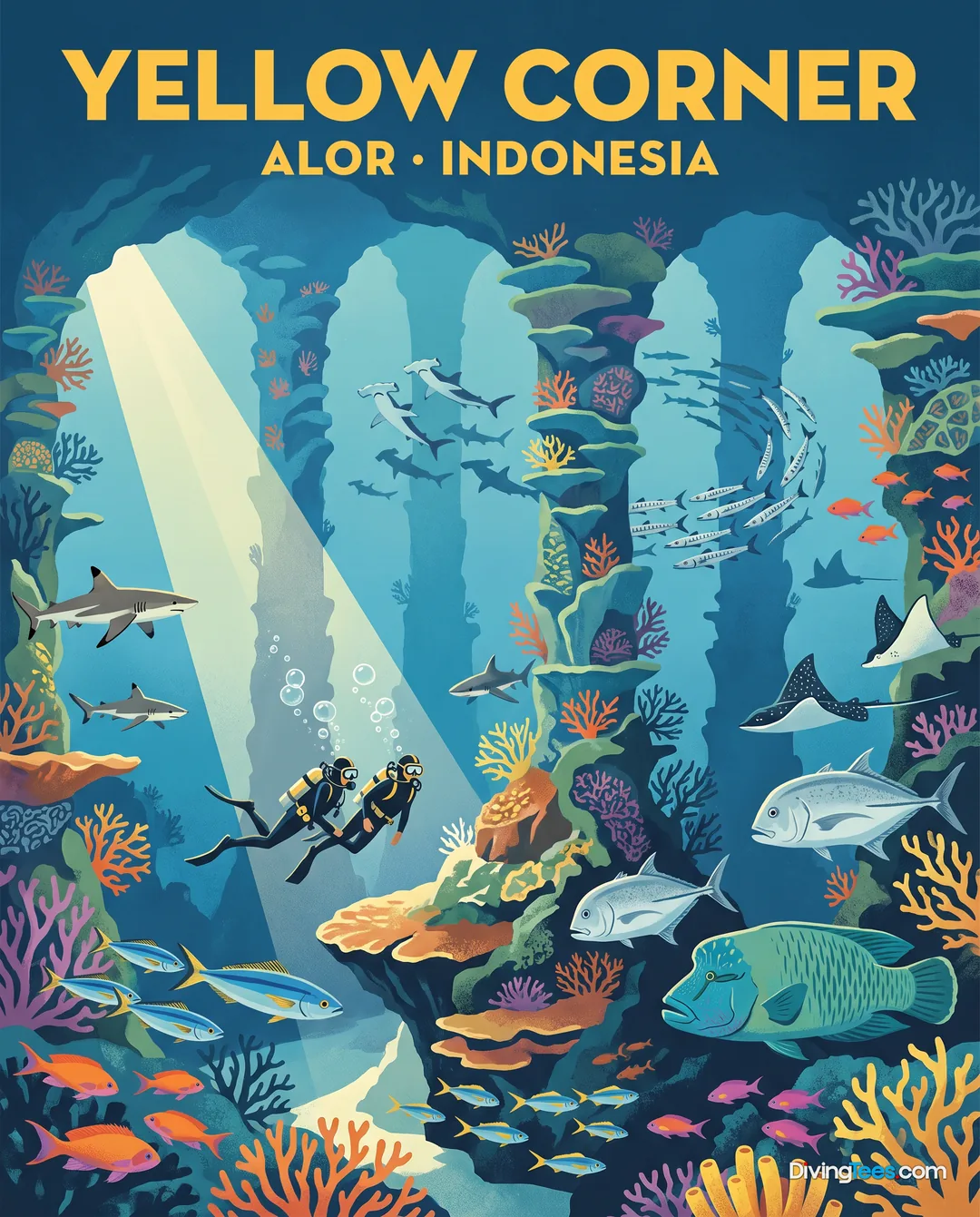
Yellow Corner →
Itineraries, dates and prices
Prices per person. Each month shows its lowest price: click a month, or pick an itinerary.
Next departures · 29 departuresfrom £1,917$2,563€2,290
November 2026
January 2027
February 2027
March 2027
See dates and prices
If you click these links and make a purchase on the partner site, DivingDeal may earn a commission, at no extra cost to you.
Dates and prices taken from liveaboard.com, updated 26 October 2026
What you’ll meet underwater
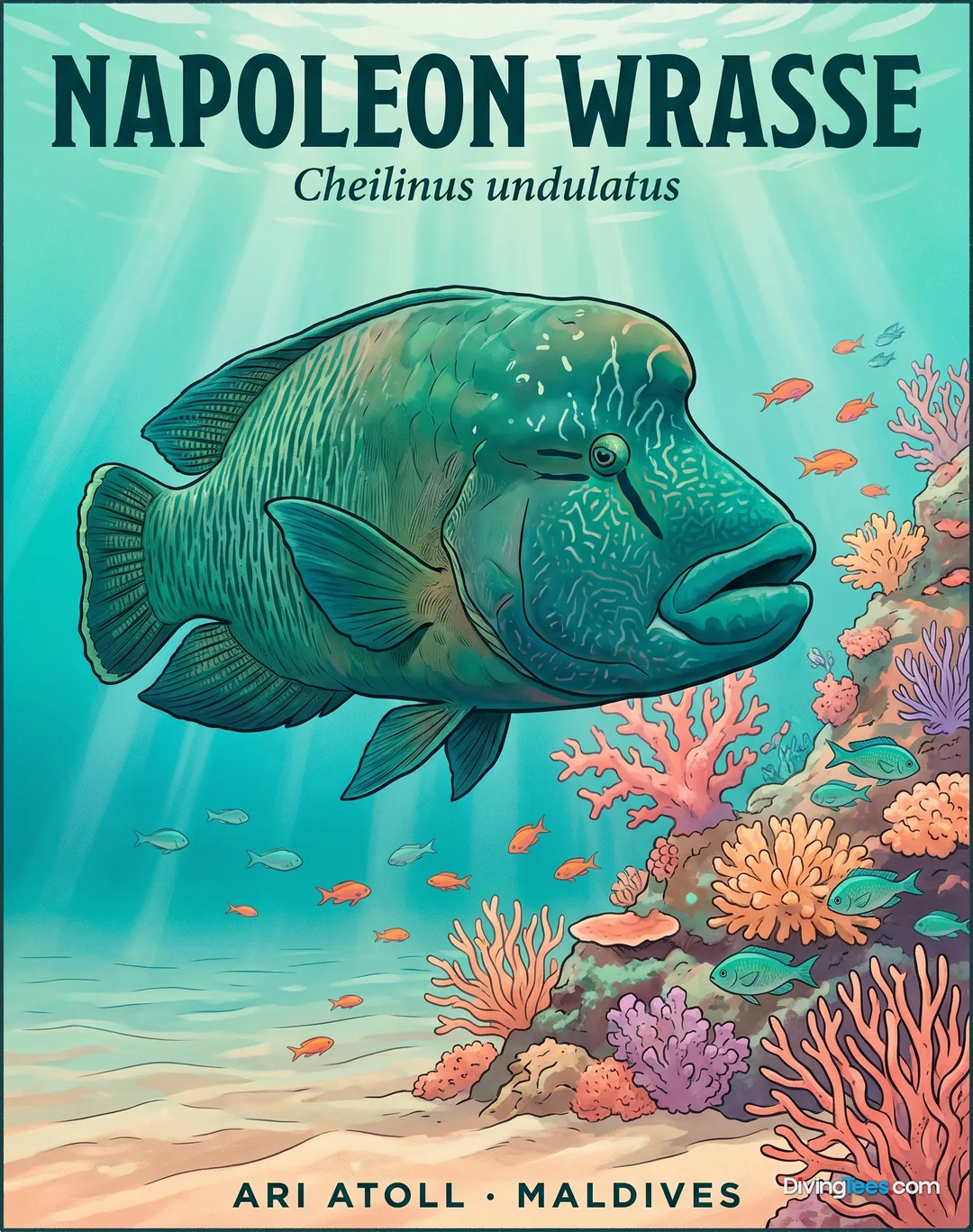
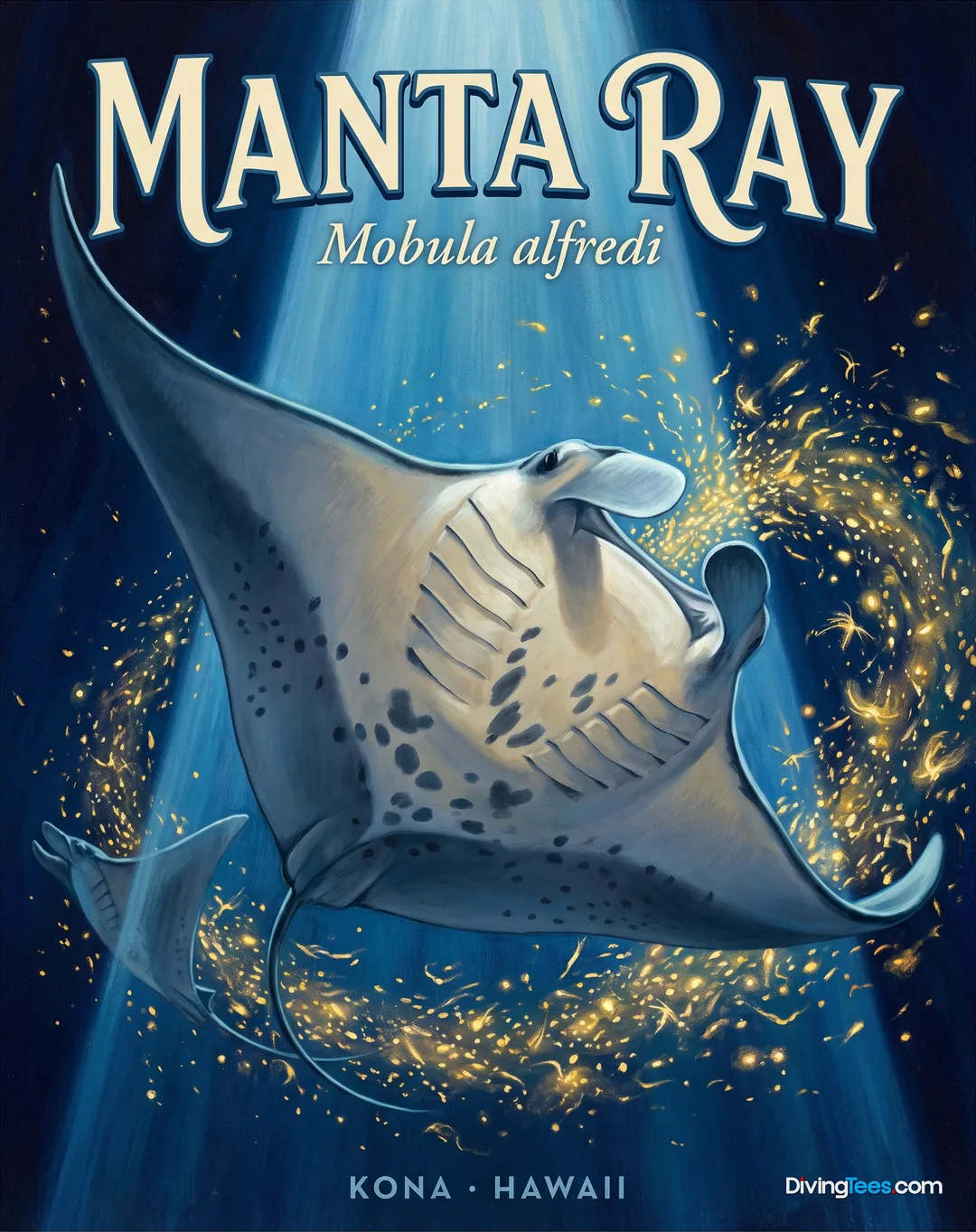
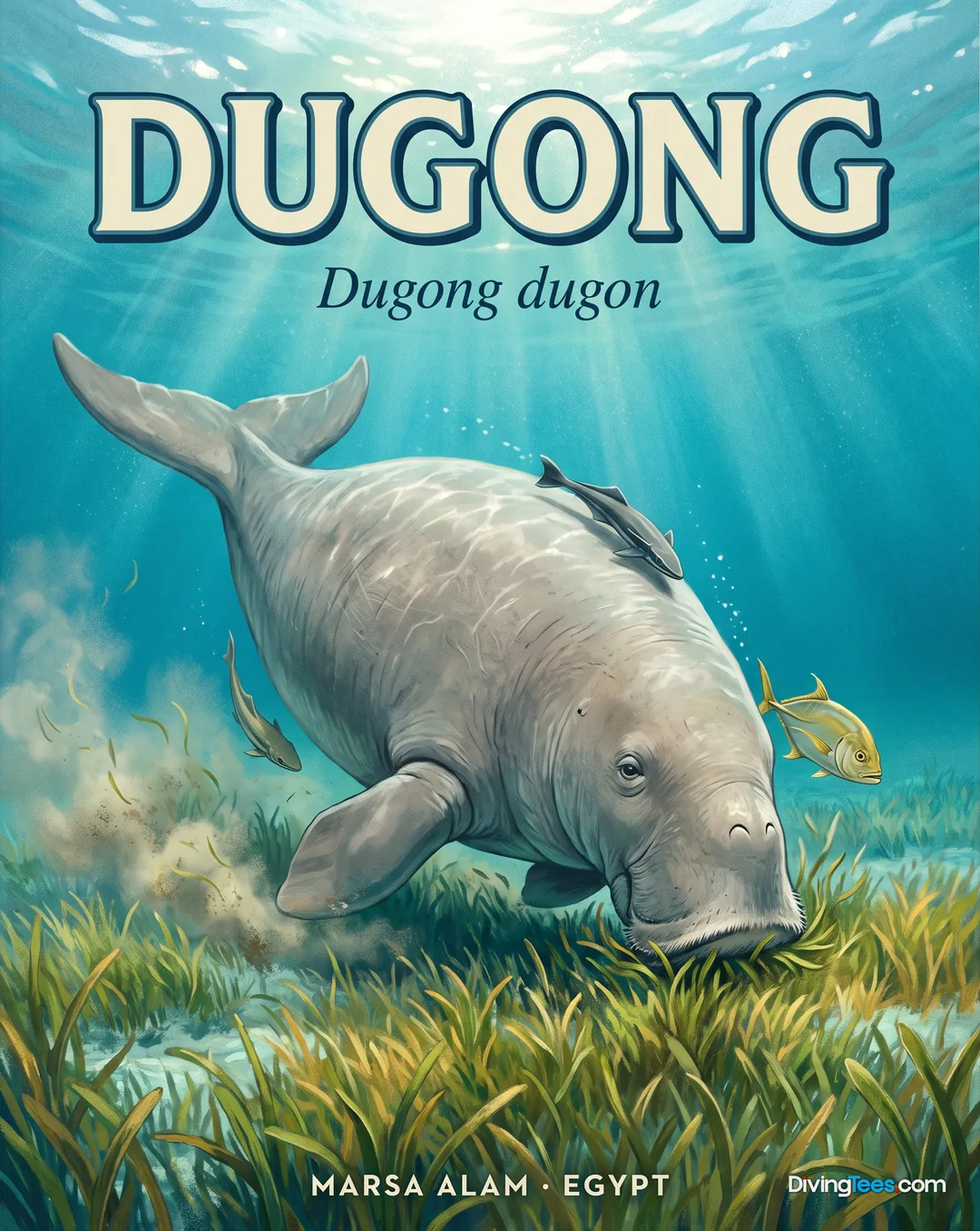
Across the route, the recurring cast is substantial: Napoleon wrasse, reef sharks, barracuda, manta rays, sea turtles, nudibranchs, pygmy seahorses, eagle rays, snappers, anthias and giant trevally are recorded at several sites. Dolphins, dugongs and tuna also occur across parts of the route, but sightings remain sightings, not promises. The site choice changes the emphasis. At Batu Bolong, the coral cover and hunting giant trevally make the pinnacle feel busy from top to bottom. Current-fed Castle Rock, Crystal Rock and Shotgun are the places to look for reef sharks, barracuda, mantas and other pelagics. Siaba Besar rewards a slower search for small animals, including the seahorse and ghost pipefish recorded only there on this route. Cathedral is the only listed site for mola mola, while Yellow Corner is the specific place associated with hammerhead sharks. Tatawa Besar is the sole recorded site for triggerfish, and Wolang Cavern for lobster. Bunaken Marine Park adds vertical coral walls to -40m and is the only listed site for angelfish. The attraction is the contrast: large animals in current, then a careful macro search on the next dive.
Who puts you in the water
The dive team works in English and Indonesian, and the operation is supported by crew trained in first aid. Oxygen is carried on board, alongside first-aid kits and the boat’s wider safety equipment, including radio communications, satellite phones, GPS, radar, sonar, a position-indicating beacon and rescue boats. Those are useful foundations for remote Indonesian diving, where the boat may be far from a harbour. The exact number of guides, group ratio, instructor qualifications, course programme, minimum logged dives and briefing format are not given. What is clear is that Mutiara Laut is set up for guided diving rather than self-directed technical logistics: tenders transport divers to the sites, and a private dive guide is an optional extra. Divers should therefore choose the trip for the route and the crew-led operation, and ask about group organisation if they need a particular ratio, course or technical profile. The site list includes current-exposed pinnacles, walls and a swim-through, so comfort in open water and honest self-assessment matter more than a polished brochure description.
The dive deck and the gear
The dive operation is built around tenders rather than a platform dropped straight over the side. Two diver tenders take groups to the sites and collect them after the dive, allowing the boat to remain in a suitable position while divers surface elsewhere. That matters in Komodo and Alor, where current can carry a group well away from the entry point. Back aboard, rinse tanks are provided for equipment, DIN adapters are available, and hot showers make the return from the water more comfortable. Nitrox is available for multi-day itineraries with repeated dives. Rental equipment is included in the listed package. The boat also carries oxygen and first-aid kits.
Between dives
Between dives, the boat gives the trip several different speeds. The wide teak decks are the natural place to dry off, sit in the shade or watch the islands pass under sail. The air-conditioned indoor saloon offers a cooler pause, particularly after a current-heavy dive, while the observation deck and terrace provide more open space when the sea is calm. Kayaks and stand-up paddleboards let guests explore a quiet anchorage without turning every surface interval into another organised excursion. Snorkelling equipment is available for people who want to stay in the water at a gentler pace, and shore visits add beaches, villages and island landscapes to the route. There is also room to do very little: a book, a drink, the sound of the rig and the changing light across the deck. Internet is available for a fee, but the boat’s better use of a quiet hour is usually the view beyond the rail. When there is no dive planned, the sailing itself becomes the activity.
A day on board
A day aboard Mutiara Laut is organised around the water, even when the boat is under sail. The first briefing comes before the first descent, with breakfast and snacks supporting the early start rather than competing with it. After the tender returns, divers rinse gear, shower and eat before the next entry, while the boat may reposition or continue toward the next island. Surface intervals are spent on the teak decks, in the air-conditioned saloon or in the water with snorkelling gear and kayaks. Later dives move the focus from current-swept reef and pelagics to shallower coral or macro terrain, depending on the site and the itinerary. Meals punctuate the day, and the galley keeps food available between them. When diving is finished, the boat has room for a shore visit, beach barbecue, paddleboard session or an unplanned hour watching the light change over the islands. There is no invented clock to follow here; the useful rhythm is the order: briefing, dive, recovery, food, repositioning, another dive, then dinner and sleep before the next departure.
What you eat aboard
Food is one of Mutiara Laut’s strongest reasons to book. Meals are described as gastronomic, with dishes drawing on both local Indonesian cooking and Western classics, and the table can be handled à la carte rather than reduced to a fixed buffet routine. The galley also works around vegetarian and vegan diets, as well as other particular dietary needs. That range matters on a dive trip: after a morning in current or a long afternoon underwater, a plate needs to be more than fuel. Meals are served across the day alongside snacks, with non-alcoholic drinks, water, tea and coffee included; beer, wine and cocktails are available separately. Dining can move outside, and the crew can take the meal ashore for a beach barbecue when the itinerary allows. On a week of diving, the food becomes part of the recovery cycle. Divers come back hungry, eat properly, and have enough choice to make the next meal feel like an event rather than another service window.
Nights at sea
The cabins are designed as quiet retreats rather than large hotel rooms. Seven air-conditioned cabins each have a private bathroom and standard windows; the master cabin adds a private terrace, while the lower-deck categories include double cabins and forward cabins. The forward location gives those cabins a more direct relationship with the sea, including the movement that comes with sleeping near the bow. The lower deck keeps the accommodation away from the main social areas, useful when the saloon is still active after dinner. Warm lighting and woodwork soften the practical limits of a liveaboard cabin, but the square metres remain those of a boat, not a resort suite. The point is to sleep well between dives, dry equipment and step back into the day without unnecessary fuss. Cabins are non-smoking, cleaned daily, and supplied with towels and toiletries. The accessible balcony and outdoor decks matter more than extra furniture: when the weather is calm, the best place to watch the night is outside, with the dark water moving past the hull.
Master Cabin
Lower Deck - Double Cabins
Lower Deck Front Cabins
What to know before boarding
Komodo departures start and finish in Labuan Bajo. The longer recorded expedition runs from Labuan Bajo to Alor, with the reverse direction also offered on the wider schedule. Airport and hotel transfers are included, and the crew arranges the welcome from the arrival point. Arriving in the departure area the night before is sensible, so a delayed connection does not put the boarding day under pressure.
Deck plan
What the boat does for the ocean
Mutiara Laut is designed to sail with seven sails and to reduce reliance on engine power when conditions allow. The operator describes a 30% reduction in fuel consumption and 20% lower CO₂ emissions, alongside zero single-use plastics and reef-safe products used on board. During island visits, the voyages include beach and ocean clean-ups, and the operation supports coral restoration and ocean education initiatives planned by 2030. These measures connect the boat’s sailing identity with the places visited: less disposable plastic on board, careful products around the reef and direct clean-up work ashore and at sea.
- Year built
- 2009
- Year renovated
- 2023
- Length
- 46 m
- Beam
- 9.4 m
- Maximum number of passengers
- 14
- Number of cabins
- 7
- Number of bathrooms
- 7
- Engines
- Yanmar 6 AYM - ETE485 KW
- Tenders
- 2
- Website
- mutiaralaut.com ↗
Hello, I'm Marina, DivingDeal.com's AI assistant. I answer in detail about hotels, dive centres and liveaboards.
Thinking about the whole trip and the flights? Talk it over with Edith →
Marina is an AI. Some links are affiliate links: DivingDeal may earn a commission, at no extra cost to you. Bookings are made with the partner.